
Judge Orders Timothy Busfield Release After Calling Evidence “Neutral”
A New Mexico pretrial detention hearing, delayed disclosures, and why a judge concluded the weight of the evidence does not yet justify detainment.
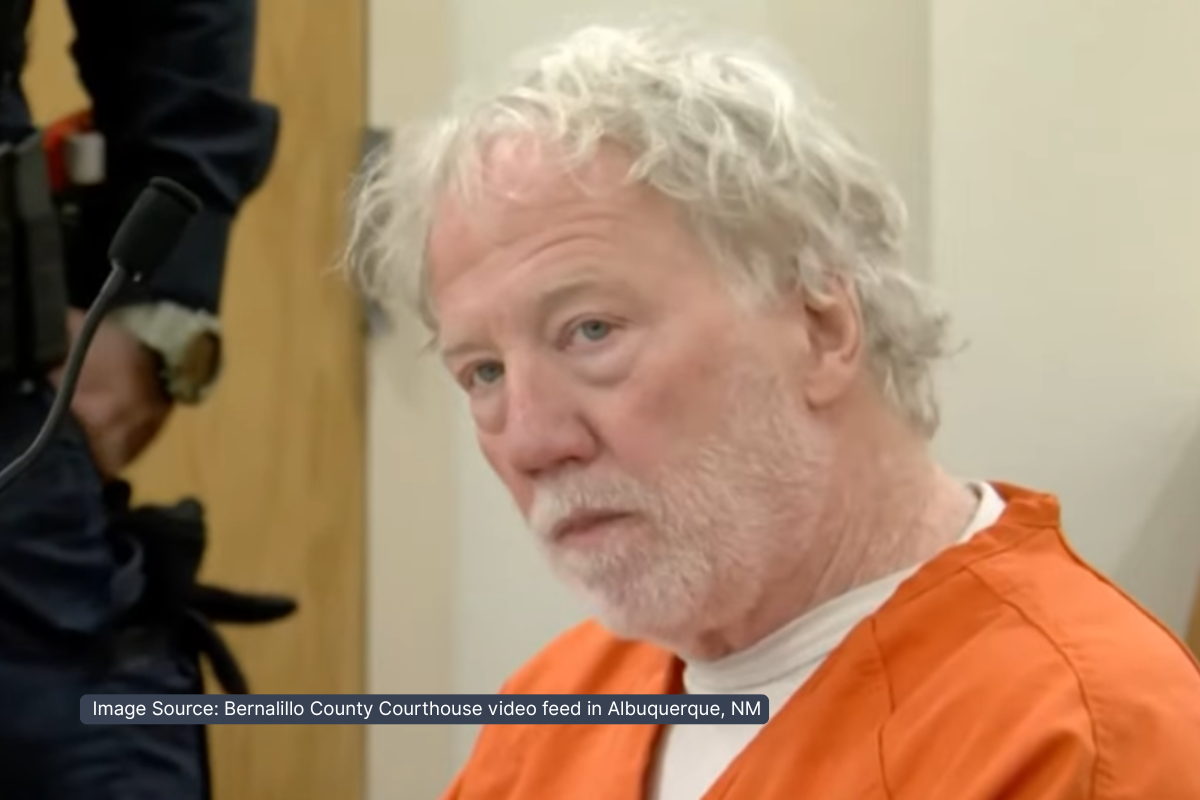
The public reaction to allegations involving children often moves faster than the legal process — and sometimes faster than the evidence itself. That tension was on full display in the recent bond hearing in State of New Mexico v. Timothy Busfield, where a judge declined to detain the defendant pretrial and released him on his own recognizance.
Timothy Busfield is facing felony charges in New Mexico alleging criminal sexual contact with two former child actors who appeared on the television series The Cleaning Lady. The alleged conduct is said to have occurred on set during the course of production. The case is based largely on delayed disclosures and testimonial accounts, with no physical evidence or eyewitness corroboration. Busfield has denied the allegations, and the case is now pending further review.
This decision to release Busfield was not an expression of disbelief in abuse allegations generally. It was a ruling grounded in law, evidence, and constitutional restraint.
At the center of the hearing was a striking judicial conclusion:
“As it stands today, based on the limited information I have in front of me, I’ll characterize the weight of the evidence against the defendant as neutral at this point in time.”
That statement — rare in its clarity — explains both the outcome of the hearing and why this case now raises serious questions about process, proportionality, and timing.
*****Scroll to bottom for case timeline.*****
Release Conditions and What the Court Did Not Order
In releasing Busfield, the court imposed standard conditions but declined to order heightened restrictions often sought in cases involving serious allegations. Busfield was released on his own recognizance, with no bail set, permitted to travel subject to geographic limitations, and was not placed on house arrest or electronic monitoring.
Based on the hearing and standard New Mexico practice, Busfield was required to:
Remain in contact with his counsel
Comply with all court orders
Appear at all scheduled court proceedings
Maintain a current address and contact information
Abide by geographic travel conditions set by the court
The absence of additional restrictions reflects the court’s determination that the risk to the community could be reasonably managed without detention or extraordinary supervision — a conclusion consistent with the judge’s assessment that the weight of the evidence, at this stage, was neutral.
Rule 5-409 Hearing
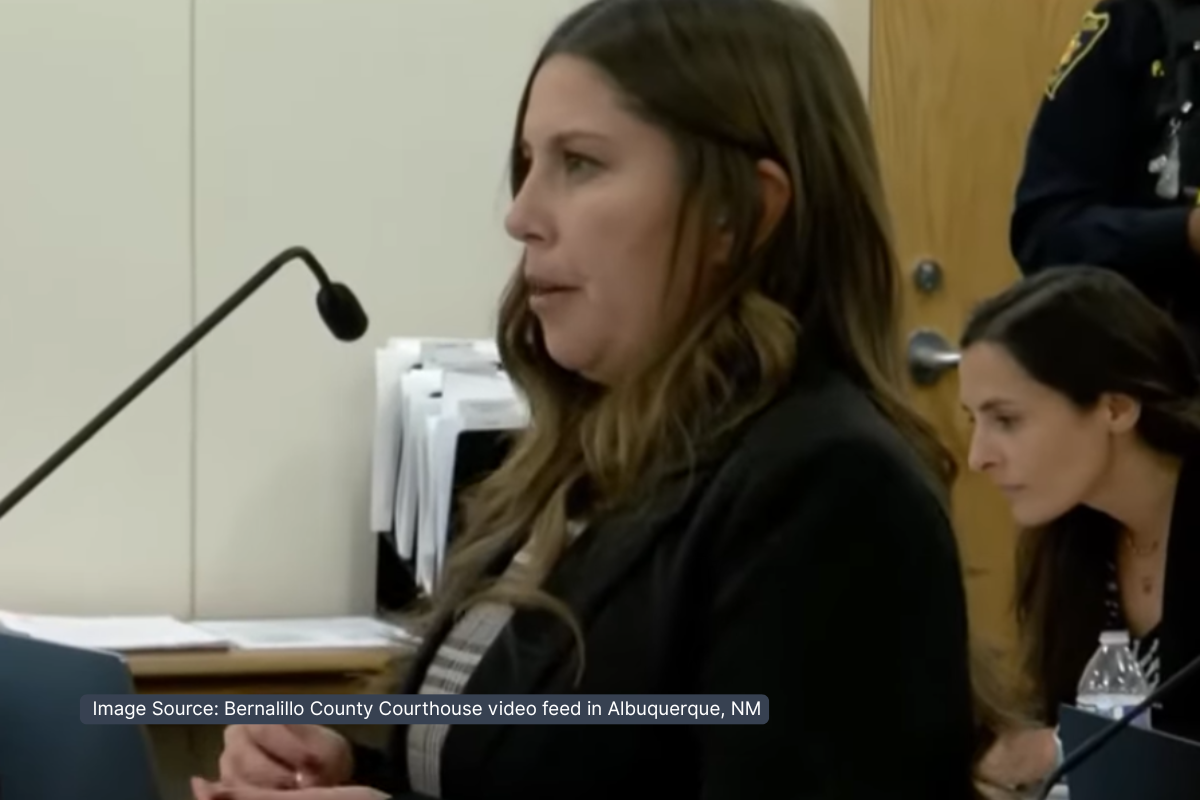
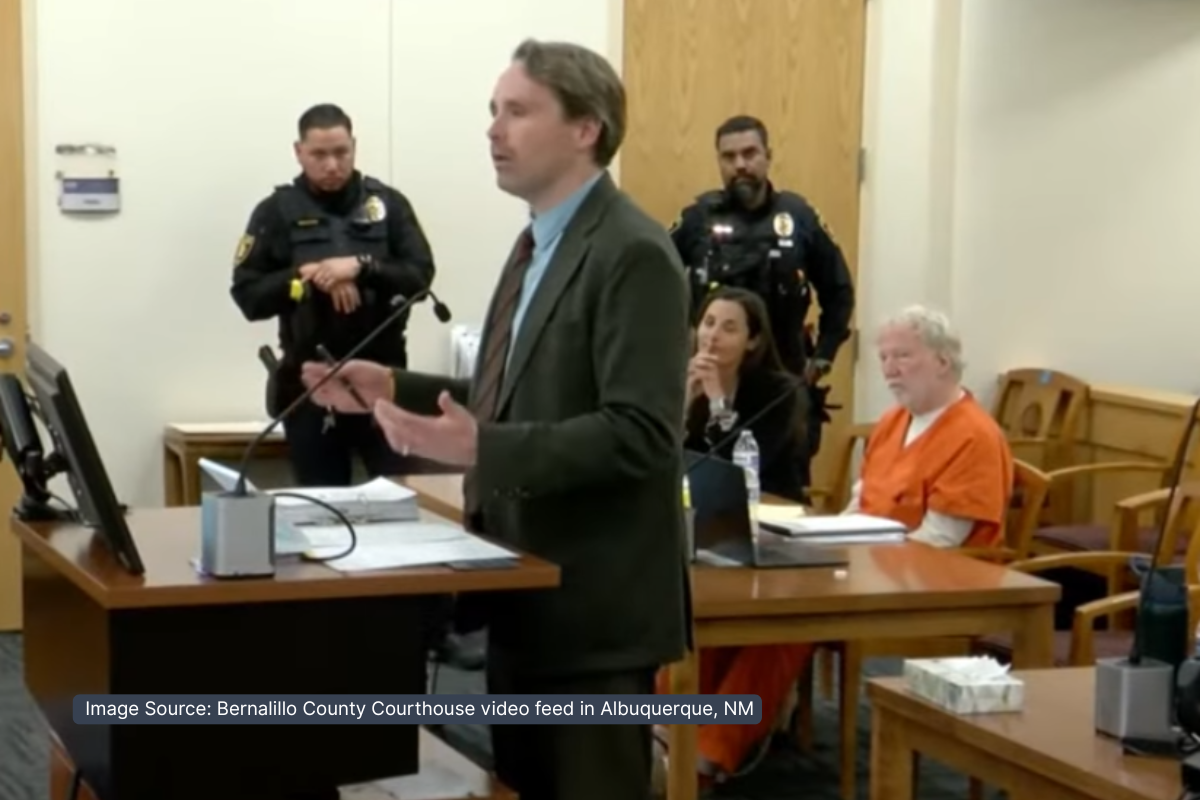
This week’s hearing was a Rule 5-409 pretrial detention hearing, where the burden rested entirely on the state. Both sides were given one hour each to plead their cases to the judge on whether Timothy Busfield would be released until proceedings conclude.
Under New Mexico law, the prosecution had to prove — by clear and convincing evidence — that no conditions of release could reasonably protect the safety of the community.
That is an intentionally high bar.
The Court’s Core Findings
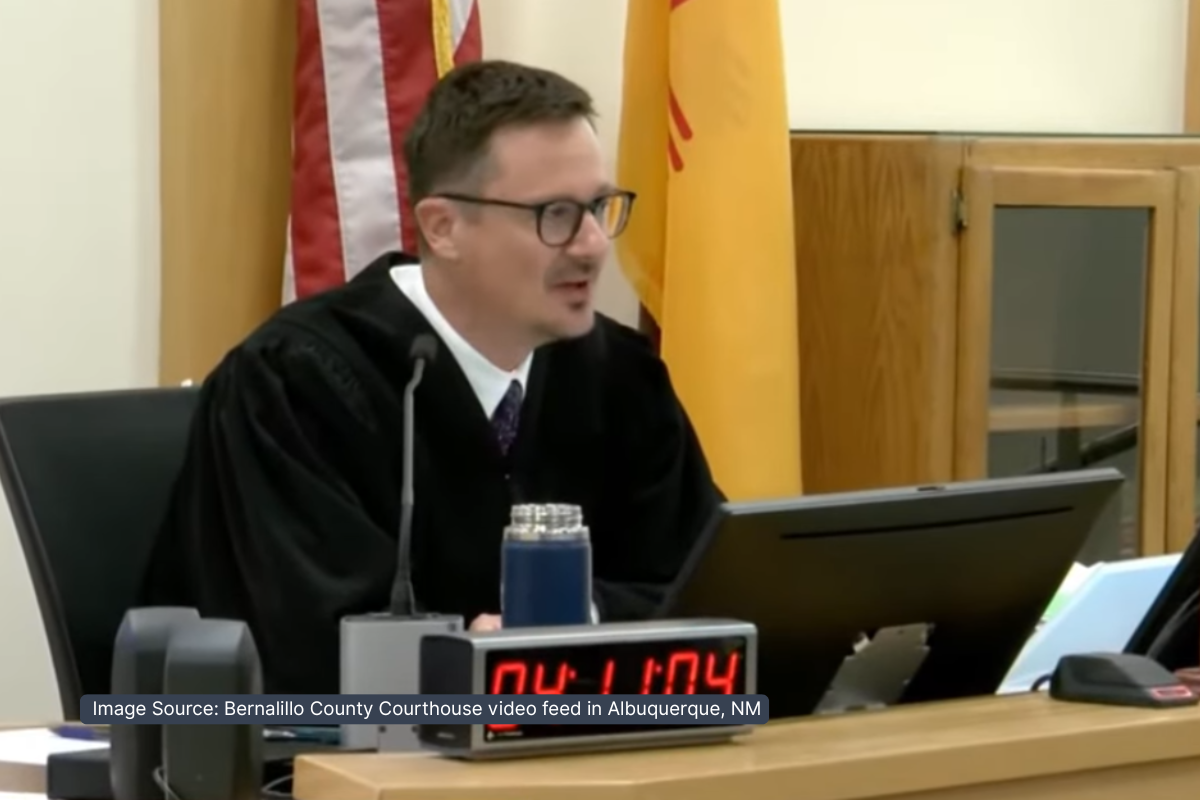
Judge David A. Murphy made several findings that shaped the ruling:
- Probable cause exists, but that is a low procedural threshold.
- Allegations involving minors are inherently serious.
- The defendant has zero criminal history.
- There is no pattern of ajudicated allegations involving children.
- Prior allegations involving adult women were unvetted and unresolved.
- Independent investigations and witness affidavits did not corroborate the accusations.
- The alleged conduct occurred on a working film set, not in private.
- Initial police interviews included explicit denials of inappropriate touching.
Taking all of this together, the court concluded the weight of the evidence is neutral, and that any potential risk could be addressed through conditions of release rather than detention.
As a result, the judge denied the state’s motion for pretrial detention and released Mr. Busfield on his own recognizance, with geographic restrictions but no ankle monitor or house arrest.
Shop Our Merch!
Only Trial Junkies and True Crime Addicts will understand this merch: Courtroom Chaos, Media Frenzy, Forensic and LEO Series available in tees, hoodies, caps, totes, and mugs. Check them out!
The Legal Significance of a ‘Neutral’ Finding
Judges do not casually label evidence “neutral,” especially in cases involving children. The phrase signals that the allegations are uncorroborated and that credibility disputes remain unresolved. The case is not evidentiary in strength at this stage. Escalation would be premature.
In explaining his decision, Judge David A. Murphy was explicit about the evidentiary posture of the case at this early stage. After reviewing the limited record before him, the judge stated that he would “characterize the weight of the evidence against the defendant as neutral at this point in time,” emphasizing that the court was not presented with corroborating witnesses or independent verification of the allegations.
The judge further noted that while probable cause existed for procedural purposes, the evidence was not sufficiently weighted to justify the extraordinary step of pretrial detention. The court acknowledged the seriousness of the allegations but stressed that seriousness alone cannot substitute for evidentiary strength, particularly where credibility disputes remain unresolved and the case relies largely on delayed disclosures.
That assessment — rare in its candor — ultimately undercut the state’s argument that no conditions of release could reasonably protect the community.
This matters because pretrial detention is not meant to punish or pre-adjudicate. It exists to address genuine, unmanageable danger — not to substitute for public outrage or media judgment.
A Case That Looks Different Than Most
The court also emphasized that this case differs from typical child-abuse prosecutions.
Sexual abuse is often clandestine, hidden, and private. Here, the allegations involve conduct said to have occurred in open, professional environments — on a television set with crew, supervisors, teachers, cameras, and union safeguards present.
While misconduct can theoretically occur in public spaces, courts must assess probability and plausibility, not mere possibility. The absence of witnesses, complaints, or contemporaneous reports weighed heavily in the analysis.

Shop Our Merch
Only Trial Junkies and True Crime Addicts will understand this merch: Courtroom Chaos, Media Frenzy, Forensic and LEO Series available in tees, hoodies, caps, totes, and mugs. Check them out!
Why Arrest Before Indictment Raises Concerns
Perhaps the most troubling aspect of this case is procedural. This prosecution relies almost entirely on testimonial evidence, involves delayed disclosures, lacks physical or eyewitness corroboration, includes initial denials to law enforcement, was charged before grand jury review.
Grand juries exist to prevent exactly this scenario — public destruction before evidentiary sufficiency is tested. Even if charges are later dismissed or declined, reputational and professional damage cannot be undone.
Due process is not a technicality. It is a safeguard.
New Mexico’s criminal procedure gives prosecutors more than one path to bring charges, but those paths exist for different reasons — and choosing the wrong one can have serious consequences.
In many serious felony cases, particularly those relying heavily on testimonial evidence, prosecutors proceed first through a grand jury. Grand juries serve as a constitutional screening mechanism: they review evidence in secret, assess whether probable cause truly exists, and decide whether charges should be filed at all. This process protects both alleged victims and the accused by preventing premature public exposure in cases where evidence may be weak, disputed, or incomplete.
An arrest before grand jury review is typically reserved for cases involving:
an immediate public safety risk
risk of flight
ongoing criminal conduct
exigent circumstances requiring swift intervention
None of those factors were clearly present here.
In this case, the allegations were historical, the defendant had no criminal history, no current access to minors was alleged, and the state itself acknowledged the absence of physical evidence, eyewitnesses, or contemporaneous reports. Despite this, charges were filed and an arrest warrant issued before the evidence was tested through grand jury review.
That decision matters.
Once an arrest occurs, the consequences are immediate and irreversible. The accused is publicly branded, employment opportunities evaporate, professional relationships collapse, and reputational harm spreads far beyond the courtroom. Even if charges are later dismissed or a grand jury declines to indict, the damage is already done.
This is precisely why grand juries exist — to ensure that cases built largely on delayed disclosures and credibility assessments meet a threshold of evidentiary sufficiency before triggering the full weight of the criminal justice system.
At the pretrial detention hearing, the court’s finding that the “weight of the evidence is neutral” underscored this concern. While the judge found probable cause sufficient to proceed procedurally, he also made clear that the evidentiary record, as presented, did not justify the most severe pretrial consequence: detention without release. That same evidentiary posture invites legitimate questions about whether arrest itself was the appropriate first step.
None of this resolves the ultimate truth of the allegations. That determination belongs to a jury — or to a grand jury, if the case does not proceed. But due process is not outcome-driven. It is structure-driven. And when the structure is bypassed, even with good intentions, confidence in the system erodes.
In cases like this one, judicial restraint is justice functioning as designed.
Pending Grand Jury Review
The grand jury will now determine whether this case proceeds.
That process is confidential by design — to protect both accusers and the accused. Whatever the outcome, the grand jury’s decision will be the first true test of whether the evidence meets the threshold for prosecution.
A Case Study in Pretrial Restraint
This case is not about denying the reality of abuse. It is about whether this prosecution, at this stage, justified arrest, detention, and public ruin before evidentiary scrutiny.
When a judge says the evidence is neutral, the correct response is not outrage — it is restraint.
Due process is not optional. It is the system working as intended.
Shop Our Merch
Only Trial Junkies and True Crime Addicts will understand this merch: Courtroom Chaos, Media Frenzy, Forensic and LEO Series available in tees, hoodies, caps, totes, and mugs. Check them out!
TIMELINE: KEY EVENTS IN THE CASE
2021 – Spring 2024
Twin boys (approx. age 7 at start) work on The Cleaning Lady (Seasons 1–3)
Filming occurs in New Mexico
No complaints to production, law enforcement, or CYFD
September 2024
Boys asked to audition for Season 4 due to aging out of the role
Only one twin (VL) auditions; not recast
Parents later see social media posts referencing prior adult complaints
Boys express discomfort but do not disclose sexual abuse
November 2024
Boys seen at UNMH
Doctor (not parents) reports concerns of possible grooming to APD and CYFD
No sexual abuse disclosed; boys deny inappropriate touching
APD closes the case
November 2024
Boys begin therapy
February 2025
SAG-AFTRA referrals made involving a different child actor and an audition concern
Parents did not initiate these referrals
February – March 2025
Warner Bros. conducts independent investigation via outside counsel
No corroboration found
September 2025
Boys disclose sexual abuse to therapist for the first time
SL diagnosed with PTSD
Pediatrician reports concerns to CYFD
October 31, 2025
Forensic interview conducted
Boys state abuse never occurred when alone
Alleged conduct described as occurring in open set environments
January 2026
Arrest made prior to grand jury indictment
Bond hearing held; defendant released on OR
Related Articles
Luigi Mangione Death Penalty Dropped, Reshaping Prosecution Strategy
A judge has removed the death penalty as a sentencing option in the case against Luigi Mangione, delivering a major win for the defense and significantly narrowing the scope of the prosecution. The ruling eliminates the most severe potential punishment Mangione faced...
Why Karen Read’s $1.4M Prosecution Expense Is Justified
When Norfolk County released invoices showing that Karen Read’s second trial cost taxpayers more than $1.4 million, critics pounced. But is that number really excessive? Not when you compare it with other high-profile, expert-heavy prosecutions. Here’s why the expense...
Investigators Debunk Myths in Bryan Kohberger Case
Image Credit: (Pool/Getty Images) In a rare and revealing post-sentencing interview with CNN’s Jean Casarez, Idaho State Police Lt. Darren Gilbertson and Moscow Police Chief Anthony Dahlinger addressed the public directly, cutting through a sea of misinformation and...