
Letecia Stauch Conviction Reversed—Appeals Court Says the Trial Wasn’t Fair
The Letecia Stauch case exposes a hard truth about the justice system: when the rules are broken, even the most disturbing convictions cannot stand.
A single juror just unraveled one of the most disturbing convictions in recent memory.
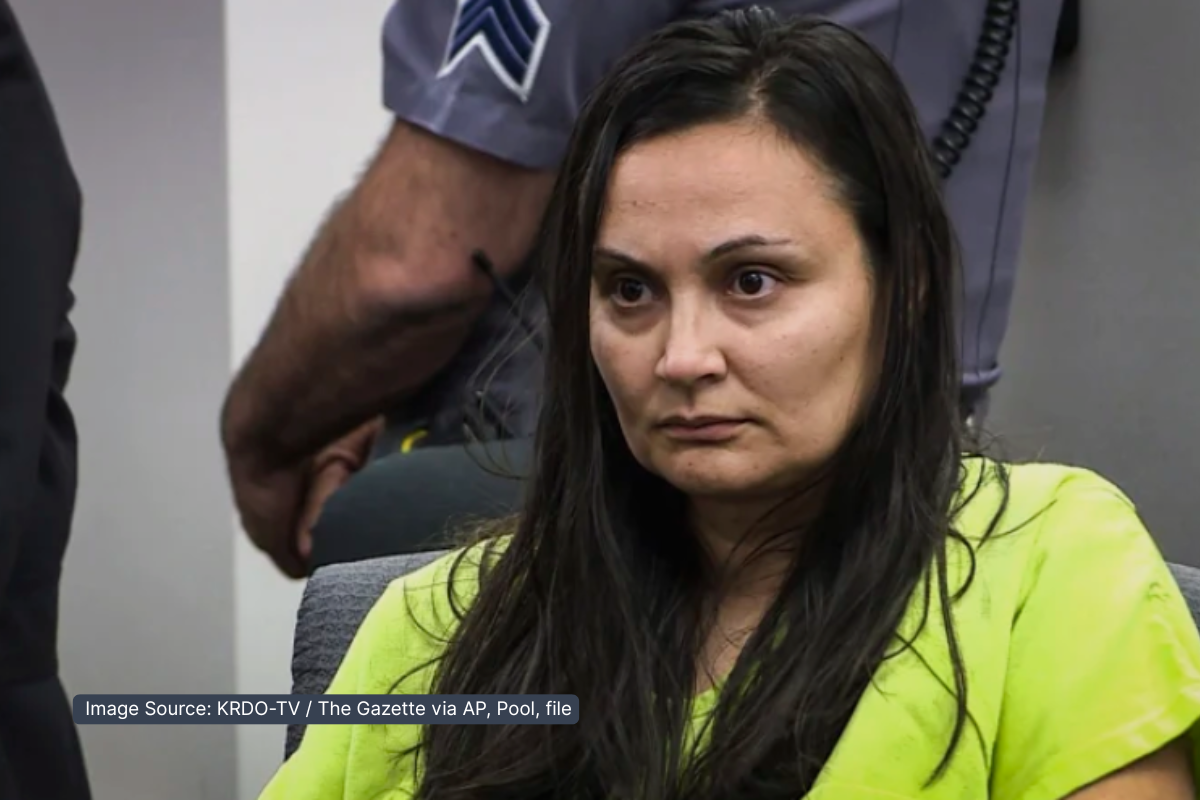
The conviction of Letecia Stauch—found guilty in April 2023 of murdering her 11-year-old stepson, Gannon Stauch—has been reversed.
Not because of new evidence. Not because she was found innocent. And not because the jury “got it wrong.”
It was reversed because the trial itself was legally flawed.
And in the American justice system, that matters more than anything else.
But at the heart of this case is Gannon Stauch—whose family now faces the painful reality of reliving this tragedy in court once again.
But at the heart of this case is Gannon Stauch—whose family now faces the painful reality of reliving this tragedy in court once again.
What Happened
At the center of the reversal is a single juror.
That juror had a family relationship to someone working in the prosecuting office—a connection that falls within Colorado’s clearly defined disqualification rules.
Under that rule, any juror related within a third degree—by blood, marriage, or adoption—to someone involved in the prosecution cannot serve.
No exceptions. No discretion. The relationship existed. That’s all the court needed.
The specific rules governing this are Colorado Revised Statutes Section 16-10-103 and Colorado Rule of Criminal Procedure 24(b).
Key Rules Regarding the Prosecution
Family/Marriage: A juror must be excused if they are related “within the third degree” by blood, adoption, or marriage to any attorney of record in the case.
The “Macrander” Rule: In Colorado, this rule is strictly interpreted. If the elected District Attorney is the one prosecuting, a juror is automatically disqualified if they are related to any deputy district attorney in that office, even if that specific deputy isn’t working on the case.
The “Third Degree” Rule
In Colorado law, a “third degree” relationship generally includes:
First degree: Parents and children.
Second degree: Grandparents, grandchildren, and siblings.
Third degree: Great-grandparents, great-grandchildren, aunts, uncles, nieces, and nephews.

Shop Our Merch!
Only Trial Junkies and True Crime Addicts will understand this merch: Courtroom Chaos, Media Frenzy, Forensic and LEO Series available in tees, hoodies, caps, totes, and mugs. Check them out!
What the Court Actually Said
The appellate court didn’t hedge its language. See: No. 23CA1067, People v. Stauch — Criminal Law — Structural
Error — Waiver — Invited Error; Juries — Juror Bias — Challenges for Cause — Peremptory Challenges
It found that the trial court committed structural error by allowing a legally biased juror to deliberate—an error so serious that reversal is automatic.
Under Colorado law, jurors with certain relationships to attorneys in the case are considered biased as a matter of law—meaning bias is presumed, not debated.
In this case, the juror’s son-in-law worked as a deputy district attorney in the very office prosecuting the case. That alone triggered mandatory disqualification.
As the court explained, the rule exists to preserve not just fairness—but the appearance of fairness, and the public’s trust in the system.
The state argued that the error shouldn’t undo the conviction—that the defense could have removed the juror or that the outcome wouldn’t have changed.
The court rejected those arguments outright.
Because when a biased juror deliberates, the law doesn’t ask whether the verdict was affected.
It assumes the entire process is compromised.
Not All Errors Are Equal—This Was a Structural Error
Most trial mistakes are evaluated under what’s called a “harmless error” standard: Did the error actually affect the outcome?
But this wasn’t that kind of error. This was a structural error—a category so serious that courts don’t even ask whether it changed the verdict.
Why? Because the problem isn’t just what the jury decided. It’s whether the trial itself can be trusted at all.
A jury that includes a legally disqualified member is not a properly constituted jury.
As the court put it, a juror in this category is “deemed as a matter of law to be biased—period.
And without a proper jury, there is no valid trial.
Shop Our Merch
Only Trial Junkies and True Crime Addicts will understand this merch: Courtroom Chaos, Media Frenzy, Forensic and LEO Series available in tees, hoodies, caps, totes, and mugs. Check them out!
What Happens Next?
The reversal doesn’t mean freedom. It means a reset.
The conviction is vacated.
The case returns to the trial court.
Prosecutors will almost certainly retry the case.
And this time, the jury will be properly qualified—removing any question about the legitimacy of the outcome.
Why the Court Doesn’t Care If the Juror Was “Actually Fair”
This is where public reaction often misses the mark. You’ll hear:
“What if the juror was unbiased?”
“The evidence was overwhelming anyway.”
But the law doesn’t work that way. It protects not just actual fairness—but the appearance of fairness. Because once you allow exceptions:
Bias becomes impossible to measure
Every case becomes subjective
Public confidence erodes
So the system draws a hard line. If the rule is violated, the verdict cannot stand.
It’s easy to look at a case like this—emotionally charged, deeply disturbing—and think “Why does this technicality matter?” But it’s not a technicality.
It’s a constitutional safeguard.
The same rules that protect a defendant in a high-profile murder case are the ones that protect everyone else in every other case.
If courts start bending those rules based on how bad the crime is—or how strong the evidence appears—then the system stops being fair. It becomes selective. And that’s exactly what the law is designed to prevent.
🔚 The Bottom Line
This case is a powerful reminder of something many people don’t fully understand:
A fair trial is not optional.
It is not flexible.
And it is not dependent on the severity of the crime.
Even in the most heartbreaking cases, the rules must be followed.
Because when they aren’t, the system doesn’t bend—It breaks.
Related Articles
What to Expect as the Luigi Mangione Trial Approaches
As the trial of Luigi Mangione approaches, one question continues to surface: What exactly is the defense going to argue? Because so far, there’s no dramatic declaration of innocence. No sweeping claim of mistaken identity. No “wrong man” narrative taking center...
Luigi Mangione Death Penalty Dropped, Reshaping Prosecution Strategy
A judge has removed the death penalty as a sentencing option in the case against Luigi Mangione, delivering a major win for the defense and significantly narrowing the scope of the prosecution. The ruling eliminates the most severe potential punishment Mangione faced...
Judge Garnett Warns DOJ: Public Comments May Violate Court Rules in Mangione Case
New York, September 24, 2025 — In a scathing order issued today, U.S. District Judge Margaret M. Garnett ruled that officials at the Department of Justice may have breached court rules by making public statements about Luigi Mangione’s case — statements that defense...