
Hold On a Minute: What Media Is Saying About Nick Reiner
An Op Ed: The Media Is Speed-Running a Defense That Hasn’t Been Proven - And Why?
There has been exactly two real developments in the Nick Reiner case: a change in attorneys and a new arraignment date set.
That’s it.
No evidence dump.
No discovery.
No probable cause affidavit released.
No forensic details confirmed on the record.
And yet somehow — overnight — the media now claims to know everything: the family’s private thoughts, Nick’s mental state, his medication history, his level of awareness, what Rob and Michele were doing at the time of the event, even what he allegedly believes about why he’s in jail.
When There’s No New Information, The Media Doesn’t Wait.
It fills the vacuum.
And that’s exactly what we’re watching right now.
“Direct Sources” Is Still Anonymous Speculation!
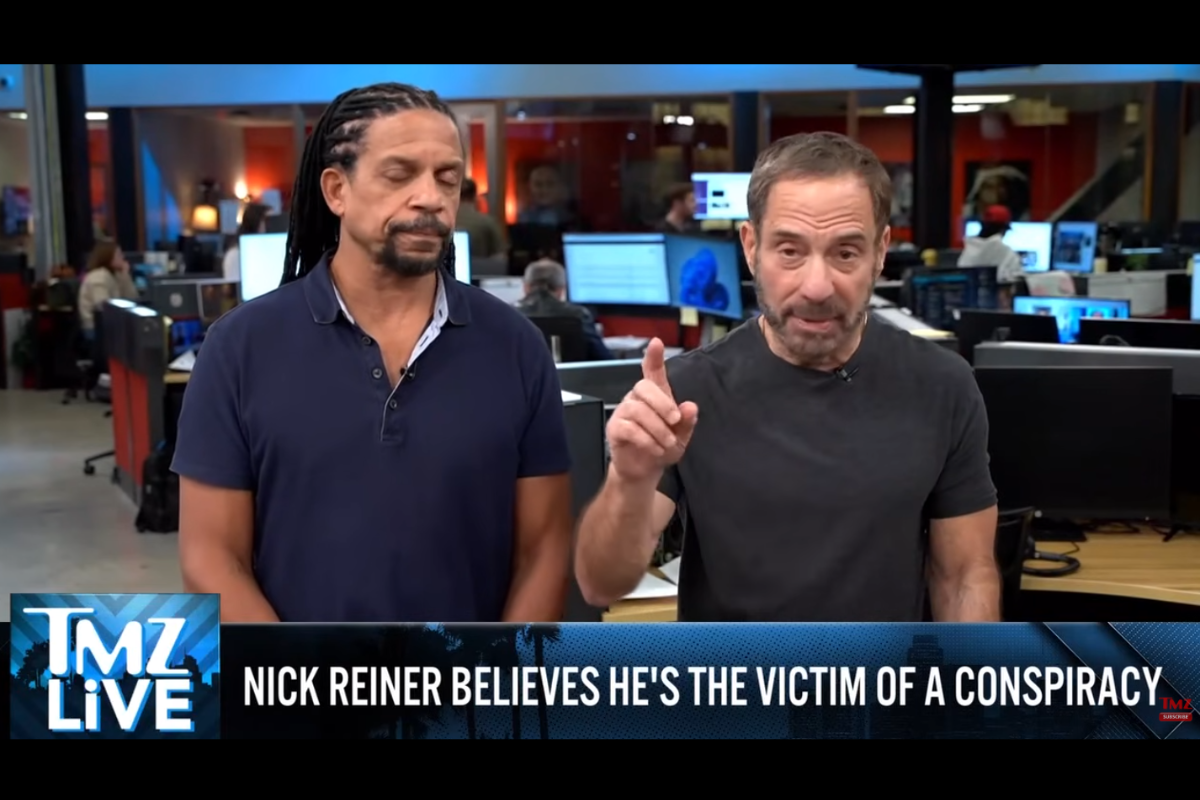
TMZ now says its reporting is based on “direct sources”, formerly known as “sources close to the family or the case”. Now it’s DIRECT sources, big and bold.
That sounds authoritative — until you ask the most basic question:
Direct how?
Direct to the family?
Direct to the defense?
Direct to law enforcement?
Direct to a third party who heard something secondhand?
If a source is truly direct and reliable, why can’t they be identified — even generically?
Why not “a defense team member,” “a treating clinician,” or “a law enforcement official”?
Because once you name the role, accountability enters the room.
“Direct sources” is not stronger than “sources close to the family.”
It’s just a rebrand.
And when anonymous leaks appear only in gossip outlets, not in court filings or sworn testimony, skepticism isn’t cynicism — it’s common sense.
Shop Our Merch!
Only Trial Junkies and True Crime Addicts will understand this merch: Courtroom Chaos, Media Frenzy, Forensic and LEO Series available in tees, hoodies, caps, totes, and mugs. Check them out!
The Alan Jackson Exit Is Being Misrepresented
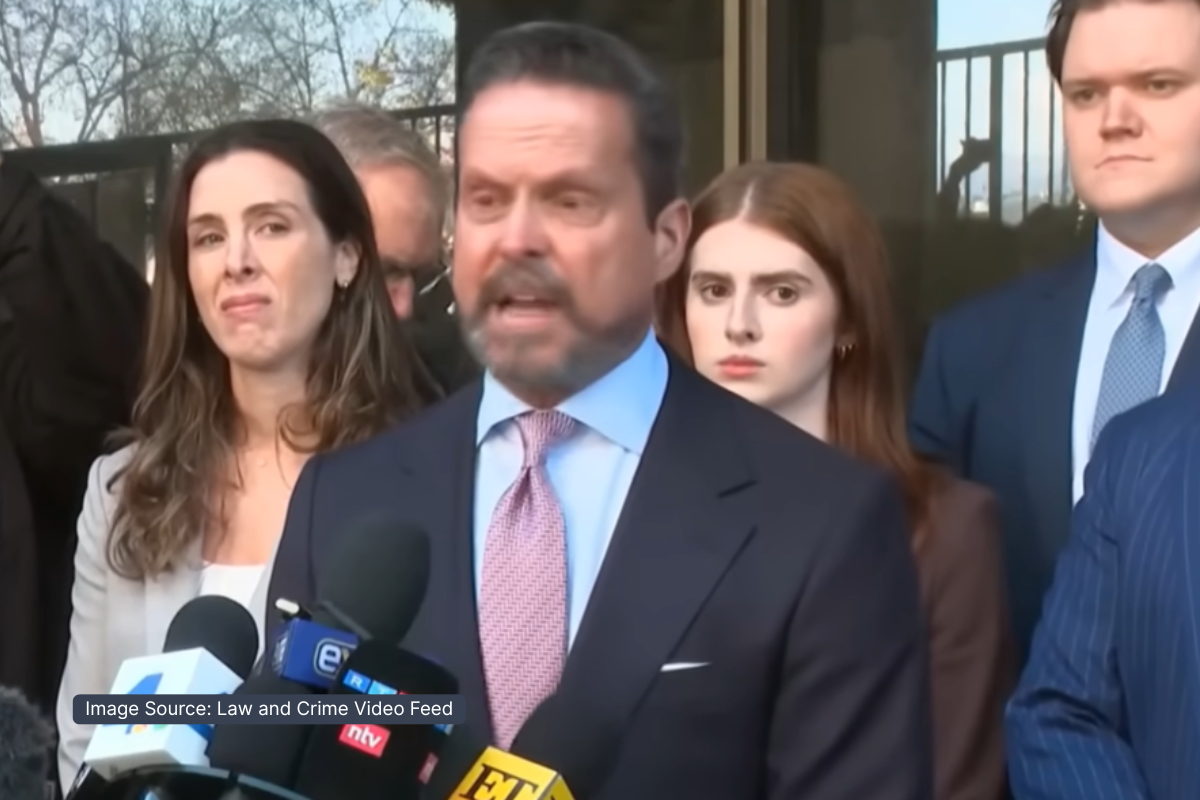
Much of this narrative hinges on the withdrawal of defense attorney Alan Jackson, with leaks now suggesting Nick was “impossible to defend,” “detached from reality,” or unable to assist counsel.
Here’s the problem:
That’s not how criminal procedure works.
Defense attorneys do not withdraw because a client is difficult, delusional, or uncooperative.
If a defendant truly cannot understand the proceedings or assist in their defense, that triggers a competency evaluation — not a media leak, and not a quiet exit.
If Nick believed there was a conspiracy against him and didn’t understand why he was incarcerated, that is not grounds for an attorney to quit. That is grounds for the court to intervene.
So either this characterization is exaggerated, OR the proper legal steps haven’t been taken, OR the narrative being circulated isn’t accurate.
What it is not is a valid explanation for why an attorney simply walks away.
Let’s Clear Up California Mental Health Law — Because It Is Important
A repeated claim online is that California is too lenient to intervene when someone becomes dangerous.
That is false.
California law allows involuntary psychiatric detention under what’s commonly known as a 5150 hold.
A person can be detained — without consent — for up to 72 hours if, due to a mental disorder, they are a danger to themselves, a danger to others, or gravely disabled.
This does not require a crime. This does not require the person’s agreement. And it is not rare. Law enforcement officers and designated clinicians use this authority every day.
So if Nick was “spiraling,” “increasingly dangerous,” “erratic and agitated,” and his family and doctors believed violence was a real risk, then California law already provided a mechanism to intervene.
That reality weakens — not strengthens — the claim that everyone was helplessly watching an inevitable tragedy unfold.

Shop Our Merch
Only Trial Junkies and True Crime Addicts will understand this merch: Courtroom Chaos, Media Frenzy, Forensic and LEO Series available in tees, hoodies, caps, totes, and mugs. Check them out!
About Twin Towers: Jail With Mental Health Services Is Still Jail
Nick is reportedly housed at Twin Towers Correctional Facility, which has been described in coverage as a mental health facility.
Let’s be precise. Twin Towers is a jail, operated by the Los Angeles County Sheriff’s Department. It is not a psychiatric hospital.
What it does provide:
psychiatric evaluations
medication management
crisis stabilization
mental health observation units
suicide watch protocols
What it does not provide:
long-term inpatient psychiatric treatment
intensive therapy
a therapeutic environment focused on recovery
Twin Towers manages symptoms. It does not resolve diagnoses. Being housed there does not mean someone is insane. It means the system is watching closely.
And importantly: If a defendant were found incompetent, court proceedings would pause and a transfer to a state hospital would likely follow.
That hasn’t happened.
The Medication Story Raises More Questions Than Answers
We’re now told Nick’s medication was changed due to weight gain, shortly before the murders. That explanation may sound benign — but it doesn’t resolve the contradictions.
If he was stable, why change medication?
If the change caused severe destabilization, why no emergency hold?
If he was dangerous, why was he attending social events?
If doctors feared violence, why was he not hospitalized?
Mental illness does not excuse logical gaps.
And leaking selective medical details — without naming a source — does not turn speculation into fact.
Insanity Is a Legal Standard, Not a Vibe
Under California law, an insanity defense requires that a defendant either: did not understand the nature of the act, or did not understand it was wrong.
Knowing one killed their parents, but claiming they didn’t “appreciate the seriousness” of it, is a very narrow argument — and one juries are famously skeptical of.
Most importantly:
Attorneys don’t decide guilt or insanity.
Producers don’t decide it.
Anonymous sources don’t decide it.
“Direct” sources don’t decide it.
Media doesn’t decide it.
A jury does.
TMZ Is Performing Certainty, Not Practicing Journalism
A roundtable discussion by TMZ staff is not a documentary. Studio lighting does not convert conjecture into evidence.
When outlets present guesses as conclusions, they don’t inform the public — they pre-load a defense narrative before the legal process even begins.
Shop Our Merch
Only Trial Junkies and True Crime Addicts will understand this merch: Courtroom Chaos, Media Frenzy, Forensic and LEO Series available in tees, hoodies, caps, totes, and mugs. Check them out!
What’s Being Misreported — and What the Record Actually Shows
❌ “Nick Reiner pleaded (or will plead) Not Guilty by Reason of Insanity at today’s hearing.”
✔ Reality: No plea of any kind was entered. The arraignment did not occur and was continued to February 23. In California, NGRI is a plea that may be entered at arraignment, but it is not required and is often added later with court permission.
❌ “The court found Reiner incompetent or ordered a mental health evaluation.”
✔ Reality: No competency motion was raised, no evaluation was ordered, and no finding of incompetence was made. Reiner waived arraignment on the record, indicating he was able to understand the proceeding at that time.
❌ “Alan Jackson withdrew because the family stopped paying him.”
✔ Reality: There is no evidence on the record to support this claim. Public Defender Kimberly Greene stated that her office learned of the substitution only the night before the hearing, had not spoken with the family, and that the family was not aware of the withdrawal in advance. These facts strongly undercut claims that the family orchestrated or financed the defense — or its termination.
❌ “The family was preparing a statement explaining why Alan Jackson withdrew.”
✔ Reality: The family issued only a brief, non-substantive statement and confirmed they were not aware of the defense withdrawal in advance. Public Defender Kimberly Greene explicitly stated the family had not been consulted.
❌ “The defense change was planned or strategic.”
✔ Reality: The Los Angeles County Public Defender’s Office learned of the substitution the night before the hearing and had minimal contact with Reiner prior to appearing in court. This points to a sudden, not coordinated, transition.
❌ “Insanity is now the confirmed defense strategy.”
✔ Reality: No defense strategy has been announced on the record. Assertions about an insanity defense are speculative and premature. Under California law, insanity is addressed only after a guilt phase if such a plea is formally entered.
❌ “The lack of courtroom footage indicates secrecy or a cover-up.”
✔ Reality: The hearing occurred pre-arraignment and involved counsel substitution and in-chambers discussions. While the absence of a live feed limits transparency, restrictions at this procedural stage are legally permissible.
Bottom line:
Much of the public narrative is running ahead of the court record. At this stage, the only verified developments are a change in counsel and a continued arraignment — not findings about mental health, pleas, or defense strategy.
Why This Case Is Being Treated Differently
There’s another question that deserves to be asked — and it has nothing to do with guilt or innocence. Why is the media suddenly so cautious, so sympathetic, so eager to explain this heinous act away?
In most homicide cases, the tone is very different. Arrest equals presumed guilt. The defendant is flattened into a villain, and due process becomes an afterthought. The media often behaves like a lynch mob long before a jury is ever seated. That isn’t happening here.
And it’s not because there’s no evidence. There is already substantial public evidence — enough that, in almost any other case, the outrage cycle would be fully engaged. So why the restraint? Because this case doesn’t fit the usual template.
This defendant is not anonymous. He comes from wealth, education, and proximity to power. His family is familiar, progressive, and culturally respected. Framing him as a simple monster would force an uncomfortable reckoning: that horrific violence can emerge from environments we instinctively see as “safe,” “enlightened,” or “like us.”
That story is unsettling. So the narrative shifts.
Mental illness becomes the soft landing. Medication changes become the explanation. Sympathy becomes the organizing principle — not because the act wasn’t heinous, but because accountability feels too destabilizing when the defendant doesn’t fit the usual profile.
This isn’t compassion. It’s narrative management. And it raises an uncomfortable but necessary question: Would this same patience exist if the defendant came from a different background?
Slow Down
The media is not a defense of Nick Reiner. It’s not a denial of mental illness. It’s not a verdict.
It’s a reminder that we don’t know yet — and pretending we do helps no one.
Justice doesn’t move faster because the internet wants closure. And speculation, no matter how confidently delivered, is still speculation.
Sometimes the most responsible thing to say is also the simplest:
Hold on a minute.
Related Articles
Nick Reiner Hearing: Defense Reset, Media Spin, and What Actually Happened
The January hearing in the Nick Reiner case produced more media noise than legal substance — and much of that noise was wrong. While some outlets rushed to frame the day as a dramatic turn toward an insanity defense, the courtroom record tells a more procedural,...
Nick Reiner: Schizophrenia or Narrative Shift?
In the earliest days of a high-profile criminal case involving son of Rob and Michele Reiner, Nick, narratives often solidify before facts are tested. Once that happens, speculation hardens into assumption—and assumption begins to masquerade as inevitability. That is...
Nick Reiner: Confirmed Facts, Media Speculation, and an Early Legal Framework
In the days following a high-profile arrest, early reporting often blends confirmed facts with assumption and speculation. The case involving Nick Reiner is no exception. While official information remains limited, public commentary is already accelerating. This...