
Lindsay Clancy Mistrial – Jurors Speak Out
Post-trial interviews reveal how jurors evaluated mental illness, expert testimony, reasonable doubt—and Lindsay Clancy herself.
What Convinced the Lindsay Clancy Jurors?
PLYMOUTH, Mass. – Five jurors have now explained their reasoning after the mistrial. Their interviews reveal how they viewed the evidence, the experts, Lindsay Clancy—and the lone juror who refused to agree.
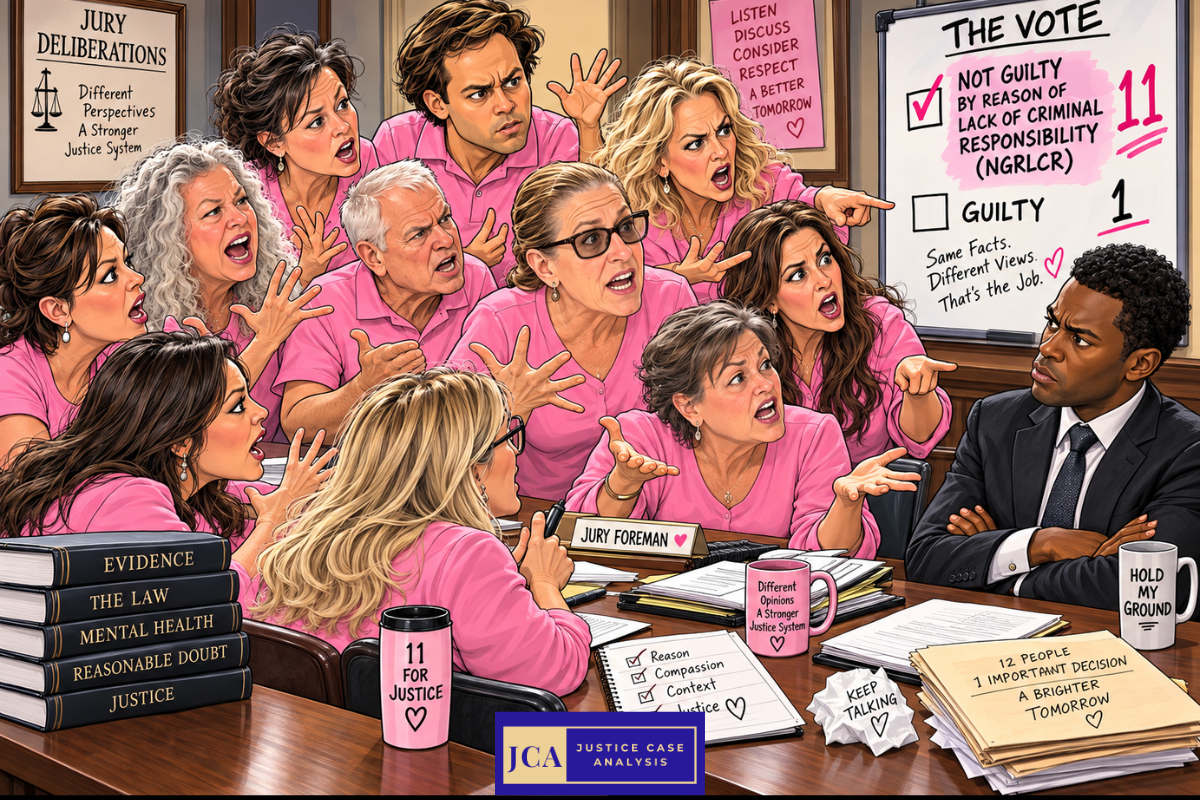
The Lindsay Clancy murder trial ended without a verdict. But the jury has certainly not remained silent. In the days following the mistrial, five jurors publicly discussed what happened during seven days of deliberations that ultimately ended 11–1, with the majority favoring a finding of not guilty by reason of lack of criminal responsibility.
Three female jurors appeared together: Kellie Farina, Paula Devlin and Foreman Roni Carlson. A fourth woman spoke anonymously in a separate interview. Then 25-year-old juror Nick Dargie became the first male juror to speak publicly.
Juror Paula Devlin subsequently appeared alone on CBS Mornings in three separate interviews, one with Gayle King, another with Shanelle Kaul, and WCVB, where she revealed additional information about the jury’s initial vote, identified what she considered particularly persuasive evidence, and disclosed previously unknown demographic details about the lone holdout. She also shockingly stated that the knife Clancy used to cut herself was “dull”.
Their interviews have given us an extraordinary glimpse inside a jury room.
We know who cried.
We know there were arguments, hugs, timeouts and even music when deliberations became too heated.
We know which lawyers some jurors liked.
We know which experts they disliked.
We know they believed Lindsay Clancy had been failed by the mental-health system.
We know they thought the lone holdout was wrong.
But after hours of interviews with five jurors, one question remains surprisingly difficult to answer:
What specific evidence convinced them that the Commonwealth failed to prove Lindsay Clancy was criminally responsible?
That is worth examining—not because eleven jurors were necessarily wrong, but because it was the question Judge William Sullivan actually instructed them to decide.
What Were the Jurors Actually Supposed to Decide?
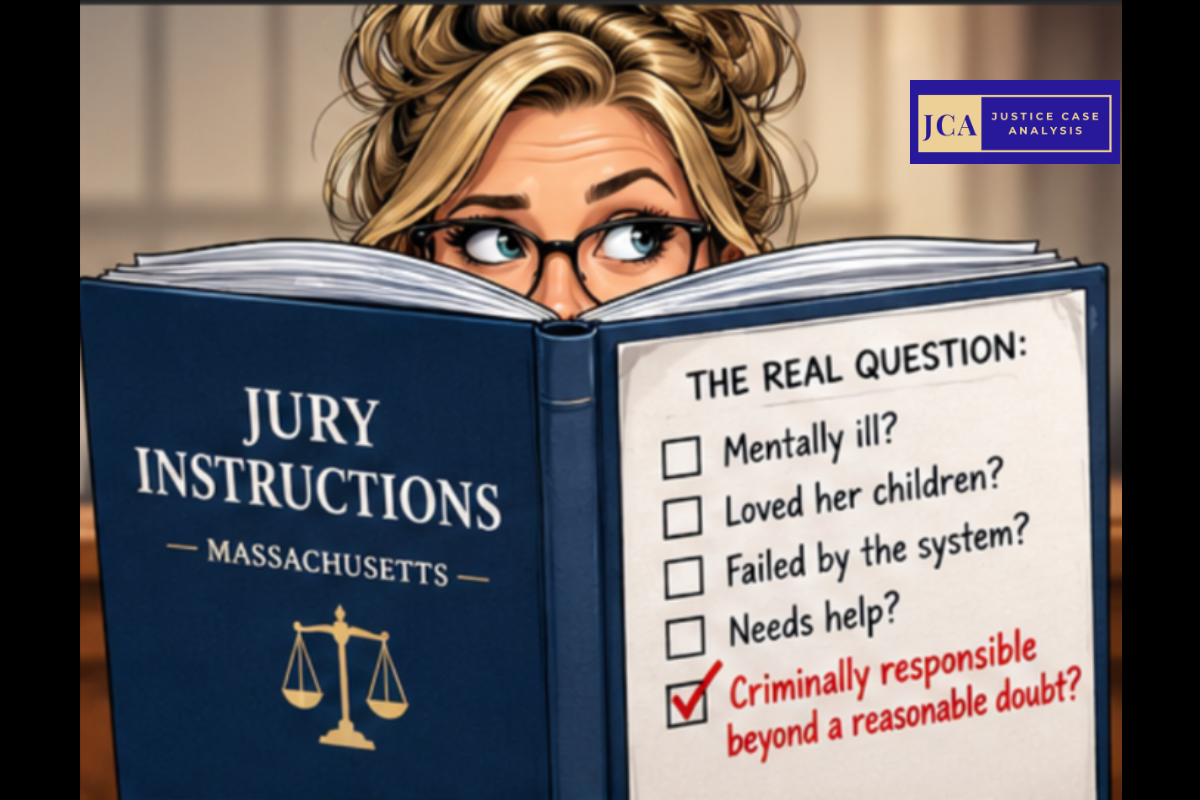 The central question was not whether Lindsay Clancy suffered from mental illness. It was not whether the healthcare system failed her. It was not whether she loved her children. And it was not whether treatment would be a better outcome for her than incarceration.
Judge Sullivan instructed the jury that before the Commonwealth could obtain a conviction, it first had to prove beyond a reasonable doubt that Clancy was criminally responsible when she killed her children. A person is not criminally responsible if, because of a mental disease or defect, she lacked substantial capacity either to appreciate the criminality or wrongfulness of her conduct or to conform her conduct to the requirements of law.
The burden belonged entirely to the Commonwealth. The Commonwealth could satisfy it by proving beyond a reasonable doubt that Clancy did not suffer from a qualifying mental disease or defect at the time of the killings—or, even if she did, that she retained the legally required capacities.
Mental illness did not automatically equal lack of criminal responsibility. Psychosis did not automatically equal lack of criminal responsibility. And expert testimony was not a vote.
Judge Sullivan instructed the jurors to consider all the evidence, including the facts underlying the crimes, Clancy’s actions before and after them, and the expert opinions at whatever weight the jury believed those opinions deserved.
The distinction matters enormously when we compare those instructions with what jurors have said afterward.
“She Loved Her Children, So She Had to Have Snapped”
One of the most striking statements in the first three-juror interview came while the women were discussing Clancy’s mental state. One juror explained:
“Everything proved that she loved her children. So, she had to have snapped and not known what she was doing. To me, that it was proof she didn’t know what she was doing.”
 There was certainly abundant evidence that Lindsay Clancy loved her children. Even the Commonwealth’s experts did not dispute that. But loving one’s children does not itself establish that a person lacked substantial capacity to appreciate wrongfulness or conform her conduct to the law. That was precisely where the competing experts came in.
The question was not simply whether something had gone catastrophically wrong with Clancy. Obviously, something had. The legal question was what had gone wrong with her mind, and what effect did it have on her capacities during the killings?
Paula Devlin Later Identified the Evidence That Persuaded Her
Devlin’s subsequent solo appearance on CBS Mornings is important because interviewer Gayle King finally asked one of the questions largely missing from the earlier interviews:
“Was there specific evidence that swayed you?”
Devlin identified Dr. Phillip Resnick. She said Resnick’s testimony concerning altruistic filicide was “really impactful.” Her explanation, however, again returned heavily to Clancy’s identity as a mother. Devlin recalled that witness after witness described Clancy as an excellent mother who loved her children. She remembered photographs of the Clancy home and said that everywhere the jurors looked, “there was just love.”
She even remembered a sign in the home reading It’s a Wonderful Life.
Then, she said, Resnick provided “a real reason why all of a sudden this could happen.” That is much more informative than simply saying the defense experts were more believable. It tells us something about the evidentiary chain Devlin followed:
Loving mother → apparently inexplicable killings → Resnick’s explanation of altruistic filicide.
But it still raises the central legal question. Did altruistic filicide explain why Clancy killed the children? Did it establish that she was psychotic? Or did it establish that, because of a mental disease or defect, she lacked one of the capacities required for criminal responsibility? Those propositions overlap, but they are not identical.
Patrick and Susan Clancy Also Mattered
Devlin told King that Patrick Clancy’s refusal to say anything derogatory about his former wife was “very impactful.” She believed prosecutors tried to nudge Patrick toward saying something negative about Lindsay, but he would not. Even after losing all three children, Devlin observed, Patrick still would not portray Lindsay as a bad person.
Nick Dargie similarly told ABC that Susan Clancy’s testimony supporting her former daughter-in-law moved him. ABC reported that Dargie found the defense experts more believable and the prosecution’s case inconsistent. Again, these were pieces of evidence the jurors were entitled to consider. But they principally established something that was barely disputed:
Lindsay Clancy had been a loving mother. That fact made the killings profoundly difficult to understand. It did not, by itself, answer the legal question of criminal responsibility.
What Happened to the Commonwealth’s Experts?
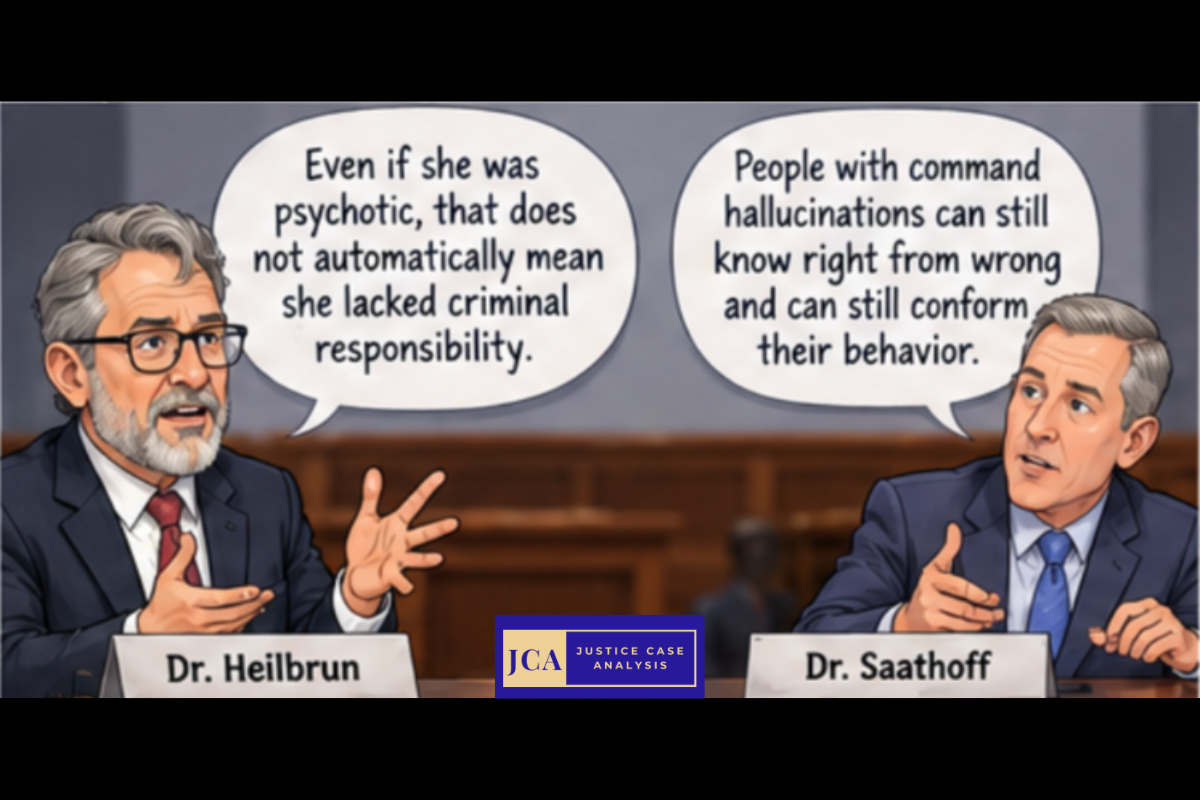
This is where the post-trial interviews become particularly interesting. Dr. Kirk Heilbrun testified that psychotic symptoms—including command hallucinations—do not necessarily eliminate a person’s knowledge, understanding or self-control. They can. But they don’t automatically do so. A person experiencing a command hallucination may still resist it or retain behavioral control.
Dr. Gregory Saathoff similarly testified that a person can experience psychosis while still knowing right from wrong and retaining the ability to conform behavior to law. And Saathoff ultimately gave a direct opinion: Clancy possessed the capacity to appreciate right from wrong.
The Commonwealth also pointed to her behavior before the killings, including the CVS and restaurant searches, the arrangements that resulted in Patrick leaving the house, her interactions with him and her behavior surrounding the crimes. Judge Sullivan specifically instructed jurors that they could consider Clancy’s conduct before and after the killings in deciding criminal responsibility.
The jurors were completely entitled to reject Heilbrun and Saathoff. The question is:
Why did they reject them?
“They Had to Pause So Often”
In the first three-juror interview, the women criticized some prosecution experts partly because of how they testified. One juror, a former special-education teacher, compared their pauses before answering questions to the “wait time” she gave students. The pauses made her less confident in the testimony.
Another juror interpreted the hesitation as though the doctors were trying to determine how to answer rather than simply giving facts. There is nothing inherently improper about considering demeanor. Judge Sullivan specifically instructed jurors that demeanor, frankness, memory and the reasonableness of testimony could be considered in evaluating credibility. But pauses are capable of multiple interpretations.
A forensic psychiatrist testifying under oath in a triple-murder trial while being aggressively questioned may pause because he is unsure. He may also pause because he is being extremely precise. The more interesting question is what the jurors thought about the substance of the opinions.
What did Heilbrun get wrong? What did Saathoff get wrong? Which assumptions underlying their opinions did the jurors reject? Those are the questions the interviews have rarely pursued.
The “Medical BS” Problem
The first interview produced another remarkable comment. Discussing Reddington’s presentation, a juror expressed appreciation that he did not prolong the case with “a bunch of more medical BS.” Yet the “medical” evidence wasn’t peripheral to this trial. It WAS the trial.
Clancy admitted killing her children. The central disputed issue was her mental condition and its legal consequences. That required the jury to evaluate competing psychiatrists, psychologists, treatment providers, medical records, medications, diagnoses and retrospective forensic evaluations. Calling that material “medical BS” doesn’t establish that the juror failed to consider it. But it certainly begs the question:
Which medical evidence did the jurors accept, which did they reject, and why?
The Medication “Cocktail”
The jurors also repeatedly described Clancy as having been subjected to a bewildering “cocktail” of medications. There is truth beneath that description: Clancy underwent numerous medication trials and changes during a relatively short period.
But the trial evidence was considerably more complicated than a long list of drug names.
A medication prescribed at some point was not necessarily a medication being taken simultaneously with every other prescription.
The toxicology evidence created still more questions because several substances were detected after the killings, including drugs that were not part of Clancy’s then-current treatment plan.
The relevant questions therefore included what was prescribed, what was actually taken, what was authorized at the time, what remained detectable in her blood and what effect—if any—the substances had on her mental state.
The shorthand “cocktail” risks collapsing all of those questions into one emotionally powerful image.
The Juror Who Changed Her Mind and Nick Dargie
The anonymous fourth juror provides perhaps the clearest example of how complicated the majority’s reasoning became. She began deliberations believing Clancy was guilty and criminally responsible. She later changed her vote.
Part of her explanation was evidentiary. She described too much “gray area” and said the prosecution lacked a figurative smoking gun. But she also explained:
“Eventually I just felt like the only way to get justice … was to get her the help that she desperately needed.”
That deserves careful treatment. The juror also explicitly discussed reasonable doubt. It would therefore be unfair to claim that she changed her vote solely because she wanted Clancy to receive treatment. But her desired outcome plainly appears in her own explanation of her decision.
And that is not quite the question Sullivan assigned the jury.
Treatment or Criminal Responsibility?
Judge Sullivan actually told the jury what could happen after an NGRLCR verdict. The Commonwealth could seek Clancy’s commitment to a mental-health facility, with continuing judicial review, potentially for a very long period. So jurors were not forbidden from knowing that an NGRLCR verdict could result in psychiatric treatment rather than ordinary incarceration.
But Sullivan immediately emphasized that their decision had to be based solely upon the evidence and the law. Their task wasn’t:
Which outcome would be better for Lindsay Clancy?
It was:
Did the Commonwealth prove criminal responsibility beyond a reasonable doubt?
But even more important after Devlin’s second interview:
Asked what justice for Lindsay would look like, Devlin answered that it would mean a finding of not responsible, getting Clancy the help she needed and creating greater awareness of postpartum mental-health problems.
Devlin also said she did not feel good about Reddington’s request that the judge now enter a finding of not guilty, explaining that the jurors wanted justice for the children too. Those are deeply human considerations. But they illustrate how easily two different questions can become intertwined:
What did the law require? and What outcome felt most just?
Nick Dargie: “Once We Laid Out All of the Evidence”
Nick Dargie provides a somewhat different perspective. Dargie, 25, told ABC that after the jurors “laid out all of the evidence,” everyone gradually came onto the same page except the eventual holdout. He found the prosecution inconsistent and the defense experts more believable. That sounds much more explicitly evidence-focused. Unfortunately, the interview stopped just where it became most interesting.
What evidence?
Which defense expert persuaded Dargie?
What part of the Commonwealth’s case was inconsistent?
What did he think about Heilbrun’s analysis?
Saathoff’s?
The timing?
The alleged command hallucination?
Clancy’s behavior before and after the killings?
ABC didn’t ask. That omission becomes particularly striking because Dargie’s principal criticism of the holdout was precisely his alleged inability to identify evidence supporting his position. Dargie said:
“There was several times I would ask him to show us like evidence or … describe a witness testimony that helped to prove what he was saying. And he couldn’t.”
That’s a fair question to ask another juror. It would have been an equally useful question to ask Dargie.
Show us the evidence supporting yours.
The Exercise Band
Dargie also described one of the most unusual moments we’ve heard about from deliberations. According to him, the holdout removed one of the admitted exercise bands from its evidence bag, wrapped it around an empty water bottle and pulled it tight. Dargie was shocked. He characterized the behavior as “playing detective” and said:
“That’s a band that was used to strangle a child. It’s disgusting.”
It is certainly disturbing. But Dargie couldn’t clearly explain what the holdout was trying to determine. The physical use of the bands had been the subject of trial testimony. Jurors were entitled to inspect admitted exhibits and evaluate their weight. Whether using an unrelated water bottle transformed that examination into an improper jury-room experiment is a more complicated legal question and cannot be resolved simply from Dargie’s brief account.
His emotional reaction, however, is interesting. Other jurors had similarly complained about the volume of graphic evidence, particularly autopsy photographs. That reaction is completely understandable. No ordinary person wants to repeatedly confront the physical reality of three murdered children.
But it raises an uncomfortable question:
Once some jurors accepted that Clancy killed the children while mentally ill, did the physical details of the killings begin to seem unnecessarily gruesome rather than potentially relevant evidence?
We cannot know. But Judge Sullivan expressly told them they could consider the facts underlying the crimes and Clancy’s behavior before and after them in deciding criminal responsibility. Dargie criticized the holdout for failing to examine or identify evidence. Yet during this particular episode, the holdout was—quite literally—examining the evidence.
Kevin Reddington's Effect on the Jury
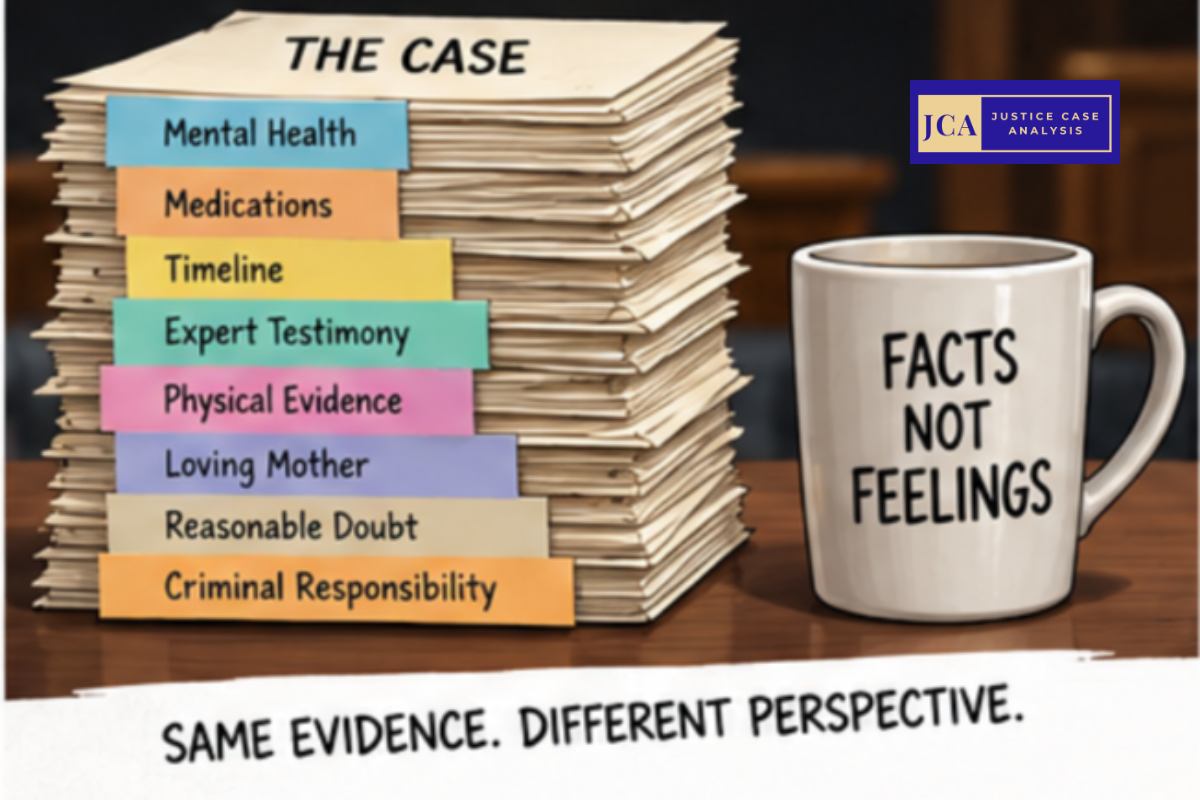 The first three jurors were remarkably candid about their reaction to defense attorney Kevin Reddington. They described him as entertaining, compassionate and “fun to watch.” One said: “If I needed a lawyer, I would call him.”
Another recalled the emotional effect of watching Reddington reach over and hold Clancy’s hand. At the same time, jurors described the prosecution as harsh, cold and lacking compassion. Again, none of this proves that anyone decided the case because they liked one lawyer and disliked another. But Sullivan specifically anticipated this danger.
The judge instructed jurors not to be influenced by personal likes or dislikes toward any party or attorney. The contrast between the jurors’ descriptions of the two sides therefore deserves attention. Reddington didn’t merely present psychiatric evidence effectively. He appears to have made Lindsay Clancy emotionally understandable to this jury.
That is excellent advocacy. It is also separate from whether the Commonwealth met its burden.
Personal Mental-Health Experiences Entered the Jury Room
The first interview revealed something else that deserved much more follow-up. Jurors discussed their own personal experiences with mental health during deliberations. One explained:
“There were many of us on the jury who have experienced mental health… so we shared our own personal stories.”
Jurors are human beings. They do not erase their lives when they enter a jury room, and Judge Sullivan specifically instructed them to use reason and common sense. But there is an important difference between using ordinary life experience to evaluate evidence and introducing one’s own specialized experiences as a substitute for evidence.
The interview never established which happened here. Were these personal stories shared as emotional support during an extraordinarily difficult trial? Were they analogies used to understand Clancy? Did they influence how jurors evaluated psychosis? We don’t know.
The interviewer didn’t ask.
Was the Holdout Really a “Rogue Juror”?
The first three jurors described the holdout in extraordinarily negative terms. He was arrogant. He wouldn’t listen. He wouldn’t engage. He allegedly acknowledged reasonable doubt but refused to vote NGRLCR.
When interviewer Sue O’Connell asked whether he was a “rogue juror,” foreperson Roni Carlson agreed. But the anonymous fourth juror provided more nuance. She described “big personalities” in the room and acknowledged that the majority began trying to sway the eventual holdout relatively early. She still believed he ultimately failed to properly apply reasonable doubt, but she was less dismissive of the difficulty of being the dissenter.
Then Paula Devlin’s second interview added another important fact. The jury did not begin 11–1. According to Devlin, the initial division was 8–2–2: eight leaning toward lack of criminal responsibility, two undecided and two favoring guilt. At another stage, it was 10–2.
Devlin acknowledged how difficult it became for those two jurors when the discussion increasingly focused on them: “They felt attacked.” She explained that when everyone is looking toward you and you must continually defend yourself, “it’s a hard thing to do.”
That is substantially more complicated than a story about one irrational juror who entered deliberations determined to convict.
And Now We Know What Troubled the Holdout
Devlin’s CBS interview finally provided one of the clearest descriptions yet of the holdout’s actual reasoning. According to Devlin, he struggled with Clancy’s apparently coherent behavior surrounding the killings. He could not reconcile how she could perform the acts sequentially and then take the steps she did in attempting suicide while simultaneously being so psychotic that she lacked criminal responsibility.
Because whether one agrees with his conclusion or not, that was not an irrelevant question. The Commonwealth’s experts addressed behavioral control. The prosecution relied heavily on Clancy’s actions before, during and after the killings. And Sullivan specifically instructed jurors that such conduct could be considered.
Perhaps the holdout gave that evidence too much weight. Perhaps the other eleven gave it too little. But his concern was connected to evidence the jury had been instructed to evaluate. That makes the “rogue juror” label considerably less satisfying.
What Did “Reasonable Doubt” Mean in That Jury Room?
Several jurors have said the holdout “admitted” reasonable doubt. Dargie remembers him saying: “I don’t know if the prosecution or the defense proved their case.” That statement is interesting because the defense did not have to prove its case. Sullivan repeatedly instructed the jury that Clancy had no burden to prove lack of criminal responsibility.
If the holdout literally believed both sides carried equivalent burdens, that would be a misunderstanding of the law. But colloquial speech during deliberations isn’t a legal transcript.
“I don’t know if the defense proved its case” could simply mean I wasn’t persuaded by the defense’s explanation. Likewise, saying one has “doubt” is not necessarily identical to saying one has legal reasonable doubt about criminal responsibility. We don’t know exactly what he meant. And therein lies the problem.
We have now heard multiple jurors tell us what the holdout thought. We still haven’t heard the holdout tell us what he thought.
Then Paula Devlin Revealed Some Interesting Things
The Medication Evidence May Not Have Been Clear to the Jury
Devlin’s latest interview also provides an important clue about how the jury processed Clancy’s complicated medication history. She explained why jurors asked to see the two bags of prescription bottles during deliberations:
“They would talk about all these pills so fast and we’re trying to take notes and you don’t know how to spell things and you’re just trying to see how they were prescribed and what there was.”
That admission is significant. The trial included a long list of medications, but the list itself could easily create a misleading impression without a clear chronology. Clancy was prescribed numerous psychiatric medications over several months, but they were not all prescribed simultaneously, some were stopped after only days, some were replaced by others, and the medications detected in her toxicology did not perfectly correspond with her authorized treatment regimen at the time of the killings.
Devlin’s comment suggests the jurors were still trying during deliberations to reconstruct something fairly fundamental: Which medications had Clancy actually been prescribed, when was she supposed to be taking them, and how did they fit together? JCA Wrote about this.
The jurors later repeatedly described Clancy as being subjected to a “cocktail” of medications. But without a clear timeline, many medication names can easily become many medications taken at once—two very different propositions.
The jurors were not responsible for creating the Commonwealth’s presentation. If the medication history was important to the prosecution’s theory, it was the Commonwealth’s job to make that evidence understandable. A simple visual timeline showing when each drug was started, stopped, replaced or tapered—[JCA DID THIS!] and separately identifying what was actually detected in Clancy’s blood on January 24—might have made an extraordinarily complicated record much easier to evaluate.
Instead, according to Devlin, jurors were trying to reconstruct that history themselves from handwritten notes and two bags of pill bottles.
Another interesting comment is that, when asked what they discovered when examining the knife, Devlin responded “It was dull.” Did Devlin consider that use of a dull knife to harm onself would not be very effective.
CBS Mornings interview with Gayle King
Devlin’s CBS Mornings interview took the public discussion in a very different direction. Gayle King asked about the racial composition of the jury. Devlin said there was only one person of color.
King asked whether that person was male.
Yes.
Then whether the holdout was that person.
Yes.
King clarified:
“A Black man is the holdout juror?”
Devlin again answered yes.
King responded:
“Well, I have to sit with that for just a second.”
Near the end of the interview, King returned to the subject, saying she was “very fascinated” to learn that the holdout was a Black man and asking Devlin for his approximate age. Devlin estimated that he was in his 30s.
Whatever significance anyone attaches to his race—or doesn’t attach to it—this changed the situation in another way. An anonymous juror had now been publicly narrowed to a very specific demographic description: the only Black juror, male, approximately in his 30s.
And the holdout still had not spoken for himself.
The Story Then Moved From His Reasoning to His Personal Life
Soon afterward, NBC10 Boston’s investigative unit reported on the anonymous holdout’s personal background. NBC reported finding a history of domestic-violence allegations, an active restraining order and a pending eviction matter involving unpaid rent. The station said it relied on court documents and interviews with family members and framed the report as raising questions about how the juror had been selected.
JCA is deliberately NOT republishing his name or photograph here. They are not necessary to examine the issue. The more important point is that by this stage, the public conversation had changed dramatically. Initially, this man was an anonymous juror whose fellow jurors publicly criticized his reasoning. Then his race, sex and approximate age became public.
Then reporters investigated his court history and personal circumstances. His identity was subsequently published elsewhere. Yet the public still had not heard his explanation of the verdict he wanted to return.
A Background Investigation Is Not the Same as an Explanation of His Vote
There may be legitimate questions concerning jury selection. If a juror failed to truthfully answer a material voir dire question, that could be significant. If the information was never requested or was legally irrelevant to qualification, that is something different. Those questions should be answered from the actual jury-selection record—not by working backward from an unpopular vote.
A past allegation, restraining order, financial dispute or eviction proceeding does not tell us whether a juror correctly understood Massachusetts criminal-responsibility law. Nor does it tell us how he evaluated Heilbrun, Saathoff or Resnick. It doesn’t tell us what he thought the exercise band demonstrated. It doesn’t explain how he interpreted Clancy’s behavior during those crucial minutes. And it certainly doesn’t establish that his vote was illegitimate.
Those are different questions.
The One Interview We Still Don’t Have
That leaves an extraordinary imbalance. Five majority jurors have spoken publicly.
We know their complaints about the holdout.
We know their interpretations of his words.
We know what they say he did with an exercise band.
We know they believed he acknowledged reasonable doubt.
We know what they thought about his demeanor.
We know his race.
We know his approximate age.
And now the public knows details about his personal and legal history.
What we don’t know is the most important thing: Why did he believe Lindsay Clancy was criminally responsible?
Perhaps his explanation would be indefensible. Perhaps he misunderstood reasonable doubt. Perhaps he misunderstood the burden of proof. Perhaps he was immovable for reasons having little to do with the evidence. All of those possibilities remain.
But there is another possibility. Perhaps he listened to the same conflicting experts, considered the same circumstantial evidence and simply reached a different conclusion.
Until he speaks, we don’t know.
Eleven Jurors Can Be Wrong. So Can One.
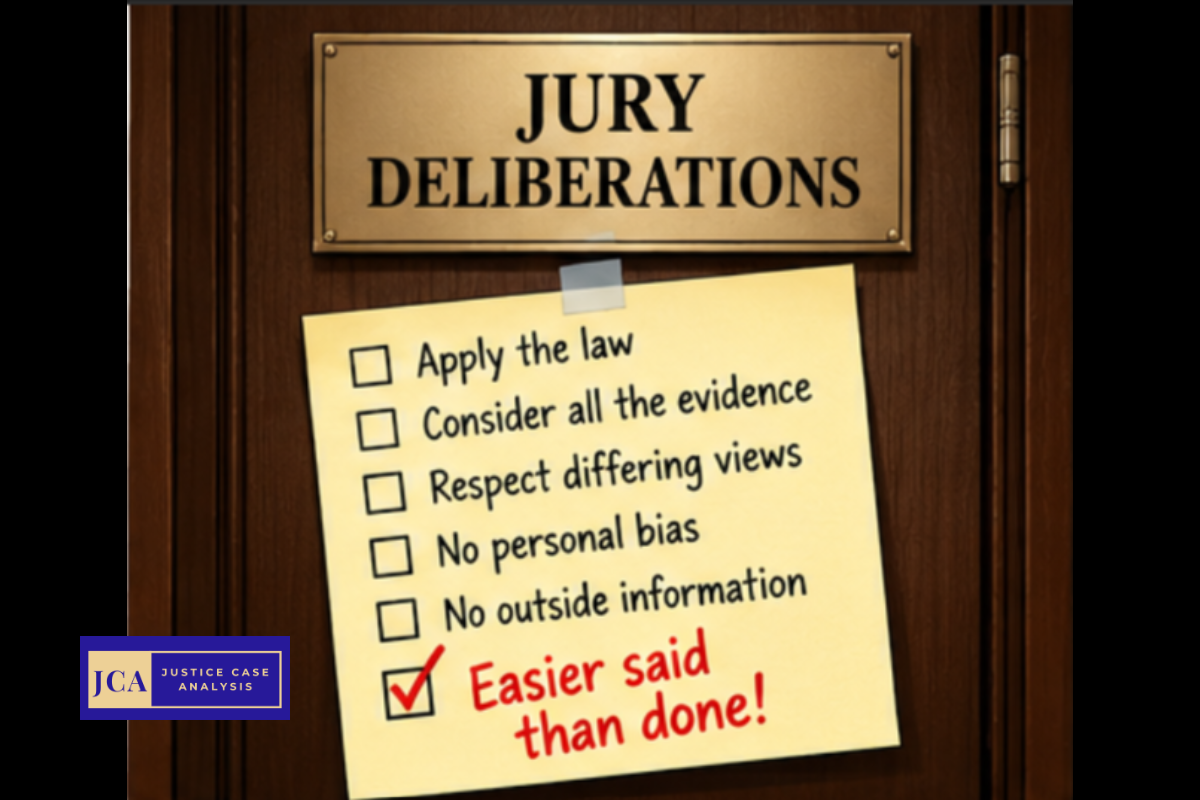 That is precisely why the unanimity requirement matters. The three women said afterward that Massachusetts should consider majority verdicts. It is easy to understand why. They spent seven days trying to reach unanimity and came within one vote.
But imagine the numbers reversed. Imagine eleven jurors favored conviction and one believed the Commonwealth had failed to prove criminal responsibility beyond a reasonable doubt. Would an 11–1 guilty verdict seem equally desirable?
The unanimity requirement protects the dissenter regardless of which side the dissenter favors. Judge Sullivan’s final instructions anticipated exactly this problem.
He told jurors: “Don’t be afraid to change your own opinion if the discussion persuades you that you should.”
But he immediately added: “Don’t come to a decision simply because other jurors feel it’s the right decision. It’s your decision. Each of you must decide this case for yourselves.”
That instruction protected the two jurors who changed their minds. It also protected the one who didn’t.
So What Convinced the Eleven?
After all of these interviews, we finally have pieces of an answer.
For Paula Devlin, Resnick’s altruistic-filicide testimony was particularly powerful. So was the overwhelming evidence that Clancy loved her children and the continued support of Patrick and Susan Clancy.
For the anonymous juror who changed her vote, reasonable doubt and perceived gaps in the Commonwealth’s case mattered—but so did her belief that justice meant getting Clancy the help she needed.
For Dargie, the defense experts were more believable and the prosecution seemed inconsistent. But his interview never identified the specific testimony that resolved the legal question for him.
The first three women emphasized Clancy’s loving motherhood, failures in her medical care, medication history, their negative impressions of prosecution witnesses and their admiration for Reddington. Those are real explanations. But they still leave important questions.
What did the majority do with Heilbrun’s testimony that psychosis and command hallucinations do not necessarily eliminate self-control?
What did they do with Saathoff’s opinion that Clancy retained the capacity to appreciate right from wrong?
What did they make of the timing?
The purposeful behavior?
The varying accounts of the command voice?
The conduct immediately before and after the killings?
Which portions of that evidence did they reject?
And why?
Those are the questions I wish reporters had asked more often.
The Diagnosis Was Never the Verdict
Before the mistrial, I wrote about whether this jury understood Judge Sullivan’s instructions. At the time, there was no way to know. I wrote then that it was entirely possible all twelve understood the instructions perfectly and simply disagreed about what the evidence proved.
That remains possible. But now we know more.
We know that compassion mattered.
We know Clancy’s identity as a loving mother mattered.
We know the failures of the mental-health system mattered.
We know attorneys’ demeanor mattered.
We know expert presentation mattered.
We know some jurors’ own experiences with mental health entered the deliberation room.
We know at least one juror considered what kind of outcome would get Clancy help.
And we know the holdout focused heavily on the sequence and apparent coherence of Clancy’s actions—evidence the Commonwealth argued demonstrated retained capacity.
None of those facts tells us who was right. But they do reinforce something that was true throughout this trial: The diagnosis was not the verdict.
The existence of mental illness, the number of medications, the failure of the mental-health system, the brutality of the killings, and whether a juror was sympathetic, unlikeable, articulate, stubborn, wealthy, poor, admirable or personally troubled was not the verdict either.
The legal question was narrower: Did the Commonwealth prove beyond a reasonable doubt that Lindsay Clancy was criminally responsible when she killed Cora, Dawson and Callan? Eleven jurors ultimately believed it did not. One believed otherwise.
And after everything that has been said about him since the mistrial, perhaps the most important voice in this story is now the only one we still haven’t heard.
The Holdout Has Now Become a Story of His Own
What began as a disagreement inside a Massachusetts jury room has now developed into something much larger.
After several majority jurors publicly criticized the lone holdout, his demographic characteristics became public and media organizations began investigating his personal history. His identity and photograph were subsequently published elsewhere. I will not republish either here because neither is necessary to examine his conduct as a juror or the evidence he apparently found persuasive.
Now, public support has begun organizing around him.
A GiveSendGo fundraiser titled “Stand With the Juror” has been established by a third party. At the time of this writing, it had already raised more than $59,000 toward a $100,000 goal, with the organizer saying the money is intended to cover potential security, legal expenses and lost work. The fundraiser itself takes a decidedly pro-holdout and anti-Clancy position; its existence and rapidly growing donations nevertheless demonstrate how far the controversy surrounding this anonymous juror has spread beyond the courtroom.
Related Articles
Lindsay Clancy Murder Trial: Beyond Reasonable Doubt. vs. Reasonable Doubt
Related Articles Related
Lindsay Clancy Jury Deadlock: Did Jurors Understand the Instructions?
PLYMOUTH, Mass. – After days of deliberations and two messages informing Judge William Sullivan that they have been unable to reach a unanimous decision, the twelve jurors deciding the fate of Lindsay Clancy are clearly struggling to agree. But what, exactly, are they...
Lindsay Clancy: Prison or State Hospital? Placement After the Verdict
PLYMOUTH, Mass. - As the jury deliberates the fate of Lindsay Clancy, much of the public discussion has understandably centered on two dramatically different possibilities: prison or a psychiatric hospital. But what would either outcome actually mean? The answer is...