
Death Row Inmate Christa Pike Survives Two Rounds of Lethal Injection in Tennessee
Christa Pike Transported to Hospital in a Failed Execution Attempt Last night - Tennessee Halts Executions and Orders an Independent Investigation
NASHVILLE, TN – Christa Gail Pike, 50, survived an attempted execution by lethal injection at Tennessee’s Riverbend Maximum Security Institution on September 30, 2026, after reportedly receiving two rounds of pentobarbital. Following an extended procedure during which witnesses reported that Pike remained alive and audibly breathing, the execution was abandoned, and she was transported to an outside hospital for medical treatment.
Tennessee Governor Bill Lee subsequently ordered an independent third-party investigation and suspended the state’s remaining scheduled execution for 2026.
The incident marks Tennessee’s second unsuccessful execution attempt in approximately four months, following the May 2026 execution attempt of Tony Von Carruthers, which was abandoned after officials were unable to establish the required intravenous access.
As of the morning of October 1, Pike’s precise medical condition, level of consciousness and prognosis have not been publicly confirmed.
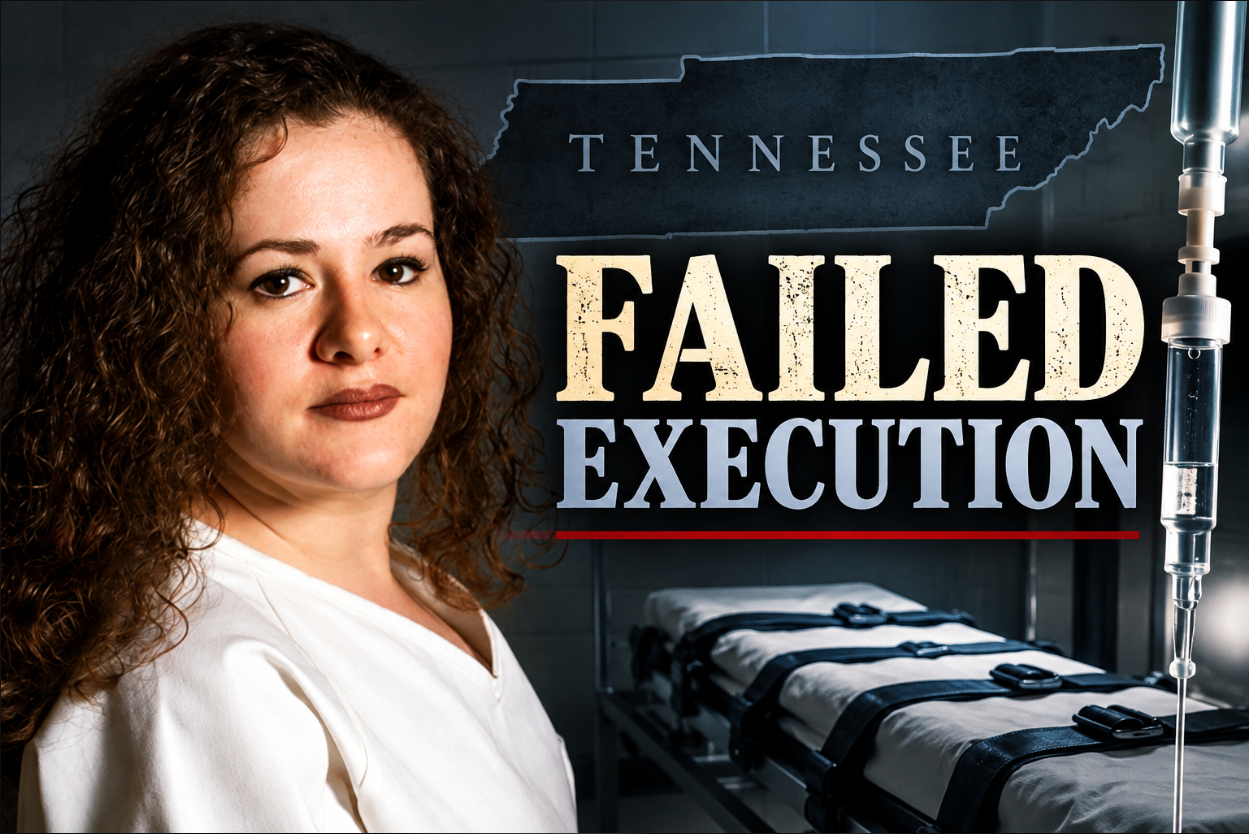
Background: Who Is Christa Gail Pike?
Christa Gail Pike was sentenced to death for the January 12, 1995, murder of 19-year-old Colleen Slemmer in Knoxville, Tennessee. Pike was 18 years old at the time of the crime. She and her then-boyfriend, Tadaryl Shipp, were convicted in connection with Slemmer’s killing after the victim was lured to a wooded area near the Job Corps training facility where they attended classes.
Shipp, who was 17 at the time, received a life sentence. Pike received a death sentence following her conviction.
Her case subsequently involved decades of post-conviction litigation, including challenges concerning the effectiveness of her trial representation, mitigating evidence, her history of childhood abuse, mental health considerations and Tennessee’s execution procedures.
Pike would have been the first woman executed in Tennessee in more than two centuries.
Slemmer’s family, including her mother, May Martinez, had awaited the enforcement of Pike’s death sentence for more than 30 years.
The Legal Proceedings Before September 30
On September 30, 2025, the Tennessee Supreme Court established September 30, 2026, as Pike’s execution date.
During 2026, her attorneys pursued additional litigation challenging Tennessee’s lethal-injection protocol and seeking relief from the scheduled execution. The challenges included concerns about Pike’s individual medical vulnerabilities, the administration of pentobarbital and whether the state’s procedures presented an unconstitutional risk of severe suffering.
On September 23, 2026, the Tennessee Supreme Court denied requests to stay the execution.
Additional proceedings continued in federal court. On the morning of September 30, the day of her scheduled execution, approximately one hour before the originally scheduled 10 a.m. execution, a three-judge panel of the U.S. Court of Appeals for the Sixth Circuit issued a temporary stay.
The court determined that additional time was necessary to consider issues raised in Pike’s pending litigation, including arguments concerning mitigating evidence of childhood sexual abuse that her attorneys maintained had not been adequately presented at sentencing.
Tennessee appealed the stay to the U.S. Supreme Court.
Later that day, the Supreme Court vacated the Sixth Circuit’s order, permitting Tennessee to proceed.
Justices Sonia Sotomayor, Elena Kagan and Ketanji Brown Jackson dissented.
Following the Supreme Court’s intervention, Tennessee resumed preparations for Pike’s execution that evening.
Timeline: September 30, 2026
All times Central Daylight Time. The following chronology is based primarily on eyewitness accounts published by Tennessee Lookout and the Associated Press. Some events occurred behind a closed witness curtain.
- 10:00 a.m. — Originally scheduled execution. The procedure was delayed following the Sixth Circuit’s temporary stay.
- Later that afternoon — U.S. Supreme Court intervention. The Court vacated the stay, allowing the execution to proceed.
- 6:41 p.m. — Witnesses assembled. Media witnesses entered the designated observation area.
- Approximately 7:26–7:27 p.m. — Curtain opened. Pike was visible on the execution gurney and delivered her final statement.
- 7:34 p.m. — Pike reported discomfort. According to a media witness, she complained of an intense sensation in her arm.
- 7:39 p.m. — Continued movement. Witnesses described Pike taking deep breaths, lifting her head and moving her feet.
- 7:46 p.m. — Curtain closed. The curtain reopened approximately three minutes later.
- 7:49–8:05 p.m. — Continued signs of life. Witnesses reported loud snoring-like breathing, additional body movement and continued activity.
- 8:05 p.m. — Curtain closed again. Much of the remaining procedure was concealed from media witnesses.
- By 8:26 p.m. — Second drug administration reported. Pike had reportedly received the second round of pentobarbital but remained alive.
- 8:53 p.m. — Audio disconnected. Witnesses reported that breathing remained audible until the microphone was switched off. They were subsequently escorted from the observation area.
- Later that evening — Emergency medical response. Pike was transported by ambulance to an outside medical facility.
- 11:15 p.m. — Official TDOC statement. The department confirmed that the approved execution protocol had been followed and that no additional procedures were authorized.
The visible portion of the attempted execution and subsequent observation extended approximately 86 minutes, from the initial opening of the curtain until the witness microphone was disconnected.
The complete timing of the drug administrations, medical assessments and decision to terminate the execution has not yet been publicly established.
Why Did the Lethal Injection Fail?
Tennessee employs a single-drug lethal-injection protocol using pentobarbital, a barbiturate capable of producing profound central nervous system depression.
Under the state’s protocol, a secondary set of drug syringes is available if the inmate is not declared deceased following the initial administration.
However, the protocol does not establish an additional procedure if the second administration also fails to result in death.
Following Pike’s attempted execution, the Tennessee Department of Correction maintained that its personnel had complied with the approved procedure.
The department also confirmed that the protocol did not authorize further intervention beyond what had already occurred.
The precise cause of Pike’s survival remains undetermined.
An independent investigation will need to establish whether intravenous access was maintained, whether the intended medication entered Pike’s circulation, whether the drug was properly prepared and administered, and how her condition was assessed throughout the procedure.
Pike’s reported complaints about her arm are potentially relevant to that investigation, although they do not independently establish an IV failure or any particular medical complication.
Tennessee’s Second Failed Execution Attempt in 2026
Pike’s case follows the unsuccessful May 21, 2026, execution attempt involving Tony Von Carruthers.
Carruthers’ execution was abandoned after medical personnel spent more than an hour attempting to establish the intravenous access required under Tennessee’s protocol.
Unlike Pike, Carruthers did not receive the lethal injection drugs before his execution was stopped.
The two incidents therefore involved materially different circumstances, although both raise questions about Tennessee’s execution procedures and the state’s capacity to implement its approved protocol.
Emergency Litigation and Suspension of Executions
As Pike remained alive following the administration of the drugs, emergency legal proceedings were initiated seeking to terminate the execution and obtain immediate medical care.
Her attorneys raised Eighth Amendment concerns regarding the continuing procedure and the potential for unnecessary suffering.
Following the incident, Governor Bill Lee ordered a comprehensive independent review to determine what occurred.
The governor also announced that Tennessee’s remaining scheduled execution for 2026 would not proceed.
The failed execution introduces additional legal questions concerning the application of the Eighth Amendment’s prohibition against cruel and unusual punishment, the adequacy of Tennessee’s lethal-injection protocol, and the constitutional implications of any subsequent attempt to carry out Pike’s death sentence.
Questions Remaining
As of October 1, several significant questions remain unanswered:
- What is Christa Pike’s current medical condition?
- Did the intravenous lines function properly throughout the procedure?
- What explains Pike’s reported complaints of intense arm discomfort?
- What were the exact times of the first and second drug administrations?
- How did the execution team monitor and assess her condition?
- At what point did officials determine that the execution could not be completed?
- What medical treatment was administered before and after her transfer to the hospital?
- Will the independent investigation result in changes to Tennessee’s execution protocol?
- What additional legal proceedings will follow the unsuccessful execution?
As of approximately 9:45 a.m. Eastern, October 1, 2026, no public medical update regarding Christa Pike’s condition has been located. Although the Tennessee Department of Correction and Governor Bill Lee have issued statements addressing the failed execution and subsequent investigation, neither has disclosed her current health status. No statement from the treating hospital has been identified. Pike’s attorneys previously confirmed that she was transported to a nearby hospital but stated they had not been informed of her condition. Her present medical status remains publicly unknown.
This is a developing case. Justice Case Analysis will continue tracking the medical developments, official investigation, court proceedings and newly released documents.
Related Articles
Letecia Stauch Conviction Reversed—Appeals Court Says the Trial Wasn’t Fair
A single juror just unraveled one of the most disturbing convictions in recent memory. The conviction of Letecia Stauch—found guilty in April 2023 of murdering her 11-year-old stepson, Gannon Stauch—has been reversed. Not because of new evidence. Not because she was...
Luigi Mangione Death Penalty Dropped, Reshaping Prosecution Strategy
A judge has removed the death penalty as a sentencing option in the case against Luigi Mangione, delivering a major win for the defense and significantly narrowing the scope of the prosecution. The ruling eliminates the most severe potential punishment Mangione faced...
Judge Orders Timothy Busfield Release After Calling Evidence “Neutral”
The public reaction to allegations involving children often moves faster than the legal process — and sometimes faster than the evidence itself. That tension was on full display in the recent bond hearing in State of New Mexico v. Timothy Busfield, where a judge...