
Lindsay Clancy Murder Trial Day 1: Opening Statements
The Lindsay Clancy murder trial begins with emotional opening statements from both sides and the first testimony from Patrick Clancy.
The Prosecution's Opening Statement
PLYMOUTH, Mass. – The first day of the Commonwealth v. Lindsay Clancy trial opened with sharply contrasting accounts of what happened inside the Clancy family home on January 24, 2023.
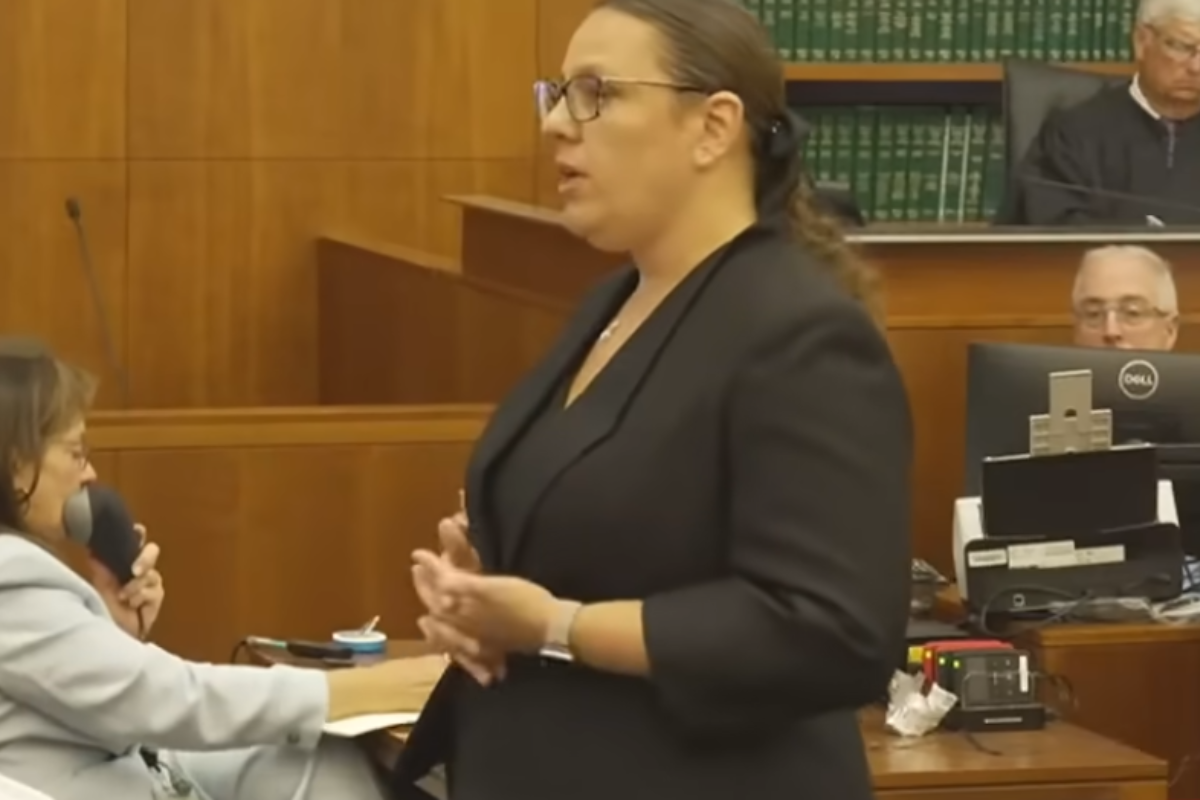
Assistant District Attorney Shanan Buckingham delivered the prosecution’s opening statement, outlining the Commonwealth’s theory that the deaths of Cora, Dawson, and Callan Clancy were not the result of legal insanity, but of deliberate planning and intentional action.
As the trial got underway, Lindsay Clancy remained visibly emotional throughout much of the day. She kept her head lowered, frequently dabbed at her face with tissues, and repeatedly took slow, deep breaths as if trying to steady herself.
While acknowledging that Lindsay Clancy had been receiving treatment for mental health issues in the months leading up to the tragedy, Buckingham argued that the evidence would show she remained capable of understanding her actions and making calculated decisions.
Over the course of nearly twenty minutes, the prosecution previewed the testimony, forensic evidence, medical records, and timeline it intends to present in support of its case, while also addressing the defense’s anticipated claim that Clancy was suffering from psychosis at the time of the killings.
Key Themes of the Prosecution's Opening Statement
1. The victims came first
Buckingham opened by humanizing each child before discussing the crime. She described:
Cora (5) as sweet, smart, loving princesses and bows.
Dawson (3) as energetic, funny and obsessed with trucks.
Callan (“Callen”/”Ken,” 8 months) as a smiling baby with “chunky cheeks.”
Only after introducing them did she state:
“We are here because they are not.”
This emotional opening clearly framed the case around the children rather than Lindsay Clancy.
2. The Commonwealth’s central theory:
This was intentional murder—not psychosis. This was the foundation of the entire opening. Buckingham repeatedly argued:
Lindsay acted deliberately.
She planned the timing.
She knew Patrick would be gone.
She controlled her behavior throughout.
She appreciated the wrongfulness of her actions.
Rather than focusing primarily on mental illness, the prosecution acknowledged Lindsay had mental health problems but argued they did not rise to legal insanity.
3. Planning and calculation
The prosecution devoted considerable time to portraying the afternoon as carefully orchestrated. Examples included:
researching the restaurant
checking driving time
calling CVS about MiraLAX
arranging for Patrick to leave
knowing exactly how long he would be gone
Buckingham argued these actions demonstrated planning rather than impulsive behavior. One of the prosecution’s strongest themes was that Lindsay created the opportunity by sending Patrick on errands.
4. The killings themselves
Buckingham alleged Lindsay:
separated Dawson from Cora and Callen
killed them individually, Dawson first, then Cora, then Callen
left the exercise bands around their necks
then proceeded upstairs to attempt suicide
She repeatedly emphasized the sequence: Dawson, Cora, Callan
The repetition appears intended to reinforce premeditation and deliberateness.
5. Patrick Clancy was portrayed as unaware
The prosecution emphasized that Patrick observed nothing unusual before leaving. Examples previewed:
children eating dinner
normal family texts
snow play earlier that day
no alarming behavior
normal 14-second phone conversation while Patrick was at CVS
The prosecution clearly wants jurors to conclude there were no outward signs of psychosis visible to those around her that evening.
6. The “voice” defense
Buckingham directly addressed one of the expected defense arguments. She told jurors they would hear Lindsay later claimed:
she heard a male voice
it told her to kill the children
it stopped after they were dead
Rather than waiting for the defense, Buckingham attacked that claim immediately by asking jurors to consider:
when she first reported hearing the voice
who she reported it to
whether its timing made sense
what experts would say about command hallucinations
This signals the prosecution intends to challenge not only whether the hallucination occurred, but whether it is credible.
7. Lindsay’s personality
Another major theme involved control. Buckingham described Lindsay as an overachiever, meticulous, controlling, schedule-oriented, and highly organized. The prosecution suggested that after Callan’s birth, she struggled when Patrick returned to work, the nanny was gone, household responsibilities increased.
Rather than portraying her as psychotic, Buckingham argued she became overwhelmed by losing control over the life she wanted to maintain.
8. Treatment decisions
The prosecution previewed evidence that Lindsay:
had extensive access to mental health care
saw multiple providers
changed medications frequently
sought different doctors
stopped treatment when dissatisfied
This appears intended to argue she was actively making choices about treatment rather than being incapable of rational decision-making.
9. Legal standard
Buckingham concluded by reminding jurors that mental illness alone does not equal legal insanity. She emphasized the legal question would be whether Lindsay:
appreciated the wrongfulness of her conduct
could control her actions
The Commonwealth argued the evidence would prove she could do both.
Defense Opening Statement: Mental Illness, Not Murder
Defense attorney Kevin Reddington told jurors there was no dispute that Lindsay Clancy caused the deaths of her three children. Instead, he argued the central question was her state of mind when it happened.
According to the defense, the evidence will show that Clancy was suffering from severe postpartum mental illness that progressed into psychosis after months of escalating symptoms, sleep deprivation, repeated medication changes, and unsuccessful attempts to obtain treatment.
Rather than portraying Clancy as a calculating killer, Reddington described her as a devoted mother who desperately sought help from doctors, psychiatrists, hospitals, crisis teams, and specialized postpartum programs in the months leading up to January 24, 2023.
“She Loved Her Children”
Throughout the opening, the defense repeatedly emphasized that Lindsay Clancy loved her children and had no motive to harm them.
Reddington described the Clancy home as filled with toys, artwork, children’s learning materials, and evidence of an active family life. He said jurors would hear testimony from friends, neighbors, teachers, family members, and coworkers describing her as an attentive mother and dedicated labor and delivery nurse. The defense argued that prosecutors were attempting to portray an ordinary family as something sinister while ignoring overwhelming evidence that Clancy had been devoted to her children until mental illness overwhelmed her.
A Timeline of Declining Mental Health
Reddington walked jurors through a detailed timeline beginning in September 2022, when Clancy first sought medical help after developing insomnia and other postpartum symptoms.
According to the defense, she consulted numerous medical professionals, visited emergency departments, participated in specialized postpartum programs, called a suicide hotline, underwent psychiatric hospitalization, and was prescribed an ever-growing list of psychiatric medications over roughly four months.
The defense argued these events demonstrated someone desperately searching for relief—not someone secretly planning violence.
The Medication Theory
A major focus of the defense was Clancy’s psychiatric treatment. Reddington argued she was prescribed numerous medications in rapid succession—including antidepressants, anti-anxiety medications, sleep medications, and antipsychotics—and suggested doctors failed to recognize an underlying bipolar disorder.
He claimed the antidepressant Zoloft caused her condition to spiral because, according to the defense, SSRIs should not be prescribed to bipolar patients. The defense contends the combination of postpartum illness and medication changes contributed to psychosis. This medication history is expected to become one of the central battlegrounds of the trial.
Insomnia and Desperation
The defense painted a picture of months of profound sleep deprivation. Jurors were told Clancy often slept only two or three hours each night and desperately searched online for answers about postpartum illness, insomnia, psychiatric medications, addiction, ketamine therapy, and suicidal thoughts.
Rather than viewing those searches as evidence of planning, the defense argued they reflected someone pleading for help as her mental health deteriorated.
Challenging the Prosecution’s Theory
Reddington repeatedly criticized the Commonwealth’s interpretation of the evidence. He argued prosecutors had portrayed Clancy as manipulative—suggesting she exaggerated symptoms, “doctor shopped,” staged a suicide attempt, and fabricated later reports of hallucinations.
The defense rejected each of those claims, arguing the evidence would instead show genuine mental illness and repeated efforts to obtain appropriate psychiatric care.
The Suicide Attempt
One of the defense’s strongest points focused on what happened immediately after the killings. Reddington argued Clancy’s injuries—including a deep neck wound, severe spinal fractures, and permanent paralysis—demonstrate she genuinely intended to end her own life, not stage a fake suicide.
He told jurors she remains permanently paralyzed and continues to live with the consequences of that day, arguing those injuries are inconsistent with someone merely attempting to create the appearance of suicide.
Command Hallucinations
The defense also addressed anticipated testimony regarding Clancy’s reports of hearing command hallucinations telling her to harm her children and herself.
Reddington argued those statements were made before any defense-retained mental health expert evaluated her, pushing back against the prosecution’s anticipated suggestion that the hallucination claims were fabricated after she obtained legal representation.
The Defense Theme
The defense concluded that this case is fundamentally about untreated postpartum mental illness and psychosis—not malice or premeditated murder.
According to Reddington, the evidence will show a woman who loved her children, repeatedly sought medical help, deteriorated despite extensive treatment, and ultimately experienced a psychiatric crisis that destroyed her family and left her permanently paralyzed.
An Analysis of the Opening Statements
One thing that really stood out was the contrast in strategy.
The prosecution’s opening was remarkably restrained and fact-driven: she knew what she was doing, planned it, and was legally responsible.
The defense, on the other hand, was highly emotional and much broader in scope. Reddington spent almost half his opening constructing the months-long story of Lindsay’s decline, introducing the medication timeline, attacking her medical treatment, and trying to establish that this tragedy was the culmination of postpartum psychosis rather than criminal intent. That framing tells us exactly where this trial is headed: the battle isn’t over what happened—it is almost entirely over why it happened and whether Lindsay Clancy was criminally responsible when it did.
Conclusion to Day 1 As with any opening statement, Buckingham’s remarks were not evidence but rather a roadmap of the Commonwealth’s case. Over the coming weeks, jurors will determine whether the prosecution’s promises are supported by witness testimony, medical records, digital evidence, and expert opinions presented during trial.
The defense will have the opportunity to challenge nearly every aspect of the Commonwealth’s narrative, particularly its assertion that Lindsay Clancy was legally criminally responsible despite her documented psychiatric treatment.
Day 1 made one thing unmistakably clear: the central battle in this case will not be over whether Lindsay Clancy suffered from mental illness, but whether that illness deprived her of the legal capacity to appreciate the wrongfulness of her actions when her three children were killed. That question now moves from opening arguments to the evidence itself, beginning with the testimony of Patrick Clancy.
Related Articles
Lindsay Clancy Mistrial – Jurors Speak Out
PLYMOUTH, Mass. – Five jurors have now explained their reasoning after the mistrial. Their interviews reveal how they viewed the evidence, the experts, Lindsay Clancy—and the lone juror who refused to agree. The Lindsay Clancy murder trial ended without a verdict. But...
Lindsay Clancy Murder Trial: Beyond Reasonable Doubt. vs. Reasonable Doubt
Related Articles Related
Lindsay Clancy Jury Deadlock: Did Jurors Understand the Instructions?
PLYMOUTH, Mass. – After days of deliberations and two messages informing Judge William Sullivan that they have been unable to reach a unanimous decision, the twelve jurors deciding the fate of Lindsay Clancy are clearly struggling to agree. But what, exactly, are they...