
Lindsay Clancy: Closing Arguments Debate Criminal Responsibility
Two Very Different Roads to the Question of Criminal Responsibility
Five Weeks of Testimony, Dozens of Witnesses, Only One Question Remains
PLYMOUTH, Mass. – After weeks of testimony from family members, treating providers, investigators, forensic experts, psychiatrists and psychologists, attorneys in the Lindsay Clancy murder trial delivered closing arguments on August 27, 2026.
The two sides agreed on more than might be expected.
There is no dispute that Lindsay Clancy killed her three children, Cora, Dawson and Callan. There is no dispute that she suffered from significant mental illness. And by closing arguments, there was no real dispute that her suicide attempt on January 24, 2023, was genuine.
The disagreement was over the question that has been at the center of this case from the beginning:
Was Lindsay Clancy criminally responsible when she killed her children?
The defense and prosecution approached that question in strikingly different ways.
Defense attorney Kevin Reddington told the story of a loving mother whose mental health deteriorated after childbirth while she moved through a fragmented system of doctors, medications and treatment programs. He attacked the police investigation, challenged the prosecution’s experts and repeatedly accused the Commonwealth of manipulating otherwise innocent evidence to make Clancy appear calculating and deceptive.
The Commonwealth took a narrower path. It conceded mental illness. It conceded suicidality. It conceded that Clancy loved her children.
Then it asked the jury to focus on what Clancy did — before, during and immediately after the killings — and whether those behaviors demonstrated that she understood what she was doing and retained the ability to control her conduct.
That difference may be the most important distinction between the two closing arguments.
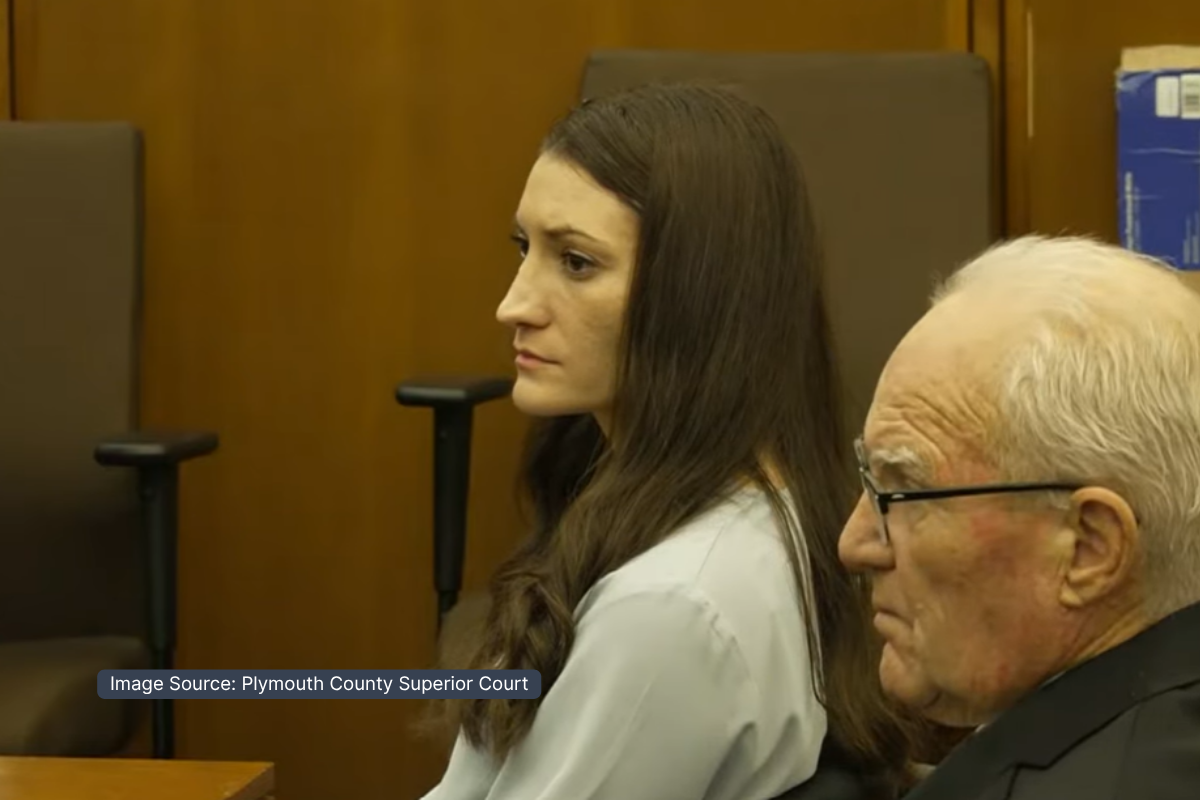
The Defense: How Does a Loving Mother Become a Woman Who Kills Her Children?

Reddington began with the children and with the Lindsay Clancy who existed before January 24, 2023. He reminded jurors of photographs, family memories, Facebook posts and a “wish jar” containing years of hopes for healthy children, successful births and good futures for them.
His fundamental question was simple: How does this woman become the woman who killed all three of her children? His answer was equally clear:
Mental illness, medication and inadequate medical care.
Reddington argued that Clancy had been a loving mother, wife, nurse and daughter with no history suggesting she wanted her children dead. Beginning in the fall of 2022, however, she became increasingly depressed and consumed by intrusive thoughts, insomnia, medications, side effects and fears that her brain had been permanently damaged. He emphasized her repeated attempts to obtain help: psychiatric appointments, medication research, Women & Infants Hospital, suicide hotlines and ultimately voluntary hospitalization at McLean. He pointed to Clancy’s detailed journals tracking medications, doses, symptoms and side effects. As the entries approached January, he argued, the careful documentation deteriorated into increasingly sparse notes because Clancy herself was deteriorating.
To Reddington, the extensive medication research was not evidence of manipulation or drug-seeking. It was evidence of a frightened woman desperately trying to understand what was happening to her.
“Watch the Manipulation”
One phrase ran through Reddington’s closing repeatedly:
“Watch the manipulation.”
Much of his argument consisted of taking evidence used by the Commonwealth and offering the jury a different interpretation. Detailed instructions to caregivers were not evidence that Clancy was controlling; they were evidence of an attentive mother. The book Good Moms Have Scary Thoughts was not a sinister discovery in her home; a provider had given it to her. Researching how long it would take Patrick to reach the restaurant did not necessarily mean she was calculating how long he would be away; Reddington argued she was struggling and wanted him home to help with the children.
Clancy’s ability to behave normally around others did not establish that she was mentally well. And asking whether she had a lawyer while hospitalized, he argued, had to be considered in the context of catastrophic injuries, medications, hospitalization and altered mental status rather than automatically treated as consciousness of guilt.
Reddington also attacked what he described as an inadequate police investigation, including evidence not collected or tested and medication bottles that were not initially seized. He challenged the Commonwealth’s interpretation of the exercise bands used to strangle the children and argued that Patrick’s recollection supported the possibility that the bands had been wrapped or secured rather than requiring Clancy to maintain continuous manual pressure for minutes.
The overall defense message was that the Commonwealth repeatedly took ambiguous facts and selected the interpretation most damaging to Clancy.
The Suicide Attempt
Reddington devoted considerable attention to Clancy’s suicide attempt. The severity of the attempt mattered to him because he believed the Commonwealth had previously attempted to portray aspects of it as superficial or inconsistent with a genuine intent to die. He emphasized the cuts, blood loss, fall from the second-story window, spinal injuries and permanent paralysis.
Whatever else jurors believed about January 24, Reddington argued, this was not a woman staging a suicide attempt to escape responsibility. By closing argument, the Commonwealth was no longer disputing that Clancy genuinely tried to kill herself. That substantially changed the battlefield. The question was no longer whether she was suicidal.
It was whether being suicidal — even profoundly suicidal — meant that she lacked criminal responsibility when she killed her children.
The Defense Experts and the Burden of Proof
This was where Reddington most directly addressed the legal issue before the jury. He relied heavily on Dr. Phillip Resnick, emphasizing Resnick’s extensive experience studying psychosis, filicide, hallucinations and malingering.
Resnick concluded that Clancy was psychotic at the time of the killings and was not criminally responsible.
Reddington also relied on Dr. Paul Zeizel and Dr. Robert Condie and argued that the Commonwealth’s later rebuttal evaluations did not overcome the defense evidence beyond a reasonable doubt. Importantly, Reddington reminded jurors repeatedly that the defense does not carry the ultimate burden of proving that Clancy lacked criminal responsibility. The Commonwealth carries the burden. That is perhaps the strongest legal component of the defense closing. Reddington did not need to establish precisely what happened inside Clancy’s mind. If the evidence left jurors with reasonable doubt about her criminal responsibility, the Commonwealth had not met its burden.
But that raises another question: What, exactly, was the reasonable doubt Reddington gave them?
Where the Defense Says Reasonable Doubt Exists
Reddington’s reasonable-doubt argument can be distilled into several propositions.
The expert disagreement. Resnick concluded Clancy was psychotic and lacked criminal responsibility. Other defense experts supported the existence of serious mental disease or defect. If highly qualified experts can reach fundamentally different conclusions, Reddington argued, how can the Commonwealth prove criminal responsibility beyond a reasonable doubt?
The command voice. Clancy reported hearing a male voice telling her to kill the children. The defense argued that the account existed independently of any alleged influence by Zeizel, pointing particularly to her disclosure to the hospital chaplain.
Her profound psychiatric deterioration. The defense argued that the woman who killed the children was plainly not functioning mentally as she had months earlier.
The genuine suicide attempt. To the defense, the attempt was powerful evidence that something catastrophic was happening psychologically that evening.
Medication and treatment history. Reddington argued that repeated medication changes, side effects, insomnia and fragmented treatment contributed to Clancy’s deterioration.
The absence of a conventional motive. The defense emphasized that Clancy loved her children and had no apparent anger, financial motive, revenge motive or history of abuse explaining why she would deliberately kill them.
Ambiguity in the timeline and physical evidence. Reddington challenged the Commonwealth’s interpretation of the phone data, exercise bands, statements after the fall and other evidence.
The limits of retrospective psychiatric evaluation. The Commonwealth’s rebuttal experts evaluated Clancy years after January 24, while Resnick evaluated her substantially closer in time.
Taken together, these arguments unquestionably create questions.
Whether they create reasonable doubt about criminal responsibility, however, depends on how directly they answer the statutory question. A genuine suicide attempt proves suicidality. It does not, standing alone, prove inability to appreciate wrongfulness or conform conduct. Loving one’s children makes the killings difficult to understand. It does not itself establish psychosis or legal nonresponsibility. Medication changes establish treatment complexity. They do not automatically establish that medication caused psychosis at the precise time of the killings. An imperfect investigation can create reasonable doubt when the missing evidence materially affects an element the Commonwealth must prove. But investigative imperfections that do not undermine the evidence of Clancy’s mental state may amount to doubt without necessarily being reasonable doubt about criminal responsibility.
The strongest defense reasonable doubt may therefore lie not in any single one of those issues, but in the expert disagreement combined with the evidence of severe mental deterioration and the reported command hallucination.
That is the defense case at its most legally focused:
Can the Commonwealth really prove beyond a reasonable doubt that a severely mentally ill and suicidal woman, whom a highly experienced forensic psychiatrist concluded was psychotic and unable to conform her conduct, nevertheless retained substantial capacity at the exact moment she killed her children?
That is a legitimate reasonable-doubt question. The Commonwealth’s closing was designed to answer it.
The Commonwealth: Mental Illness Is Not the Question
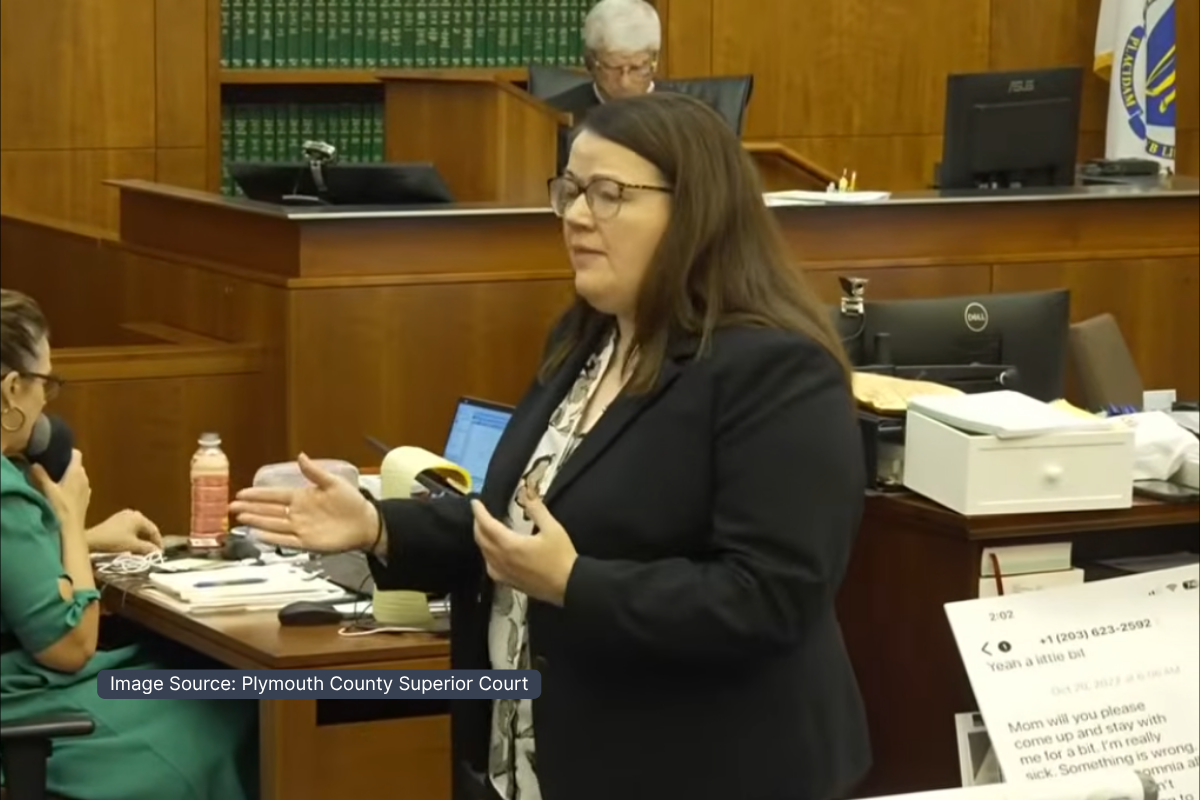
The prosecution began by conceding two of the defense’s largest themes.
Clancy was mentally ill.
She tried to kill herself.
The prosecutor then told jurors, in substance: That isn’t what you have to decide. The question was whether Clancy knew the difference between right and wrong and whether she possessed substantial capacity to conform her behavior to the requirements of law.
The prosecutor also rejected Reddington’s broader indictment of the mental-health system. This trial, the Commonwealth argued, was not about how America treats postpartum women, what is or is not contained in the DSM, or whether psychiatric care could be improved. It was about Lindsay Clancy’s mental state when she killed Cora, Dawson and Callan. That immediately narrowed the case.
Treatment Was Available — And Information Was Withheld
The Commonwealth disputed the defense portrayal of Clancy as repeatedly seeking help only to be turned away. It pointed to insurance coverage, multiple providers, family assistance, preschool for the older children, help from a nanny and access to specialty programs. Most significantly, the prosecutor returned to the Women & Infants records.
According to the Commonwealth, Clancy was not simply told that the program could not help her. She was offered three alternatives: inpatient medication management, a general mental-health partial hospitalization program and outpatient treatment. The prosecutor argued that Clancy later told providers she had essentially been turned away without accurately conveying those options.
The Commonwealth also emphasized something potentially more significant to criminal responsibility: Clancy did not tell her providers about thoughts of harming her children. She told Patrick and family members.
But when providers repeatedly asked about homicidal thoughts, she denied them. Why conceal them? The Commonwealth argued that Clancy feared her children might be taken away if she disclosed those thoughts. And that, according to the prosecution, demonstrated two things:
She understood that harming her children was wrong.
And she was capable of controlling what she said and how she behaved in order to avoid an unwanted consequence.
Functioning Is Not the Same as Being Well
The Commonwealth did not argue that Clancy was mentally healthy simply because she could function. Instead, it used her functioning as evidence of capacity.
In January, she participated in Cora’s birthday party, visited the Museum of Science, cared for the children, interacted with family, communicated normally, drove and attended appointments. Her family believed she was improving. Patrick testified that January 24 appeared to be her best day. The pediatrician who saw Clancy that morning observed nothing suggesting psychosis.
None of this necessarily proves that Clancy was not depressed, suicidal or even concealing severe internal distress. But the Commonwealth’s point was narrower:
She demonstrated repeatedly that she could regulate her outward behavior despite what she was experiencing internally.
The legal question involves capacity, not simply diagnosis.
The Planning Argument
The Commonwealth then moved to the events of January 24. The prosecutor argued that planning began hours before Patrick left.
Clancy searched for children’s constipation medication.
She searched for 3V restaurant.
She checked the travel time.
She searched CVS.
She called CVS, asked about alternatives and specifically confirmed that the medication was in stock.
She later suggested takeout to Patrick.
She placed the restaurant order, correctly answered questions and supplied Patrick’s information.
And only as Patrick was leaving did she present the CVS stop as though it were an additional errand.
The defense interpreted these events innocently. The Commonwealth interpreted them as construction of an opportunity. One line captured the prosecution’s theory particularly well:
She did not merely take advantage of the situation. She created it.
Patrick’s absence provided the uninterrupted period in which the children could be killed and Clancy could then attempt suicide.
The 5:33 Phone Call
The Commonwealth placed enormous importance on Patrick’s telephone call from CVS. Using the phone and stair-climbing evidence together with the medical evidence concerning strangulation time, the prosecution argued that the children must already have been strangled before the call. If so, the significance goes far beyond timeline reconstruction.
Clancy had just killed her children. Patrick called. And according to the Commonwealth, she was able to speak normally, conceal what had happened, avoid asking him to return and continue with her plan. She did not tell him the children were injured. She did not call 911. She did not attempt CPR despite being a nurse. She did not seek help.
For the Commonwealth, that was evidence not merely of planning but of behavioral control immediately after the killings.
The Problem With the Voice
The prosecution did not have to establish that hallucinations are impossible or that Clancy could never have experienced psychosis. Instead, it attacked the reliability of this particular command-hallucination account.
The Commonwealth identified multiple problems.
Clancy allegedly heard the voice once, immediately obeyed it, had never heard it before and has not heard it since.
She made no attempt to resist.
She did not call Patrick.
She did not call 911.
She did not remove herself from the children.
The descriptions of what the voice told her varied.
And the command itself allegedly provided little detail beyond killing the children so that she could kill herself.
That meant Clancy still had to make decisions:
Where?
How?
Which child first?
What instrument?
What method?
Then repeat the method with three separate children.
Then determine how she herself would die.
The prosecution even used Resnick’s own work against the defense, arguing that immediate compliance with a first-time command hallucination was among the factors that should raise questions about its reliability.
The Commonwealth Finally Answered “Why?”
Perhaps the most important portion of the closing was the prosecution’s proposed motive. The Commonwealth did not claim Clancy hated her children. It did not dispute that she had been a good mother. It did not characterize her as evil.
Instead, the prosecutor argued that Clancy was profoundly depressed, exhausted and suicidal — and that her children had become her protective factor. They were the reason she continued living. If she wanted to die, the prosecution argued, she believed she had to remove that protective factor. She therefore decided to take them with her.
The prosecutor acknowledged the horror of that proposition but repeatedly returned to one word:
Choice.
Clancy could have continued seeking treatment. She could have gone to her mother’s home. She could have sought emergency help. She could have killed herself without killing the children. Instead, according to the Commonwealth, she chose to kill them first.
That explanation allowed the prosecution to reconcile facts that have sometimes been treated as mutually exclusive:
Lindsay Clancy could love her children.
She could be seriously mentally ill.
She could genuinely want to die.
And she could still be criminally responsible for choosing to kill them.
Two Completely Different Structures
Perhaps the clearest way to understand the closing arguments is to reduce each side’s approach to a simple sequence.
The Commonwealth
FACT → INFERENCE → LEGAL QUESTION
Searches and CVS call → planning → capacity to make decisions.
Waiting until Patrick left → concealment/opportunity → knowledge of wrongfulness.
Normal conversation after the alleged killings → behavioral control → ability to conform conduct.
Failure to disclose homicidal thoughts to providers → deliberate concealment → appreciation that the thoughts were wrong.
Different choices required after the alleged command voice → independent decision-making → capacity rather than irresistible compulsion.
The Defense
FACT → PROSECUTION IS MANIPULATING THIS → ALTERNATIVE INTERPRETATION → MEDICAL-SYSTEM/MEDICATION NARRATIVE → REASONABLE DOUBT
Restaurant search → Commonwealth calls it planning → she simply wanted Patrick home quickly → she was struggling and needed help → prosecution’s interpretation is not proven beyond a reasonable doubt.
Medication research → Commonwealth sees control → defense sees desperation → repeated medication changes and inadequate treatment contributed to deterioration → reasonable doubt.
Normal outward behavior → Commonwealth sees capacity → defense sees a mentally ill woman capable of masking symptoms → providers failed to recognize her condition → reasonable doubt.
That does not mean the defense approach is legally invalid. In fact, because the Commonwealth carries the burden, a defense can prevail by demonstrating that apparently incriminating facts have reasonable alternative explanations. But there is a strategic difference.
The prosecution repeatedly told jurors what a fact meant and then connected that meaning directly to the legal test they would soon be instructed to apply.
Reddington more often told jurors why the Commonwealth’s interpretation should not be trusted.
Doubt — or Reasonable Doubt?
This may ultimately be the hardest question in the case. There are uncertainties. We cannot enter Lindsay Clancy’s mind at the moment she killed her children.
Psychiatrists disagree.
Psychosis does not always look the same.
People suffering severe mental illness can sometimes appear normal.
The exact timing of every movement inside the house cannot be reconstructed with absolute certainty.
There are legitimate questions surrounding medications, treatment, statements made after catastrophic injury and the reliability of retrospective psychiatric evaluation.
But the standard is not whether any doubt whatsoever exists. The question is whether the remaining doubt is reasonable as to the proposition the Commonwealth must prove.
A juror can believe Clancy was mentally ill without reasonably doubting criminal responsibility.
A juror can believe doctors could have treated her differently without reasonably doubting criminal responsibility.
A juror can believe medications worsened her condition without concluding that they deprived her of substantial capacity on January 24.
A juror can believe she genuinely intended to die without concluding she lacked the ability to control the decision to kill her children first.
Even belief that Clancy experienced some form of psychosis would not necessarily end the inquiry if the Commonwealth proved beyond a reasonable doubt that she nevertheless retained the legally required capacities.
That is where the prosecution’s rebuttal case and closing argument were aimed.
The defense’s strongest reasonable doubt is therefore not simply:
“She was very sick.”
It is:
“She was so mentally ill at the moment of the killings that the Commonwealth cannot prove beyond a reasonable doubt that she retained substantial capacity to appreciate wrongfulness or conform her conduct to law.”
Everything else matters only insofar as it makes that proposition reasonably possible.
From Opening Statements to Closing Arguments
There is one more comparison worth making. At the beginning of this trial, the Commonwealth told jurors they would see planning, intentional conduct, concealment and control.
The defense told them they would see a loving mother destroyed by severe postpartum mental illness, psychosis, medication problems and inadequate care.
Weeks later, neither side had fundamentally abandoned its original theory. But the evidence sharpened them.
The Commonwealth’s case became less about proving that Clancy was not mentally ill and more about proving that mental illness did not eliminate her criminal responsibility.
The defense continued to emphasize illness, medication, treatment failures and psychosis, but its ultimate burden-of-proof argument remained that the Commonwealth could not eliminate the reasonable possibility that Clancy lacked criminal responsibility when she entered that basement.
In other words, the trial ended very close to where it began. The prosecution asked jurors to follow the behavior. The defense asked them to understand the illness.
And the jury must now determine whether those two things can coexist:
Whether Lindsay Clancy could have been severely mentally ill, suicidal and even experiencing distorted thinking — yet still have known that killing her children was wrong and retained enough control to choose not to do it.
That, far more than the number of medications prescribed, the adequacy of the mental-health system, or even the label attached to Clancy’s illness, is the question this jury must answer.
Related Articles
Lindsay Clancy Mistrial – Jurors Speak Out
PLYMOUTH, Mass. – Five jurors have now explained their reasoning after the mistrial. Their interviews reveal how they viewed the evidence, the experts, Lindsay Clancy—and the lone juror who refused to agree. The Lindsay Clancy murder trial ended without a verdict. But...
Lindsay Clancy Murder Trial: Beyond Reasonable Doubt. vs. Reasonable Doubt
Related Articles Related
Lindsay Clancy Jury Deadlock: Did Jurors Understand the Instructions?
PLYMOUTH, Mass. – After days of deliberations and two messages informing Judge William Sullivan that they have been unable to reach a unanimous decision, the twelve jurors deciding the fate of Lindsay Clancy are clearly struggling to agree. But what, exactly, are they...