
Lindsay Clancy: Prison or State Hospital? Placement After the Verdict
Where Will Lindsay Clancy Go If Found Guilty or NGRLCR? Prison and State Hospital Options Explained
Why Lindsay Clancy Would Not Go to Bridgewater — and Where She Could Go Instead
PLYMOUTH, Mass. – As the jury deliberates the fate of Lindsay Clancy, much of the public discussion has understandably centered on two dramatically different possibilities: prison or a psychiatric hospital.
But what would either outcome actually mean? The answer is more complicated than it sounds. If Clancy is convicted of first-degree murder, Massachusetts law provides a relatively straightforward answer: life in prison without the possibility of parole.
If she is found not guilty by reason of lack of criminal responsibility, however, there is no predetermined period of confinement. She would almost certainly be hospitalized initially. She could remain committed for many years — even for the rest of her life.
But she could also eventually be released. That possibility may become one of the most controversial consequences of this case.

Five Verdicts — But One Threshold Question
Judge William Sullivan gave the jury five possible verdicts for each of Clancy’s three children:
Not guilty
Not guilty by reason of lack of criminal responsibility
First-degree murder
Second-degree murder
Manslaughter
But before jurors determine the degree of homicide, there is a threshold issue they must resolve: Was Lindsay Clancy criminally responsible when she killed her children? Under Massachusetts law, the burden rests entirely with the Commonwealth.
Judge Sullivan instructed jurors that the Commonwealth must prove beyond a reasonable doubt either that Clancy did not suffer from a qualifying mental disease or defect at the time of the killings, or that despite such an illness she retained substantial capacity to appreciate the criminality or wrongfulness of her conduct and to conform her conduct to the law. If the Commonwealth fails to meet that burden, the appropriate verdict is not guilty by reason of lack of criminal responsibility.
If it succeeds, the jury then considers what degree of homicide has been proved. That produces a relatively simple decision tree:
Was Clancy criminally responsible?
No → Not Guilty by Reason of Lack of Criminal Responsibility
Yes → What homicide offense has the Commonwealth proved?
And possible sentences:
First-degree murder → Life without parole
Second-degree murder → Life, parole eligibility after 15–25 years, judge decides concurrent (15-25 years) or consecutive (45-75 years)
Manslaughter → Up to 20 years, concurrent (up to 20), consecutive (up to 60 years)
NGRLCR → No criminal sentence; commitment lasts as long as the statutory mental-illness/dangerousness requirements continue to be met
The Horror of the Crime Is Not Proof of Lack of Criminal Responsibility
She killed her three children → a normal mother wouldn’t do that → therefore she must have been mentally ill → therefore NGRLCR.
There’s a circularity problem there. The crime itself becomes proof of the condition that excuses responsibility for the crime.
And Judge Sullivan’s instruction contains language that is especially relevant to that problem: a “mental disease or defect” does not include an abnormality characterized only by repeated criminal conduct. The jury has to determine whether a qualifying mental disease or defect actually existed based on all the evidence.
Believing that no mother in her “right mind” could kill her children is different than finding that Lindsay Clancy lacked criminal responsibility under Massachusetts law.
Did that mental disease or defect cause the particular incapacity required by Massachusetts law?
Judge Sullivan expressly told them that if she had a mental disease or defect, the Commonwealth could nevertheless establish criminal responsibility by proving that she retained substantial capacity to appreciate wrongfulness/criminality and to conform her behavior to the law.
The horrific or seemingly inexplicable nature of the killings cannot, by itself, establish the legal standard. The jury must determine from the evidence whether Clancy suffered from a mental disease or defect and, if so, whether that condition deprived her of the substantial capacity to appreciate the criminality or wrongfulness of her conduct or to conform her conduct to the requirements of the law.
A juror might understandably think, “A mentally healthy mother would never do this,” but that is not the question the law asks. Mental illness alone is not enough, nor can the nature of the crime itself become circular proof that the person who committed it must have lacked criminal responsibility. Judge Sullivan specifically cautioned jurors against reaching conclusions based on generalizations, gut feelings, sympathies or stereotypes rather than the evidence and the law.
The Three Guilty Verdict Choices
First-Degree Murder: Life Without Parole
Massachusetts law provides that an adult convicted of first-degree murder must be sentenced to life imprisonment without eligibility for parole. Clancy faces three separate murder indictments, one for each child.
Judge Sullivan instructed jurors on two separate theories of first-degree murder: deliberate premeditation and extreme atrocity or cruelty. The jury may unanimously find either theory, or both.
For deliberate premeditation, the Commonwealth must prove that Clancy intended to kill and did so after a period of reflection.
That period of reflection does not have to be lengthy.
Judge Sullivan specifically instructed the jury that deliberate premeditation can occur over days, hours or even seconds. The sequence is what matters: consideration of whether to kill, a decision to kill, and the killing resulting from that decision.
The second theory, extreme atrocity or cruelty, focuses not simply on death but on the manner in which death was inflicted. Jurors may consider whether the defendant was indifferent to suffering, whether the method substantially increased or prolonged conscious suffering, or whether the means employed were excessive or disproportionate to what was necessary to cause death.
Mental illness and prescription medication may be considered in determining whether these elements have been established, but neither automatically prevents a finding of first-degree murder.
What About Second-Degree Murder?
Second-degree murder remains legally available on the verdict form.
Judge Sullivan explained that its causation and intent requirements essentially mirror those used for the first-degree, but without the additional requirement that the killing itself be committed with extreme atrocity or cruelty.
The Commonwealth may establish the necessary intent by proving that the defendant intended to kill, intended to inflict grievous bodily harm, or intended an act that a reasonable person would understand created a plain and strong likelihood of death.
The jury must therefore follow those legal elements rather than simply select second-degree murder because it appears to occupy a middle position between acquittal and first-degree murder.
The evidence presented at trial will determine whether that middle ground exists. The defense argued against the extreme atrocity element by trying to show that the killings didn’t take as long as the prosecution wanted the jury to believe.
In Massachusetts, second-degree murder carries a mandatory sentence of life imprisonment, but unlike first-degree murder, the defendant is eligible for parole.
For a second-degree murder committed on or after August 2, 2012, the judge sets the minimum parole eligibility term at between 15 and 25 years. So in Lindsay Clancy’s case, the sentence on each second-degree murder conviction would be:
Life in prison, with parole eligibility after a judge-set minimum of 15–25 years.
That does not mean automatic release after 15–25 years. It means she could first become eligible to seek parole then; the Parole Board could deny release and continue doing so.
Manslaughter Requires Something Different
Manslaughter is also listed on the verdict form, but its elements differ significantly from murder.
Judge Sullivan instructed the jury on manslaughter based on wanton or reckless conduct. The Commonwealth would have to prove that Clancy intentionally engaged in the conduct that caused the deaths, but it would not have to prove that she intended the children to die. Instead, it would have to prove that her intentional conduct created a grave risk of substantial harm and was wanton or reckless.
Manslaughter is not simply a compromise verdict carrying less punishment than murder. Jurors must independently find that its legal elements fit the evidence.
If convicted of ordinary manslaughter in Massachusetts, a defendant may receive as much as 20 years in state prison.
If the Jury Finds Lack of Criminal Responsibility
This is where the process becomes considerably less familiar. Judge Sullivan explained to jurors that a verdict of not guilty by reason of lack of criminal responsibility does not ordinarily result in the defendant simply leaving the courthouse.
Instead, the district attorney or another authorized party may — and generally does — petition the court for psychiatric commitment.
If the court determines that the defendant is mentally ill and that release would create a substantial likelihood of serious harm, the defendant can be committed to a state mental health facility.
Judge Sullivan also made another critical point: there is no fixed maximum number of renewed commitment orders. If the legal requirements continue to exist, a defendant could theoretically remain hospitalized for life. But that is not the same thing as receiving a life sentence.
The First 40 Days
Massachusetts General Laws Chapter 123, Section 16 allows the court following an NGRLCR verdict to order hospitalization for observation and examination for as long as 40 days.
During that period:
Clinicians evaluate the defendant’s current mental health and the risks associated with release.
A petition for formal commitment may then be filed.
If the court finds the statutory requirements satisfied, the first commitment order lasts six months.
After that six-month period expires, additional commitments may be ordered in one-year increments.
Each additional commitment, however, remains subject to legal review.
The Question Changes After Trial
The murder trial asks jurors to answer a historical question:
What was Lindsay Clancy’s mental condition on January 24, 2023?
A future commitment hearing asks something quite different:
What is Lindsay Clancy’s mental condition now?
Critically, the Commonwealth cannot continue confining someone indefinitely merely because the original crime was horrific.
For continued involuntary hospitalization, Massachusetts requires proof beyond a reasonable doubt that:
The person currently suffers from mental illness
Because of that mental illness, release would create a likelihood of serious harm to the patient or someone else.
There is no adequate less restrictive alternative to hospitalization.
The seriousness of the original offense remains relevant to risk assessment, but it is not itself a substitute for present mental illness and dangerousness.
What Does “Likelihood of Serious Harm” Mean?
Massachusetts recognizes three forms.
There can be a substantial risk that the patient will seriously harm herself.
There can be a substantial risk that the patient will physically harm another person.
Or there can be a very substantial risk that the person will suffer serious physical harm because mental illness leaves her incapable of protecting herself in the community.
That means future proceedings could become highly fact-specific. Suppose years from now Clancy is psychiatrically stable, consistently takes prescribed medication, displays no psychosis, denies suicidal or homicidal thoughts, participates in treatment and has committed no acts of violence.
Would the Commonwealth still be able to prove beyond a reasonable doubt that she remains dangerous because of mental illness? Possibly. But it would have to prove it.
Massachusetts courts are allowed to consider the original offense, the patient’s psychiatric history, expert risk assessments, the seriousness of the potential harm, and whether the patient’s current stability exists partly because she has lived for years inside a highly controlled environment.
State judicial guidance specifically recognizes that a patient need not have committed a recent dangerous act before recommitment can be ordered. A court may also consider whether institutional restrictions have limited the person’s opportunity to demonstrate dangerous behavior. Those facts would be weighed against evidence favoring release.
Ultimately, the decision belongs to a judge.
Does the District Attorney Get a Say?
Yes. Judge Sullivan specifically told the jury that the district attorney must receive notice of hearings concerning continued commitment or release and has the right to participate. But the prosecutor does not make the final decision. Neither does the hospital. The court does.
That could eventually produce a very different kind of courtroom proceeding from the murder trial now taking place. The question would no longer be whether Lindsay Clancy killed three children. That fact would already be established.
The question would be whether Massachusetts can prove that her current psychiatric condition still justifies involuntary confinement.
Could Lindsay Ever Be Released?
Legally, yes. That is one of the most important differences between a first-degree murder conviction and an NGRLCR verdict.
A first-degree murder conviction produces a sentence of life without parole.
An NGRLCR commitment lasts only while the legal requirements for involuntary commitment remain satisfied.
Judge Sullivan expressly told the jury that if Clancy no longer remains mentally ill and dangerous, the court must eventually order discharge following a hearing. Conversely, if those conditions continue, she could remain institutionalized for the rest of her life. There is no predetermined expiration date.
Why Bridgewater State Hospital Isn't an Option
During his jury instructions, Judge Sullivan repeatedly referred to commitment to “a mental health facility or Bridgewater State Hospital.” That language comes from Massachusetts’ general statutory framework. But there is an important qualification that was not relevant to the jury’s legal decision.
Bridgewater State Hospital is for male patients.
Massachusetts’ judicial standards specifically state that commitment to Bridgewater requires the respondent to be male and to require strict security beyond what an ordinary Department of Mental Health facility can provide. That means Lindsay Clancy would NOT be sent to Bridgewater.
Her placement would instead be in an appropriate facility designated within the Massachusetts mental health system.
Where Could Lindsay Be Hospitalized?
Massachusetts currently operates four principal continuing-care psychiatric facilities:
- Worcester Recovery Center and Hospital
- Taunton State Hospital
- the Hathorne Units at Tewksbury Hospital
- Metro Boston Mental Health Units associated with Lemuel Shattuck Hospital.
Clancy’s unusually significant physical disability may make her placement more complicated than that of the typical forensic psychiatric patient. And one facility deserves particular attention.
Tewksbury Hospital May Be Especially Relevant
 Lindsay Clancy is already receiving full-time care at Tewksbury Hospital. Before trial, her transportation to Plymouth Superior Court was described as a significant medical undertaking, with nurses accompanying her because of her complex care requirements.
Tewksbury Hospital provides both substantial medical care and psychiatric services. Its services include 24-hour nursing, physicians, rehabilitation, physical therapy, occupational therapy, wound care and treatment of medically complex patients. The hospital also operates a program specifically intended for people who are simultaneously medically and psychiatrically ill.
The Department of Mental Health operates the Hathorne Mental Health Units on the same campus. Those units accept both male and female adult psychiatric patients and also receive court-ordered forensic patients.
Many Tewksbury patients are wheelchair-dependent.
That combination of psychiatric treatment, continuous nursing and complicated medical care could become particularly significant in Clancy’s case.
Nothing in the publicly available record establishes where she would be placed following an NGRLCR verdict, however, and a final placement decision would depend upon her medical and psychiatric condition and the state’s determination of the appropriate level of care.
Worcester Recovery Center and Hospital - State Hospital or Vacation Resort?
Worcester Recovery Center and Hospital is one of Massachusetts’ primary Department of Mental Health continuing-care facilities and provides longer-term inpatient psychiatric treatment for adults who require more intensive care than can be provided in the community.
Opened in 2012, the 320-bed hospital was deliberately designed to look and function differently from the traditional image of a state psychiatric institution. Patients live in smaller residential units organized into “houses” and “neighborhoods,” with access to treatment and rehabilitation programs, outdoor courtyards, recreation areas, a salon, a gym, library and other shared spaces intended to support recovery and eventual transition to a less restrictive setting.
The facility serves both civilly committed and forensic patients. Although Worcester is one of the facilities that could potentially be relevant following an NGRLCR verdict, Lindsay Clancy’s significant medical and nursing needs could affect where the Department of Mental Health determines she can appropriately be housed. Worcester may not currently be an option. Her current placement at Tewksbury Hospital is particularly notable because that campus combines psychiatric treatment with the higher level of medical and nursing care her physical condition requires.
What If She Is Sentenced to Prison?
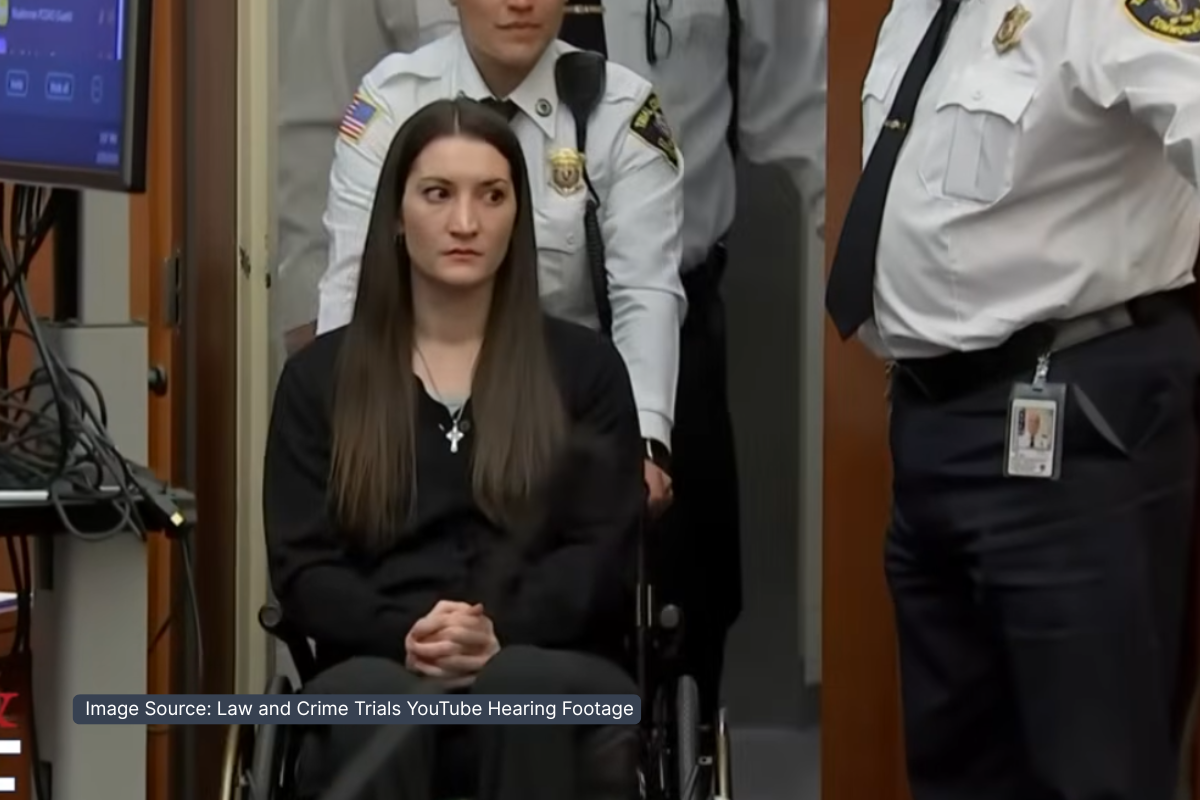 A guilty verdict would not eliminate the medical problem either. Massachusetts’ primary state correctional facility for women is MCI-Framingham, a medium-security reception and diagnostic center housing female prisoners at all security levels.
State correctional policy requires individualized evaluation and treatment of prisoners with disabilities, including necessary wheelchairs, medical supplies, rehabilitation and inpatient care. Massachusetts DOC also uses a secure inpatient hospital unit at Lemuel Shattuck Hospital for incarcerated patients requiring hospital-level treatment. Consequently, a first-degree murder conviction would not necessarily mean that Clancy could simply be placed in an ordinary prison cell.
Her spinal cord injury and continuing medical needs would have to be accommodated within the correctional medical system. The precise details of Clancy’s current bladder, bowel and other daily medical management have not been publicly established sufficiently to assume what interventions she personally requires. But the larger point is clear.
Whether the verdict is guilty or NGRLCR, Massachusetts will have to address two separate realities:
Lindsay Clancy requires substantial physical care.
And her legal status will determine whether that care is delivered within a correctional system or a mental-health commitment system.
Hospital Is Not Another Word for Prison
Much of the public discussion surrounding NGRLCR verdicts treats psychiatric hospitals as though they were simply prisons with different signage. Legally, they are not. A prison sentence is punishment for a crime. An involuntary psychiatric commitment exists because a court finds that a presently mentally ill person cannot safely be released. Those distinctions have enormous practical consequences.
A prisoner serving life without parole remains imprisoned regardless of whether she becomes mentally healthy, behaves impeccably or ceases to pose a danger. A person committed following an NGRLCR verdict must remain eligible for commitment under Massachusetts mental-health law. That person could remain confined for life.
But the state must continue proving why confinement remains legally justified. And that may ultimately be one of the most consequential differences between the two verdicts the Lindsay Clancy jury is now considering.
Related Articles
Lindsay Clancy Mistrial – Jurors Speak Out
PLYMOUTH, Mass. – Five jurors have now explained their reasoning after the mistrial. Their interviews reveal how they viewed the evidence, the experts, Lindsay Clancy—and the lone juror who refused to agree. The Lindsay Clancy murder trial ended without a verdict. But...
Lindsay Clancy Murder Trial: Beyond Reasonable Doubt. vs. Reasonable Doubt
Related Articles Related
Lindsay Clancy Jury Deadlock: Did Jurors Understand the Instructions?
PLYMOUTH, Mass. – After days of deliberations and two messages informing Judge William Sullivan that they have been unable to reach a unanimous decision, the twelve jurors deciding the fate of Lindsay Clancy are clearly struggling to agree. But what, exactly, are they...