
Lindsay Clancy: Inside the Mistrial and the Aftermath
An 11–1 jury deadlock, allegations against a holdout juror, an extraordinary battle to prevent a mistrial, and revealing post-trial interviews have raised questions that extend far beyond Lindsay Clancy's criminal case.
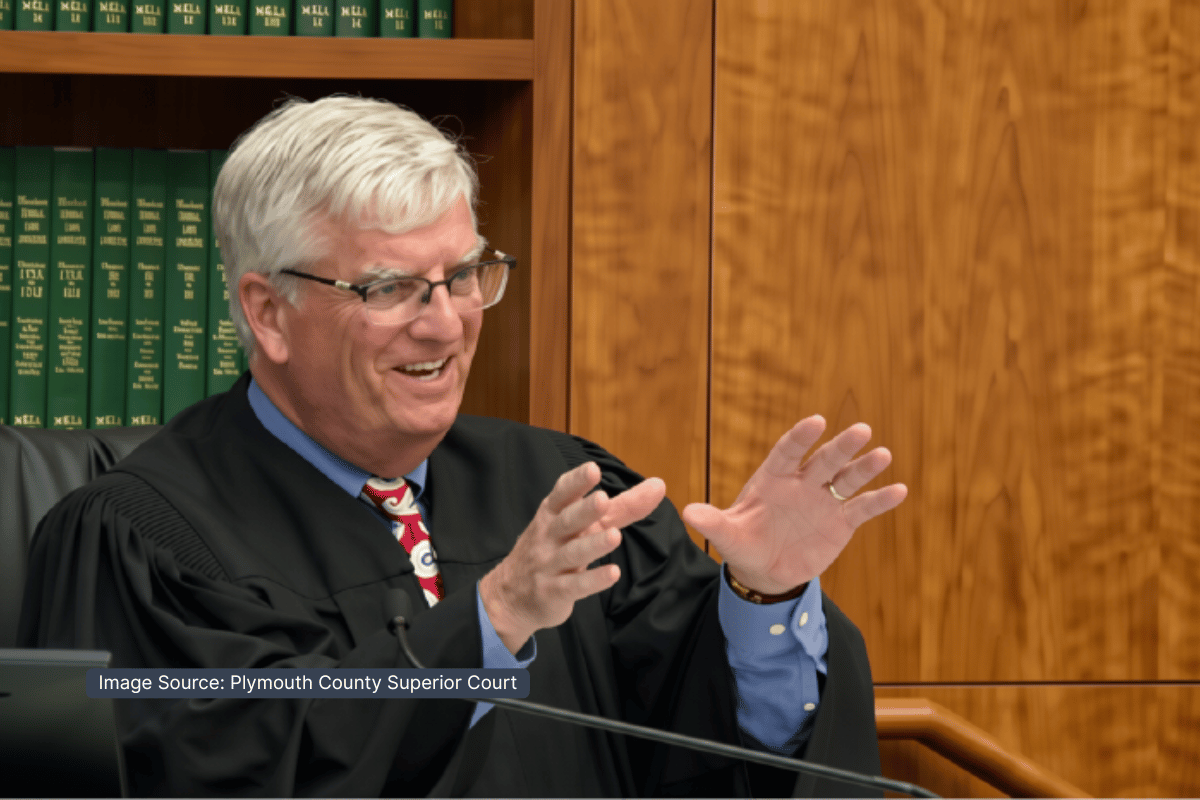
PLYMOUTH, Mass. – On November 9, 2026, Judge William F. Sullivan denied Lindsay Clancy’s motion to dismiss the three murder indictments, concluding that the mistrial was justified by manifest necessity.
His decision provides an important legal framework for examining what happened inside the jury room—and why the objections of eleven jurors did not automatically invalidate the judgment of the twelfth.
On September 4, 2026, after days of unsuccessful deliberations, the jury in Lindsay Clancy’s murder trial informed Massachusetts Superior Court Judge William F. Sullivan that it could not reach a unanimous verdict.
One juror disagreed.
What followed was an extraordinary legal battle over whether that lone juror should have been removed, whether deliberations should continue, and whether declaring a mistrial would violate Clancy’s constitutional protection against double jeopardy.
But the controversy did not end when the jury was discharged.
Several jurors subsequently embarked on a series of media interviews, offering detailed accounts of their deliberations, criticizing the holdout juror, discussing their preferred outcome for Clancy, and advocating for changes in mental health care.
Their statements raise an important question that has received considerably less attention than the accusations against the holdout:
Were all twelve jurors applying the law to the evidence, or did some allow their personal beliefs about mental illness, treatment, and the consequences of a verdict to influence their decisions?
From Deliberations to Deadlock: How the Mistrial Unfolded
The jury began deliberating on August 27, following a lengthy trial involving extensive medical testimony, psychiatric evaluations, digital evidence, and evidence concerning the January 2023 deaths of Clancy’s three children: Cora, Dawson, and Callan.
Clancy’s mental condition at the time of the killings was central to the trial. The Commonwealth was required to prove not only the elements of the charged offenses but also that Clancy was criminally responsible for her conduct.
Under Massachusetts law, a defendant may lack criminal responsibility if a mental disease or defect deprived her of substantial capacity to appreciate the wrongfulness or criminality of her conduct, or to conform her conduct to the requirements of the law. That determination was the jury’s responsibility.
According to Sullivan’s November 9 ruling, the jury reported difficulty reaching a unanimous decision on September 1 and again on September 2.
After approximately 27 hours of deliberations, Sullivan delivered the supplemental instruction commonly known as the Tuey-Rodriguez charge, encouraging jurors to reconsider their positions while maintaining their independent judgment.
By September 3, however, the disagreement had evolved into something more contentious. The foreperson submitted a note alleging that a juror was unable to follow the court’s instructions concerning reasonable doubt. Sullivan questioned the jurors individually about their ability to follow the law. All twelve, including the holdout, affirmed that they could.
The defense sought further action, including the possibility of removing the holdout juror and substituting an alternate. Sullivan declined.
Another note followed, alleging that the holdout had acknowledged doubt but refused to apply it to the verdict.
On September 4, the jury submitted its final communication:
“With a heavy heart … we report that we are unable to come to a unanimous decision and will not be able to.”
The Commonwealth supported declaring a mistrial. The defense continued to object. Ultimately, Sullivan concluded that further deliberations would not produce a unanimous verdict without risking coercion, and he declared a mistrial.
The jury was discharged without reaching a verdict on any of the three murder indictments.
The Holdout Juror: Refusing to Deliberate or Refusing to Agree?
Following the mistrial, several jurors publicly accused the holdout of failing to participate meaningfully in deliberations. Juror Paula Devlin described an initial division of eight jurors favoring lack of criminal responsibility, two undecided, and two favoring guilt. As deliberations progressed, that division reportedly became 10–2 and eventually 11–1.
Juror Nick Dargie claimed that the holdout could not adequately identify evidence supporting his position. Dargie also alleged that the juror sometimes looked at his phone while others were speaking and described an incident in which the holdout handled an exercise band and wrapped it around an empty water bottle. Dargie characterized the incident as inappropriate, suggesting the juror was attempting to recreate aspects of the killings.
These are serious allegations, but they remain the recollections and interpretations of fellow jurors—not judicial findings of misconduct. And there is a crucial distinction between a juror who refuses to deliberate and one who deliberates but refuses to agree. A juror is not required to persuade the other eleven members of the jury that his interpretation of the evidence is correct. Nor is a juror obligated to change his vote simply because the majority believes its interpretation is more reasonable.
Indeed, Judge Sullivan specifically instructed the jury on August 27:
“Don’t come to a decision simply because other jurors feel it’s the right decision.”
The judge also emphasized that each juror must decide the case independently after considering the evidence and discussing it with fellow jurors. The supplemental Tuey-Rodriguez instruction reinforced that obligation.
It required jurors to listen respectfully and reconsider their positions, but it did not require a minority juror to surrender a sincerely held conclusion.
Does acknowledging doubt require an acquittal?
One of the majority’s principal complaints was that the holdout acknowledged having doubts about aspects of the Commonwealth’s case while continuing to favor conviction. But the existence of some doubt is not necessarily the same as reasonable doubt under the law.
Sullivan’s instructions expressly distinguished reasonable doubt from possible or imaginary doubt. A juror may recognize unanswered questions, inconsistencies, or uncertainty about particular evidence and nevertheless conclude that the Commonwealth proved its case beyond a reasonable doubt. Conversely, a juror may find those same uncertainties sufficient to prevent conviction. The distinction is fundamental.
In his November 9 decision, Sullivan rejected the proposition that the foreperson’s notes established a legally sufficient basis to remove the holdout. The court could not simply accept the majority’s interpretation of another juror’s reasoning and substitute a different juror who might be more receptive to its position. Doing so would threaten the independence of the jury itself.
The Jurors Take Their Case to the Media
The mistrial was followed by an unusual series of public interviews. Jurors described the emotional burden of hearing the evidence, their experiences deliberating, their frustrations with the holdout, and their belief that Clancy should have been found not criminally responsible. Some also expressed strong opinions about the criminal justice system and mental health care.
These interviews provide a rare glimpse into the deliberation process. They also raise questions.
“I wish we could have come through for Lindsay”
In a September 8 interview featuring three female jurors, identified as Kellie Farina, Ronnie Carlson, and Paula Devlin, the discussion began with their reflections on the trial. Farina expressed a desire for greater mental health awareness and said she believed Clancy had been failed by the medical system.
Carlson, the jury foreperson, similarly hoped the case would produce changes in mental health care. Then she made a particularly revealing statement:
“I wish we could have come through for Lindsay.”
That sentiment may reflect genuine compassion for someone the juror believed was suffering from a serious psychiatric condition. But it also raises a question about how the juror understood her responsibility.
The jury’s purpose was not to come through for Clancy. Its purpose was to determine whether the Commonwealth proved the charged offenses and criminal responsibility beyond a reasonable doubt. Those are different obligations.
Personal experiences and emotional deliberations
During the same interview, jurors described crying, hugging, taking breaks when discussions became heated, and sharing personal experiences involving mental health.
Emotional reactions are understandable in a case involving the deaths of three young children. The legal concern arises when those reactions potentially influence the application of the law. Judge Sullivan had specifically instructed jurors to remain impartial and decide the case based on the evidence.
He told them:
“Your decisions must rest solely on the facts that you find in the law that I give to you in these instructions.”
He also cautioned against reaching conclusions based on personal sympathies, gut feelings, prejudices, or biases. Yet some of the post-trial interviews suggest that jurors viewed the case through a broader lens involving mental health advocacy, perceived failures of medical providers, and their personal impressions of Clancy as a mother.
That does not establish that their verdict preferences were legally improper. But it makes the difference between evaluating evidence and pursuing a preferred outcome particularly important.
Did the jurors consider the consequences of their verdict?
Devlin subsequently explained that she did not favor an outright acquittal. Rather, she wanted Clancy to remain in a psychiatric facility and receive treatment. This is a significant statement.
During the trial, Sullivan explained the legal process that could follow a verdict of not guilty by reason of lack of criminal responsibility, including possible commitment, periodic judicial review, and eventual release. The jurors were therefore informed about potential consequences. However, the judge did not instruct them to select a verdict based on which consequence they preferred.
A verdict of not guilty by reason of lack of criminal responsibility is a legal determination—not a sentencing recommendation or a mechanism for securing a particular treatment plan.
The jury’s obligation was to apply the legal standard to the evidence. Whether Clancy should receive psychiatric treatment, remain hospitalized, or face imprisonment could not replace that determination.
When advocacy enters the conversation
Devlin also described jurors discussing postpartum mental health awareness and their desire to use the attention surrounding the trial to encourage change. In another interview, she explained that the jurors had considered giving a joint interview to raise awareness.
Advocacy after a trial is not, by itself, evidence of improper deliberations. The more difficult question is whether the desire to advance a particular cause had already influenced how jurors interpreted the evidence. That question becomes particularly relevant when jurors discuss the outcome they wanted for Clancy alongside the social changes they hoped the case would produce.
The interviews do not provide a definitive answer. But they provide ample reason to examine the jury instructions alongside the jurors’ own accounts.
What Is "Manifest Necessity"—and Why Does It Matter?
The phrase manifest necessity has appeared repeatedly throughout the legal arguments surrounding Clancy’s mistrial. For readers unfamiliar with criminal procedure, the concept can sound unnecessarily complicated. It is actually based on a straightforward constitutional principle.
The basic rule
The Fifth Amendment protects defendants against being placed in jeopardy twice for the same offense. Generally, once a criminal jury has been sworn, jeopardy attaches. That gives a defendant an important interest in having the case decided by the jury originally selected.
But that protection is not absolute. Sometimes a trial cannot be completed fairly, despite the court’s efforts. When a judge declares a mistrial over the defendant’s objection, the question becomes whether there was sufficient necessity to end the proceedings without a verdict.
That is where manifest necessity comes in.
A hung jury is the classic example
Imagine a jury that has carefully reviewed the evidence, discussed the case for days, received additional instructions, and repeatedly informed the judge that it cannot agree. The judge cannot force the jurors to reach a verdict. Nor can the judge simply disregard the dissenting juror and accept the majority’s decision.
If the deadlock is genuine and further deliberations would be futile or coercive, a mistrial may be necessary. That is the classic example of manifest necessity.
Manifest necessity does not mean that a mistrial must be the only imaginable option. It means the circumstances sufficiently justify ending the trial despite the defendant’s interest in obtaining a verdict from the original jury.
The judge must exercise sound discretion, consider reasonable alternatives, and avoid unnecessarily terminating the proceedings.
Why the 11–1 split did not decide the issue
The defense emphasized that eleven jurors reportedly favored a verdict of lack of criminal responsibility. But criminal verdicts in Massachusetts require unanimity. Eleven votes are not a verdict.
A single juror’s disagreement cannot be eliminated merely because the other eleven believe he is mistaken. And removing a juror because of his position on the merits would create a troubling precedent: a majority could effectively reshape the jury until it achieved unanimity.
Sullivan’s November 9 ruling addressed precisely that danger. The judge found no sufficient basis to conclude that the holdout should have been removed for misconduct or inability to perform his duties.
The court also recognized the risk that additional questioning could pressure the identified minority juror to change his vote.
The judge’s dilemma
Sullivan faced competing constitutional concerns. On one side was Clancy’s right to have her case decided by the jury that heard the evidence. On the other was the requirement that any verdict be unanimous, voluntary, and reached through fair deliberations.
Sending the jury back indefinitely could create pressure to reach an agreement simply to end the ordeal. Removing the holdout without adequate justification could compromise the integrity of the jury.
Declaring a mistrial would mean the case might have to be tried again. There was no effortless solution. But the law did not require Sullivan to produce unanimity at any cost.
The Defense's Last-Ditch Efforts: One More Argument Before the Mistrial
If the jury’s final days were dramatic, the courtroom proceedings that followed were hardly uneventful. Defense attorney Kevin Reddington vigorously opposed declaring a mistrial. His position was understandable from a strategic perspective. With eleven jurors reportedly favoring lack of criminal responsibility, the defense was tantalizingly close to obtaining its desired outcome. But close is not unanimous.
The defense argued for additional measures rather than discharging the jury, including further examination of the holdout’s conduct and possible substitution of an alternate juror.
Sullivan repeatedly resisted efforts that he believed would improperly intrude into deliberations or place pressure on the minority juror.
When the jury ultimately declared itself hopelessly deadlocked, the defense still was not finished. Reddington sought emergency intervention from a single justice of the Massachusetts Supreme Judicial Court. Sullivan allowed a brief opportunity for that request.
The emergency application was denied.
Only then did Sullivan proceed with the mistrial. The proceedings produced a memorable remark attributed to the judge:
“What do you want me to do, bring in a brass band?”
The line captured the extraordinary persistence of the defense’s objections. But beneath the courtroom frustration was a consequential legal dispute. The defense wanted to preserve a jury that appeared overwhelmingly favorable to Clancy.
The judge had to determine whether preserving that jury remained consistent with the constitutional requirement of an independent, unanimous verdict. Those objectives were no longer necessarily compatible.
The subsequent double-jeopardy argument
After the mistrial, the defense sought dismissal of the murder indictments, arguing that the mistrial had not been justified by manifest necessity. The argument effectively challenged Sullivan’s decision to end the trial rather than pursue further alternatives.
But Sullivan’s November 9 ruling rejected that position. The court concluded that the jury’s repeated declarations of deadlock, the instructions already provided, and the absence of legally sufficient grounds to remove the holdout supported the mistrial.
The defense’s preference for continued deliberations did not require the judge to continue a process he concluded could no longer produce a fair, unanimous verdict.
The Defense's Shifting Narrative: What Happened, Who Did It, and Criminal Responsibility
Another issue deserves closer examination as the case moves toward a potential retrial. Throughout the recent criminal proceedings, the defense challenged the Commonwealth’s case, alleging that they lacked proof beyond a reasonable doubt that Clancy committed the murders of her three children. He also advanced arguments concerning Clancy’s mental condition. At various points, defense questioning and argument also raised issues involving Patrick Clancy and the sequence of events surrounding the children’s deaths.
There is nothing inherently improper about challenging the prosecution’s evidence or requiring the Commonwealth to prove every element of the charges. That is precisely what defense counsel is entitled to do. But the defense’s public and courtroom positions become particularly interesting when compared with allegations contained in Clancy’s own civil litigation.
What Lindsay Clancy alleged in her civil complaint
In her civil complaint against medical providers, Clancy presents an account of the events of January 24, 2023, in which she describes experiencing a commanding voice and an overwhelming compulsion. On pages 18–19, the complaint alleges that she strangled her three children before attempting to take her own life. The complaint attributes those actions to her alleged psychiatric condition.
The civil complaint does not merely describe Clancy as someone accused of the killings. It advances an account in which she committed the physical acts while asserting that her mental condition deprived her of meaningful control.
These are allegations in a civil pleading, not judicial findings or sworn testimony. Nevertheless, they are relevant when comparing the positions advanced in the related litigation.
Statements to forensic evaluators
The criminal trial also included testimony from psychiatric experts who evaluated Clancy. Commonwealth expert Dr. Gregory Saathoff described statements Clancy reportedly made about the events, including her awareness of timing and the period Patrick would be away from the house.
Saathoff interpreted aspects of that account as evidence bearing on Clancy’s ability to appreciate right from wrong.
Defense experts offered competing interpretations of her psychiatric condition and criminal responsibility. However, the jury received an important limiting instruction.
Sullivan expressly instructed that statements Clancy made to evaluating psychiatrists and psychologists could be considered as the basis for expert opinions about her mental condition, but not as substantive proof of the facts described in those statements or as proof of premeditation or intent.
The statements may be highly relevant to evaluating the competing psychiatric opinions without necessarily being admissible for every purpose the prosecution might otherwise wish to pursue.
What about Patrick Clancy?
Suggestions involving Patrick Clancy have circulated throughout public discussion of the case. Yet jurors who spoke publicly after the mistrial generally rejected theories implicating him in the killings. Several described his testimony and the recording of his emergency call as particularly compelling. One juror stated that the jury deliberately avoided making Patrick the focus of its deliberations.
The criminal defense’s precise statements about Patrick should therefore be examined alongside the trial evidence, rather than interpreted through speculation.
And the civil complaint presents another important point of comparison: Clancy’s own allegations describe her as having committed the acts.
The legal question remains whether the Commonwealth can prove the charged offenses and criminal responsibility under the applicable standards. The existence of a civil allegation does not eliminate the prosecution’s burden. But neither should the differences between the narratives advanced in the criminal and civil proceedings escape scrutiny.
Sullivan's November 9 Ruling: The Court Rejects the Defense's Challenge
On November 9, Judge Sullivan issued his decision denying Clancy’s motion to dismiss the three murder indictments. The ruling addressed the defense’s claim that the mistrial had been declared without manifest necessity. It also examined the allegations concerning the holdout juror and the court’s handling of the foreperson’s notes.
No sufficient grounds to remove the holdout
Sullivan concluded that the allegations in the jury notes did not establish legally sufficient grounds to dismiss the holdout juror. The judge distinguished between misconduct or inability to serve and disagreement over how the evidence should be evaluated. A juror’s refusal to adopt the majority’s interpretation of reasonable doubt is not automatically a failure to follow the law.
Sullivan also emphasized the sensitivity of inquiries into jury deliberations. Once the holdout’s minority position had effectively been disclosed, additional individualized questioning risked pressuring him to abandon his view.
The court was not permitted to resolve the disagreement by deciding which jurors had interpreted the evidence correctly.
The significance of post-trial interviews
Sullivan’s decision also addressed the later accounts of jury deliberations. The critical question was whether manifest necessity existed when the mistrial was declared.
Post-trial interviews could not retroactively change the circumstances confronting the court on September 4. Nor could conflicting recollections establish that the judge should have removed a juror when the information available at the time did not justify doing so. This is particularly important given the public attention devoted to the majority jurors’ allegations.
The court’s obligation was to protect the integrity of the process—not to decide which juror gave the most persuasive television interview.
Fairness over a favorable outcome
Near the conclusion of his ruling, Sullivan acknowledged the frustration surrounding the case. He nevertheless emphasized that the court’s primary concern was protecting the fairness of the proceedings and avoiding a coerced verdict. That principle lies at the center of the decision.
A party’s understandable desire for a favorable outcome cannot override the requirements of a fair trial. And a numerical majority, however overwhelming, cannot substitute for unanimity.
The motion to dismiss was denied. The three murder indictments remain pending.
What's Next? November 16 Hearing Could Clarify Retrial Plans
Lindsay Clancy is scheduled to return to Plymouth Superior Court on Monday, November 16, 2026, at 10:00 a.m., for a status and possible trial-assignment hearing before Judge William Sullivan.
Sullivan’s November 9 ruling clears a significant procedural obstacle to retrying Clancy on the murder indictments, subject to any further appellate proceedings.
Constitutional and appellate attorney Martin G. Weinberg, a member of Clancy’s defense team, told Boston.com on November 9 that he anticipates an appeal to the Massachusetts Supreme Judicial Court in the very near future. Weinberg emphasized that the constitutional protection against double jeopardy permits defendants, in appropriate circumstances, to seek appellate review before being subjected to another trial.
The anticipated appeal would challenge Sullivan’s determination that the September 4 mistrial was justified by manifest necessity after the jury failed to reach a unanimous verdict. The defense maintains that Sullivan should have investigated concerns regarding the holdout juror’s alleged refusal to follow the court’s instructions concerning reasonable doubt before declaring a mistrial.
Although the defense has announced its intention to appeal, a formal appellate filing has not yet been independently confirmed.
The question now is how the Commonwealth intends to proceed. During the November 2 hearing, Sullivan directly questioned Assistant District Attorney Jennifer Sprague about the prosecution’s intentions.
Judge Sullivan: “Has the Commonwealth made a decision how they’re going to proceed with this case?”
ADA Sprague: “Well, Your Honor, this would be a retrial as to what that looks like will depend. We’re not at that point yet. I think once we get the decisions on the motions and see what happens from there, then we would decide what that looks like. But it would be a retrial.”
The exchange suggests that prosecutors anticipate another trial but have not publicly committed to pursuing the original three first-degree murder charges. Other possibilities include reduced charges, such as second-degree murder, or a negotiated resolution.
Defense attorney Kevin Reddington challenged the prosecution’s reluctance to specify its intentions, questioning why the defense still did not know whether Clancy would face first-degree murder, lesser charges, or no charges at all.
Reddington also emphasized Judge Sullivan’s approaching retirement and expressed his preference for Sullivan to preside over any second trial. He urged the court to move forward in the spring rather than allow the case to remain unresolved.
Sullivan suggested March 2027 as a realistic timeframe, although no trial date has been established.
The November 16 hearing is expected to focus on scheduling and the next procedural steps. With Sullivan having already ruled on the three motions argued November 2—including denying the defense’s double-jeopardy challenge, rejecting its request for additional holdout-juror records, and denying the Commonwealth’s proposed gag order—the parties can now address the path toward a possible second trial.
A second trial would require a new jury to consider the evidence and apply the governing legal standards. The Commonwealth would again bear the burden of proving the charged offenses and criminal responsibility beyond a reasonable doubt.
The defense would remain free to challenge the evidence, present psychiatric testimony, and argue that Clancy lacked criminal responsibility at the time of the killings.
Final Analysis: The Jury's Job Was Not to Deliver the Outcome Anyone Wanted
The mistrial has already exposed a broader issue that will not disappear with the selection of a new jury. The first jury’s failure to reach a verdict was followed by a public debate that frequently treated the eleven-member majority as though it had reached a legally meaningful verdict.
It had not.
The majority’s interpretation of the evidence was entitled to consideration. So was the holdout’s. Neither position became legally controlling without unanimity.
And while the majority jurors’ post-trial interviews have provided useful insight into their experiences, those interviews also invite scrutiny of their own reasoning. Their discussions of mental health advocacy, perceived failures of medical providers, preferred treatment outcomes, and personal experiences deserve examination against the instructions Sullivan actually gave them.
The same standard applied to all twelve jurors.
The Lindsay Clancy case presents difficult questions about psychiatric illness, criminal responsibility, medical treatment, and the deaths of three young children. Those questions are emotionally charged. But the legal standards governing a criminal trial do not change because the evidence is disturbing or the circumstances are tragic.
The Commonwealth must prove its case. The defendant is presumed innocent. Jurors must evaluate the evidence independently and apply the law as instructed. And a unanimous verdict cannot be manufactured by removing a dissenting juror simply because the majority finds his position frustrating.
The post-trial interviews have placed considerable attention on whether the holdout juror properly performed his duties. That is a legitimate subject for examination. But it is not the only one. The statements of the eleven jurors who disagreed with him deserve the same scrutiny.
Were they applying the legal standard for criminal responsibility, or did some begin to view a particular verdict as a way to secure treatment for Clancy, recognize perceived medical failures, or advance mental health awareness? Their interviews contain statements that make those questions worth asking, even if they do not conclusively establish improper deliberations.
Ultimately, Sullivan’s November 9 ruling reaffirmed a principle that should not be lost amid the controversy:
The purpose of a jury is not to deliver the verdict favored by the greatest number of jurors, the most sympathetic witnesses, or the loudest public voices. It is to reach a unanimous decision based on the evidence and the law.
Eleven jurors believed Lindsay Clancy should be found not criminally responsible. One did not agree.
That disagreement resulted in a mistrial—not an acquittal, not a conviction, and not a finding that either side’s interpretation was correct.
The next jury, if the case is retried, will have to begin again.
Related coverage and court records
Justice Case Analysis will continue following the criminal proceedings, related civil litigation, and developments concerning a potential retrial.
Related Articles
Lindsay Clancy Mistrial – Jurors Speak Out
PLYMOUTH, Mass. – Five jurors have now explained their reasoning after the mistrial. Their interviews reveal how they viewed the evidence, the experts, Lindsay Clancy—and the lone juror who refused to agree. The Lindsay Clancy murder trial ended without a verdict. But...
Lindsay Clancy Murder Trial: Beyond Reasonable Doubt. vs. Reasonable Doubt
Related Articles Related
Lindsay Clancy Jury Deadlock: Did Jurors Understand the Instructions?
PLYMOUTH, Mass. – After days of deliberations and two messages informing Judge William Sullivan that they have been unable to reach a unanimous decision, the twelve jurors deciding the fate of Lindsay Clancy are clearly struggling to agree. But what, exactly, are they...