
Lindsay Clancy Case Updates
The Lindsay Clancy case centers on the January 2023 deaths of three young children in Duxbury, Massachusetts. Clancy, a labor and delivery nurse and the children’s mother, is charged with three counts of first-degree murder. Her defense has raised a lack of criminal responsibility claim based on alleged severe mental illness, while prosecutors maintain the evidence shows deliberate and knowing conduct. The case remains in pretrial proceedings, with trial currently scheduled for July 2026.
This page tracks all major updates as they happen. For full background, see the Trial Hub, read our Case Articles, and check out the or Case Documents.
October 3, 2026– Current Status and What Comes Next
Next Hearing: November 2, 2026
As of October 3, prosecutors have not publicly confirmed whether they will retry Clancy, and no retrial date has been established. The defense’s separate double-jeopardy motion, challenging whether the mistrial was properly declared, remains unresolved.
Other pending matters include requests involving jury records, an inquiry concerning the holdout juror, and the Commonwealth’s request to restrict extrajudicial statements by defense counsel.
The parties are expected to revisit these issues at the November 2 hearing. Prosecutors are also expected to submit their opposition to the double-jeopardy motion approximately one week beforehand. Defense attorney Kevin Reddington has indicated that his existing trial commitments would prevent him from beginning another trial before June 2027.
September 28-October 1, 2026 – Commonwealth Opposes Defense Motion; Judge Sullivan Denies Acquittal
September 28 – Commonwealth Files Opposition to Renewed Motion for Required Finding of Not Guilty
Following the September 4 mistrial, the Commonwealth filed a 13-page opposition to Lindsay Clancy’s renewed motion for a required finding of not guilty under Massachusetts Rule of Criminal Procedure 25(b)(2).
Prosecutors argued that the evidence presented at trial was legally sufficient to establish both the underlying murder charges and Clancy’s criminal responsibility beyond a reasonable doubt.
The Commonwealth emphasized Clancy’s actions before, during, and after the January 24, 2023, killings, arguing that her conduct demonstrated planning, rational thought, and an ability to appreciate the wrongfulness of her actions and conform her behavior to the law.
Prosecutors also challenged the defense’s psychosis theory, maintaining that the evidence did not substantiate Clancy’s claim of experiencing a command hallucination at the time of the killings.
Although acknowledging evidence of serious mental illness and psychiatric treatment, the Commonwealth argued that a mental illness diagnosis does not automatically establish a lack of criminal responsibility.
The prosecution further maintained that the jury’s inability to reach a verdict did not justify removing the question of criminal responsibility from the fact-finder.
October 1 – Judge Sullivan Denies Defense Motion
Superior Court Judge William F. Sullivan issued a five-page written decision denying Clancy’s renewed motion for a required finding of not guilty on all three murder indictments.
The defense had challenged the sufficiency of the evidence in two areas: identification of the individual responsible for the killings and Clancy’s criminal responsibility.
On the question of identity, Sullivan concluded that the physical and circumstantial evidence, viewed in the light most favorable to the Commonwealth, was sufficient to permit a rational jury to find the elements of murder beyond a reasonable doubt.
Addressing criminal responsibility, Sullivan acknowledged that experts for both sides testified that Clancy suffered from a serious mental illness at the time of the killings. However, he emphasized that mental illness alone does not preclude criminal responsibility.
The judge cited the Commonwealth’s evidence concerning Clancy’s actions and demeanor surrounding the killings, together with testimony from three prosecution experts who concluded that she retained substantial capacity to appreciate the wrongfulness of her conduct and conform her behavior to the requirements of the law.
Sullivan also emphasized that conflicting expert opinions are matters for a jury to weigh, including questions of credibility and the weight assigned to psychiatric testimony.
The court ultimately found that the Commonwealth had presented sufficient evidence to support a finding of criminal responsibility beyond a reasonable doubt and DENIED the defense motion under Rule 25(b)(2).
The ruling does not constitute a finding of guilt or resolve the disputed psychiatric evidence. It means that the evidence met the legal threshold necessary for the murder charges to remain before a fact-finder.
September 29, 2026 – Holdout Juror’s Attorney Heather O'Connell Speaks Following September 29 Hearing
Holdout Juror’s Attorney Speaks Following September 29 Hearing
Following the September 29 hearing in the Lindsay Clancy case, attorney Heather O’Connell spoke with reporters about her representation of Juror Doe, the holdout juror whose vote differed from the majority during deliberations.
O’Connell explained that her motion seeks to challenge the defense’s request for her client’s phone records and obtain access to the impounded affidavit, memorandum, and supporting exhibits being used to pursue that information. She requested additional time to review those materials before responding.
Juror Privacy and Allegations of Selective Targeting
O’Connell repeatedly expressed concern that her client is being singled out because his vote differed from the other jurors. She argued that jurors must be able to evaluate evidence, follow the judge’s instructions, and reach independent conclusions without fear of having their private lives scrutinized afterward.
Asked what her client wants, she gave two brief answers: “Privacy” and “Justice for the children.” She also confirmed that her client is very concerned about his personal safety and security.
Questions About the Juror Questionnaire
Reporters questioned O’Connell about allegations that Juror Doe may not have truthfully completed his original jury questionnaire, specifically regarding an active restraining order against him. O’Connell declined to address the allegation until she could personally review the questionnaire, but stated that her client believes he completed it truthfully.
She also pointed out that both the prosecution and defense had opportunities during jury selection to question and strike prospective jurors, including her client, but neither side exercised that option.
Deliberations and Potential Juror Misconduct
When asked whether her client believed other jurors had improperly used their phones or accessed the internet during deliberations, O’Connell acknowledged that he has a belief concerning the matter but declined to disclose further details.
She also confirmed that she and her client had discussed his treatment by other jurors during deliberations, including questions about whether he felt shunned. However, she refused to reveal the substance of those conversations.
Asked whether Juror Doe disagreed with the foreperson’s statement that he had expressed reasonable doubt, O’Connell answered yes, confirming that he disputes that characterization.
Response to Kevin Reddington
O’Connell was also asked about defense attorney Kevin Reddington’s characterization of her client as destructive. She suggested that Reddington was drawing upon the surrounding social media controversy and said she wanted to avoid name-calling. She emphasized that the issue should remain focused on the justice system and how it is intended to function, rather than personal attacks.
Fundraising and Security Concerns
A reporter raised the crowdfunding campaign established in support of the holdout juror, describing its total as approximately $400,000.
O’Connell acknowledged the fundraiser and confirmed that a portion of the proceeds had been used to pay her legal fees. She said she did not know her client’s future plans for the remaining funds but indicated that, given the public attention and exposure of his personal information, he needs money for protection.
Throughout the interview, O’Connell maintained that although her client’s information has already become public, the continued scrutiny of his private life should end.
Statement from Michael P Desronvil
The following statement was aired by Sean Hannity of Fox News September 28, 2026:
Hello my name is Michael Desronvil, also known as the lone juror.
I know the whole focus has been on me but we want to reel everything back and put the focus on the three angels that cannot speak for themselves, that cannot defend themselves and the one that cannot fight the battles.
And those are Cora, Dawson and Callan.
I want to thank God for my Catholic faith.
I want to thank God for blessing me with the ability to love my daughter.
And I am foremost I would like to thank everyone, every individual that has supported me throughout this difficult situation.
Your prayers, your emotional support, your psychological support, is tremendous to my heart can I that I feel that I sense can I get that.
September 29, 2026 – Hearing: Rule 25 Arguments, Juror Motions and Retrial Scheduling
September 29, 2026 – Rule 25 Arguments, Juror Motions and Retrial Scheduling
Lindsay Clancy appeared in person in Plymouth Superior Court on September 29, 2026, for a lengthy hearing before Judge William Sullivan addressing her Rule 25 motion for a required finding of not guilty, several motions involving jurors and access to impounded records, a media request concerning public access to court proceedings, and scheduling issues surrounding a possible retrial.
No ruling was issued on Clancy’s Rule 25 motion or on the juror-record and media-access motions argued during the hearing.
Defense Asks Judge to Enter a Finding of Not Guilty
Rule 25 Motion: Defense Challenges Evidence That Clancy Committed the Killings
Defense attorney Kevin Reddington argued that the Commonwealth failed to present legally sufficient evidence on two separate questions:
- Whether Lindsay Clancy committed the killings.
- Whether the Commonwealth proved she was criminally responsible at the time.
The first argument represented a notable departure from the defense’s presentation during trial, which focused primarily on Clancy’s mental state rather than disputing that she caused the children’s deaths. Reddington criticized the police investigation, questioning aspects of the physical evidence, forensic testing, and timeline. He raised issues involving blood evidence, exercise bands, medication-related items and the significance of Cora Clancy’s body temperature. He repeatedly questioned whether the Commonwealth had established that Clancy committed the killings.
Among the evidentiary issues he raised were:
The lack of what he considered adequate DNA and fingerprint evidence.
The handling and testing of the exercise bands.
Questions concerning blood evidence in the bedroom and the absence of blood where he argued it might otherwise be expected.
The failure to seize and test the cup containing what Patrick Clancy reportedly believed was crushed medication.
The absence of a pill crusher or other physical evidence establishing that medication had actually been crushed.
Questions surrounding Clancy’s injuries, her lack of shoes when she went out the window, and the timeline.
The relationship between the prosecution’s timeline and evidence concerning Clancy’s core body temperature.
Reddington repeatedly criticized the police investigation and argued that the Commonwealth’s case depended too heavily on inference and speculation. He then turned to criminal responsibility, arguing that the evidence overwhelmingly demonstrated that Clancy was suffering from a serious mental disease or defect and psychosis. He emphasized the defense experts, including Dr. Phillip Resnick, and argued that a person experiencing psychosis can nevertheless perform normal, goal-directed activities.
Reddington also challenged the prosecution’s evolving explanation for the killings and asked what rational reason Clancy—a nurse and mother with no prior history of criminal conduct—would have had to kill her three children.
Commonwealth: Evidence Was More Than Sufficient
The Commonwealth strongly opposed the motion. Shanan Buckingham noted that throughout the trial the defense repeatedly objected to evidence concerning the underlying murders on the basis that Clancy had admitted or stipulated to committing the acts. She characterized the new argument that there was insufficient evidence Clancy committed the killings as “laughable.”
The Commonwealth pointed to circumstantial and physical evidence, including:
Clancy being alone in the home with the three children.
Patrick Clancy’s testimony that Lindsay sent him on errands.
Phone records confirming calls to CVS and the restaurant.
Surveillance video documenting Patrick at those locations during the relevant time.
Lindsay Clancy’s DNA on the ends of the exercise bands.
Statements Clancy reportedly made after regaining consciousness, including statements to a hospital chaplain concerning hallucinations telling her to kill the children.
The prosecutor then addressed criminal responsibility, emphasizing that evidence of mental illness does not automatically establish lack of criminal responsibility. She argued that the relevant question included whether Clancy retained substantial capacity to appreciate the wrongfulness of her conduct or conform her conduct to the requirements of the law.
The Commonwealth pointed to evidence of Clancy’s behavior before, during and after the killings, including goal-directed conduct, her interactions with others and medical providers, and evidence that she was not outwardly displaying signs of psychosis immediately before the incident. The prosecution also disputed Reddington’s assertion that the Commonwealth had presented no motive. It argued that evidence supported a theory that Clancy had become convinced she would never return to the person she had once been, intended to die by suicide, and intended to take the children with her because she believed no one else could care for them as she could.
Judge Sullivan took the Rule 25 motion under advisement. He did not indicate when he would rule.
Juror Motions Become a Major Issue
Several separate motions involving jurors and access to juror-related records were also before the court. One defense motion seeks preservation of juror records, production of a juror questionnaire and related materials, and permission for a limited inquiry involving a juror identified in the proceedings as Juror Doe.
Attorney Heather O’Connor appeared on behalf of Juror Doe. The motion concerning the defense’s requested inquiry was continued until November 2. O’Connor has also filed a separate motion seeking limited relief from existing impoundment orders so that she can access materials necessary to prepare for the juror proceedings.
Judge Sullivan said it was not clear from her filing exactly which impounded materials she was requesting. O’Connor explained that part of the problem is that some records are impounded and she cannot see them well enough to identify precisely what she needs.
Sullivan asked O’Connor to supplement her filing and explain specifically what materials she is requesting. He indicated that he will review the supplemental filing and may be able to decide the access issue on the written submissions. If not, it can be addressed in connection with the November 2 hearing.
Defense Wants September Juror Notes and Sidebar Discussions Released
Attorney Martin Weinberg separately argued a defense motion seeking access to juror notes and transcripts of sidebar discussions from September 2, 3 and 4. The request is directly connected to Clancy’s pending motion to dismiss the charges on double-jeopardy grounds.
Weinberg argued that a September 3 juror note and the discussions that followed are important to determining whether there was “manifest necessity” to declare a mistrial on September 4. According to Weinberg, one of two important juror notes was discussed publicly, while an earlier September 3 note remains impounded because it was addressed at sidebar.
The defense contends that the earlier note may be relevant to whether additional inquiry should have been conducted before the mistrial was declared—including possible further questioning of a juror or the foreperson. The ultimate issue raised by the defense is whether alternatives should have been explored before the jury was discharged. If the defense can establish that the mistrial was declared without the legally required manifest necessity, it intends to argue that trying Clancy again would violate constitutional protections against double jeopardy. Weinberg emphasized that the defense is willing to have juror names and identifying information redacted from any records released.
The Commonwealth opposed the request, arguing that protecting juror communications serves an important interest in preserving the integrity of the jury system. The prosecutor argued that jurors could be discouraged from communicating candidly with a judge if they believed their notes and subsequent discussions about them might later become public. She asked the court to consider the issue from the opposite perspective: a jury with 11 members favoring conviction and a lone holdout favoring acquittal.
Judge Sullivan took the defense motion concerning the juror notes and sidebar discussions under advisement.
Boston Globe and WBZ Seek Greater Public Access
A separate motion filed on behalf of The Boston Globe and WBZ addressed public access to substantive court proceedings. The media attorney explained that the motion was not asking Sullivan to prohibit sidebars or allow members of the public and press to physically attend them. Instead, the argument focused on whether substantive legal arguments should routinely occur at sidebar where the public cannot hear them.
The attorney compared an extreme version of that situation to watching a silent movie without captions: the public may technically be present but cannot understand the arguments underlying important judicial decisions. He argued that allowing the public to hear substantive legal arguments promotes understanding of the proceedings and confidence in the judicial system.
The Commonwealth responded that matters involving private information about individual jurors should remain protected and argued at sidebar when necessary.
Sullivan took the Globe/WBZ motion under advisement.
Commonwealth Seeks Restrictions on Public Statements by Attorneys
The Commonwealth also filed a motion seeking to bar prejudicial extrajudicial statements by attorneys involved in the case. That motion was filed shortly before the hearing, and Sullivan said he had not seen it until approximately 5:00 a.m. that morning. Because the request raises significant constitutional and Massachusetts-law issues, Sullivan declined to hear it immediately.
The motion will instead be addressed on November 2.
Double-Jeopardy Motion Also Set for November 2
Clancy’s defense has filed a separate, extensive motion to dismiss the charges on double-jeopardy grounds.
The Commonwealth objected to arguing the motion on September 29, saying prosecutors had received the 34-page memorandum only about eight days earlier and had not understood that the defense intended to argue it at this hearing.
Weinberg told Sullivan that the defense was prepared to proceed immediately and emphasized the significance of the issue, noting that a ruling for Clancy could end the prosecution.
Sullivan agreed that the Commonwealth should have additional time to respond.
The motion to dismiss will be argued November 2, with the Commonwealth directed to file its written opposition approximately one week beforehand.
Judge Pushes for a Retrial Date — and the Courtroom Laughs
One of the more revealing exchanges occurred toward the conclusion of the hearing when Judge Sullivan attempted to move discussions toward scheduling a potential second trial. Both the Commonwealth and defense preferred to wait until the court ruled on the pending motions before selecting a date.
Sullivan questioned why a date could not be established in the meantime, while expressly cautioning the parties not to interpret his scheduling efforts as an indication of how he intended to rule. He then pointed out the considerable change in the parties’ positions since the mistrial:
“The discussion three weeks ago was let’s try this thing in a week, right. And now no one wants to pick a trial date.”
The remark prompted laughter in the courtroom.
Prosecutor Sprague stated this was not their position.
Reddington subsequently advised the judge that he could not begin another trial before June.
Sullivan made clear that he did not want scheduling to be repeatedly postponed and directed both sides to return on November 2 prepared to discuss a potential trial date.
Importantly, Plymouth County District Attorney Timothy Cruz has not formally announced whether the Commonwealth will pursue a retrial. The scheduling discussion therefore remains contingent upon the pending rulings and the prosecution’s ultimate decision.
What Happens Next?
The next hearing is scheduled for November 2, 2026, at 9:00 a.m.
Among the matters expected to be addressed are:
Clancy’s motion to dismiss on double-jeopardy grounds.
The defense request concerning juror records and a limited juror inquiry.
Issues involving Juror Doe and access to impounded records.
The Commonwealth’s motion concerning extrajudicial statements.
Possible scheduling of a retrial.
Meanwhile, Sullivan has taken several matters under advisement, including the Rule 25 motion for a required finding of not guilty, the defense request for access to juror notes and sidebar discussions, and the Globe/WBZ public-access motion.
September 28, 2026 — What to Expect at Lindsay Clancy’s September 29 Hearing
Lindsay Clancy is expected back in Plymouth Superior Court on Tuesday, September 29, at 9:00 a.m., for what could be one of the most consequential hearings since Judge Brian Sullivan declared a mistrial on September 4.
Nearly a month after the jury failed to reach a unanimous verdict, there has still been no public announcement from Plymouth County District Attorney Timothy Cruz that the Commonwealth intends to retry Clancy.
Meanwhile, the defense has filed several motions that could potentially affect whether a second trial takes place at all.
Renewed Motion for Required Finding of Not Guilty
Defense attorney Kevin Reddington has renewed his request for a required finding of not guilty under Massachusetts Rule of Criminal Procedure 25. The defense argues that the Commonwealth failed to present legally sufficient evidence from which a rational jury could find beyond a reasonable doubt that Clancy was criminally responsible when she killed her three children.
This is not simply a question of how the first jury voted. Although jurors who have spoken publicly have described an eventual 11–1 split, Judge Sullivan must apply the legal standard governing the sufficiency of the evidence rather than substitute his judgment for that of the deadlocked jury.
Defense Raises Double-Jeopardy Argument
The defense has also asked that the charges be dismissed on double-jeopardy grounds, challenging whether there was sufficient “manifest necessity” to declare the mistrial. A genuinely deadlocked jury ordinarily permits a mistrial followed by another prosecution. The defense, however, argues that this case was different because the court received allegations that the lone holdout juror was refusing to follow the judge’s instructions. According to the defense, those allegations should have been investigated before the court concluded that the jury was hopelessly deadlocked and discharged it.
Defense Seeks Investigation of Holdout Juror
Reddington has separately asked the court to investigate holdout juror Michael Desronvil, including allegations concerning cellphone use during deliberations and questions surrounding his jury questionnaire and statements to the court. The defense has sought cellphone records covering deliberation periods and additional questioning of the juror.
Judge Sullivan has also extended orders keeping juror questionnaires and other identifying juror information impounded, meaning the controversy surrounding the jury remains an active issue before the court.
Will the Commonwealth Announce a Retrial?
Perhaps the biggest unanswered question going into Tuesday’s hearing is remarkably simple: Does the Commonwealth intend to try Lindsay Clancy again? DA Timothy Cruz has not publicly announced a decision.
Tuesday’s proceeding is also a status/trial-assignment hearing, giving the court an opportunity to determine where the case goes from here. Prosecutors could announce that they intend to retry Clancy, indicate that no final decision has been made, or reveal that some other resolution is being considered.
A new trial date could potentially be discussed if the Commonwealth announces its intention to proceed.
What to Watch for Tuesday
Several issues could provide important clues about the future of the case:
Whether Judge Sullivan hears full argument on the Rule 25 motion or takes the matter under advisement.
How the prosecution responds to the defense’s claim that its evidence of criminal responsibility was legally insufficient.
Whether Sullivan orders any further investigation or questioning concerning the holdout juror.
How the court handles the defense’s double-jeopardy argument.
Whether prosecutors announce their intention to retry Clancy.
Whether a second trial date is discussed or scheduled.
Judge Sullivan does not necessarily have to rule on the major defense motions Tuesday. He could hear arguments, request additional briefing and issue written decisions later. But after weeks of defense filings, public comments from several jurors, controversy surrounding the lone holdout juror and continued uncertainty about a retrial, Tuesday’s hearing should finally provide some indication of where the Lindsay Clancy case goes next.
Justice Case Analysis will continue to follow the hearing and update this page as developments occur.
September 22, 2026 — Edward Andrew Paltzik, Michael Desronvil Attorney Responds to Reddington Motion
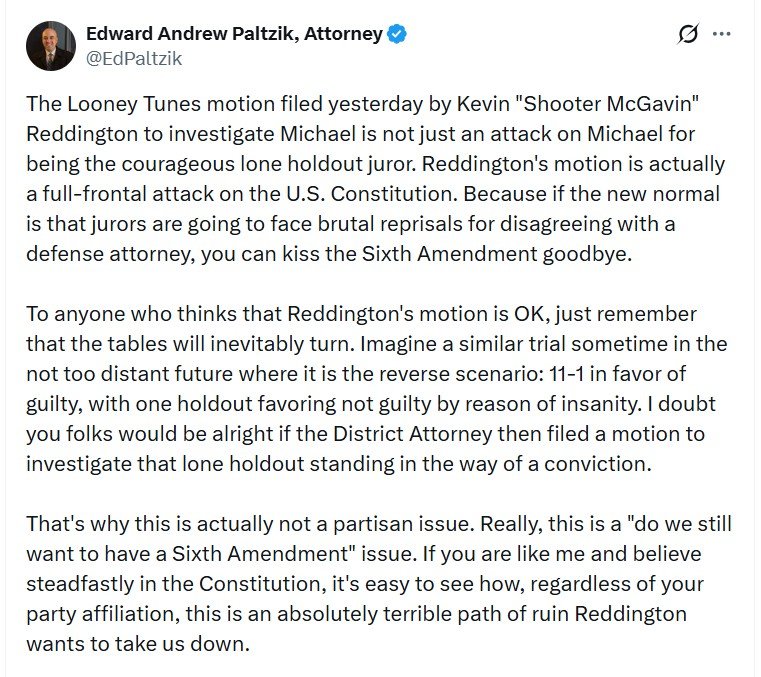
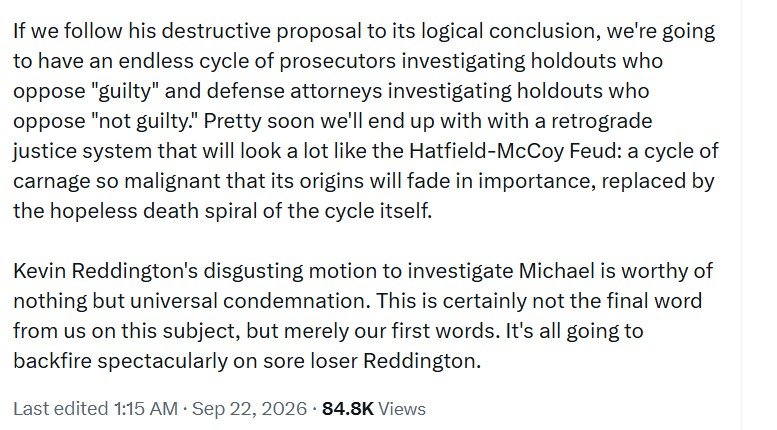
September 21, 2026 — Defense Moves to Dismiss Charges on Double Jeopardy Grounds
Lindsay Clancy’s attorneys filed two significant motions on September 21, including a 34-page Motion to Dismiss asking the Plymouth Superior Court to dismiss all three murder charges on double-jeopardy grounds.
The defense argues that the mistrial should never have been declared because the court failed to adequately investigate reports that one juror refused to follow the judge’s instructions concerning reasonable doubt. According to the motion, the jury twice alerted the court that one member allegedly refused to apply the law as instructed. Clancy’s attorneys repeatedly requested further questioning of the foreperson and/or jurors, but those requests were denied.
The central issue is “manifest necessity.” Because Clancy objected to the mistrial, the defense argues that the Commonwealth may retry her only if the mistrial was supported by manifest necessity. The motion contends that standard cannot be met because the court had a possible alternative to ending the trial: investigate the reported juror misconduct and determine whether the juror could or would follow the law.
The defense maintains that if the juror was actually refusing to apply the reasonable-doubt instruction, that could have provided grounds to remove the juror for misconduct and replace the juror with an alternate — potentially allowing deliberations to continue rather than ending the case in a mistrial. Importantly, the motion does not argue that the court should simply have removed the lone holdout because of his position on the verdict; it argues that the court first had an obligation to determine whether the problem was disagreement over the evidence or an unwillingness to follow the law.
The defense also takes direct aim at the court’s statement that it had “no choice” but to declare a mistrial. According to Clancy’s attorneys, that conclusion was reached without adequately considering alternatives and without sufficiently accounting for Clancy’s constitutional interest in having the case decided by the jury already empaneled.
The motion ultimately asks Judge William Sullivan to dismiss Counts 1 through 3, arguing that retrying Clancy after the allegedly unnecessary mistrial would violate the Double Jeopardy Clauses of the U.S. and Massachusetts Constitutions.
Defense Also Seeks Release of Juror Notes and Sidebar Discussions
In a separate motion filed the same day, Clancy’s attorneys asked the court to remove from impoundment the jury notes and transcripts of sidebar discussions concerning the deliberations and mistrial. Those records could be particularly important because portions of the Motion to Dismiss are currently redacted. The defense says the juror notes are central to creating a complete record for deciding the dismissal motion — and for any eventual appeal. Counsel states that it does not currently have access to the notes and is willing to have juror names and identifying information redacted.
The defense is also seeking the sidebar transcripts in which the attorneys and judge discussed possible alternatives to declaring a mistrial. It argues those discussions are judicial records and that, now that deliberations have ended, continued impoundment is no longer justified.
There is another potentially important consequence: if the court grants the motion to unseal these materials, the defense says it intends to refile its Motion to Dismiss without the current redactions. These filings turn what happened during the final days of deliberations into a constitutional question that could determine whether there is a second trial at all.
The defense is essentially arguing:
The question was not simply whether the jury was deadlocked. The question was whether it became deadlocked because one juror refused to follow the law — and whether the court was required to investigate that allegation before concluding that a mistrial was unavoidable.
The dismissal motion also intersects with a separate defense effort to investigate the holdout juror. In a motion filed September 18, Kevin Reddington asked the court to preserve and obtain records concerning the juror’s questionnaire and background, as well as records relating to his cellphone use during deliberations.
According to published reports, Reddington is seeking a limited examination of the cellphone by a neutral examiner and phone records covering deliberation hours, following allegations that the juror used his phone while the jury was deliberating. The defense also seeks records concerning a 2021 criminal prosecution involving the juror and a later abuse-prevention order. The supporting memorandum and exhibits remain impounded.
In today’s Motion to Dismiss, the defense specifically reserves the right to supplement its double-jeopardy argument based upon information obtained through that separate juror inquiry.
September 18, 2026 — Holdout Juror Breaks Silence — and Hires Defamation and Media Attorney
The lone holdout juror in the Lindsay Clancy trial has broken his silence, directly disputing accounts given by other jurors about what happened during deliberations — and he has retained an attorney whose practice includes defamation and media litigation.
Michael Péguy Desronvil, the sole juror who declined to find Clancy not guilty by reason of lack of criminal responsibility, issued his first public statement through attorney Edward Andrew Paltzik.
Desronvil specifically rejected one of the most consequential claims made about him following the mistrial: that he acknowledged having reasonable doubt but nevertheless refused to return an NGRI verdict.
“I didn’t have any doubts,” Desronvil said. He explained that when he attempted to discuss different possible theories during deliberations, he was repeatedly interrupted and that those discussions were apparently interpreted by other jurors as expressions of doubt.
Desronvil said that based on the physical evidence, key witnesses and the prosecution’s case, he believed there was sufficient proof that Clancy “knew exactly what she was doing and planned.”
That account directly conflicts with statements made publicly by members of the 11-person majority after the September 4 mistrial. In an interview, the jury foreperson said the holdout had admitted having reasonable doubt during deliberations. According to the foreperson, she became so convinced the jury was about to reach a verdict that she began completing the verdict forms before learning that the holdout still would not agree to NGRI.
Desronvil is now saying that characterization was wrong: discussing alternative theories did not mean that he personally harbored reasonable doubt.
The competing accounts cannot presently be reconciled from outside the jury room. But Desronvil’s statement is significant because, until now, the public narrative surrounding the deliberations has overwhelmingly come from members of the 11-person majority.
Who is Edward Andrew Paltzik?
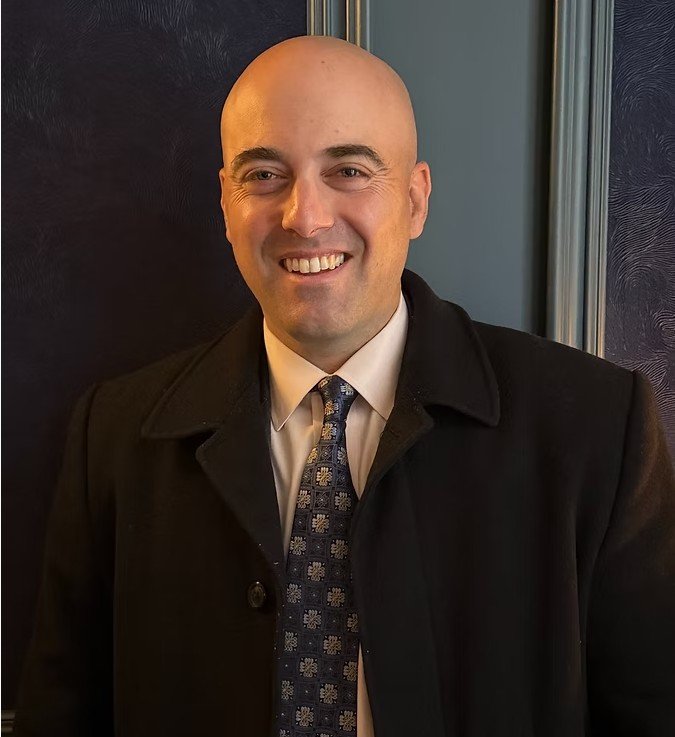 Desronvil’s choice of attorney is particularly noteworthy. Paltzik is an experienced civil and criminal litigator licensed in New York, New Jersey and Texas and admitted to practice in numerous federal courts, including the U.S. Supreme Court. The State Bar of Texas lists his practice areas as including commercial litigation, civil and criminal appellate work, arbitration and civil rights.
His firm’s biography is considerably more specific. Paltzik describes his practice as including Defamation and Media Law, constitutional litigation, complex commercial litigation, white-collar criminal defense and employment litigation. His biography describes him as a leading practitioner in defamation and media law.
He has also represented President Donald Trump in defamation litigation. Court records identify Paltzik as counsel in Trump’s federal defamation lawsuit against The New York Times and others.
And this isn’t merely an attorney whose résumé happens to contain an old defamation case. Paltzik is currently involved in other high-profile disputes involving alleged media defamation. In the Nolan Wells case, for example, he represents three young men whose attorneys have threatened defamation litigation over public statements made about them.
In other words, Desronvil has retained an attorney with direct and current experience confronting media organizations and public figures over allegedly damaging statements. Paltzik’s own language makes clear that he believes there may ultimately be an issue of “accountability.”
After announcing his representation, Paltzik said Desronvil would not be participating in media interviews for now and asked that people stop attempting to contact or locate him. He said his immediate concern was his client’s “health, safety, and well-being,” adding:
“There will be a time for accountability and a time for the real story of the Lindsay Clancy Trial to be told. But not right now.”
Paltzik has also stated that those he believes have attacked his client will be “held accountable to the maximum extent of the law.”
The media scrutiny of the holdout
Desronvil became the focus of extraordinary public attention almost immediately after the mistrial. NBC10 Boston first interviewed three jurors who described the holdout’s conduct during deliberations. The station subsequently conducted an investigation specifically into the holdout juror’s background, reporting a dismissed domestic-violence charge, a restraining order involving a family member and an eviction proceeding.
The Boston Globe subsequently identified Desronvil by name and reported additional details from court records.
Other jurors also spoke publicly about him. Among the allegations were that he failed to meaningfully engage in deliberations, disregarded expert testimony and behaved inappropriately with physical evidence during deliberations. Those remain the accounts of those jurors; Desronvil’s new statement presents a very different picture of his participation and reasoning.
The scrutiny then expanded well beyond conventional reporting, as the juror’s identity, photographs and personal information circulated extensively online.
What happens next?
There are now several questions that could become important if litigation does follow.
How was Desronvil’s identity obtained? What information was published, and by whom? Was any information false or materially misleading? What role, if any, did the impoundment of juror information play? And what exactly did individual journalists, former jurors and online personalities say about Desronvil after the mistrial?
Those are questions for another day unless a complaint is actually filed. For now, however, one development is unmistakable:
The lone holdout is no longer voiceless.
He has publicly disputed the characterization of his deliberations offered by members of the 11-person majority, and he now has an attorney whose résumé includes precisely the area of law that has suddenly become relevant to the extraordinary media scrutiny surrounding him.
NBC Boston, the jurors who have spoken publicly, online “commentators”, and others who participated in the post-trial coverage may be feeling somewhat anxious about what Paltzik means when he promises a future “time for accountability.”
September 16, 2026 — Holdout Juror Reportedly Speaks, Juror Identities Sealed and More.....
September 16, 2026 — Holdout Juror Reportedly Speaks, Juror Identities Sealed, and Massachusetts Announces New Postpartum Mental-Health Initiatives
The fallout from the mistrial in the Lindsay Clancy case continues, with new information emerging about the jury’s deliberations, the lone holdout juror, juror privacy concerns, and the broader debate over postpartum mental-health care.
Fugitive TV Says It Spoke With the Holdout Juror
For the first time since the September 4 mistrial, a media personality says he has spoken at length with the lone juror who declined to join the other 11 jurors in finding Lindsay Clancy not criminally responsible.
Ray Marcel, host of the YouTube channel Fugitive TV, said he spoke with the holdout juror by telephone for approximately one hour. The juror himself did not appear on camera and no recording of the conversation was played. Instead, Marcel relayed what he said the juror told him.
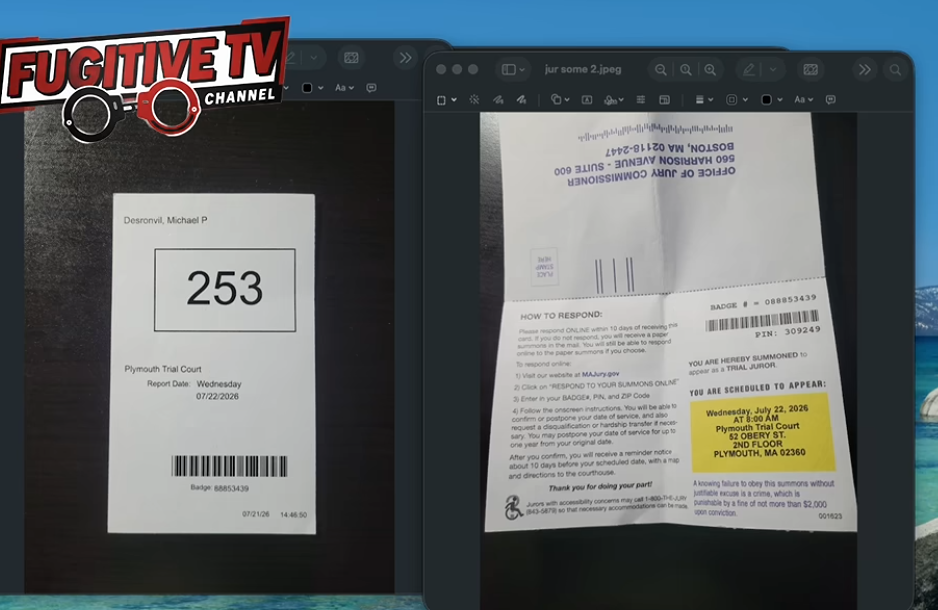
Marcel displayed what he represented as the man’s July 22, 2026 Plymouth Trial Court jury summons and juror identification information, pictured below. He also displayed documents and personal photographs that he said were provided in connection with his communication with the juror. The material lends some support to Marcel’s claim that he has been in contact with the juror, but the conversation itself has not been independently authenticated or released. The statements attributed to the juror should therefore be understood as Marcel’s account of what the juror told him, rather than a recorded interview.

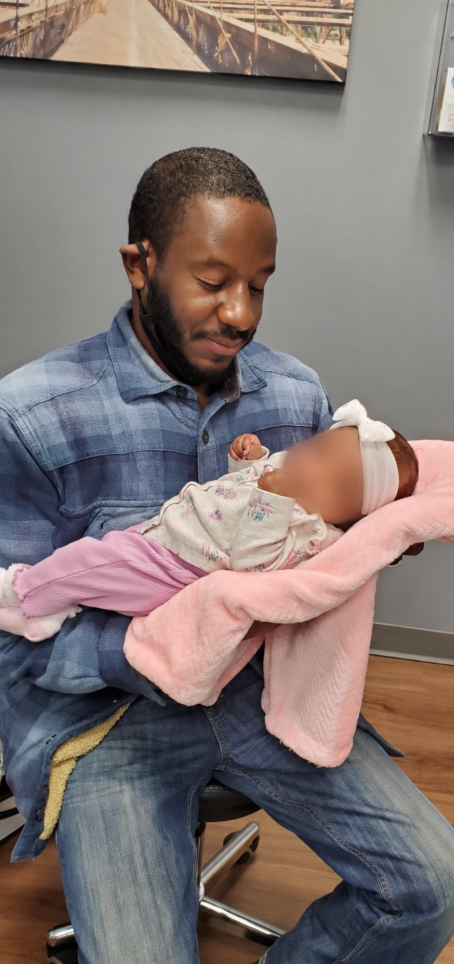
Holdout Gives His Version of the Deliberations
According to Marcel, the holdout described the jury’s initial division as approximately:
- 8 jurors favoring a finding of not criminally responsible
- 2 favoring guilt
- 2 undecided
That initial division is significant because it is consistent with what juror Paula Devlin previously told CBS about the progression of deliberations. Devlin said the jury began 8–2–2 and eventually moved to 10–2 before reaching the final 11–1 split.
The new element is the holdout’s account of who remained in the second guilty camp and how that final vote changed. According to Marcel, the holdout said that another female juror remained with him in favor of guilt until late in deliberations before ultimately joining the majority. He reportedly identified her as a juror who has since participated in a media interview without publicly showing her face. Marcel did not identify her by name.
The holdout reportedly told Marcel that he remained convinced by the evidence that Clancy was criminally responsible and understood what she was doing when she killed her children. That account differs sharply in perspective from the public statements made by several members of the 11-person majority, who have described the holdout as unwilling to meaningfully engage with their arguments or properly apply the court’s instructions concerning reasonable doubt.
The Water-Bottle Demonstration — His Explanation
Several jurors have publicly discussed an incident during deliberations in which the holdout used a water bottle and a band or string in an apparent demonstration related to how the children were killed. According to Marcel, the holdout said the demonstration was deliberate: he was attempting to illustrate how the exercise bands were used around the children’s necks and said he explained that purpose to the other jurors.
That provides a substantially different characterization of an incident that, until now, has primarily been described publicly by jurors who ultimately voted for a finding of lack of criminal responsibility. It does not resolve which account most accurately characterizes the deliberations, but it provides another perspective on what occurred inside the jury room.
Holdout Says He Disclosed His Prior Arrest
Perhaps the most consequential assertion from the reported conversation concerns jury selection. Questions have been raised since the mistrial about the holdout juror’s prior legal history and whether that information was disclosed before he was selected. According to Marcel, the juror emphatically denied concealing it.
He reportedly said that he checked the appropriate box indicating that he had previously been arrested, provided information explaining the incident, and was subsequently questioned about it during jury selection. He further claimed that the prosecution questioned him before he was ultimately seated on the jury.
If accurate, that would be important. It would mean the issue was not necessarily undiscovered during jury selection; rather, the attorneys and court may have known about at least some portion of his history and nevertheless determined that he could serve. However, the juror questionnaire and sidebar proceedings have not been publicly released, so this assertion cannot presently be independently verified.
It also does not necessarily resolve separate questions concerning other matters in his background, including whether every relevant proceeding or restraining order was disclosed.
Juror Accounts Are Beginning to Fill in Both Sides of the Story
Since the mistrial, several jurors who supported a finding of lack of criminal responsibility have spoken publicly and criticized the holdout’s conduct during deliberations. Paula Devlin, Roni Carlson and Kellie Farina told NBC10 Boston that the deliberations became heated and that the holdout resisted their interpretation of the evidence and the law. Carlson said there was even a moment when she believed a unanimous verdict had been reached after the holdout acknowledged reasonable doubt, only for him to decline to join the others in finding Clancy not criminally responsible.
Until now, however, virtually everything publicly known about the holdout’s conduct inside the deliberation room has come from jurors who disagreed with him. If Marcel’s account is authentic, this is the first substantial version of events attributed directly to the holdout himself.
The accounts overlap on some important facts — including the initial 8–2–2 division — while differing considerably in their interpretation of what happened afterward.
Judge Indefinitely Seals Juror Identities
Meanwhile, Judge William Sullivan has extended protections surrounding the jury. The court has now ordered juror identities sealed indefinitely, citing safety and privacy concerns following the intense public reaction to the mistrial. At least one juror reportedly requested continued protection of identifying information.
Several jurors have voluntarily identified themselves and participated in television interviews. Others have chosen not to do so. The order comes after extraordinary public scrutiny of the jury — particularly the lone holdout — following the 11–1 deadlock.
The Office of Jury Commissioner has also confirmed that Massachusetts court officials are aware of the safety concerns surrounding jurors following the Clancy mistrial.
After Justice Case Analysis contacted the Office of Jury Commissioner regarding concerns about the identification and treatment of jurors, Massachusetts Jury Commissioner Sheila Creaton Kelly responded on September 14:
“Thank you for sharing your concern on this issue. The Office of Jury Commissioner and the Court is aware of this and taking all steps to protect juror safety, which is always of paramount concern.”
After follow-up by JCA, Kelly did not provide details about what specific protective measures were being taken. However, her response confirms that both the Office of Jury Commissioner and the Court were aware of the situation and actively addressing juror safety concerns in the days following the mistrial.
Paula Devlin Continues Speaking Publicly
Juror Paula Devlin has continued giving interviews following her appearances with NBC10 Boston and CBS Mornings. In her latest comments, Devlin has shifted some of her focus from the deliberations themselves to what she believes could come from the case. She described the Clancy trial as a possible “turning point” in public awareness of postpartum mental-health conditions and expressed hope that what happened could ultimately improve support for other women. Devlin has also expressed concern that the intense aftermath of the trial could discourage people from performing jury service in future high-profile cases.
Her comments come amid continuing debate over juror privacy following the mistrial. Devlin herself previously revealed during her CBS Mornings interview that the holdout was the only Black juror on the panel — information that lead to reveal of his identification before his name began circulating publicly.
Governor Healey Announces Maternal Mental-Health Initiatives
The Clancy case is also having an impact beyond the courtroom. Massachusetts Governor Maura Healey announced a series of proposals aimed at expanding postpartum care and maternal mental-health services in the Commonwealth.
Healey is seeking approximately $2 million to provide voluntary nurse home visits to families with newborns, regardless of income. The visits would include assistance with newborn care as well as screening for postpartum depression and other mental-health concerns. he governor is also proposing $250,000 for the Massachusetts Child Psychiatry Access Program for Moms and has directed state officials to update regulations governing perinatal mental-health screening.
The announcement follows the intense attention generated by the Clancy trial and its extensive testimony concerning postpartum depression, postpartum psychosis and the difficulties families can face while attempting to navigate maternal mental-health treatment.
Healey’s announcement should not be interpreted as taking a position on Lindsay Clancy’s guilt or criminal responsibility. Rather, the governor is addressing the broader public-health issues brought into focus by the case.
What Comes Next
The case remains active despite the mistrial. Clancy’s defense has renewed its request for a required finding of not guilty, and her next court appearance is scheduled for September 29. Meanwhile, attorney Martin Weinberg has reportedly joined the defense team for purposes of pursuing a double-jeopardy argument aimed at preventing another trial.
District Attorney Timothy Cruz has not yet publicly announced whether the Commonwealth will retry Clancy.
For now, the post-trial story is continuing to develop almost daily — and, for the first time, the public may be beginning to hear both sides of what happened inside the jury room.
Sept. 10, 2026 - Reddington Files Renewed Motion for Required Finding of Not Guilty
Lindsay Clancy’s attorney, Kevin Reddington, has formally filed a Renewed Motion for Required Finding of Not Guilty, asking Judge William Sullivan to enter findings of not guilty by reason of lack of criminal responsibility on all six indictments.
The motion was filed September 10 under Massachusetts Rule of Criminal Procedure 25(b)(2), following the September 4 mistrial. Reddington is asking that the motion be heard at the previously scheduled September 29, 2026 conference.
The Defense Is Challenging the Sufficiency of the Commonwealth’s Evidence
Although the motion discusses the jury’s reported 11–1 split in favor of not guilty by reason of lack of criminal responsibility, Reddington makes clear that he is not asking Judge Sullivan to treat that vote as a verdict.
In fact, the defense expressly acknowledges that a hung jury is not a verdict and that a mistrial ordinarily permits the Commonwealth to retry a defendant.
Instead, Reddington is making a different argument: that the Commonwealth’s evidence was legally insufficient to prove Clancy’s criminal responsibility beyond a reasonable doubt in the first place.
Under the legal standard cited in the motion, the evidence must be viewed in the light most favorable to the prosecution, and the question for the judge is whether a rational factfinder could have found the required elements beyond a reasonable doubt.
Reddington Says the Commonwealth Had Two Routes
The motion argues that once lack of criminal responsibility was properly raised, the Commonwealth could establish criminal responsibility in one of two ways: by proving that Clancy did not suffer from a mental disease or defect, or by proving that despite having one, she nevertheless retained the substantial capacity to appreciate the wrongfulness of her conduct or conform her conduct to the requirements of the law.
Reddington argues that the Commonwealth’s own evidence effectively eliminated the first route.
According to the motion, all six forensic experts — three called by the defense and three by the Commonwealth — agreed that Clancy suffered from a serious mental illness on January 24, 2023.
The experts disagreed over diagnosis and the effect of that illness. Reddington notes, for example, that Dr. Mack diagnosed a major depressive episode while Dr. Heilbrun diagnosed bipolar II disorder with dissociation. Treating clinicians testified that Clancy presented with postpartum depression and anxiety and that they had not observed psychosis.
But, the defense argues, those disagreements concerned what illness Clancy had — not whether she had a mental disease or defect at all.
The Fight, Then, Is Over Capacity
According to Reddington, that left the Commonwealth with its second route: proving beyond a reasonable doubt that despite Clancy’s mental illness, she retained the substantial capacity required for criminal responsibility.
The motion identifies four primary categories of evidence relied upon by the Commonwealth’s rebuttal experts:
- Clancy was able to drive, call a pediatrician and send her husband on errands on January 24;
- the killings involved a sequence of choices occurring over approximately 18 to 20 minutes;
- she had conducted internet searches concerning medications, psychosis and related subjects in the preceding weeks; and
- her later accounts of the voice she reported hearing were inconsistent.
Reddington argues that even when this evidence is viewed at its strongest for the prosecution, it demonstrates that Clancy could perform familiar tasks and act sequentially — not that she retained the substantial capacity to appreciate the wrongfulness of killing her children or conform her conduct to the law.
That difference is at the heart of the defense motion.
Reddington Turns the Commonwealth’s Own Expert Testimony Against It
The motion also points directly to testimony from prosecution expert Dr. Paul Heilbrun. Reddington argues that Heilbrun’s own characterization of the event — involving a mentally ill mother who believed her children would suffer without her and killed them out of love — describes “delusional reasoning,” rather than demonstrating preserved capacity to appreciate that her conduct was wrong.
The defense further points to Clancy’s actions immediately after the killings, including cutting her wrists and neck and jumping from a second-story window, as well as her attempts to obtain psychiatric help in the weeks beforehand and her continuing institutional psychiatric care.
What About the 11–1 Jury Split?
This is one of the more interesting parts of the filing. Reddington recounts that eleven jurors were prepared to find Clancy not guilty by reason of lack of criminal responsibility and that, according to the foreperson’s note, the remaining juror had acknowledged doubt but was refusing to apply it as the law required.
But Reddington expressly tells Sullivan:
“This motion does not rest on the jury’s division.”
The defense acknowledges that a hung jury is not a verdict and even cites the Massachusetts Supreme Judicial Court’s 2025 ruling arising from the Karen Read case, in which the court rejected an argument that jurors’ statements after discharge amounted to an unannounced verdict.
Instead, Reddington argues that Rule 25 requires Sullivan to conduct his own independent legal review of the evidence, regardless of how the individual jurors voted.
Why This Motion Matters for a Possible Retrial
The stakes are significant. If Judge Sullivan concludes that the Commonwealth’s evidence was legally insufficient and enters the requested findings of not guilty, Reddington argues that the resulting acquittals would bar another trial.
Without such a ruling, however, the mistrial itself does not prevent the Commonwealth from trying Clancy again. Reddington summarizes the purpose of his request succinctly:
“Rule 25 exists so that a case the evidence cannot sustain is not tried twice.”
The defense asks Sullivan to enter findings of not guilty by reason of lack of criminal responsibility on each indictment and then proceed under Massachusetts law governing defendants acquitted on that basis.
What Happens Next?
The motion asks to be heard at the September 29 conference already scheduled before Judge Sullivan. Sullivan could grant the motion, deny it, or hear argument and take the matter under advisement before issuing a decision.
One point is particularly important following the mistrial: this motion is not asking the judge to substitute his judgment for the holdout juror simply because eleven jurors favored an NGRLCR verdict.
The legal question presented by Reddington is narrower — and potentially much more consequential:
Even viewing the trial evidence in the light most favorable to the Commonwealth, was there legally sufficient evidence from which a rational juror could find beyond a reasonable doubt that Lindsay Clancy was criminally responsible on January 24, 2023?
That is now the question Reddington has placed squarely before Judge Sullivan.
Sept. 8, 2026 - Jurors Speak After the Mistrial
Four days after Judge William Sullivan declared a mistrial in the Lindsay Clancy case, jurors have begun speaking publicly about what happened inside the deliberation room — and their accounts are raising new questions about the 11–1 deadlock.
Three jurors — foreperson Roni Carlson, Paula Devlin and Kellie Farina — spoke together with NBC10 Boston’s Sue O’Connell.
According to the jurors, deliberations initially began with an 8–4 split, with eight jurors favoring a finding of not criminally responsible by reason of lack of criminal responsibility. Over the course of deliberations, three jurors changed their positions, eventually leaving one male juror as the lone holdout.
The three women described increasingly contentious deliberations and expressed frustration with the holdout juror, whom they believed was unwilling to meaningfully consider their arguments. Most notably, Carlson said the holdout at one point acknowledged having “reasonable doubt,” leading her to believe the jury had finally reached a unanimous decision. According to Carlson, however, he still refused to vote that Clancy was not criminally responsible.
That account has generated significant attention, but the holdout juror has not yet spoken publicly, leaving only one side of the disagreement available.
A fourth juror, who spoke separately and anonymously to WBZ, offered a somewhat more nuanced description of the deliberations. She said the lone holdout was not the only juror who had difficulty considering the opposing position.
More jurors may speak in the coming days, and Justice Case Analysis will be following those interviews closely. A separate analysis of the jury deliberations and the jurors’ comments is forthcoming.
Reddington: Mr. President, How About a Pardon?
Defense attorney Kevin Reddington continued his post-trial media appearances Tuesday — and made perhaps his most unexpected request yet. During an appearance on Good Morning America, Reddington appealed directly to President Donald Trump:
“Mr. President, I would hope that you would consider this young lady, the type of person she is, what she’s been through, and consider a pardon.”
There is one rather significant problem with that request: the President cannot pardon Lindsay Clancy on the Massachusetts murder charges. Presidential pardon authority applies to federal offenses, while Clancy is being prosecuted by the Commonwealth of Massachusetts.
Reddington later acknowledged that limitation during an interview with WBZ, explaining that what he really hopes to obtain is Trump’s influence. He suggested Trump could use his political “clout” with Plymouth County District Attorney Timothy Cruz in an effort to resolve the case.
Trump himself commented on the Clancy case following the mistrial, calling it a “horrible tragedy” and saying there would ultimately be “a price” — whether that meant a mental institution or jail.
Reddington has also indicated that the defense would be willing to discuss a negotiated resolution with prosecutors. Meanwhile, District Attorney Cruz has not announced whether the Commonwealth will retry Clancy. The next scheduled court date is September 29.
Patrick Clancy: “Enough Is Enough”
Patrick Clancy is also speaking out — but about a very different issue. Through attorney Howard Cooper, Patrick issued a strongly worded statement addressing the increasingly widespread social-media allegations and conspiracy theories claiming that he was somehow involved in the deaths of Cora, Dawson and Callan.
Cooper described the online campaign as escalating and destructive and said some influencers and conspiracy theorists were knowingly spreading false claims for attention and profit. According to Cooper, the accusations have created real-world threats to Patrick’s reputation, livelihood and personal safety, and law enforcement has been notified.
It is unclear from the statement exactly which individuals, accounts or specific allegations Patrick and his attorneys are targeting. One particularly notable comment, however, came after Patrick’s statement from Lindsay Clancy’s own defense attorney, Kevin Reddington.
When asked what he thought about conspiracy theories involving Patrick Clancy, Reddington did not reject them. Instead, he said:
“I certainly don’t dismiss them. It’s amazing what people on Instagram and TikTok, how they ferret out facts and they do investigations. It’s truly amazing.”
Minutes later, a reporter gave Reddington a direct opportunity to address the allegations, asking whether he wanted to “dispel the rumors” circulating online about Patrick potentially being involved.
Reddington declined to do so.
“I said what I want to say regarding that in the trial, and we’ll see where the case goes in the next time around, if in fact it does go to trial.”
Reddington did not identify which specific theories or purported “facts” he believed deserved consideration, nor did he provide evidence supporting allegations that Patrick was involved in the deaths of his children. The comment is notable given the extraordinary amount of speculation about Patrick that has circulated online since the deaths — and because Patrick’s attorneys are now publicly warning about the consequences of those accusations.
Patrick has consistently denied any involvement in the deaths of his children. No evidence presented during Lindsay Clancy’s trial established that Patrick participated in or had advance knowledge of the killings. Patrick’s attorneys said he now wants to turn his attention back to preserving the memories of Cora, Dawson and Callan and supporting women experiencing perinatal mental-health challenges.
Their message was unequivocal: “Enough is enough.”
What Happens Next?
The legal case remains unresolved. The Commonwealth can retry Lindsay Clancy following the mistrial, the parties could potentially reach a negotiated resolution, and Reddington has said he intends to pursue additional legal avenues on his client’s behalf. But the immediate post-trial story may now be unfolding outside the courtroom.
Jurors are beginning to describe what happened during nearly 40 hours of deliberations, Reddington continues an aggressive public campaign on behalf of his client, Patrick Clancy is pushing back against increasingly serious allegations circulating online, and prosecutors still have one major decision to make:
Will they try Lindsay Clancy again?
The next court hearing is scheduled for September 29, 2026.
Sept. 4, 2026 - Day 7- Post-Trial Statements by DA Timothy Cruz and Defense Attorney Kevin Reddington
Following the mistrial, Plymouth County District Attorney Timothy Cruz and defense attorney Kevin Reddington spoke separately to reporters.
DA Cruz: Decision on Retrial Has Not Been Made
District Attorney Timothy Cruz thanked the jurors for their service and emphasized that the prosecution remained focused on Cora, Dawson and Callan Clancy. Cruz defended the decision to prosecute the case, saying the Commonwealth believed the evidence showed that Lindsay Clancy was in control of her actions when she killed her children. He also defended prosecutors Jennifer Sprague and Shannon Buckingham and the police investigation.
When repeatedly questioned about whether the Commonwealth would retry Clancy, Cruz did not announce a decision.
“I’ll be making that decision shortly.”
Asked how the prosecution could expect a different result from another jury, Cruz cautioned against assuming what the jurors believed:
“We don’t know what they believed and what they didn’t believe.”
He said his office would assess the evidence and law before determining how to proceed.
Reddington Repeatedly Characterizes the Result as an “Acquittal”
Reddington’s comments took a considerably different tone. He praised Clancy, thanked members of the defense team and sharply criticized Cruz and the prosecution. He also repeatedly characterized the reported 11-1 jury split as being “for an acquittal.”
Reddington told reporters:
“It’s 11 to 1 for an acquittal…”
That characterization is notable because Clancy was not acquitted. No verdict was returned. Judge Sullivan declared a mistrial after the jury reported that it could not reach a unanimous decision. Reddington continued to maintain that the lone juror had acknowledged reasonable doubt but refused to apply the law, while praising the other jurors and accusing the holdout of having “robbed” them of a verdict.
When reporter Lauren Conlin questioned Reddington about his use of the word acquittal—rather than a verdict of not guilty by reason of lack of criminal responsibility—Reddington did not clearly correct or clarify the characterization.
For now, the legal result remains straightforward: there was no acquittal and no guilty verdict. The case ended in a mistrial.
Sept. 4, 2026 - Day 7 of Deliberations: Mistrial Declared After a Day of Last-Ditch Legal Challenges
What began as another morning of jury deliberations in the Lindsay Clancy trial turned into an extraordinary day of courtroom arguments, an emergency appeal to the Massachusetts Supreme Judicial Court, repeated efforts by the defense to force an inquiry into a holdout juror, and, finally, a mistrial. The controversy centered on notes sent by the jury the previous day concerning one juror and the meaning of reasonable doubt.
1. Defense Asks Judge Sullivan to Question the Holdout Juror
Court began with arguments over the jury’s September 3 note, which stated that one juror had “made statements acknowledging doubt but refuses to apply it to the verdict as the law states.”
Defense attorney Kevin Reddington argued that the note showed something more serious than disagreement among jurors. He contended that the juror was refusing to follow the court’s instructions on reasonable doubt and asked Judge William Sullivan to conduct an individual inquiry.
Reddington went so far as to argue that, because all 12 jurors had told Sullivan the previous day that they could follow his instructions, the holdout juror had effectively made a false statement under oath if the foreperson’s description was accurate.
The Commonwealth strongly disagreed.
Prosecutors argued that the note did not establish misconduct or dishonesty. Instead, it showed that the jurors disagreed about what constituted reasonable doubt and how it should be applied—precisely the kind of disagreement that occurs during jury deliberations.
Judge Sullivan agreed that further inquiry would risk improperly invading the jury’s deliberative process. He denied the defense request.
2. “You Did It Soft.” The Argument Over Judge Sullivan’s Instructions
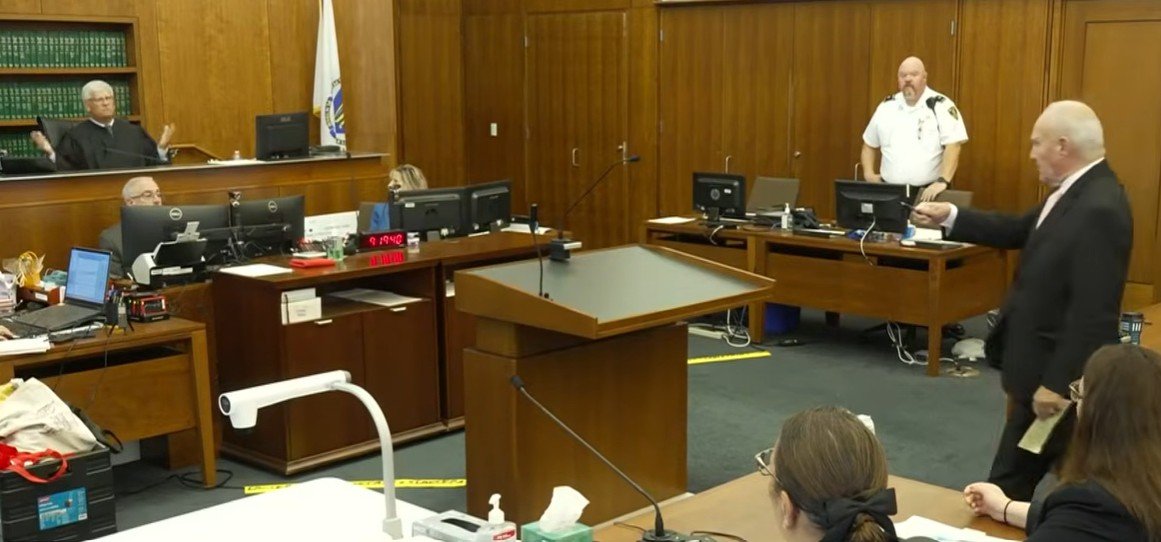 Reddington then objected to the manner in which Sullivan had addressed the jury the previous day. He asked Sullivan to focus specifically on reasonable doubt and to reinstruct the jury “forcefully.” Sullivan reminded Reddington that he had already done so.
Reddington responded:
“You did it yesterday. You did it soft. You didn’t do it forcefully.”
That produced one of the more memorable heated exchanges of the trial.
Sullivan loudly responded:
“What do you want me to do? Get a brass band?”
He continued:
“The fact that I perhaps didn’t give it my full inflection, I’m sorry about that. I’m not an actor.”
When Reddington accused the court of “glossing over the issue,” Sullivan pushed back, saying he had thought “long and hard” about what was happening and was specifically not glossing over it.
Sullivan ultimately said he would give the jury his instruction with “more pizzazz.”
3. Jury Ordered to Continue Deliberating
The jurors were brought into court. Sullivan reminded them that they were required to accept the law as he gave it to them and could not ignore any part of his instructions. He told them:
“You must follow the law as I give it to you, whether you agree with it or not.”
He also instructed the jurors not to reveal their numerical division in any future notes. The jury returned to deliberations.
4. The Jury Says It Cannot Reach a Verdict
Several hours later, another note arrived: “It is with a heavy heart that we report we are unable to come to a unanimous decision…”
The Commonwealth argued that, because the jury had already received the Tuey-Rodriguez instruction and had continued deliberating afterward, the court should declare a mistrial.
Reddington disagreed. He argued that Sullivan still had discretion to send the jury back yet again.
Sullivan rejected that request, concluding that under Massachusetts law he had reached the point where he had no choice but to declare a mistrial.
But the defense was still not finished.
5. Defense Asks About Partial Verdicts
Before Sullivan could declare the mistrial, Reddington raised another issue. Citing the Massachusetts Supreme Judicial Court’s decision involving Karen Read and Rule 27 of the Massachusetts Rules of Criminal Procedure, he asked Sullivan to determine whether the jury had reached agreement on any charges or lesser offenses—even if it remained deadlocked on others. If a verdict had been reached on any charge, Reddington argued, that verdict could potentially have double-jeopardy implications for a retrial.
The Commonwealth objected that such an inquiry would improperly enter into the jury’s deliberations.
Sullivan declined the defense request and again announced that he would declare a mistrial.
The jury was summoned back to the courtroom.
6. As the Jury Is Coming In, Reddington Makes an Emergency Appeal
Then came another turn. As the court was literally waiting for the jury to enter, Reddington stood again. He asked Sullivan to delay formally declaring the mistrial so the defense could seek emergency relief from a single justice of the Massachusetts Supreme Judicial Court under G.L. c. 211, §3.
Reddington wanted the SJC to review Sullivan’s refusal to conduct an inquiry into the holdout juror. He also raised the Americans with Disabilities Act, although he did not explain in detail on the record how the ADA applied to the juror issue. Reddington described the situation as a “travesty” and argued that there was a “clear and present danger” that the holdout juror had taken an intractable position regardless of the reasonable-doubt standard.
Sullivan asked what, exactly, Reddington wanted. Reddington stated he wanted to file an emergency appeal to address the juror situation.
Judge stated he would allow him to request an emergency stay, but not to file an appeal.
Sullivan gave the defense one hour to seek it. The mistrial was put on hold.
7. Emergency Hearing Before the Supreme Judicial Court
The defense filed its emergency petition, and a single justice of the Supreme Judicial Court held a hearing that afternoon.
During that hearing, Assistant District Attorney Jennifer Sprague walked the justice through the increasingly unusual sequence of jury notes. On September 3, the jury had first reported:
“A member of the jury is unable to follow the instructions regarding reasonable doubt. How should we proceed?”
After Judge Sullivan individually questioned the jurors and each affirmed an ability to follow his instructions, another note followed:
“[The juror] has made statements acknowledging doubt but refuses to apply it to the verdict as the law states. This is why we cannot come to a unanimous decision.”
Those words became the heart of the dispute. The defense argued that the jury was reporting an actual refusal by one juror to follow the law—not simply a disagreement about the evidence.
The Commonwealth argued that the notes reflected disagreement among jurors about what constitutes reasonable doubt and how that standard should be applied. The court could not assume that the 11 jurors were correct and the lone juror was wrong.
The defense asked the SJC to intervene and require Judge Sullivan to conduct an inquiry. The single justice took the matter under advisement.
8. The SJC Denies Emergency Relief
Court later reconvened before Judge Sullivan. The answer had arrived. The emergency request for relief had been denied, and the temporary stay was lifted.
Sullivan announced that he intended to bring the jury back and declare the mistrial.
And then…… Reddington stood up again.
9. One Final Attempt: Federal Law
Reddington acknowledged that he was speaking “at the risk of incurring the wrath of the court,” but raised one more argument. This time he turned to federal law. He cited Federal Rule of Criminal Procedure 23(b) and First Circuit precedent concerning the removal of a deliberating juror for “good cause.” He argued that a juror’s refusal to follow the law can constitute grounds for dismissal and again asked Sullivan to conduct a hearing into whether the holdout juror was actually refusing to follow the court’s instructions.
Sullivan’s response was brief:
“That request will be denied.”
At last, the jury was brought into the courtroom.
10. Judge Sullivan Declares a Mistrial
Judge Sullivan told the jurors that he was declaring them deadlocked and declared a mistrial. He then thanked them for their extraordinary commitment throughout the lengthy and emotionally difficult trial. Drawing on a phrase attributed to Winston Churchill, Sullivan told the jurors that they had agreed to “brace for that duty” when they accepted jury service. He told them that he had watched them perform that duty day after day and week after week and that they should be proud of their work.
The jurors were discharged. After more than six days of deliberations, the first trial of Lindsay Clancy had ended without a verdict.
11. The Defense Immediately Looks Ahead
Even after the mistrial was declared, the proceedings were not quite finished. Reddington told Sullivan that the defense intended to pursue a motion under Massachusetts Rule of Criminal Procedure 25(b)(2), seeking reconsideration of the court’s ruling on a required finding.
Reddington initially proposed an extraordinarily fast schedule: he wanted a hearing on the motion the following Tuesday and, assuming the motion was denied, suggested impaneling another jury the following Monday.
Sullivan was not prepared to move quite that quickly. He explained that another trial would require consideration of the court’s calendar, attorneys’ schedules, witnesses and other logistical issues. He suggested that a retrial might occur later in the fall.
The case was continued to September 29, 2026, at 9:00 a.m. for a status/trial-assignment hearing and argument concerning the Rule 25 motion.
What Happens Next?
The mistrial does not end the prosecution of Lindsay Clancy. The Commonwealth can retry the case, and Judge Sullivan made clear that his preference is to do so sooner rather than later. Before that happens, however, the defense’s Rule 25 motion will be addressed.
September 4 therefore ended the first Clancy trial—but it did not end the legal battle over what happened inside that jury room.
The same question that dominated the final days of deliberations may continue to matter going forward:
Was the lone juror refusing to follow the law—or did the other 11 jurors simply disagree with that juror about what constitutes reasonable doubt?
Sept. 3, 2026 - Day 6 of Deliberations: Court Reexamines Reasonable Doubt After Concern About a Juror
Day six of deliberations in the Lindsay Clancy trial ended with an extraordinary development: a concern raised by the jury foreperson that one juror was allegedly not following Judge William Sullivan’s instructions concerning reasonable doubt.
Before addressing the jury as a group, Judge Sullivan individually questioned the 12 deliberating jurors. Those individual inquiries were conducted with white noise playing in the courtroom, so observers could not hear the questions or answers.
Afterward, Sullivan brought the full jury back into the courtroom and again instructed them on reasonable doubt.
Judge Sullivan Re-Reads the Reasonable Doubt Instruction
Judge Sullivan first reminded the jurors that they are required to follow his instructions on the law. He then repeated the reasonable-doubt instruction:
“I want to remind you that you are required to follow my instructions on the law as I gave them to you. All right?
“I also want to, at this point, go over the instruction that I gave you about reasonable doubt. All right?
“Reasonable doubt. The burden is on the Commonwealth to prove beyond a reasonable doubt that the defendant is guilty of the charges made against her.
“What is proof beyond a reasonable doubt? Well, the term is often used and probably pretty well understood, though it’s not easily defined.
“Proof beyond a reasonable doubt does not mean proof beyond all possible doubt. For everything in the lives of human beings is open to some possible or imaginary doubt.
“The charge is proved beyond a reasonable doubt if, after you’ve compared and considered all of the evidence, you have in your minds an abiding conviction, to a moral certainty, that the charge is true.
“When we refer to moral certainty, we mean the highest degree of certainty possible in matters relating to human affairs, based solely on the evidence that has been put before you in this case.
“I’ve told you that every person is presumed to be innocent until they are proved guilty and that the burden of proof is on the prosecutor.
“If you evaluate all the evidence and you still have a reasonable doubt remaining, the defendant is entitled to the benefit of that doubt and must be acquitted.
“It’s not enough for the Commonwealth to establish a probability, even a strong probability, that the defendant is more likely to be guilty than not guilty. That is not enough.
“Instead, the evidence must convince you of the defendant’s guilt to a reasonable and moral certainty — a certainty that convinces your understanding and satisfies your reason and judgment as jurors who are sworn to act conscientiously on the evidence.
“This is what we mean by proof beyond a reasonable doubt.”
Judge Sullivan then directed the jury to resume deliberations.
Reddington Asks the Court to Remove the Juror
After the jury left the courtroom, defense attorney Kevin Reddington asked to put his objection on the record. He argued that Judge Sullivan’s questioning had not gone far enough and formally requested removal of the juror identified in the foreperson’s note.
Reddington told the court:
“Thank you, Your Honor. I appreciate that. I appreciate the fact, Your Honor, that you’re allowing us to be heard in public rather than at the sidebar.
“The court has an instruction from the foreperson of that juror that’s been working for a week now, saying that there’s one juror who refuses to listen to the law that you’ve given him or her on reasonable doubt.
“And I suggest respectfully that the soft instruction that you gave them, saying at the sidebar, ‘Can you listen to the law as I instruct you?’ does not focus on the issue. The question is not sufficient enough.
“It does not allow any foundation for a motion to remove the juror who refuses to accept your instructions on the law on reasonable doubt.
“And if we come back here in a half an hour with a mistrial because of a juror that has just spurned the instructions of this court, it’s a shame. It’s a real shame.
“And that’s why I object to the court’s ruling. I request that we have further inquiry. I request that we — my motion is to remove this juror that refuses to listen to your instruction on reasonable doubt.”
Importantly, Reddington’s statements describe the allegation contained in the foreperson’s note. The note itself was not read into the public record in this portion of the proceeding, so its precise wording is not yet known from the available transcript.
Commonwealth: The Court Should Not Attempt to Determine Who Is “Correct”
Prosecutor Jennifer Sprague opposed further inquiry and supported Judge Sullivan’s handling of the situation.
She responded:
“Thank you, Your Honor. We have the note from the jury. There’s no way to determine what the deliberations are, who’s correct, who’s incorrect, and nor should we attempt to because that’s part of deliberations.
“I think what Your Honor has done by asking each juror if they’re able to follow the law and then giving a general instruction on reasonable doubt is appropriate under Commonwealth versus Ralph.
“So we do not have an objection to what — the questions or the re-instruction.”
Sprague’s response is particularly significant because it emphasizes that the court does not know — and should not attempt to determine — which juror’s position during deliberations is “correct.”
The issue before the court is therefore not simply whether one juror disagrees with the others. The concern raised is whether a juror is refusing to apply the law as instructed by the judge.
Judge Sullivan: “I Don’t Feel It’s Appropriate for Me to Say I Agree With One Juror or the 11”
Judge Sullivan then explained why he had limited his inquiry:
“Well, I’m sure, as parties understand, as they say, the discharge of a deliberating juror is a sensitive undertaking.
“I was just specifically responding to the specific question that was asked.
“I don’t feel that it is proper for me to side with one side or the other of the deliberations. I don’t feel it’s appropriate for me to say I agree with one juror or the 11.
“At this point, I’ve asked if they are able to follow my instructions. According — they swore earlier that they could. They’ve said tonight, at this point, that they can.
“That was specifically addressed towards the specific question, and that’s what I’m doing.
“So, the defendant’s objection is noted.”
That statement provides important context. According to Sullivan, the jurors had individually indicated that they were able to follow his instructions.
The judge therefore declined, at that point, to determine which side of the apparent disagreement was correctly applying reasonable doubt.
What Happened During the Closed Sidebar?
Much of the drama preceding these statements could not be heard by the public because white noise was played during the sidebar. Law & Crime reporter Sierra Gillespie, who was seated in the courtroom, later described what she personally observed.
Gillespie said Clancy was brought into the courtroom before the cameras began rolling and appeared to have been crying. She reported seeing mascara on Clancy’s cheeks and described her as visibly upset.
Once the sidebar began, Gillespie described it as the most intense sidebar she had witnessed. According to Gillespie, Reddington became visibly angry, turned red, slammed his fists on the desk, threw papers and pointed toward Judge Sullivan.
Because white noise was being played, Gillespie could not hear the substance of the argument. She did, however, report hearing Sullivan raise his voice in response to Reddington.
At one point, according to Gillespie, Reddington threw up his hands, returned to the defense table and approached Clancy. Gillespie described Reddington holding Clancy’s hands and speaking with her forehead-to-forehead. Reddington then moved behind Clancy’s wheelchair and wheeled her closer to the sidebar, where the discussions continued.
Gillespie reported that the 12 deliberating jurors were subsequently brought in one at a time. Each was sworn and questioned individually by Judge Sullivan. Again, because of the white noise, those in the gallery could not hear the questions or the jurors’ responses.
Gillespie said that during the individual questioning, some jurors appeared relatively relaxed and exchanged pleasantries with the judge. Once the jury was brought back together, however, she described the group as appearing exhausted after six days of deliberations. She also described the courtroom as unusually crowded and the atmosphere as extremely tense.
When Sullivan ultimately instructed the jury to return to deliberations, Gillespie reported hearing an audible gasp from the gallery. Many of the reporters in attendance had apparently expected the proceeding to end with the declaration of a hung jury.
Jury Sent Home — But Another Inquiry Is Expected
Later in the afternoon, Judge Sullivan brought the jurors back into court and told them:
“What I’m going to do is excuse you until tomorrow morning at 9:00. All right? And then I’ll speak to you at that point tomorrow morning.”
The judge again reminded the jurors to avoid coverage of the case and not to discuss it with anyone.
What was not explained in open court was exactly what Sullivan intended to address when the jury returned.
However, immediately afterward, Reddington told reporters that the juror had been identified in the foreperson’s note and that he expected Sullivan to conduct an inquiry the following morning.
Reddington said:
“The juror has been identified by the note from the fore[person], and there will be an inquiry by the judge tomorrow at 9:00. I don’t know what his question is going to be. We’ll have an argument about it.”
Reddington also characterized the issue this way:
“It’s basically that there’s a person who has doubt but will not listen to the judge’s instruction.”
That wording deserves particular care. Reddington said the juror “has doubt.” He did not say the juror has reasonable doubt. Under Sullivan’s own instruction, proof beyond a reasonable doubt does not require proof beyond all possible doubt. A juror may therefore have some doubt and nevertheless conclude that the Commonwealth has met its burden.
Likewise, two jurors may consider the same uncertainty and disagree about whether that uncertainty rises to the level of reasonable doubt. Such disagreement does not, standing alone, establish that either juror has refused to follow the law.
The question facing the court is much narrower: Is this juror actually refusing to apply Judge Sullivan’s legal definition of reasonable doubt, or does the juror simply disagree with other members of the jury about whether the evidence creates reasonable doubt?
The exact language of the foreperson’s note could be critical in answering that question.
As of the end of Thursday’s proceedings, the note itself had not been read aloud in the portion of the proceeding available in this transcript, and the direction of the jury’s disagreement had not been established on the public record.
The jury is scheduled to return Friday morning at 9:00 a.m.
Sept. 2, 2026 - Jury Reports Deadlock Twice; Judge Gives Tuey-Rodriguez Instruction
The jury in the Lindsay Clancy trial has now twice told Judge William Sullivan that it has been unable to reach a unanimous decision.
On Tuesday, September 1, the jury sent its first note indicating that it could not reach a unanimous verdict. Judge Sullivan declined to give the jury a formal deadlock instruction at that point, noting the size and complexity of the case and directing jurors to continue deliberating.
They did….For six more hours, they kept working. Then asked to go home at 3:30pm.
On Wednesday, September 2, the jury returned and continued to deliberate for several more hours. At around 2pm, they came with a second message indicating that they still could not reach a unanimous decision. This time, Sullivan gave the jury the Tuey-Rodriguez instruction, Massachusetts’ instruction for a jury that is having difficulty reaching a unanimous verdict.
The instruction asks jurors to reconsider their positions, listen to the reasoning of other jurors and continue making a good-faith effort to reach agreement. Importantly, however, jurors are also told that no one should surrender an honestly held belief merely for the purpose of reaching a verdict.
Following the instruction, the jury returned to the deliberation room and continued working. Later in the afternoon, jurors asked to go home for the day rather than reporting another impasse. They will return Thursday morning to resume deliberations.
At this point, the jury is clearly divided, but it has not yet been declared a hung jury. A deadlocked jury describes where deliberations currently stand; a hung jury would be the ultimate result if the jurors remain unable to reach unanimity and the court determines that further deliberations are unlikely to resolve the disagreement.
Spectator Arrested After Allegedly Recording Jurors
Tuesday’s proceedings were also complicated by an incident outside the courthouse involving a spectator who allegedly recorded members of the jury as they were leaving. The spectator was arrested and charged with intimidation of a witness, juror, police or court official. She has pleaded not guilty.
Justice Case Analysis is intentionally not identifying the individual. Her identity is irrelevant to our coverage of the Clancy trial. What is relevant is that the incident became serious enough that, before deliberations resumed Wednesday, Judge Sullivan individually questioned all 12 deliberating jurors and the six alternates about what occurred and whether it had affected them.
Deliberations were then permitted to continue.
The jury will return Thursday for another day of deliberations. What remains unknown—and cannot be determined from the jury’s notes—is how the jury is divided, which verdict or verdicts are causing the disagreement, or how close they may be to reaching unanimity.
For now, there is no verdict, and there is no mistrial. The jury is still deliberating.
Aug. 29, 2026 - Battle of the Expert Witnesses
Aug. 27, 2026 - Trial Day 22 - Closing Arguments
Aug. 25-26, 2026 - Trial Day 20-21 - Commonwealth Rebuttal Continues with Dr. Gregory Saathoss
Dr. Gregory Saathoss — Forensic Psychiatrist
Criminal Responsibility, the Alleged Voice, Inconsistencies and Evidence of Behavioral Control
The Commonwealth’s final psychiatric expert, forensic psychiatrist Dr. Gregory Saathoff, offered an opinion that in some respects was more nuanced than a simple disagreement with the defense.
Saathoff agreed that Lindsay Clancy was suffering from a mental disease or defect on January 24, 2023. He also believed her suicide attempt was genuine and extremely serious. However, he concluded that Clancy retained both the capacity to appreciate the wrongfulness of her actions and the ability to conform her conduct to the requirements of the law.
In Saathoff’s opinion, Clancy was criminally responsible when she strangled her three children.
Much of his analysis focused not simply on Clancy’s psychiatric diagnosis, but on the sequence of her behavior before, during and after the killings; inconsistencies between accounts she gave different evaluators; discrepancies between her later recollections and contemporaneous records; and the unusual characteristics of the command auditory hallucination she reported after the deaths.
Saathoff’s Diagnosis: Bipolar II
Saathoff testified that Bipolar II disorder made the most sense diagnostically, although he acknowledged Clancy did not fulfill all—or even many—of the usual diagnostic criteria.
A significant factor for him was her response to Zoloft. Clancy reported an episode in which she was unable to sleep for approximately 48 hours after the medication was increased. Saathoff considered that a significant adverse medication reaction and testified that, if Clancy were his patient, he would diagnose Bipolar II in part so that future treating physicians would exercise caution before prescribing another SSRI antidepressant.
In Saathoff’s testimony, he did not argue that Clancy had no significant mental illness. He accepted that she did. The disagreement was over what that illness did—or did not do—to her capacities at the time she killed her children.
Psychosis Is a Symptom, Not a Diagnosis
Saathoff explained psychosis as a symptom that can manifest through perceptual disturbances such as hallucinations, delusions, or disturbances in thought and communication. A person can experience one or more of those features. Psychosis itself can also arise from a number of causes, including serious psychiatric illness, medical conditions and substances.
That characteristic became important when Saathoff analyzed Clancy’s report that she suddenly heard a male voice commanding her to kill her children and then herself.
Clancy Gave Different Accounts of When the Voice Began
According to Saathoff, Clancy was very specific with him about the onset of the alleged voice. She told him she was standing at the refrigerator when Patrick called from CVS. She did not answer initially, returned his call, spoke with him, and after that conversation ended, she heard an external male voice telling her, in substance, that this was her last chance and that she had to kill the children before killing herself.
But Saathoff found a materially different account in Dr. Margaret Spinelli’s report. According to Spinelli’s report, Clancy said the voice began at approximately 5:10 or 5:15 p.m.—essentially when Patrick left the house—and increased in intensity. That account also included an additional concept: that the children would suffer if Clancy did not act.
Saathoff characterized the two accounts as “markedly inconsistent.” The discrepancy was significant because it concerned not a peripheral detail, but the timing and content of the alleged command hallucination at the center of Clancy’s criminal-responsibility defense.
Saathoff said the accounts simply did not match, leaving him to determine which version he should consider.
The Alleged Voice Had Several Atypical Characteristics
Saathoff identified a number of characteristics of Clancy’s reported auditory hallucination that he considered atypical based upon his experience treating patients with psychosis and command hallucinations.
Clancy reported no history of hearing voices before January 24, 2023, and she has reported no voices since. She described the voice as constant rather than intermittent. According to Saathoff, Clancy said it repeated essentially the same command in the same tone, over and over, almost “as if it were on a tape.” And then it abruptly stopped.
According to the account Clancy gave Saathoff, the voice continued while she took Dawson downstairs and strangled him, returned upstairs for Cora and strangled her, and finally returned for Callan and strangled him.
After the last child was strangled, the voice stopped.
Saathoff testified that this was not typical of command auditory hallucinations.
“Committing the act is not curative of the voice.”
He testified that he had never seen a command hallucination simply disappear because the person completed the act commanded by the voice.
Saathoff also testified that experiencing a command auditory hallucination without an accompanying delusion would be rare. He found no evidence that Clancy held a delusional belief about the children or a delusional belief explaining why they needed to die.
Fear That the Children Could Be Taken Away Was Not Necessarily Delusional
One issue raised throughout the case has been Clancy’s fear that her children might be taken from her if she disclosed thoughts of harming them. Saathoff did not consider that belief delusional. Mental-health providers are mandated reporters, and disclosure that a parent may present a danger to children can lead to intervention and an assessment of the children’s safety. Therefore, although Clancy’s fears could have been intense or exaggerated, the underlying possibility that disclosure might lead to intervention involving her children was grounded in reality.
Saathoff found no separate fixed false belief concerning the children that accompanied the alleged voice and explained why they had to die.
Ativan and the Earlier Intrusive Thoughts
Saathoff also addressed Clancy’s earlier intrusive thoughts. Clancy had reported that taking Ativan sometimes relieved those thoughts. Saathoff considered that significant because Ativan, or lorazepam, is a benzodiazepine commonly used for anxiety. It is not an antipsychotic medication designed to eliminate psychotic hallucinations.
In Saathoff’s opinion, the fact that Ativan relieved the earlier intrusive thoughts provided additional support for interpreting those experiences as internal intrusive thoughts rather than external psychotic voices.
Hearing a Command Does Not Mean a Person Must Obey It
Saathoff directly challenged the proposition that a genuine command hallucination necessarily eliminates a person’s ability to choose. He testified that people experiencing command hallucinations do not automatically obey them. In fact, people frequently take steps to resist commands, particularly when the command is extreme or contrary to their values.
Saathoff gave the example of a psychotic person hearing a command to commit an act while a police officer is nearby. The presence of the officer and awareness of possible consequences can affect whether the person obeys the voice. In other words, even if a person is genuinely psychotic and genuinely hears a command hallucination, that fact alone does not establish that the person cannot appreciate right from wrong or conform behavior to the law.
That distinction was central to Saathoff’s ultimate criminal-responsibility opinion.
“The Children Are Not Puppets”
One of Saathoff’s most striking observations came when he addressed Dr. Phillip Resnick’s description of Clancy as feeling like a “puppet,” as though an outside force were controlling her actions. Saathoff pointed out that even if Clancy experienced herself that way:
“The children are not puppets.”
Children, he explained, have a strong will to survive just as adults do. Saathoff had reviewed video showing the Clancy children. Dawson and Cora were active young children who could walk and run independently.
Clancy told Saathoff that after the phone conversation with Patrick she took Dawson downstairs first. Saathoff asked what she said to persuade Dawson to leave his siblings and go downstairs with her, whether he resisted, cried or said anything. Clancy said she could not remember.
She remembered taking Dawson downstairs and strangling him.
She then returned upstairs for Cora. Again, she could not remember how she got Cora downstairs. Cora was taken to another area of the basement and strangled.
Clancy then returned upstairs for Callan. When Saathoff asked where Callan had been while the other children were being killed, Clancy was uncertain, suggesting he may have been in a playpen. She nevertheless remembered bringing him downstairs and strangling him last.
For Saathoff, the significance was that the alleged voice supplied only a broad command. It did not provide the numerous decisions necessary to accomplish the killings.
The Voice Didn’t Tell Her How to Do Any of It
On the continuation of direct examination, the prosecutor broke this point down explicitly.
Clancy did not report that the voice told her:
where to kill the children
how to kill them
what to use to kill them
in what order to kill them
where to attempt suicide
how to kill herself
According to Clancy, the command was essentially to kill the children so that she could kill herself. Everything required to execute that command still had to be determined.
Saathoff emphasized the limited period in which all of this occurred. Within that window, Clancy had to separate three children, move them individually downstairs, use three exercise bands as ligatures, strangle each child, respond to an unexpected telephone call from Patrick, and then carry out a multi-method suicide attempt.
In Saathoff’s opinion, this demonstrated that Clancy maintained “control of the sequence” of what she was doing.
The Chicken Nuggets Discrepancy
Saathoff also identified a seemingly small discrepancy that he considered important when evaluating the reliability of Clancy’s account. Clancy told him that when Patrick called from CVS, she was standing at the open refrigerator preparing to get chicken nuggets for the children’s dinner.
Patrick gave Saathoff a different account. According to Patrick, the children were already eating chicken nuggets before he left the house. He specifically recalled Dawson eating chicken nuggets and green beans from a bowl on the couch. Crime-scene photographs also showed a bowl on the couch.
Saathoff described the accounts as inconsistent. Standing alone, the question of when chicken nuggets were prepared would obviously prove very little. But Saathoff explained that discrepancies matter in a retrospective forensic evaluation because the evaluator is attempting to reconstruct the defendant’s mental state and actions years after the event.
The chicken nuggets became one of several examples in which Clancy’s later description did not align with collateral information.
A History of Presenting Differently Than She Felt Internally
Saathoff also discussed what he described as Clancy’s ability to portray herself outwardly in ways that did not necessarily reflect her internal condition. He learned that while Clancy and Patrick were dating during nursing school, she experienced significant anxiety and received psychiatric treatment, including Prozac, Wellbutrin and propranolol. Patrick reportedly did not know at the time that she was experiencing those symptoms or taking psychiatric medication.
Saathoff also pointed to Clancy’s own later descriptions of deliberately trying to appear normal. She described a Christmas breakfast during which she was struggling internally but nevertheless attempted to cook and participate with the family. In reflecting on that behavior, Clancy herself used the word “fake” to describe the way she had presented herself.
Saathoff did not use this simply to argue that photographs of a smiling mother proved she was mentally healthy. Rather, it demonstrated that Clancy herself acknowledged an ability to suppress or conceal her internal state and present something different outwardly.
Clancy’s Account of Spaulding Did Not Match the Records
Saathoff identified another discrepancy concerning Clancy’s later rehabilitation at Spaulding Hospital. Clancy expressed anger that Spaulding had prioritized treatment of her spinal cord injury over her mental-health needs and described the psychiatric care she received there as inadequate.
Saathoff reviewed the Spaulding records. Those records showed that Clancy was seen multiple times not only by a psychiatrist, but also by a psychologist and social worker.
Saathoff acknowledged that Spaulding was primarily a rehabilitation hospital and naturally concentrated heavily on her spinal injury. However, he testified that Clancy’s later depiction of the absence or inadequacy of mental-health attention did not match the documented mental-health services she received.
Again, his larger point was not simply that Clancy was “wrong.” It was that her retrospective characterization of events sometimes differed materially from contemporaneous documentation.
ThreeV: What Clancy Remembered Versus What the Digital Evidence Showed
Saathoff spent considerable time examining the decision to send Patrick for takeout. According to Saathoff, Clancy described the decision to him as though she first raised the general idea of getting takeout with Patrick and then settled on ThreeV.
The digital evidence showed a different sequence. Before sending Patrick the text suggesting ThreeV, Clancy had already researched the restaurant and the distance between ThreeV and the Clancy home. Saathoff said the sequence was essentially reversed from the way Clancy described it. Instead of first asking Patrick about takeout and then investigating a restaurant, the records showed that she had already researched ThreeV and its distance before proposing that particular restaurant.
Patrick also told Saathoff that the family had never previously gotten takeout from ThreeV. They had eaten there as a family and liked the restaurant, but their usual nearby takeout choices included West End Grill and Chestnut Grill in Duxbury.
To Saathoff, the choice of a more distant restaurant, combined with the advance research and the difference between Clancy’s recollection and the digital record, was significant.
CVS and MiraLAX Added More Time
Saathoff found a similar pattern involving the request that Patrick also stop at CVS. Cora had been seen by her pediatrician that morning, and MiraLAX (Pedialax) had been recommended for constipation. Clancy researched PediaLAX and CVS shortly after 4:00 p.m.—well before Patrick left. Yet she did not initially communicate that errand to him. CVS was added later. The result was an additional stop and additional time away from the house.
Saathoff ultimately viewed the ThreeV and CVS evidence as part of the preparatory planning preceding the killings.
Planning, Avoidance of Witnesses and Timing
When asked why he believed Clancy retained the ability to appreciate right from wrong, Saathoff pointed to several categories of behavior.
First was planning: the searches concerning ThreeV, its distance from the house, and CVS before Patrick was ultimately sent on the errands.
Second was avoidance of witnesses. Saathoff explained that a witness to a crime can do more than later report what occurred—the witness can intervene and prevent it.
The killings occurred during the period when Patrick, the only other adult in the home, had been sent away on errands that would keep him out of the house for a period of time.
Third was timing. Clancy knew Patrick would return. According to Saathoff, she told him that she had considered or “mapped out” the distance because she did not want Patrick gone too long. But once Patrick left, Saathoff viewed his eventual return as creating a deadline within which the killings and Clancy’s intended suicide had to be completed.
The amount accomplished during that limited window was significant to his assessment.
The Unexpected CVS Phone Call
Patrick’s telephone call from CVS was particularly important to Saathoff. Patrick called Clancy while he was at the store. She did not answer initially but called him back. That call was not part of whatever sequence had been unfolding in the house. It was an unexpected interruption. Yet Clancy was able to stop what she was doing, return the call, answer Patrick’s question concerning the medication and avoid communicating that she was in distress or that anything extraordinary was occurring.
Saathoff believed that demonstrated the ability to adapt her behavior to changing circumstances. It also mattered to him because the call kept Patrick on his errands. Had Clancy failed to return the call, sounded distressed, reported hearing a voice, or asked Patrick to come home, Patrick might have become concerned and returned.
Instead, the interaction reassured him sufficiently that he continued.
Concealment
Saathoff also considered concealment relevant to appreciation of wrongfulness. All three children were taken downstairs before being strangled. According to information Saathoff received from Patrick, Patrick’s office door was closed. Saathoff also considered the locked bedroom door significant after the killings, although Clancy told him she did not remember locking it.
When Patrick returned and asked what happened, Clancy did not initially tell him that she had killed the children. She told him she had tried to kill herself and directed him to the basement when he asked where the children were.
Saathoff interpreted those behaviors, along with the timing and location of the killings, as evidence relevant to concealment and awareness of wrongfulness.
The Suicide Attempt Was Real
Saathoff did not testify that Clancy staged or faked her suicide attempt. Quite the opposite. He described the attempt as “very, very serious.”
Saathoff discussed the interpersonal psychological theory of suicide, which he described through three components: a sense of aloneness or isolation, perceived burdensomeness, and the acquired capability to overcome the human instinct for survival and actually kill oneself. He found evidence of all three in Clancy’s circumstances.
She felt isolated and unable to fully communicate what she was experiencing. She had been unable to return to the nursing job she loved and had identified financial concerns as a stressor, contributing to a sense of burdensomeness.
And Saathoff believed her use of multiple suicide methods demonstrated the seriousness of her intent. The relatively superficial knife wounds did not cause him to conclude that she had not intended to die. He explained that overcoming the natural will to live can itself make completing a suicide extremely difficult.
In his view, the multiple methods, the locked door and the fact that Clancy was not dressed for the cold when she went out the window all supported genuine suicidal intent.
Crushing the Pills Was Another Sequential Process
The powdered medication residue described by Patrick also became relevant to Saathoff’s analysis. Clancy told Saathoff about lemonade in a wine tumbler but, according to his testimony, did not initially provide the detail that a significant number of pills had apparently been crushed into powder.
Saathoff explained that crushing numerous pills into a fine powder without equipment such as a mortar and pestle would itself be a laborious process. That required additional decisions and actions: selecting the medication, crushing the pills, combining the powder with liquid, consuming it, using a knife and ultimately going out the window.
For Saathoff, the suicide attempt therefore reinforced two conclusions at once. Clancy genuinely intended to die. But the attempt also demonstrated continued sequential and goal-directed behavior.
Those propositions were not mutually exclusive.
Clancy’s Behavior Throughout January 24
Saathoff looked beyond the killings themselves to Clancy’s functioning throughout January 24. That morning she drove Cora to a pediatric appointment. The pediatrician did not report observing bizarre or obviously psychotic behavior.
Throughout the day Clancy cared for the children, played with Play-Doh, went outside with them to build a snowman, sent photographs to family, prepared food and interacted normally with others.
Saathoff characterized the day as one involving substantial organization and control. His point was not merely that a person who appears normal cannot be mentally ill. His own testimony acknowledged Clancy’s history of concealing internal distress. Instead, he considered the day’s functioning together with what happened later: research, errands, timing, the unexpected phone call, separating the children, three strangulations, and the suicide attempt.
Mental Illness Did Not Equal Lack of Criminal Responsibility
Saathoff ultimately separated three questions that can easily become conflated in this case.
Was Lindsay Clancy mentally ill?
Yes, in his opinion.
Was her suicide attempt genuine?
Yes, emphatically.
Did either fact mean she lacked criminal responsibility for killing her children?
No.
Saathoff concluded that Clancy retained the capacity to appreciate right from wrong. He also concluded that she retained the capacity to conform her behavior to the requirements of the law.
His opinion rested heavily on the cumulative behavioral sequence: preparation before Patrick left, selection and timing of the errands, absence of witnesses, ability to respond appropriately to an unexpected telephone call, repeated trips upstairs and downstairs to retrieve the children individually, selection and use of separate ligatures, concealment, and the multiple decisions involved in her subsequent suicide attempt.
In Saathoff’s view, the events of January 24 demonstrated a woman who was mentally ill and suicidal, but who nevertheless remained capable of organized, adaptive and purposeful behavior.
He therefore concluded, to a reasonable degree of medical certainty, that Lindsay Clancy was criminally responsible when she strangled her children.
Cross-Examination: Reddington Challenges Saathoff’s Experience and the Commonwealth’s Theory
Defense attorney Kevin Reddington’s cross-examination was extensive and frequently contentious. Reddington first attacked Saathoff’s background and attempted to portray him as an expert whose professional career was heavily aligned with government institutions rather than perinatal psychiatry.
He walked through Saathoff’s lengthy résumé, emphasizing work involving the FBI, Department of Justice, Virginia corrections, terrorism, threat assessment, crisis negotiation, national security and violent offenders. At one point Reddington asked whether it was fair to describe Saathoff as a “government man.” The Commonwealth objected and the judge sustained the objection.
Saathoff pushed back against Reddington’s characterization of his career, noting that he had treated psychiatric patients for approximately 40 years.
Reddington also challenged his experience with postpartum psychiatric disorders.
Saathoff testified that he had treated women with postpartum psychosis during the late 1980s and 1990s while running a state-hospital unit treating men and women with serious psychiatric illness. He also testified that assessment of women’s reproductive and postpartum histories remained part of psychiatric practice throughout his career.
Reddington emphasized, however, that Saathoff’s direct treatment experience with postpartum psychosis was decades old.
The Defense Emphasizes Postpartum Depression and Screening
Reddington questioned Saathoff extensively about postpartum depression, the postpartum period and the Edinburgh Postnatal Depression Scale.
Saathoff acknowledged that Clancy had received Edinburgh screenings and recalled her highest score as approximately 23 out of 30. He agreed that scores above 15 are concerning.
The defense also questioned him about blood testing, thyroid testing, medication metabolism and whether additional testing should have been performed during Clancy’s treatment.
Saathoff generally resisted broad propositions that such testing was automatically required, explaining that the need for laboratory testing depends upon the medication, symptoms and clinical circumstances.
Medication Side Effects and Sleep Deprivation
Reddington also emphasized Clancy’s medication history and the severe insomnia she experienced after Zoloft was increased.
Saathoff agreed that approximately 48 hours without sleep was significant and that severe sleep deprivation can, in some circumstances, contribute to psychosis. He also agreed that Clancy was not “doctor shopping” in an effort to obtain drugs or get high. She was seeking help for genuine psychiatric symptoms.
That concession is important because Saathoff’s criminal-responsibility opinion did not depend upon portraying Clancy as someone who fabricated her mental-health problems before the killings.
Resnick’s Research on Auditory Hallucinations
Reddington confronted Saathoff with published research concerning auditory verbal hallucinations, including work associated with defense expert Dr. Phillip Resnick. The cross-examination challenged the idea that characteristics such as whether a voice is perceived inside or outside the head can reliably distinguish genuine hallucinations from fabricated ones.
Saathoff acknowledged that auditory hallucinations can vary considerably in how they are experienced.
The defense’s broader point was that an “atypical” hallucination is not necessarily a false hallucination and that psychiatric literature documents substantial variation among patients who genuinely hear voices.
That was an important limitation on the Commonwealth’s argument: Saathoff identified unusual features in Clancy’s account, but unusual does not by itself mean impossible.
The Central Disagreement Remained Criminal Responsibility
Despite the lengthy cross-examination concerning postpartum illness, medications, sleep deprivation, psychiatric treatment and the characteristics of auditory hallucinations, Saathoff did not retreat from his ultimate opinion.
His testimony did not require the jury to find that Clancy had never suffered significant psychiatric illness. It did not require them to find that every symptom she reported was fabricated. And it did not require them to believe that her suicide attempt was staged. Instead, Saathoff’s opinion focused on a narrower legal question:
Whatever Lindsay Clancy was experiencing internally on January 24, what do her actual behaviors demonstrate about the capacities she retained? For Saathoff, the answer was found not in one isolated act, but in the entire sequence. She researched. She planned. She communicated. She waited until the only other adult left. She adapted to an unexpected telephone call. She moved three independently mobile children separately through the house. She selected and used ligatures. She completed three separate strangulations. She undertook a multi-step suicide attempt.
And the account she later gave of some critical portions of that sequence did not always match the digital evidence, Patrick Clancy’s account, other evaluators’ reports or contemporaneous medical records.
Saathoff’s conclusion was therefore not that Lindsay Clancy was mentally healthy.
It was that mental illness did not deprive her of criminal responsibility.
Aug. 25, 2026 - Trial Day 20 - Commonwealth Rebuttal Continues with Dr. Kirk Heilbrun
Dr. Kirk Heilbrun — Forensic Psychologist
Dr. Kirk Heilbrun, a forensic psychologist called by the prosecution, testified that Lindsay Clancy was suffering from a genuine mental disease or defect on January 24, 2023. However, after reviewing the extensive records, interviewing Clancy, conducting psychological testing, and interviewing collateral sources, Heilbrun concluded that she remained criminally responsible for killing her three children.
His testimony was significant because he did not dispute that Clancy had become seriously mentally ill. Instead, Heilbrun focused on a different question: Did that mental illness deprive her of the capacities required for criminal responsibility?
His answer was no.
Heilbrun’s Diagnosis: Bipolar II Disorder
Heilbrun diagnosed Clancy with Bipolar II disorder with depressive symptoms. He also believed her sleep difficulties and probable adverse reactions to medications exacerbated her psychiatric condition.
In his opinion, Clancy therefore did have a mental disease or defect at the time of the killings.
That finding, however, was only the first part of the criminal-responsibility analysis. Heilbrun did not believe her illness prevented her from appreciating the illegality and wrongfulness of her conduct or from controlling her actions.
Two Competing Explanations for the Killings
Heilbrun considered two primary explanations for what occurred on January 24:
Clancy was psychotic, heard command hallucinations and killed her children in response to those commands; or
Clancy was profoundly depressed and suicidal and killed her children as part of a serious suicide attempt because she did not want to leave them behind — what Heilbrun described as altruistic filicide.
After interviewing Clancy, administering psychological testing, reviewing the records and conducting collateral interviews, Heilbrun concluded that the evidence much more strongly supported the second explanation.
In his view, Clancy’s depression and hopelessness were genuine, as was her desire to die. Her thinking about her children had also become distorted. But that was different from concluding that psychosis or command hallucinations controlled her behavior.
“The Children Will Suffer Without Me”
Heilbrun drew an important distinction between thoughts that were distorted and thoughts that were psychotically false. Clancy reportedly believed her children would suffer if she died. Heilbrun said there was some realistic basis for that belief — children likely would suffer after losing their mother. Her belief that no one else could adequately care for them, however, was distorted.
According to Heilbrun, Clancy’s moral judgment was influenced by her depression, hopelessness and desire not to leave her children behind. But he did not believe that meant she had lost awareness that killing them was illegal and wrong. He concluded that the killings were best understood as a serious suicide attempt combined with altruistic filicide — killing the children out of what Clancy perceived as love — rather than a response to command hallucinations.
Peritraumatic Dissociation Is Not Necessarily Psychosis
Heilbrun also addressed Clancy’s descriptions of feeling as though it wasn’t really her committing the acts, that she was watching herself, and that there was “no thinking” or “no decision making.”
He explained the concept of peritraumatic dissociation, which can occur while a person is experiencing an extremely traumatic event. A person may feel that events are unreal, that they are watching themselves from outside their body, or that it does not feel as though they are the person performing the actions. Importantly, Heilbrun said such descriptions can sound psychotic without actually representing psychosis.
He then compared Clancy’s claim that there was essentially no decision-making with the actual sequence of events. In Heilbrun’s view, numerous decisions had to be made during the approximately 18-to-20-minute period in which the children were killed: where the killings would occur, what would be used to strangle them, which child would be killed first, how the children would be managed during the sequence, and how Clancy would subsequently attempt to kill herself. Those actions were important to his assessment of whether she retained behavioral control.
Heilbrun: Clancy Retained Control
Heilbrun testified that Clancy demonstrated self-control throughout January 24 and retained control during the critical period after Patrick Clancy left the house. Her depression and hopelessness influenced her decisions, he said, but she nevertheless retained control over “whether, when, and how” she carried them out — including her decision to include the children. That difference went directly to the second prong of criminal responsibility: whether Clancy lacked substantial capacity to conform her conduct to the requirements of the law. Heilbrun concluded that she did not lack that capacity.
The Phone Call During the Critical Time Period
The brief phone call between Patrick and Lindsay Clancy also factored into Heilbrun’s analysis. Patrick called Lindsay at approximately 5:33 p.m. She did not answer but immediately called him back at approximately 5:34. During Heilbrun’s collateral interview with Patrick, Patrick said Lindsay sounded somewhat distracted or as though she was in the middle of something, but nothing about the conversation struck him as particularly unusual. As Heilbrun explained it, Patrick said that when Lindsay was home with three young children, she was usually in the middle of something.
Heilbrun considered the call unusually useful because it provided both a contemporaneous observation of Clancy during the critical period and an objective marker within the timeline between Patrick leaving at approximately 5:15 p.m. and returning at approximately 6:00 p.m.
Clancy Became More Guarded When Discussing the Killings
Heilbrun also noticed a change in Clancy during his three-day evaluation. During the first two days, he described her as attentive and responsive, with surprisingly good recall considering that approximately three years had passed. She remembered details involving dates, medications, dosages, times and other information.
That changed on the third day when the discussion turned specifically to her mental state at the time of the killings and the events themselves. Heilbrun said Clancy became more cautious and guarded and increasingly responded that she did not remember or did not recall.
One example involved her Apple Watch. When Heilbrun asked which wrist she normally wore it on, Clancy said she could not remember.
Another involved an important contemporaneous hospital record. After regaining consciousness at Brigham and Women’s Hospital, Clancy was intubated and unable to speak. When asked about her mood, she reportedly wrote that she was “horrified.” When Heilbrun later asked her about that statement, Clancy said she did not remember writing it and did not remember why she would have been horrified.
Inconsistencies in What Clancy Said the Voice Told Her
Heilbrun also identified inconsistencies in Clancy’s accounts of the alleged voice. According to the Brigham and Women’s records, Clancy reported that the voice told her words to the effect of:
“You have to kill yourself so you can kill the kids,” and that “the kids will suffer without you.”
When Heilbrun questioned her years later, however, Clancy told him the voice did not say the children would suffer without her. She said the voice only told her, in substance:
“This is your last chance. You have to kill the kids so you can kill yourself.” That discrepancy mattered to Heilbrun.
He explained that when he encounters inconsistent accounts during a forensic evaluation, it raises the possibility that the information is inaccurate. When two statements are mutually inconsistent, at least one of them cannot be accurate.
This was part of Heilbrun’s broader effort to test Clancy’s later account against contemporaneous records, objective evidence, and collateral information rather than simply accepting her description of her mental state.
Ativan and the Intrusive Thoughts
Another detail Heilbrun considered was Clancy’s report that Ativan helped make her intrusive thoughts go away. Heilbrun noted that lorazepam, or Ativan, is a benzodiazepine primarily used to treat anxiety. It is not an antipsychotic medication intended to eliminate hallucinations. He therefore considered Clancy’s reported response to Ativan more consistent with intrusive thoughts associated with anxiety than with psychotic auditory hallucinations.
Heilbrun’s Ultimate Opinion
To a reasonable degree of psychological certainty, Heilbrun concluded that Clancy had a mental disease or defect on January 24, 2023.
But he also concluded that she retained awareness of the illegality of killing her children.
Her moral judgment was affected by depression, hopelessness, her desire to die and her distorted belief that her children should not be left behind. Nevertheless, Heilbrun believed she remained capable of controlling her behavior.
His ultimate clinical opinion was that Lindsay Clancy was criminally responsible for the killings.
Cross-Examination — Reddington Challenges Heilbrun
Defense attorney Kevin Reddington attacked Heilbrun’s opinion from several directions, including the timing of his evaluation, his compensation, his lack of recent specialization in postpartum psychiatric disorders and the severity of Clancy’s deterioration during the months preceding the killings.
Evaluation Nearly Three Years Later
Reddington emphasized that Heilbrun did not personally evaluate Clancy until approximately three years after the killings. Heilbrun acknowledged that, generally, evaluating someone closer in time to the alleged offense is preferable because the evaluator can more directly compare the person’s current mental state with the mental state being reconstructed.
The evaluation itself took place over three days and totaled approximately 10½ hours. On the first day, Heilbrun and psychiatrist Dr. Abram Mack interviewed Clancy together for approximately 4½ hours. Heilbrun conducted psychological testing on the second day for approximately three hours and interviewed her for another three hours on the third day.
Approximately $54,000 in Fees
Reddington also questioned Heilbrun about his compensation. Heilbrun testified that he was being paid approximately $300 per hour and had devoted roughly 180 hours to the case before his courtroom testimony. At that point, he estimated his compensation at approximately $54,000, with additional billing expected for his testimony. Reddington used the figure as part of his effort to portray Heilbrun as a highly paid prosecution expert.
Lack of Recent Postpartum Specialization
A substantial portion of cross-examination focused on Heilbrun’s professional background. Heilbrun has extensive experience in forensic psychology, including forensic mental-health assessments, violence-risk assessment, competency, juvenile justice, mentally disordered offenders and consultation with numerous governmental and criminal-justice organizations. Reddington, however, emphasized what was largely absent from Heilbrun’s lengthy CV: recent specialization in postpartum depression or postpartum psychosis.
Heilbrun testified that while working at Florida State Hospital around 1982, he conducted a therapy group involving approximately four or five severely mentally ill women who had killed their children. Reddington repeatedly emphasized that this experience occurred approximately 44 years ago.
He also questioned Heilbrun about a much older publication involving psychosis and established that Heilbrun had not built his academic career around postpartum psychiatric disorders.
The defense attack was therefore not that Heilbrun lacked forensic credentials — his extensive CV demonstrated otherwise — but that perinatal and postpartum psychiatric disorders were not his specialty.
Reddington Walks Through Clancy’s Deterioration
Reddington then used Heilbrun’s own testimony and report to reconstruct Clancy’s deterioration from the fall of 2022 through January 2023. Heilbrun agreed with many of the underlying facts. Before the fall of 2022, Clancy had generally been happy, highly functioning, hardworking and disciplined. She had been a successful nurse and, by Heilbrun’s own description, a very good mother.
By October, however, her condition had begun to deteriorate. Reddington highlighted Clancy’s October 20 text to her mother asking her to come stay with her:
“I’m really sick. Something is wrong.”
Clancy described severe insomnia, said she did not know how she would get through the day, believed medication prescribed for anxiety had made things worse and said she was scared and did not want to be alone.
By November and December, Heilbrun agreed that Clancy was experiencing significant sleep disruption, anxiety, panic symptoms, concerns about benzodiazepines, forgetfulness and feelings of disconnection. She described feeling like a “zombie,” disconnected from her body and unable to relate normally to other people. She believed medications were contributing to what was happening to her and at times feared they were damaging her brain. Heilbrun agreed that December was probably the worst month for her. Clancy was also reporting intrusive or “dark” thoughts, including thoughts involving self-harm and, at times, possible harm to the children.
Were Providers Asking the Right Questions?
Reddington pressed Heilbrun about how Clancy’s mental-health providers responded when she reported intrusive thoughts, dark thoughts and thoughts of harm. Heilbrun explained that asking whether a patient is hearing voices is a standard mental-status question and testified that Clancy was asked such questions on multiple occasions. Her typical response was no.
Reddington nevertheless challenged whether providers adequately explored what Clancy meant when she described “dark thoughts” or intrusive thoughts.
The exchange highlighted an important dispute running throughout the trial: whether Clancy’s pre-offense descriptions represented documented intrusive thoughts that later developed into psychosis, or whether the later account of voices was fundamentally different from what she had consistently reported before January 24.
A Good Mother Who Became Profoundly Ill
Reddington repeatedly returned to the dramatic change in Clancy’s life. Heilbrun agreed that she had been a good student, hardworking, disciplined, successful professionally, and a very good mother. He also agreed that she had been playing outside and making snowmen with her older children only hours before they were killed.
The defense used that history to emphasize how extraordinary the killings were compared with everything previously known about Clancy. But Heilbrun did not dispute that contrast.
In fact, one of the most important aspects of his testimony was precisely what he didn’t dispute: he did not claim Clancy was previously violent, a bad mother, malingering throughout her treatment, or free of serious psychiatric illness. He accepted that she had deteriorated significantly.
The disagreement was over what that deterioration ultimately meant under the criminal-responsibility standard.
The Central Point of Heilbrun’s Testimony
Heilbrun’s opinion can ultimately be reduced to an important distinction: Mental illness does not automatically equal lack of criminal responsibility.
He believed Clancy was seriously depressed, suffered from Bipolar II disorder, experienced severe sleep problems and may have suffered adverse medication effects. He believed her hopelessness and desire to die profoundly influenced what happened on January 24.
But after comparing her later statements with contemporaneous medical records, collateral interviews, the objective timeline and her behavior during the killings, Heilbrun did not believe the evidence best supported a psychotic command hallucination that deprived Clancy of control. Instead, he believed the evidence more strongly supported a profoundly depressed and suicidal woman who decided she could not leave her children behind.
In Heilbrun’s opinion, her mental illness influenced why she killed her children. It did not eliminate her ability to understand what she was doing or control whether, when and how she did it.
For that reason, he concluded that Lindsay Clancy was criminally responsible.
Aug. 24, 2026 - Trial Day 19 - Commonwealth Rebuttal Continues with Dr. Avram Mack and Dr. Kirk Heilbrun
Dr. Avram Mack — Commonwealth Forensic Psychiatrist
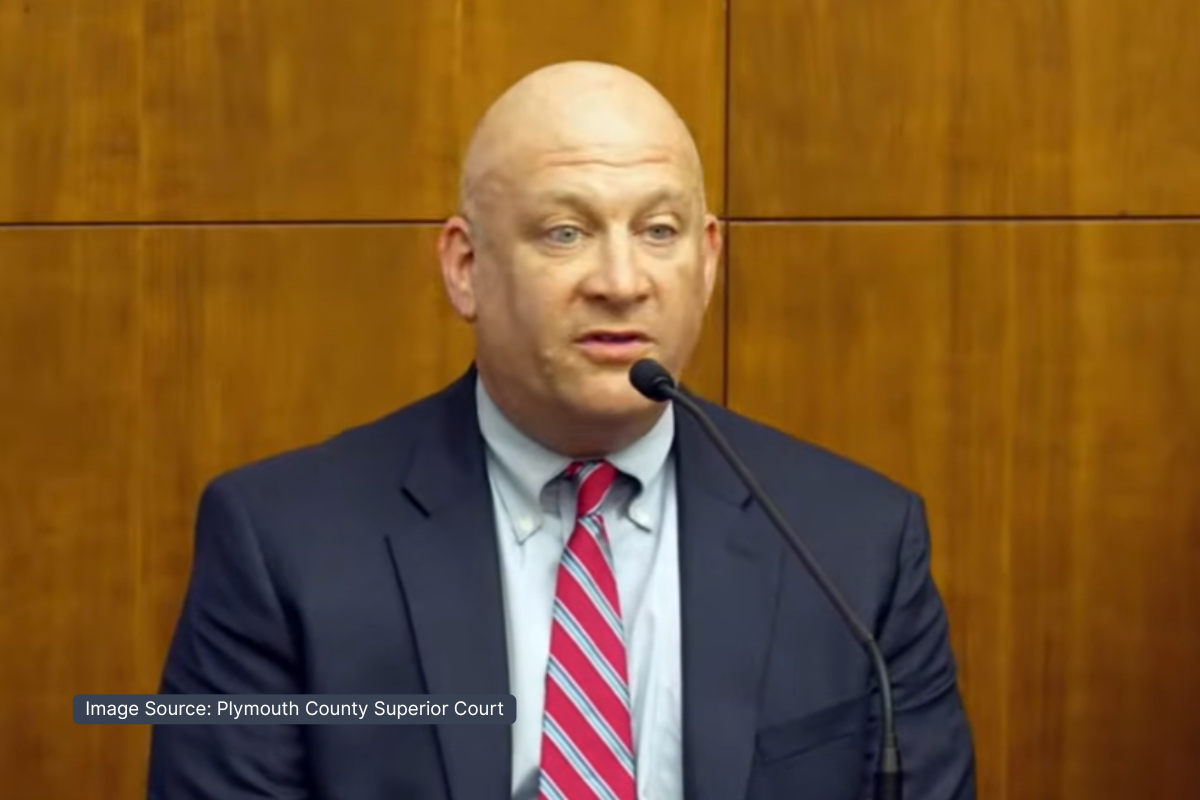
The Commonwealth continued its rebuttal case Tuesday with the conclusion of forensic psychiatrist Dr. Avram Mack’s cross-examination by Kevin Reddington, followed by psychologist Dr. Kirk Heilbrun, who conducted psychological testing of Lindsay Clancy and participated with Mack in her forensic evaluation.
The day ended earlier than expected after defense attorney Kevin Reddington moved for a mistrial over direct testimony of Heilbrun concerning Clancy’s Catholic upbringing and religious beliefs. Judge Sullivan denied the motion but struck the testimony and gave the jury a strong curative instruction.
Reddington Continues Cross-Examination of Dr. Avram Mack
Mack returned by Zoom Tuesday morning for the remainder of his cross-examination. Judge White reminded jurors that the Commonwealth was presenting its rebuttal case and that closing arguments and jury instructions would follow after the rebuttal witnesses were completed.
Reddington began by focusing on Mack’s experience specifically in criminal responsibility cases. Mack estimated that he had testified in court on criminal responsibility only one or two times previously, making the Clancy case approximately his third time testifying at trial on that issue.
Reddington then questioned Mack about previous cases in which his qualifications or methodology had reportedly been challenged. He cited cases from Pennsylvania, New Jersey and Florida, at times reading what he characterized as findings or criticism from courts regarding Mack’s qualifications or methodology. Mack said he did not remember some of the cases and disputed Reddington’s characterization of others.
The questioning also turned to Mack’s forensic work and compensation. Mack testified that his forensic work has generated several hundred thousand dollars annually in some years. He acknowledged that he was retained in this case by the Plymouth County District Attorney’s Office through Park Dietz & Associates.
Reddington attempted to use that relationship to raise the issue of confirmation bias — the tendency to seek or interpret information in a way that supports an existing belief. Mack acknowledged the concept but rejected Reddington’s suggestion that being retained by prosecutors meant he entered the evaluation hoping to reach a conclusion favorable to the Commonwealth.
Reddington also emphasized that Mack did not evaluate Clancy until 2026, approximately three years after the deaths of her children. Before meeting with her, Mack had already reviewed a substantial amount of evidence, including medical and psychiatric records, police reports, toxicology evidence, grand jury testimony, witness interviews, digital evidence and reports prepared by defense experts.
The MMPI and Whether Clancy Exaggerated Her Symptoms
A significant portion of the cross-examination concerned psychological testing performed by Heilbrun, particularly the Minnesota Multiphasic Personality Inventory (MMPI). Reddington questioned Mack about the MMPI’s validity scales and repeatedly attempted to characterize them as a means of determining whether someone was lying or exaggerating symptoms.
Mack pushed back on that characterization. He explained that the validity scales can indicate whether a person’s response pattern makes the MMPI results unreliable or unusable, but said the test is not a lie detector and does not establish whether a person is telling the truth about a particular factual claim.
That distinction is important in this case because the credibility and reliability of Clancy’s later descriptions of hearing a voice have become a central issue in the competing expert opinions.
Reddington also continued questioning Mack about the various diagnoses considered by Clancy’s providers and defense experts, including major depression and bipolar disorder, and about symptoms that can overlap among psychiatric conditions.
Mack ultimately maintained the opinion he offered during his direct examination: although Clancy was suffering from mental illness, he did not believe she lacked criminal responsibility at the time she killed her children.
Dr. Kirk Heilbrun Takes the Stand
The Commonwealth next called Dr. Kirk Heilbrun, a forensic psychologist who participated in the April 2026 evaluation of Clancy with Mack and independently conducted psychological testing.
Heilbrun described an extensive review of the case. Among the materials he reviewed were Clancy’s medical and psychiatric records, police investigative material, grand jury proceedings, defense expert reports, Department of Children and Families records, cell phone evidence, text messages, Apple Watch and other digital evidence, and surveillance video involving the Clancy family.
He estimated that he had spent approximately 180 hours on the case before traveling to Plymouth for trial. Approximately 10½ hours were spent meeting with and testing Clancy, while another 1½ hours were spent conducting collateral interviews. He interviewed Patrick Clancy and Patrick’s mother, Sue Clancy. He also requested an interview with Lindsay Clancy’s sister, who declined.
Heilbrun and Mack interviewed Clancy together on two of the evaluation days, while Heilbrun conducted psychological testing separately.
Clancy’s Account of the Voice
One of the most significant portions of Heilbrun’s testimony concerned what Clancy told him about the voice she says she heard on January 24, 2023. According to Heilbrun, Clancy described the voice as telling her words to the effect of:
“This is your last chance. You have to kill the kids so you can kill yourself.”
She told him that the message repeated for approximately 18 minutes, including during the period in which she strangled her children.
Heilbrun compared that description with other accounts Clancy gave after the killings. In those accounts, the reported content or meaning of the voice was not always the same. At other times, Clancy reportedly described believing that the children would suffer without her or that she needed to take them with her.
Those differences were significant to Heilbrun’s evaluation because he was assessing not simply whether Clancy had experienced psychiatric symptoms, but whether the available evidence supported the existence of an acute psychotic state at the time of the killings.
Postpartum Psychosis
Heilbrun also addressed the defense theory that Clancy was suffering from postpartum psychosis. He noted that Clancy was approximately eight months postpartum when the children were killed and discussed diagnostic literature concerning the typical onset of postpartum or peripartum psychiatric illness. He did not dispute that Clancy had significant psychiatric symptoms before January 24. However, he questioned whether the evidence supported the conclusion that those symptoms represented postpartum psychosis.
This contrast has become increasingly important during the expert phase of the trial. The Commonwealth’s rebuttal experts have not argued that Clancy was free of mental illness. Rather, they have distinguished mental illness from psychosis and psychosis from the legal standard for lack of criminal responsibility.
“Go to God, Baby” Testimony Leads to Mistrial Motion
Late in the afternoon, Heilbrun’s testimony took an unexpected turn. Heilbrun discussed Clancy’s statement that, while killing her children, she said words to the effect of:
“Go to God, baby. Go to God.”
The questioning then moved into Clancy’s Catholic upbringing and her reported expectation that she and her children would ultimately be together in heaven. Heilbrun also discussed questioning Clancy about Catholic teaching concerning suicide, including whether suicide was considered a mortal sin.
That prompted an objection and a lengthy sidebar. Reddington subsequently moved for a mistrial, arguing that testimony concerning Clancy’s religion and religious beliefs was improper and prejudicial.
Judge Sullivan denied the mistrial motion but agreed that the questioning had entered an improper area.
When the jury returned, Sullivan gave a forceful curative instruction. He told jurors that testimony concerning Clancy’s religious upbringing was “absolutely an inappropriate area of testimony” and ordered them to disregard it. The judge made clear that Heilbrun’s understanding or interpretation of Catholic teaching was irrelevant to the issues the jury must decide.
The testimony was stricken.
Clancy’s own statements — including what she says she told the children and what she says she believed at the time — may be relevant to experts evaluating her mental state. Heilbrun’s interpretation of whether those beliefs were consistent with Catholic doctrine was a different matter, and that was the area Judge Sullivan instructed jurors to disregard.
The dispute consumed enough time that the court ended for the day before Heilbrun completed his testimony.
Heilbrun Will Return Tuesday
Heilbrun’s direct examination was not completed Monday. He will return Tuesday morning for the remainder of the Commonwealth’s questioning and will then face cross-examination by Reddington.
Judge Sullivan also indicated before dismissing the jury that he believed the Commonwealth has one additional rebuttal witness after Heilbrun. That means the Commonwealth’s rebuttal case is not yet complete. Once Heilbrun finishes, including cross-examination and any redirect, the Commonwealth is expected to call that remaining witness before the case can move toward closing arguments and jury instructions.
The expert testimony has increasingly narrowed the central dispute for jurors. There appears to be little disagreement that Clancy was experiencing significant psychiatric symptoms in the months before the deaths of her children. The much larger question is what those symptoms meant on January 24, 2023 — and whether a mental disease or defect left her unable to appreciate the wrongfulness of her actions or unable to conform her conduct to the requirements of the law.
That question will ultimately be left to the jury.
Aug. 21, 2026 - Trial Day 18 - Dr. Avram Mack, Forensic Psychiatrist, First Commonwealth Rebuttal Witness
Dr. Avram Mack — Commonwealth Forensic Psychiatrist
For its first rebuttal witness, the Commonwealth called Dr. Avram Mack, a forensic psychiatrist who evaluated Lindsay Clancy for criminal responsibility. Mack interviewed Clancy on April 10 and April 12, 2026, reviewed extensive records and case materials, and testified that his role was forensic rather than therapeutic: he was evaluating her mental condition as it related to the legal standard for criminal responsibility.
Mack did not testify that Clancy was free of mental illness. Rather, his ultimate opinion was that although she suffered from a mental disorder, she retained the capacities required for criminal responsibility at the time of the deaths of her children.
Mack Disputes the Bipolar II Diagnosis
One of the most significant portions of Mack’s testimony concerned the defense diagnosis of Bipolar II disorder.
Dr. Phillip Resnick previously testified that he diagnosed Clancy with Bipolar II disorder, including a severe depressive episode, and identified earlier behavior that he believed represented a period of hypomania or “mild mania.”
Mack disagreed.
He explained the use of the DSM diagnostic criteria and testified that, after reviewing the records, he found no evidence that Clancy experienced either mania or hypomania during the relevant 2022–2023 period.
Mack tells the jury that psychiatry uses the DSM criteria as the diagnostic standard—not merely as a loose guide. Then he goes directly into mania/hypomania and says he found no indication of either in Lindsay.
That’s significant because we’re not talking about whether Lindsay occasionally:
talked fast
slept badly
felt better for a day
cleaned the house
seemed energetic
was unusually productive
or had some other isolated behavior someone might retrospectively characterize as “up.”
Those things don’t automatically create a DSM episode. Duration, clustering of symptoms, change from baseline, severity/functioning, and the other diagnostic requirements matter.
That disagreement is important because a diagnosis of Bipolar II requires a history of at least one qualifying hypomanic episode. Mack’s testimony therefore challenges not simply the severity of Clancy’s symptoms, but a fundamental component of the defense expert’s Bipolar II diagnosis.
What Qualifies as Mania or Hypomania?
Dr. Mack explained that under DSM criteria, both mania and hypomania involve a distinct period of abnormally elevated, expansive or irritable mood and increased activity or energy, accompanied by at least three characteristic symptoms (four when the mood is only irritable):
Inflated self-esteem or grandiosity
Decreased need for sleep — importantly, not merely insomnia
More talkative than usual or pressured speech
Flight of ideas or racing thoughts
Distractibility
Increase in goal-directed activity or psychomotor agitation
Excessive involvement in risky activities with potentially painful consequences
The crucial differences include duration and severity:
Mania: Generally lasts at least seven days, present most of the day nearly every day (or any duration if hospitalization is necessary), and causes marked functional impairment, requires hospitalization, or includes psychotic features.
Hypomania: Lasts at least four consecutive days, present most of the day nearly every day. It represents an unequivocal change in functioning observable by others but, unlike mania, is not severe enough to cause marked functional impairment or require hospitalization and does not include psychosis.
That last part is especially important:
Bipolar I requires at least one manic episode.
Bipolar II requires at least one hypomanic episode plus at least one major depressive episode, with no history of a manic episode.
Mack testified that he specifically searched the 2022–2023 record for these phenomena and found “never indication of any element of mania or hypomania.” Later he made the diagnostic consequence explicit: without evidence of a manic or hypomanic episode in the available record, “you can’t diagnose bipolar disorder.”
The competing expert testimony leaves the jury with an important factual and diagnostic question: Was there actually a period in Clancy’s history that met the criteria for hypomania, or are individual symptoms and behaviors being interpreted retrospectively as evidence of bipolar disorder?
Clancy’s Condition in April 2026
Mack also described his observations of Clancy during his two interviews in April 2026. He characterized her as friendly and cooperative, with appropriate eye contact and generally normal speech, thought processes, mood/expression and cognition. She became distressed and tearful when discussing certain subjects, but Mack otherwise described the mental-status examination as largely unremarkable.
Clancy described herself as experiencing “situational depression,” including feeling miserable and not wanting to be alive. Mack emphasized, however, that the legal question before him was not Clancy’s mental condition in 2026, but her mental condition at the time of the offenses in January 2023.
Lindsay questions whether she has bipolar disorder, calls her present depression situational, has no current observable psychosis in the records we’ve seen, denies hallucinations before or since the killings, and Mack says her current medication doses are relatively low. None individually proves anything about January 24, 2023—but collectively, they’re highly relevant context for evaluating the competing retrospective diagnoses.
Current Medication: Olanzapine
Mack also provided an answer to a question that has surfaced periodically during the trial: what psychiatric medication is Clancy currently receiving?
According to Mack, Clancy told him about her current medication during his April 2026 evaluation, and he compared what she reported with her Tewksbury records. He testified that “the main medication of note is olanzapine.”
Olanzapine is an antipsychotic medication, although the fact that a patient receives the medication does not, by itself, establish a particular psychiatric diagnosis. Mack’s testimony in this portion did not establish why Tewksbury prescribed it or identify the treating facility’s current diagnosis.
Other current medications:
Olanzapine — 2.5 mg. Mack specifically called that a “small dose.”
Trazodone
Wellbutrin (bupropion) — antidepressant
Clonidine — Mack described it as sometimes used for anxiety or sleep
Propranolol — sometimes used for anxiety
Asked about the regimen overall, Mack testified:
“Overall, they’re on the lower side of dosages.”
She had also previously been trialed on lithium, but Mack said it wasn’t used for very long and cautioned that psychiatric disorders aren’t defined by medication response.
Criminal Responsibility
Ultimately, the most important distinction in Mack’s testimony was between having a mental disorder and being legally not criminally responsible because of that disorder. Mack accepted the former but rejected the latter.
His opinion was that Clancy had a mental disorder, but that the disorder did not deprive her of the capacities necessary for criminal responsibility when the children were killed.
That places the expert disagreement at the heart of the case. The Commonwealth does not necessarily have to persuade jurors that Clancy was mentally well. Instead, Mack’s testimony gives prosecutors a different position: mental illness was present, but it did not rise to the level required to excuse criminal responsibility.
Cross-Examination Begins on a Tense Note
Cross-examination began with an unusually contentious exchange between defense attorney Kevin Reddington and Dr. Mack.
Reddington asked whether part of Mack’s evaluation involved an intent to “investigate” the person he was evaluating for purposes of rendering an opinion on criminal responsibility. Mack responded:
“What do you mean by investigate?”
Reddington immediately pushed back:
“You don’t know what investigate means? You want me to explain that to you?”
The exchange then moved into whether Mack was “employed by” or “retained by” the district attorney’s office. Mack corrected the terminology, saying he was retained and paid for his time. Reddington responded that everyone involved in the proceeding was being paid for their time, including himself and the judge, adding, “Jurors not so much.”
Reddington challenged Mack’s role as an expert retained by the Commonwealth and probed the basis for his conclusions.
Timing and the Scope of Mack’s Evaluation
Reddington emphasized that Mack did not interview Clancy until approximately three years after the killings, contrasting his evaluation with defense expert Dr. Phillip Resnick’s interview approximately four months afterward. The timing had also arisen during Resnick’s testimony, when the Commonwealth established that its experts were not permitted to interview Clancy until the defense formally raised criminal responsibility and the court authorized the examinations.
Reddington also questioned Mack about the manner in which his evaluation was conducted, including the fact that another doctor participated in the interview with Clancy.
More significantly, Reddington established that Mack did not personally interview collateral contacts such as family members or Clancy’s former coworkers. Mack testified that he obtained information about Clancy’s history both from Clancy herself and through his review of records. When asked whether he had spoken with any of the nurses who worked with Clancy, Mack answered that he had not.
That became the subject of one of the more tense exchanges of the afternoon. Reddington asked how Mack could tell the jury about Clancy’s “life story” without speaking to collateral contacts:
Reddington: “So, how is it that you can tell this jury what her life story is? Did you get it from her?”
Mack began answering, “I got it from her to the extent that—” before Reddington interrupted and moved to another question. Mack appeared to look toward the prosecution as the exchange continued, prompting Reddington to object to where Mack was looking. The judge then pointed toward Mack, then to Reddington and instructed Mack:
“Listen! You look over there and listen to the question and answer the question!”
Mack asked for the question to be repeated, and the examination continued.
The Judge Tells Mack to Rein It In
As the questioning moved into Clancy’s history, Mack sometimes gave broader explanatory answers rather than the shorter responses Reddington was seeking.
When Mack began explaining several sources of Clancy’s anxiety—including returning to work, caring for three young children, concerns about the baby taking a bottle and ambivalence about hiring a nanny—the judge interrupted:
“I’m going to pull you in. Okay, this is a cross-examination, Sir. Just ask the next question.”
Reddington Tries to Bring in Park Dietz and Andrea Yates
Then we get the exchange you were talking about earlier. Reddington established Mack’s affiliation with Park Dietz & Associates and asked whether Mack knew Park Dietz. Mack said he did. Reddington then tried this:
“And you know that he’s a guy that testified in the case and cited [a] Law & Order episode that didn’t exist…”
(Park Dietz was the prosecution’s psychiatric expert in Andrea Yates’ first murder trial. He incorrectly testified that Law & Order had aired an episode shortly before the killings involving a mother with postpartum depression who drowned her children and was found not guilty by reason of insanity. No such episode existed. The Texas Court of Appeals later overturned Yates’ conviction, finding a reasonable likelihood that Dietz’s false testimony affected the jury’s judgment.)
The Commonwealth immediately objected. Sustained.
Reddington then backed away and returned to Mack’s affiliation with the firm, including the Park Dietz & Associates name appearing on Mack’s letterhead and CV and how cases are referred to experts through the organization.
Where the Cross Was Heading
What is relevant is where Reddington was taking Mack substantively. He began challenging the completeness and framing of Mack’s reconstruction of Clancy’s psychiatric history—her anxiety surrounding returning to work, childcare and the nanny; her prior functioning; and the information Mack relied upon in reaching his opinion. The questioning also became increasingly contentious over whether Mack should simply answer the question asked or be permitted to explain the basis for his answer.
The larger issue for the defense will be whether it can undermine Mack’s assessment of Clancy’s mental condition at the time of the killings—and particularly his rejection of evidence supporting hypomania and Bipolar II disorder.
Cross-examination continues Monday, August 24, 2026.
Aug. 21, 2026 - Trial Day 18 - Dr. Phillip Resnick, Final Defense Witness
Dr. Phillip Resnick — Defense’s Final Witness
Resnick is an extraordinarily credentialed forensic psychiatrist. He has been involved in roughly 80 filicide cases, directed a forensic psychiatry fellowship for 40 years, directed Cleveland’s court psychiatric clinic for more than 40 years, and has worked for both prosecution and defense in major cases including Jeffrey Dahmer, Ted Kaczynski, Andrea Yates, Casey Anthony, the Aurora theater shooting, and the Oklahoma City bombing case. So Reddington clearly ended with his heavyweight.
He evaluated Lindsay in May 2023, approximately four months after the killings, interviewing her for about three hours and her parents for another hour and fifteen minutes. That timing was something Reddington emphasized because the Commonwealth experts did not evaluate her until years later. But the prosecutor later neutralized that somewhat by establishing that the Commonwealth wasn’t legally permitted to evaluate Lindsay until after the defense gave notice of the criminal-responsibility defense.
Resnick’s diagnosis
His ultimate diagnosis was: Bipolar II disorder with severe depression on January 24, 2023.
He testified that Lindsay met seven of the nine symptoms of major depression and had earlier evidence of hypomania/mild mania consistent with Bipolar II. Then he went farther. Resnick testified that although postpartum psychosis most commonly occurs much closer to childbirth and psychosis eight months postpartum is unusual, Lindsay’s illness had a postpartum onset and she was “frankly psychotic” at the time of the killings. Therefore, he considered what occurred a postpartum psychosis in that broader sense.
And here’s something important: He did NOT say Lindsay was psychotic throughout January 24. Quite the opposite. He said she was functioning normally enough to make the snowman, take Cora to her doctor’s appointment, interact with people and have what Lindsay herself described as a relatively good day. According to Resnick, she was not frankly psychotic until Patrick left and she experienced the alleged command hallucination. That’s a pretty narrow window.
His explanation of what happened
Resnick accepted Lindsay’s account that she experienced both:
1. A command hallucination — a voice commanding her to kill the children.
2. A “delusion of influence” — the sensation that an external force had taken control of her body, almost as though she were a puppet whose strings were being pulled.
That became the basis for his conclusion on the conform prong of criminal responsibility: because of mental disease, she lacked the substantial capacity to conform her conduct to the requirements of law. He said she felt compelled to obey and lacked meaningful control over whether she followed the command. But then he added another theory:
The “children would be better off in heaven” theory
Resnick classified Lindsay’s killings under two of his five categories of filicide:
Altruistic filicide — killing supposedly motivated by a distorted belief that death benefits the child.
Acutely psychotic filicide — killing resulting from hallucinations/delusions rather than a rational motive.
His altruistic explanation was that Lindsay believed she was going to die and that the children would be miserable without her, so they would be better off going to heaven with her. He therefore concluded that although Lindsay ordinarily understood killing children was illegal, she believed what she was doing was morally right for her children.
This ddresses the other criminal-responsibility prong: appreciation of wrongfulness.
But there is a potential problem to compare against the evidence. Where did the “better off in heaven with me” belief originate?
Because if that’s coming essentially from Lindsay’s later account to Resnick rather than contemporaneous evidence from January 24 or beforehand, the Commonwealth has an obvious attack on it. The judge actually interrupted this section to remind the jury that Lindsay’s statements to psychiatrists cannot be considered proof that the underlying events happened; they may only be considered as a basis for the expert’s mental-state opinion.
Then the Commonwealth started using Resnick against Resnick
This cross was clever. The prosecutor began with his own teachings about expert testimony — including material in which Resnick advises experts not to volunteer information because it can open new questioning, provide ammunition for attacks and eliminate opportunities for surprise.
Then she went directly into his own filicide research. Resnick acknowledged:
Most women who kill their children do NOT do so because of mental illness.
He had himself written:
“More filicides occur due to fatal maltreatment than because of maternal psychiatric illness.”
He also acknowledged something regarding Lindsay’s behavior afterward: parents who kill children can experience profound emotional devastation afterward, including depression and reactions to birthdays, holidays, and anniversaries.
In other words, grief afterward doesn’t establish psychosis at the time of the killing.
And THEN she got to the command hallucination.
This was the strongest part of the cross.
The Commonwealth pulled out Resnick’s own writings on malingering. He acknowledged having written:
“Command auditory hallucinations are easy to fabricate.”
And:
“Persons experiencing genuine command hallucinations do not always obey the voices, especially if doing so would be dangerous.”
He also teaches clinicians evaluating possible malingering to ask what the patient does to make the voices stop or diminish. Then she got him to acknowledge two red flags he himself teaches evaluators to look for:
Patient uses no strategies to diminish hallucinations.
Patient claims to obey all commands.
And then came Andrea Yates. Not Dietz. Yates herself. The prosecutor established through Resnick that Yates had heard voices for months telling her to kill her children, had been hospitalized five times, attempted suicide twice, and resisted those voices before ultimately killing her children. Resnick agreed.
Then:
Commonwealth: “Lindsay heard the voice and immediately acted, correct?”
Resnick tried to substitute Lindsay’s earlier “impulses to harm” the children as evidence that she’d been resisting the command. And the prosecutor pinned that down beautifully:
Those were two occasions. They were described as thoughts or impulses to harm, not kill. Lindsay never told her providers she wanted to kill her children. And she repeatedly denied homicidal ideation. That directly connects to the question about the alleged “horrible thoughts.” Resnick actually interprets “harm” as meaning “kill”:
“I think it’s clear that to harm her children was to kill her children.”
But that’s his interpretation. That’s not what Lindsay reportedly said.
And then she used another Resnick teaching
This may be even more damaging. The prosecutor quoted Resnick giving this example when teaching about malingering:
If someone suddenly hears a voice saying kill your mother, the person’s moral beliefs would ordinarily cause hesitation. But if the person simultaneously has a delusion that the mother is an evil wizard, the person is more likely to obey the command.
Then she asked, “Where is Lindsay’s corresponding delusion?”
There was no evidence she believed the children were evil, possessed, dangerous, threatened by supernatural forces, etc. Resnick’s answer was essentially:
The delusion was that the children would be better off in heaven than motherless.
And then the prosecutor exposed something very important about how he reached that conclusion. She asked whether he concluded that was the psychotic motive because he could identify no rational, nonpsychotic motive for Lindsay to kill them.
Resnick:
“Yes.”
Then she forced him to acknowledge that simply because an evaluator cannot identify a rational motive doesn’t mean one didn’t exist.
There is a potential circularity:
I cannot identify a rational motive → therefore the motive was psychotic → the psychotic motive proves she was psychotic.
That doesn’t necessarily mean Resnick’s conclusion is wrong. But the prosecutor exposed the inferential problem.
And THEN Tewksbury
The prosecutor used Resnick’s own writings again:
Rapid resolution of psychotic symptoms with medication can be a red flag because genuine psychotic symptoms usually take longer to resolve.
Resnick agreed. Then she brought out the Tewksbury records:
Lindsay had been clinically stable since admission.
No affective, cognitive or behavioral instability.
No difficulty conforming herself to institutional rules.
Lindsay denied experiencing hallucinations either before OR since the killings.
Intact reality testing.
No observable symptoms of psychosis.
And she was already able to identify future hopes, including becoming an advocate for postpartum-psychosis awareness and participating in a wheelchair marathon.
That’s significant because according to the account Resnick accepted:
No voices before January 24.
Command voice appears.
Three children are killed.
Voice disappears.
No hallucinations afterward.
That doesn’t prove fabrication. A brief psychotic phenomenon can occur. But when Resnick himself teaches that unusually rapid disappearance of psychotic symptoms is something an evaluator should examine when considering malingering, the Commonwealth had very fertile ground.
One more thing…
Reddington emphasized that Lindsay was supposedly so suicidal at Tewksbury that she was continuously observed and therefore couldn’t kill herself even if she wanted to.
But the Commonwealth had just established records describing her as clinically stable, accepting institutional rules, actively engaged in treatment and identifying future goals. Those aren’t necessarily contradictory — someone can have suicide precautions while functioning well — but there’s tension there from the records themselves.
Where I think Resnick landed
His credentials are formidable. No question. If the defense wanted someone who could credibly tell the jury, “I’ve spent my career studying parents who kill their children, and this is psychotic filicide,” Resnick is about as strong a witness as they could put on. But the Commonwealth’s cross did something more sophisticated than attacking his qualifications.
They embraced his qualifications.
They essentially said:
Great. You’re one of the world’s authorities on filicide, command hallucinations and malingering. Let’s use your research. And then they showed the jury several features of Lindsay’s reported psychosis that Resnick himself has taught clinicians can warrant scrutiny. That is a much stronger cross-examination strategy than simply calling him a hired defense expert.
And something else jumps out:
The entire psychotic event he describes becomes incredibly concentrated.
She’s not frankly psychotic that morning. She’s functioning. Patrick leaves. A command hallucination appears. She experiences a delusion of influence. She develops/acts upon the belief that the children should accompany her to heaven. She kills all three children. She attempts suicide.
And then the hallucinations apparently never recur.
That’s the factual/psychiatric proposition the defense ultimately put before this jury through its last witness.
And the Defense rests its case.
Aug. 20, 2026 - Trial Day 17 - Chaplain Sheila Cavanaugh
The defense called Sheila Kavanaugh, a board-certified chaplain at Brigham and Women’s Hospital, who first encountered Lindsay Clancy on January 25, 2023, the morning after the deaths of her children and Lindsay’s fall from the second-story window. Kavanaugh testified that she saw Lindsay on January 25 and again the following day, while Lindsay remained intubated and unable to speak. She returned on January 31, after Lindsay had been extubated and was able to communicate.
Kavanaugh described Lindsay’s emotional state that day as neutral, with a flat affect. She testified that the first thing Lindsay said to her was:
“I am so glad my children are safe.”
Kavanaugh responded from a theological perspective, telling Lindsay that her children were safe in heaven with God, and the two prayed for them.
The sequence is notable: Lindsay referred to her children as “safe” before Kavanaugh mentioned heaven. Kavanaugh’s testimony therefore does not establish when or how Lindsay first learned that her children had died, who told her, or what Lindsay knew or remembered about the events of January 24.
Lindsay Reports a Male Voice
Kavanaugh testified that during the January 31 conversation, Lindsay also alluded to hearing a voice. According to Kavanaugh, Lindsay said the voice told her that if she did not follow the command, neither she nor her children would be safe. Kavanaugh said Lindsay described the voice as male and persistent.
This was not, according to Kavanaugh, a single conversation. She testified that she visited Lindsay at least 14 times while Lindsay was hospitalized at Brigham and that the subject of the voice arose several times during several visits.
Kavanaugh continued visiting Lindsay after her transfer to Spaulding Rehabilitation Hospital and later at Tewksbury State Hospital. She estimated that she has visited Lindsay at Tewksbury approximately 200 times, generally on a weekly basis.
Cross-Examination: The Voice Is Missing From Kavanaugh’s Notes
On cross-examination, the Commonwealth focused on a significant issue: Kavanaugh never documented Lindsay’s statements about the voice in her contemporaneous hospital notes.
Kavanaugh acknowledged that she kept detailed notes concerning her visits with Lindsay, yet none mentioned Lindsay hearing a voice or described what the voice allegedly commanded her to do.
The Commonwealth walked Kavanaugh through several examples of what she did document:
- On February 6, Lindsay expressed fear about “not being able to walk again” and concern that her paralysis could make her vulnerable to others.
- On February 9, Kavanaugh described Lindsay as engaged, energized and hopeful and noted that Lindsay spoke hopefully about eventually being transferred to Spaulding.
- On February 13, Lindsay expressed hope about her physical progress and said she felt “deserving of this” in light of recent events.
- On February 16, Kavanaugh described Lindsay as hopeful and uplifted about her anticipated transfer to Spaulding and documented Lindsay spending time playing cards with her mother.
Despite documenting Lindsay’s emotional condition, concerns, rehabilitation progress and even some of Lindsay’s words in quotation marks, Kavanaugh never documented the alleged male voice—not on January 31 and not during any of the later conversations in which she now recalls the subject arising.
Kavanaugh explained that chaplain notes are not verbatim transcripts and that she was not evaluating Lindsay clinically. She described the chaplain-patient relationship as one based on trust and confidentiality.
On redirect, the defense emphasized that confidential communications with a chaplain are different from a chaplain’s observations about a patient’s mood or demeanor. Kavanaugh said she does not generally put those confidential conversations into the medical record.
The Commonwealth then returned briefly to the issue on recross, pointing out that Kavanaugh had included some of Lindsay’s actual words in quotation marks in her notes.
Asked why those statements appeared in the medical record if Lindsay’s communications were confidential, Kavanaugh responded:
“I use my best judgment.”
Her notes concerning her interactions with Lindsay were admitted into evidence.
What is Important about this Testimony?
Kavanaugh provides some of the earliest testimony presented by the defense that Lindsay reported hearing a male, persistent voice giving her a command connected to the safety of herself and her children—only days after the killings.
But the Commonwealth established an important limitation: the account presented to the jury comes from Kavanaugh’s present recollection rather than her contemporaneous documentation. Although she says Lindsay discussed the voice on several occasions, none of those conversations appears in the detailed chaplain notes introduced at trial.
That leaves the jury to decide how much weight to give Kavanaugh’s recollection more than three years later—and how to evaluate the absence of the alleged voice from records created much closer to the events themselves.
Aug. 18 & 19, 2026 - Trial Day 15 and 16 - Dr. Zeizel, Psychologist Defense Evaluator
Dr. Paul Zeizel — Clinical and Forensic Psychologist
The final witness of Day 15 was Dr. Paul Zeizel, a clinical and forensic psychologist who would become one of the defense’s central witnesses on Lindsay Clancy’s mental state and criminal responsibility.
Zeizel testified that defense attorney Kevin Reddington contacted him on February 3, 2023, shortly after the deaths, and that he first met Lindsay at Brigham and Women’s Hospital on February 4. Unlike Condie, Zeizel personally evaluated Lindsay extensively. He testified that he had met with her dozens of times over the following years and reviewed medical records, police material, grand jury testimony and other case discovery.
Zeizel also disclosed that he and Reddington had known each other for approximately 20 years, had worked together on previous cases and were friends.
During one of Zeizel’s early hospital visits, Lindsay asked to use his phone to contact Patrick. Zeizel testified that during a subsequent call, with him present, Lindsay told Patrick that she had heard a male voice ordering her to kill the children and then herself. Zeizel emphatically denied telling Lindsay to make that claim or suggesting that she report hearing voices. He also testified that his evaluation found no evidence Lindsay was malingering, faking or exaggerating her psychiatric symptoms.
As Day 15 drew to a close, Reddington began developing Zeizel’s opinion that Lindsay showed signs of an evolving psychotic illness before January 24. Zeizel discussed dissociation and derealization, fear that other people could know or hear her thoughts, and what he characterized as ideas of reference. He explained that psychosis does not necessarily eliminate a person’s ability to perform ordinary tasks: someone experiencing psychosis may still drive, use a telephone, order food, care for routine needs and otherwise appear functional.
Day 16 Continue Direct Examination – Zeizel’s Opinion: Bipolar Disorder With Postpartum Psychosis
On direct examination, Zeizel traced what he characterized as Clancy’s psychiatric decline beginning in the months after Callan’s birth. He described symptoms including depression, anxiety, derealization, paranoia, intrusive thoughts, insomnia, suicidal thoughts, thought broadcasting and, ultimately, auditory hallucinations.
Zeizel testified that a person experiencing psychosis can still perform ordinary activities and appear outwardly functional. In his opinion, Clancy’s ability to drive, attend her daughter’s pediatric appointment, build a snowman, use her phone and computer, remember medication instructions, communicate with Patrick and care for the children did not rule out psychosis.
He also administered a Hare Psychopathy Checklist and testified that Clancy did not have antisocial personality disorder or sociopathy. Zeizel ultimately diagnosed Clancy with bipolar disorder with postpartum psychosis. He testified that on January 24, 2023, she suffered from a mental disease or defect, was unable to conform her conduct to the requirements of the law and lacked appreciation for the wrongfulness of her actions.
Cross-Examination: ADA Buckingham Challenges the Foundation of Zeizel’s Opinion
Buckingham’s cross-examination attacked both the factual foundation of Zeizel’s conclusions and his objectivity as a forensic evaluator.
She first established that much of Zeizel’s recent Massachusetts work has been performed through the Committee for Public Counsel Services. He acknowledged receiving approximately $340,000 from CPCS in fiscal year 2024 and approximately $300,000 in fiscal year 2025. He has also worked with defense attorney Kevin Reddington numerous times.
Buckingham then emphasized professional standards requiring forensic evaluators to remain impartial, objective and alert to confirmation bias.
The 2025 Report: Stable and Coming Off Psychotropic Medication
Buckingham confronted Zeizel with an update he wrote in July 2025 stating that Clancy was at Tewksbury Hospital with a planned transfer to Worcester Recovery Center and Hospital and was:
“presently medication stabilized and is in the process of discontinuing most if not all psychotropic medications, demonstrating an emerging capacity to stabilize without them.”
Zeizel acknowledged writing that. Buckingham then established that Clancy remains at Tewksbury and is currently taking psychotropic medication.
On redirect, Zeizel explained that Clancy had been evaluated for transfer to Worcester but was not accepted because of her pending criminal charges.
The Voices Became a Major Issue
One of the strongest portions of Buckingham’s cross concerned Zeizel’s repeated characterization of Clancy’s pre-homicide intrusive thoughts as “voices” or “auditory hallucinations”.
Zeizel acknowledged that Clancy has reported no voices since January 24, 2023. He also conceded that the treatment records from September 2022 through January 23, 2023 do not document Clancy telling her providers that she heard a voice telling her to kill herself. The records repeatedly describe intrusive thoughts and suicidal thoughts, but Buckingham drew a distinction between an intrusive thought and an auditory hallucination. Zeizel agreed that when providers asked about Clancy’s intrusive thoughts, she did not describe them as a voice.
Zeizel testified that Clancy later told him she experienced intrusive thoughts such as:
“I should kill myself. Your brain is damaged. You’re never going to get better.”
But that account was given to Zeizel after the killings. The only time, Zeizel ultimately agreed, that Clancy specifically reported hearing a male voice was in her account of January 24, 2023.
Zeizel said Chaplain Sheila Kavanaugh told him that Clancy reported a male voice instructed her first to kill the children and then herself. He also heard Clancy tell Patrick about the voices during a February 6 phone call.
Buckingham therefore highlighted an important evidentiary distinction: the command voice central to Zeizel’s psychosis opinion was not documented by Clancy’s treating providers before the killings.
Thought Broadcasting — Belief or Fear?
Buckingham also challenged Zeizel’s characterization of Clancy’s concerns that other people could hear her thoughts. Zeizel had characterized this as “thought broadcasting,” a psychotic symptom. Buckingham drew a distinction between believing that other people were actually hearing one’s thoughts and fearing that they might be able to know what one was thinking.
Zeizel agreed that a fixed false belief would constitute a delusion. He also agreed that fearing police or DCF involvement if someone learned about troubling thoughts could have a rational basis. That distinction became important because Zeizel had used these concerns as evidence supporting psychosis.
Problems With the Medication History and Timeline
Buckingham identified several inaccuracies or unsupported statements in Zeizel’s report and testimony. Zeizel had attributed Clancy’s reported 48 hours without sleep to increasing Zoloft from 25 mg to 50 mg. Buckingham produced the prescription bottle showing 30 pills had been dispensed and 23 remained. The instructions called for one 25 mg tablet daily for seven days before increasing to two tablets.
With only seven pills apparently missing, Buckingham asked how Clancy could have increased the dose at all. Zeizel suggested she could theoretically have used pills from another prescription. Buckingham then established through the CVS records that this was Clancy’s only sertraline prescription.
Buckingham also challenged Zeizel’s statement that Rebecca Jollotta prescribed 25 mg of Seroquel for anxiety, depression, unstable mood and psychotic symptoms. Jollotta testified that the low-dose Seroquel was prescribed for insomnia. Zeizel acknowledged that a dose used to treat bipolar disorder would ordinarily be significantly higher than 25 mg.
Other corrections included:
- Zeizel testified that Clancy had been taking Klonopin around her McLean admission, although her medication journal showed she had not taken it since November 27.
- He acknowledged incorrectly testifying that Clancy took trazodone after Dawson’s birth; she had actually been prescribed Zoloft and reported that she never took it.
- He initially placed Clancy’s Women & Infants visit on December 15; Buckingham established that it occurred December 20.
- Zeizel initially testified that Clancy went to the Mass General ER and “did not get help.” On cross, he acknowledged that she had actually been offered inpatient admission and declined it, choosing outpatient treatment instead.
- His report referred to nurse practitioner Rebecca Jollota as “Paula Jollotta.”
- He described a postpartum race as a five-mile race, but acknowledged it may actually have been a 5K.
- He characterized Clancy’s Beachbody involvement as a “marketing scam” in which she lost money, but could not identify where his report documented that she had actually lost money.
Buckingham repeatedly returned to the importance of factual accuracy in a forensic criminal-responsibility evaluation.
Records Missing From the Report’s Source List
Zeizel testified that he had reviewed records from several facilities, but Buckingham established that some were not listed among the sources in his final report, including records from McLean, Spaulding Rehabilitation and Women & Infants.
The approximately 7,001 pages of Tewksbury Hospital records were also not fully reviewed before his report. Zeizel said he had looked through them but had not read every word.
When Buckingham asked whether he reviewed Dr. Phillip Resnick’s forensic report before reaching his conclusions, Zeizel initially said no. Buckingham then pointed out that Resnick’s report was listed as a source in Zeizel’s own report. Zeizel clarified that he had “perused” part of it but had not reviewed the entire report.
The Children’s Birthdays and Anniversaries
Buckingham then did something unusually specific: she went through the voluminous Tewksbury records and located nursing notes from the children’s birthdays and the anniversaries of January 24. The dates included Callan’s birthdays, Dawson’s birthdays, Cora’s birthdays and the first, second and third anniversaries of the killings.
The records described Clancy on those dates eating meals and snacks, using her phone, visiting with her parents, watching television, attending groups, playing games or dominoes, socializing with selected peers and staff, taking medication, moving through the unit in her wheelchair and generally remaining in behavioral control.
The records did not document self-injurious behavior on the dates Buckingham highlighted.
The point was unmistakable: Buckingham selected dates that would presumably carry extraordinary emotional significance and showed that contemporaneous hospital observations did not document an obvious psychiatric collapse on those days. Trial video of Clancy did not capure emotional displays during this testimony but instead, often shaking her head and rolling her eyes.
Reddington countered on redirect that propelling herself through a hallway, talking with other patients, using a phone or receiving dinner from her parents did not establish that Clancy was psychiatrically well. Zeizel testified that Clancy has “bad days and worse days” and said she speaks about her children, loves them, misses them and thinks about them constantly.
He also explained that Clancy remains under one-to-one observation because of continuing concern about suicide.
On final recross, however, Buckingham elicited that Clancy has made no further suicide attempt in the three years since January 24, 2023.
Confirmation Bias and Zeizel’s Relationship With Clancy
Buckingham’s other major line of attack concerned Zeizel’s unusually close involvement with Clancy.
Zeizel agreed that forensic evaluators must guard against confirmation bias and that forensic and therapeutic roles should remain separate.
Buckingham then produced a November 2025 letter Zeizel wrote to the court concerning accommodations for Clancy in which he referred to her as “my patient.”
She established that Zeizel:
- first visited Clancy at Reddington’s request as a friend and colleague;
- has met with her approximately 60 times;
- spent roughly 37 hours conducting his forensic evaluation;
- has appeared at numerous court proceedings involving Clancy;
- sat with her during earlier proceedings;
- advocated for accommodations relating to her transportation and medical condition;
- checks on her during the current trial;
- has worked extensively with Reddington;
- acknowledges that he cares about Clancy; and
- participated in a press conference concerning the case in February 2023.
Buckingham played video from that early press conference. At the time Zeizel made those public comments, he had met with Clancy only a few times and acknowledged that he had none of the medical records that now form the basis of his forensic opinion. Nevertheless, his comments at the press conference discussed delusions, command hallucinations and individuals who can appear lucid while suffering serious mental illness — themes strikingly similar to his testimony at trial.
Zeizel maintained that the comments were general observations about people experiencing serious mental illness and were not an assessment of Clancy.
Buckingham later asked how many other criminal-responsibility defendants Zeizel had spent 35 hours evaluating. His answer: one.
How many other defendants had he testified that he cared deeply about? One.
How many other defendants had he given press conferences about? None.
Redirect
Reddington attempted to rehabilitate Zeizel by arguing that empathy and rapport are not ethical violations and can actually assist a forensic evaluator in obtaining accurate information. Zeizel maintained that he did not begin with a predetermined conclusion and said avoiding confirmation bias requires approaching an evaluation as a “blank slate.”
Reddington also emphasized that the Tewksbury birthday and anniversary notes merely showed routine daily activity inside a state hospital — not the absence of mental illness. Zeizel testified that Clancy is well-liked on the unit, continues to struggle psychiatrically, remains a suicide concern and frequently speaks about and grieves for her children.
Bottom Line
Zeizel gave the defense its clearest expert opinion yet that Lindsay Clancy was legally insane at the time of the killings: bipolar disorder with postpartum psychosis, an inability to conform her behavior to the law and an inability to appreciate the wrongfulness of her actions.
But Buckingham’s cross-examination exposed significant questions about the foundation of that opinion.
Most notably, the treating records before January 24 do not document Clancy reporting auditory hallucinations or a male command voice; several factual details in Zeizel’s report or testimony were inaccurate or unsupported; some important medical records were absent from his source list or only partially reviewed; and his extraordinary degree of personal involvement with Clancy gave the prosecution a substantial basis to raise confirmation bias.
The jury will ultimately have to decide whether Zeizel’s lengthy relationship with Clancy gave him a uniquely informed understanding of her mental condition — or whether that relationship compromised the objectivity expected of a forensic evaluator.
Aug. 18, 2026 - Trial Day 15 - Defense Continues with Sue Clancy, MIL, Dr. Donald Condie, Psychopharmacologist, and Dr. Elizabeth Laposata — Forensic Pathology
The defense continued its case with testimony from Lindsay Clancy’s mother-in-law, a psychiatrist specializing in psychopharmacology, a forensic pathologist, and finally clinical and forensic psychologist Dr. Paul Zeizel, whose testimony continued into Day 16.
Susan “Sue” Clancy — Mother-in-Law
Susan Clancy, Patrick Clancy’s mother, testified that she worked as a labor-and-delivery nurse at South Shore Hospital for approximately 38 years and described having a close relationship with Lindsay and the children.
Sue said Lindsay had been a loving and nurturing mother but began reaching out to her for help in November 2022. She recalled Lindsay reporting insomnia, loss of appetite, anxiety and sadness and described her as “begging for help.” Sue helped connect Lindsay with the South Shore perinatal program and Julie Paul. Text messages between Sue and Lindsay were also introduced.
On cross-examination, the prosecution explored Sue’s actual observations of Lindsay during this period. Sue acknowledged that she was working full-time and was not continuously present in the Clancy home. She recalled positive family experiences as well, including Christmas morning breakfast followed by church, which Lindsay reportedly said she was glad she attended.
The prosecution also clarified testimony surrounding Lindsay’s December visit to the Women & Infants program. Evidence indicated that although its particular program was not considered appropriate for her, other treatment options were recommended, including inpatient medication management, a general mental-health partial hospitalization program, or continued outpatient care.
An unusual moment occurred when Sue, an active Catholic, was asked whether she knew murder was considered a mortal sin. Following a sidebar, the judge specifically instructed jurors not to consider the question or answer for any purpose.
Dr. Donald Condie — Psychiatry and Psychopharmacology
Dr. Donald Condie, a clinical and forensic psychiatrist with more than 40 years of experience, testified for the defense regarding psychopharmacology and Lindsay’s psychiatric medications. Condie made clear that he had never met or interviewed Lindsay and had not evaluated her for criminal responsibility.
Condie discussed Lindsay’s numerous medication changes and explained potential side effects and difficulties associated with psychiatric medications. His testimony supported the defense contention that Lindsay underwent repeated medication trials while her symptoms continued.
Cross-examination, however, placed important limits on that narrative. Condie acknowledged that Lindsay was not taking all of the medications associated with her treatment at the same time and generally appeared to be taking approximately three medications at once. By January 12, the active medications discussed included amitriptyline, Valium as needed and trazodone.
He also acknowledged that the proposed 400 mg dose of Seroquel was a titration target, and he did not know that Lindsay ever actually took 400 mg. He agreed she reportedly did not take lamotrigine and that Seroquel had been tapered to zero by the time she left McLean.
The prosecution also established limitations in Condie’s review. His involvement originated in connection with information supplied for the pending civil litigation. He had not reviewed police reports or crime-scene photographs, and his sources included medical records, an interview with Patrick Clancy and information from a New Yorker article.
Significantly, Condie acknowledged that Lindsay had not reported hearing a voice to Jennifer Tufts, Rebecca Jolotta or Leticia Dukes before the killings.
Dr. Elizabeth Laposata — Forensic Pathology
Forensic pathologist Dr. Elizabeth Laposata testified remotely for the defense after reviewing medical records, police and grand jury materials, crime-scene photographs, the children’s medical-examiner records and records concerning Lindsay’s injuries.
Laposata addressed bruising and other injuries observed on the children, explaining that some were consistent with ordinary childhood activity or medical treatment. She also testified extensively about Lindsay’s injuries following her suicide attempt. Laposata characterized Lindsay’s wrist and neck wounds as consistent with a serious suicide attempt and described the extensive spinal injuries she sustained after falling approximately 13 to 14 feet from a second-story window.
She concluded that Lindsay fell head-first onto the frozen ground. On cross-examination, the prosecution challenged that conclusion by establishing that Lindsay had no skull fracture, brain bleed or apparent significant external injury to her head despite the force sufficient to fracture multiple vertebrae. Laposata nevertheless maintained that a head-first fall was consistent with the injuries.
The most significant portion of her testimony concerned the ligature strangulation of the children. Laposata testified that effective compression with the exercise bands could cause unconsciousness within approximately 5–10 seconds, but emphasized that unconsciousness is not death. Continuous restriction of blood flow would have to remain in place for minutes afterward for brain death to occur. During questioning, she estimated death could occur approximately 5–10 minutes after unconsciousness if continuous pressure remained around the neck.
The prosecution confronted Laposata with testimony she had given in an earlier Rhode Island strangulation case in which she discussed the need for continued pressure after unconsciousness. Laposata distinguished that case as involving a different mechanism from ligature strangulation.
The defense then attempted to establish that Lindsay would not necessarily have needed to remain with each child physically holding the ligature. Laposata testified that an elastic exercise band wrapped tightly multiple times could continue applying pressure after being released.
That contention was challenged with an in-court demonstration when the wrapped band came apart after it was released.
On redirect, Laposata maintained that ligature strangulation differed significantly from manual strangulation, but again agreed that continuous pressure had to remain for several minutes after unconsciousness to cause death
Aug. 17, 2026 - Trial Day 14 - Defense Begins Case in Chief with Linsday's friend, sister, Mom, and ER Doc
Margaret Hamp — Lindsay’s MGH coworker
Hamp is a longtime labor-and-delivery nurse at Mass General who worked nights with Lindsay for roughly seven years. Her purpose for the defense is essentially character + motherhood.
She described Lindsay as compassionate, kind, an excellent nurse and patient advocate who became emotional during births. She also described Lindsay as an attentive, concerned mother who frequently asked coworkers for parenting advice and monitored her children from work. In one striking story, infant Cora was crying on the monitor and Patrick wasn’t answering Lindsay’s calls, so Lindsay became concerned enough to call police for a wellness check.
But Hamp had very little knowledge of Lindsay’s condition after Callan was born. She never visited the Clancy home during that period, had only limited text contact with Lindsay, and Lindsay never disclosed her mental-health struggles to her.
The most memorable defense point came on redirect. Hamp recalled a patient with suicidal thoughts during pregnancy, which prompted a discussion with Lindsay about postpartum mental illness and the Andrea Yates case. According to Hamp, Lindsay had never heard of Yates; after Hamp explained the case, Lindsay cried and said:
“How could a mother hurt her children?”
That is obviously powerful emotionally for the defense — the woman Hamp knew years earlier was horrified by the idea of a mother killing her children. But it doesn’t establish Lindsay’s mental state in January 2023.
Allison Ozga — Lindsay’s sister
This one gets much more relevant to Lindsay’s actual mental-health deterioration. Ozga testified that Lindsay appeared different by Thanksgiving 2022: low energy, depressed and “off.” By early December, Ozga believed Lindsay had significantly decompensated. Lindsay told her she was in a “really tough spot,” and Ozga became concerned enough to ask whether she was safe. Lindsay said yes.
Ozga described Lindsay reporting depression, insomnia, suicidal thoughts, numbness, hopelessness and eventually telling her she had experienced suicidal ideation every day for approximately a month. She knew Lindsay was seeking medical treatment and trying different medications. After McLean, however, Lindsay told her the treatment plan felt like a step in the right direction and that she was beginning to feel better.
At Cora’s January birthday party, Ozga thought Lindsay looked tired and as though she was “going through the motions.”
Then Buckingham’s cross becomes important.
Ozga acknowledged telling police shortly after the killings that Lindsay seemed okay when she saw her approximately two weeks earlier. Her communications after McLean suggested Lindsay’s tone had improved, and on January 19 Lindsay again seemed okay.
And then Buckingham landed the key point: Ozga is a licensed social worker and mandated reporter. Despite everything she knew about Lindsay’s mental-health problems, at no point between January 1 and January 24 did she believe Lindsay or the children were in enough danger to make a mandated report.
That’s a very effective prosecution counterpoint: yes, Lindsay was struggling — but even her own sister, a trained mandated reporter who knew about those struggles, did not perceive imminent danger to Lindsay or the children.
Paula Musgrove — Lindsay’s mother
This is easily the biggest witness of this group. On direct, Musgrove described Lindsay as a loving, devoted mother and said the family had been happy during the summer of 2022. She first noticed significant anxiety around the second week of October. Then came the October 20 text:
“Mom, will you please come up and stay with me for a bit? I’m really sick. Something is wrong. I had horrible insomnia all night… It’s just really scary and I don’t want to be alone.”
Musgrove testified that Lindsay continued struggling through November and December, sometimes becoming afraid to be alone and on one occasion asking to sleep with her mother. It was never revealed where Patrcik was at these times when Lindsay expressed not wanting to be alone.
By January, Musgrove described weight loss, irrational fears or paranoia, reluctance to drive, concern that people at the children’s school would realize something was wrong, and Lindsay repeatedly saying that she didn’t feel like herself.
And then Reddington got the bombshell we’ve been watching for:
In early-to-mid December, Lindsay told Patrick and her mother that she had thoughts of harming the children.
But Buckingham’s cross seriously complicated that testimony.
When Lindsay made that disclosure, Patrick apparently asked whether she felt she couldn’t be alone with the children. Lindsay said no. Musgrove did not consider hospitalization, did not think Lindsay should go to Connecticut away from the children, and testified that she wasn’t concerned about the children’s safety — although she explained that was because she was there.
Then ADA Buckingham walked Musgrove through Lindsay’s January texts almost day by day::
- Jan. 8: “Good. Going to the science museum.” Slept well with less Ativan.
- Jan. 10: At the gym with the kids; sleeping “pretty good”; feeling “a little bit” better; believed getting off Seroquel was helping.
- Later Jan. 10: played with the kids, went outside, Kingsbury Club and gymnastics.
- Jan. 11: “Doing all right… taking it day by day.”
- Jan. 13: “Pretty good today”; went to the gym.
- Jan. 14: weekend going well; still didn’t feel completely like herself and planned to discuss it with her psychiatrist.
- Jan. 15: indoor water park.
- Jan. 16: described the water park as fun and said the children enjoyed it; Patrick went skiing while Lindsay stayed with the boys.
- Jan. 17: still low mood; psychiatrist recommended another antidepressant.
- Jan. 18: exercising on the treadmill; had started the new medication two nights earlier; said she felt better than she had several weeks before.
- Jan. 19: “I’m feeling all right… I’m okay.”
- Jan. 20–22: ordinary family plans, including her parents’ visit and the Carneys’ bonfire.
- Jan. 22: after seeing Lindsay in person all weekend, Musgrove texted: “Nice to see you doing better.”
Musgrove tried to soften that last one by saying she was trying to encourage Lindsay rather than literally describing what she observed. Buckingham’s response was pretty sharp: you didn’t write “I hope you feel better”; you wrote “nice to see you doing better.”
And remember: that’s January 22. The killings occurred January 24.
That cross is important because it doesn’t prove Lindsay was mentally well. She plainly wasn’t. But it establishes a very different proposition: her own contemporaneous reports and her mother’s contemporaneous communications repeatedly indicated improvement and normal functioning during the two weeks immediately preceding the killings.
That distinction matters enormously.
4. Dr. Michael Vulovich — emergency physician
Then the defense switches gears completely and calls Dr. Michael Vulovich, a board-certified emergency physician who reviewed Lindsay’s South Shore and Brigham records and crime-scene photographs.
His testimony establishes that Lindsay’s injuries were extremely serious. At South Shore she arrived with a Glasgow Coma Scale of 10, severe hypothermia — approximately 82.1°F — tachycardia and hypotension. She required intubation, ventilation, sedation, blood-pressure support and active rewarming.
He described cuts to both wrists and the neck. Some were superficial, but there were also full-thickness lacerations extending through the skin into subcutaneous tissue. Importantly, however, the deeper cuts did not injure major underlying structures.
Vulovich also identified multiple superficial cuts consistent with what are sometimes described as hesitation-type wounds. When Reddington tried to ask whether the injuries demonstrated a genuine rather than “fake” suicide attempt, the Commonwealth objected and the judge sustained it.
Vulovich therefore gave the medically supportable conclusion: The injuries were “consistent with self-injurious behavior,” but he could not determine intent.
The fall from the second-story window caused much more catastrophic trauma: C1 burst fracture, C4 fracture, thoracic spinal fractures, significant internal bleeding and other injuries. After transfer to Brigham’s surgical ICU, Lindsay suffered cardiac arrest and required two rounds of CPR before being revived.
So the defense clearly wanted the jury to understand: this wasn’t someone who merely made a token gesture after killing the children; Lindsay came extraordinarily close to dying herself.
But they didn’t get the doctor to say that. His testimony establishes severe injury and self-injurious behavior, not what Lindsay intended when she inflicted the cuts or went out the window.
What the defense is likely building
Now that we can see the opening sequence of the defense case, their architecture is becoming pretty obvious:
Lindsay before illness → devoted mother/nurse → dramatic deterioration beginning in October → desperate attempts to obtain treatment → medication changes → suicidal thinking → thoughts of harming the children → near-fatal self-harm after the killings.
That’s a coherent narrative.
But the Commonwealth has already identified the pressure point in it: deterioration isn’t the same thing as legal insanity.
And Buckingham is repeatedly dragging everyone back to the days immediately surrounding January 24 rather than allowing the defense to live in November and December.
That’s why Paula Musgrove’s cross may ultimately be more consequential than her direct. The direct gave Reddington perhaps his strongest lay testimony — “thoughts of harming the children.” But the cross gave the Commonwealth January 8 through January 22 in Lindsay’s own contemporaneous words, plus her mother’s contemporaneous observation that she was “doing better.”
And Allison Ozga gives them essentially the same thing from another angle: a licensed social worker knew Lindsay was mentally ill and suicidal, yet still did not perceive Lindsay as posing sufficient danger to herself or her children to make a mandated report.
Aug. 17, 2026 - Trial Day 14 - Final Commonwealth Witness - Ian Whiffen, Digital Forensics:
Aug. 13, 2026 - Trial Day 13 - Digital Forensics: Kyle Paveo and Timothy Chiapini; Joshua McKelligan – Lead Case Officer
Digital Forensics: Kyle Paveo and Timothy Chiapini
Kyle Paveo – Computer Forensics
Former Massachusetts State Police cybercrime investigator Kyle Paveo testified about forensic examinations of computers recovered from the Clancy home. His testimony included internet activity related to mental health, psychiatric medications and suicide.
One computer showed August 2022 browsing that eventually reached information about suicide and a “methods of suicide” page. On cross-examination, however, Paveo acknowledged there was no search for terms such as “ways to kill,” and the defense challenged whether the activity could definitively be attributed to Lindsay. Reddington also presented information suggesting Lindsay may have been at a medical appointment with Dawson during part of the relevant period—information Paveo had not been given during his analysis.
Other computer activity included searches related to psychiatric treatment and medications, including Lamictal, Zoloft, bipolar disorder, mania, detox programs, DBT, benzodiazepine withdrawal and ketamine therapy. One search asked what to do when a psychiatrist had “overprescribed.”
Timothy Chiapini – Cell Phone Forensics
Massachusetts State Police Trooper Timothy Chiapini performed a forensic extraction of Lindsay Clancy’s iPhone, recovering texts, calls, browser activity, photographs, notes and other phone data.
Prosecutors highlighted a January 20 search for “can you treat a sociopath” and introduced lengthy notes written by Clancy describing her depression, parenting struggles and difficulty adjusting after Callan’s birth. In one October note, she wrote about
feeling less connected to Callan after stopping breastfeeding, occasionally resenting her older children because they prevented her from parenting Callan as she wanted, and wanting to feel love and connection with all three children. She also described having previously been severely sleep deprived and “paranoid.”
Another note, originally created December 22, showed a last-modified date of January 23, although Chiapini could not determine what had been changed or how extensive the modification was. He also testified that numerous photographs of the children were accessed and modified during the evening of January 23—the night before the killings. The forensic data did not establish exactly how the photos were altered; Chiapini explained that an iPhone modification could include something as routine as converting a Live Photo into a JPEG.
The prosecution then reconstructed Clancy’s phone activity during the hours before the killings.
4:13 p.m. on January 24, her phone accessed 3V Restaurant through Apple Maps
4:43 p.m., there was activity involving the 3V menu. Clancy subsequently searched for children’s laxatives, accessed CVS information and called the Kingston CVS
4:53 p.m., she texted Patrick asking whether he wanted takeout from 3V, later telling him to check the menu. The couple exchanged meal selections
5:15 p.m., Lindsay texted Patrick, “Pedia-Lax liquid stool softener.”
The Apple Maps evidence may be particularly significant to the prosecution’s planning theory. Chiapini testified that entering a destination into Apple Maps can provide a route preview and estimated travel time based on the starting location and current traffic conditions. Thus, the phone showed activity involving the restaurant and its route before Lindsay suggested that Patrick get takeout from 3V. The testimony did not establish why she accessed the map, but the timing provides circumstantial evidence for the jury to consider.
On cross-examination, Reddington broadened the picture considerably. He elicited evidence of numerous searches involving psychosis, hallucinations, schizophrenia, bipolar disorder, intrusive thoughts, postpartum conditions, psychiatric medications and suicide, along with extensive ordinary parenting searches involving children’s medications, formula, milestones, activities and other childcare concerns. He also introduced apparently routine and affectionate communications between Lindsay, Patrick and her mother in the days immediately preceding the killings.
On redirect, prosecutor Shanan Buckingham returned specifically to a January 19 search for “psychosis symptoms,” emphasizing that the search was seeking information about what symptoms someone experiencing psychosis might have. Buckingham also introduced a January 22 text from Lindsay’s mother after seeing her in person:
“Nice to see you doing better.”
Key takeaway: The digital evidence cuts in both directions. The defense highlighted extensive mental-health and medication research as evidence of Clancy’s ongoing psychiatric struggles, while the prosecution presented evidence of organized, purposeful activity immediately before the killings—including the 3V route search before Patrick was asked to pick up dinner. The phone records also raise an important question likely to become more significant as the psychiatric testimony continues: why was Clancy researching symptoms such as psychosis and hallucinations while receiving extensive psychiatric care, and what symptoms did she actually report to her providers?
Joshua McKelligan – Lead Case Officer
Massachusetts State Police Trooper Joshua McKelligan, the case officer assigned to the investigation, testified about the crime scene, medications later located in the home, surveillance video of the Clancy family and information investigators received from the medical examiner regarding strangulation.
McKelligan responded to Duxbury on January 24 and entered the Clancy home in the early morning hours of January 25 after a search warrant had been obtained and the search completed. In the master bedroom, he recalled blood on the floor but testified that he did not see blood sprayed throughout the room or blood spatter on the walls. Prosecutors played a scene video showing the bedroom. Outside the home, McKelligan identified the raised screen at the second-floor master-bedroom window and reddish-brown staining on the exterior of the house and around the first-floor window below.
McKelligan also addressed prescription medications. Investigators knew from Patrick that Lindsay was taking psychiatric medication, which is why prescription drugs were included in the search warrant. At the time of the original search, however, investigators did not know Lindsay allegedly had crushed and ingested pills that night.
Patrick later turned over pill bottles he said had been located in the center console of his truck. McKelligan testified that Patrick also reported finding additional pill bottles in the master-bedroom nightstand while accompanied by attorney Kevin Reddington. According to McKelligan, those bottles were given to Reddington rather than State Police and were never subsequently turned over to investigators. On cross-examination, Reddington personally challenged that implication, telling McKelligan that he had contacted the District Attorney’s Office after obtaining the items and offered to allow prosecutors to inspect, seize or test them. McKelligan said he did not know what Reddington had communicated to the DA’s office.
Museum of Science Video
The prosecution also played surveillance footage from the family’s January 8, 2023 visit to the Museum of Science. McKelligan identified Lindsay interacting with the children at an exhibit. The footage showed her instructing them, pointing things out, demonstrating how the exhibit worked and helping the children individually over a period of several minutes. This footage is notable because January 8 was only three days after Lindsay’s discharge from McLean Hospital. Rather than relying on someone’s recollection of her behavior, the jury was able to see Lindsay interacting with her family for itself.
What Investigators Were Told About Strangulation
McKelligan’s final testimony returned to the manner in which the children died. He attended a pre-grand-jury meeting with medical examiner Dr. Barbara Vidal Olsen and testified that she told investigators that pressure would have to remain constant even after a victim became unconscious in order to cause death. Asked what he recalled about the length of time involved, McKelligan testified that after unconsciousness:
“It would take several more minutes for someone to die.”
He confirmed that meant several additional minutes of strangulation.
Key Takeaway
McKelligan’s testimony served largely to connect evidence already introduced through other witnesses, but several portions were significant to the prosecution’s case. The Museum of Science footage gave jurors an opportunity to observe Lindsay’s behavior shortly after her McLean hospitalization, while the strangulation testimony reinforced the prosecution’s argument that the deaths required continued physical action after the children lost consciousness, rather than a momentary or instantaneous act.
His testimony also clarified the dispute surrounding the prescription bottles discovered later in the master-bedroom nightstand. The State emphasized that those bottles were not turned over to investigators; Reddington countered that he had notified the DA’s office and made them available for inspection or testing. McKelligan could not confirm or refute Reddington’s account of those communications.
Aug. 12, 2026 - Trial Day 12 - Dr. Renee Stonebridge, Neuropathologist and Dr. Barbara Olson - Medical Examiner
Dr. Renee Stonebridge — Neuropathologist
Dr. Renee Stonebridge is a medical examiner and the Director of Cardiac and Neuropathology for the Massachusetts Office of the Chief Medical Examiner. She examined neurological/ocular evidence from all three children.
For Cora, Stonebridge examined the eyes and found acute hemorrhaging in the tissue and muscles surrounding them, as well as hemorrhage around the left optic nerve. She testified that, considered with the overall autopsy findings, these injuries were consistent with an asphyxial event such as strangulation.
For Dawson, she also examined the eyes and found acute hemorrhaging around them, along with small hemorrhages in the right retina and optic nerve sheath.
For Callan, Stonebridge conducted the most extensive examination — the brain, dura, spinal cord and eyes. She found hypoxic-ischemic changes, meaning the brain had suffered inadequate blood flow and oxygen. His brain was swollen, the ventricles were compressed, and the tissue remained abnormally soft even after fixation. She testified that these findings were consistent with the oxygen and blood deprivation that ultimately led to brain death.
Dr. Barbara Olsen — Medical Examiner
Dr. Barbara Olsen, a forensic pathologist with the Massachusetts Office of the Chief Medical Examiner, performed the January 25 autopsies of Cora and Dawson. This is the main ME testimony in this section.
For Cora, Olsen documented a horizontal ligature furrow around the neck, abrasions and bruising associated with the ligature mark, and extensive petechial hemorrhaging of the face, eyelids and inside the mouth. She also documented several relatively recent bruises on Cora’s arms and legs, but could not determine exactly when or how those bruises occurred.
Olsen explained that ligature strangulation deprives the brain of oxygen by interfering with breathing and blood flow through the neck. She testified that with complete oxygen deprivation, loss of consciousness can occur within approximately 10–30 seconds, brain damage can begin around one minute, and irreversible brain damage and death can occur as early as approximately five minutes, although numerous variables affect those estimates. She also testified that relatively little force is required to compress the neck vessels — approximately four pounds for the veins and ten pounds for the arteries.
There was an interesting exchange over whether pressure must continue after unconsciousness. Olsen ultimately testified that once oxygen deprivation has progressed to irreversible brain injury, death can continue without the ligature remaining in place unless there is successful medical intervention. Sprague apparently attempted to confront Olsen with prior testimony suggesting continued pressure would be necessary, but the judge sustained the objection.
Olsen determined Cora’s cause of death was asphyxia due to ligature strangulation.
For Dawson, Olsen found a similar horizontal ligature furrow, abrasions, petechial hemorrhaging of the face, eyelids and mouth, and several recent bruises on his arm and legs. The petechial hemorrhaging was more prominent and extensive than Cora’s.
That produced an interesting piece of testimony: Olsen said Dawson’s greater hemorrhaging indicated there were moments when blood pushed through the compressed vessels, which could result from movement of the ligature, movement by the person handling it, or movement by Dawson himself. When asked specifically whether Dawson struggling could account for it, Olsen said changes in ligature pressure could do so.
She determined Dawson’s cause of death was asphyxia. The autopsy photographs and both children’s death certificates were then admitted.
Lindsay’s Courtroom Reaction
During Dr. Olson’s testimony about the oxygen deprivation and catastrophic brain injury suffered by Callan, Lindsay Clancy broke down in the courtroom. With her head down on the defense table, her body heaved as she sobbed and wailed loudly. Rather than subsiding, her distress appeared to intensify, and the judge eventually stopped the proceedings and sent the jury from the courtroom.
Court recessed for approximately 28 minutes. When the jury returned, Judge White reminded them that some of the evidence could provoke strong emotional reactions, but instructed them that their verdict could not be based on “sympathy or anger or passion or prejudice.”
Lindsay remained visibly distressed when testimony resumed. Reddington sat beside her holding her hand as Dr. Barbara Olsen began describing the autopsy findings for Cora. Lindsay continued to sob during the testimony. Within minutes, the proceedings were interrupted a second time and the jury was again sent from the courtroom for another recess.
After the second recess, Olsen resumed her testimony, describing the injuries and autopsy findings for Cora and Dawson. They were able to complete the testimony.
In a Nutshell
Stonebridge confirmed oxygen-deprivation injury in all three children, including catastrophic hypoxic-ischemic brain injury in Callan; Olsen established the physical findings supporting ligature strangulation/asphyxia in Cora and Dawson; and Olsen provided the approximate physiological timeline for loss of consciousness and irreversible brain injury.
Aug. 12, 2026 - Trial Day 12 - Leticia Dukes, LMHC — South Shore Hospital Perinatal Clinic
Leticia Dukes, LMHC — South Shore Hospital Perinatal Clinic
Dukes is the more substantive clinical witness here. She had four therapy sessions with Lindsay:
December 2 — in person intake
December 5 — telehealth
December 12 — telehealth
December 19 — telehealth
There was also limited follow-up contact on December 27.
December 2 intake
Lindsay reported anxiety, lack of sleep, depressive symptoms and frequent passive suicidal ideation — wanting to die/not wanting to be here — but no plan. Dukes observed her as tearful while discussing anxiety but otherwise found normal thought process and intellectual functioning. Lindsay reported no previous attempts to harm herself or anyone else.
Lindsay also told Dukes she feared she had an Ativan addiction. Dukes actually assessed her for substance-use disorder and concluded that she did not meet criteria for a substance-use disorder and appeared to have been using Ativan appropriately for her anxiety.
Dukes diagnosed postpartum anxiety and recommended continued medication, weekly therapy and a higher level of outpatient treatment such as IOP/PHP.
December 5
Lindsay reported a difficult weekend with continuous intrusive thoughts about wanting to die and said she had contacted Aspire crisis services. Aspire reportedly determined she did not qualify for inpatient treatment because she had no suicidal plan.
By the December 5 appointment, however, Dukes testified Lindsay had no current suicidal ideation.
Patrick joined this approximately 30-minute telehealth session. Dukes recommended IOP/PHP and discussed sleep hygiene. Lindsay also asked about psychological testing herself, apparently seeking additional help or another opinion concerning diagnosis and medication.
Most importantly for psychosis tracking:
No mania.
No delusions.
No paranoia.
No psychosis.
No homicidal ideation.
And Dukes did not believe Lindsay was in crisis during the appointment.
December 12
Lindsay reported that she planned to begin a partial hospitalization program in Norwell on December 20. Dukes separately recommended the Women & Infants program, particularly because it specialized in postpartum women and allowed the infant to accompany the mother. Lindsay consented to that referral.
She continued to report passive suicidal ideation, but again no plan and no attempts. Dukes identified protective factors including Patrick, Lindsay’s mother-in-law, Lindsay’s willingness to contact crisis services, and her willingness to accept treatment recommendations. Dukes did not believe Section 12/involuntary intervention or another emergency response was warranted.
December 19 — improvement
Lindsay continued to report low mood and numbness, but no suicidal ideation and no need for crisis intervention over the weekend. She said she was spending time with family and her children and exercising.
Her sleep had improved. And Dukes actually observed a change:
Lindsay was more engaged, could smile and laugh, and was enjoying time with family.
Dukes viewed those as positive signs. Again, she saw nothing requiring emergency intervention.
December 27
Dukes’ contact was largely administrative/follow-up concerning the Women & Infants referral. She also spoke with Patrick, with Lindsay’s consent, after he raised medication/prescription concerns. Dukes redirected him to the medication prescriber because that was outside her role.
And then the Commonwealth got the big overall summary from her:
Throughout Dukes’ contact with Lindsay, she never had concerns about Lindsay’s physical safety or the safety of anyone around her; never observed mania, delusions, paranoia or psychosis; never noticed abnormal speech or difficulty understanding her; and never believed Lindsay was inaccurately reporting information to her. She never believed a Section 12 or safety intervention was necessary. Her higher-level-care recommendations were IOP/PHP.
Dukes is another provider who did recognize Lindsay was genuinely struggling. This isn’t testimony saying, “Nothing was wrong with her.” Lindsay had significant anxiety, depression, insomnia and recurring passive thoughts of death, enough that Dukes repeatedly pushed for more intensive outpatient treatment.
But at the same time, Dukes was specifically assessing for the very things now central to the defense — psychosis, delusions, mania, homicidal ideation and danger to others — and didn’t see them.
So this witness fits extremely neatly into the documented: significant psychiatric symptoms requiring treatment, yes; observable psychosis or danger to the children, no.
Aug. 12, 2026 - Trial Day 12 - LEO's Dan Lawler, and Nicole Bradley, MSP, and Cameron Daley, Duxbury Police Department
Sgt. Dan Lawler — Massachusetts State Police
Lawler was assigned to the Plymouth County DA’s State Police Detective Unit at the time. On January 24, 2023, he went first to South Shore Hospital, where Lindsay was unable to speak and had visible injuries and medical equipment attached to her. He issued a preservation notice for her blood and urine and took custody of clothing, her wedding ring and wedding band. He later went to Boston Children’s Hospital to check on Callan, who was still alive but critically ill.
He then participated in the January 25 search of 47 Summer Street as the evidence officer.
Lawler testified that four prescription bottles were recovered from the kitchen and personally inventoried them:
- Trazodone — filled January 12, quantity 30; 20 remaining
- Diazepam 5 mg — filled January 9, quantity 14; 2½ remaining
- Diazepam 2 mg — filled January 16; 9½ remaining
- Amitriptyline 10 mg — filled January 16, quantity 30; 22 remaining
So now we have actual testimony identifying all four kitchen bottles and their pill counts. The pills along with Lindsay’s clothes were all presented to the jury.
Lawler also searched the master bedroom and collected a baby monitor and Google Nest camera. Importantly, he did not recall searching the nightstand. Other investigators were searching the bedroom too. That becomes relevant to those additional medications the defense says were later discovered in the bedside drawer.
He also testified about the blood upstairs: he remembered blood on the floor near the mirror and continuing toward the back-right window. He did not find an Apple Watch during the search.
Dr. Paul Zeizel Visit
Lawler also testified that Dr. Paul Zeizel visited Lindsay at Brigham and Women’s pursuant to a court order. Lawler remained outside the room and did not hear their conversation. Lindsay later used Zeizel’s phone to call Patrick and reported hearing voices.
On cross, Lawler acknowledged that investigators had discussed a theory that Zeizel may have prompted Lindsay to make the statement about voices, but he had no firsthand knowledge or evidence that this occurred. He confirmed that the idea was investigative speculation rather than something he personally witnessed.
Officer Cameron Daley — Duxbury Police Department
Cameron Daley was a Duxbury patrol officer in January 2023. On January 25, 2023, he was assigned to Brigham and Women’s Hospital to maintain a police watch over Lindsay Clancy.
Daley arrived at approximately 10:00 a.m. with Officer Thomas Johnson, relieving two Duxbury officers who had been there previously. He remained until approximately 7:00 p.m.
During his shift:
- Lindsay was asleep when he observed her and had medical equipment attached to her.
- Daley and the other officers remained outside her room.
- Medical personnel periodically entered to treat her.
- No visitors, attorneys, or other non-medical individuals entered Lindsay’s room during his shift.
- At approximately 7:00 p.m., Massachusetts State Police personnel arrived, followed by Plymouth County Sheriff’s deputies, who assumed the hospital watch.
- Daley did not return for another hospital-watch shift.
Reddington’s cross was about 15 seconds long and essentially emphasized the rather formidable security surrounding a severely injured woman in a hospital bed: Daley was in uniform, armed and wearing his badge, as was the other officer. When Reddington characterized the assignment as guarding “the woman that was tied to the bed,” Daley agreed. Then Reddington basically said he had nothing else.
Why the Commonwealth bothered with him
I think this becomes clearer when we put Daley immediately before Lawler’s testimony about Zeizel gaining court-ordered access to Lindsay.
The Commonwealth is establishing the chain of access to Lindsay while she was hospitalized: she wasn’t freely receiving visitors. Police were stationed outside her room, access was controlled, and during Daley’s January 25 shift specifically, nobody other than medical staff visited her.
That helps establish when certain people could or could not have spoken with her and lays foundation for the later controversy over Zeizel’s visit and the subsequent phone call to Patrick.
Nicole Bradley — Plymouth County Sheriff’s Department
Nicole Bradley, an assistant deputy superintendent with the Plymouth County Sheriff’s Department, appeared solely to authenticate the department’s hospital-watch logs for Lindsay Clancy from January 25 through February 3, 2023. The logs recorded activity and visitors while Lindsay was under guard. They were admitted as business records without objection, and there was no cross-examination.
Aug. 11, 2026 - Trial Day 11 - Mental Health Nurse Practitioner Rebecca Jollotta
Aug. 10, 2026 - Trial Day 10 - Mental Health Nurse Practitioner Julie Paul
Julie Paul, Psychiatric Mental Health Nurse Practitioner
READ: The full detailed medications timeline.
Julie Paul, a board-certified psychiatric mental health nurse practitioner and certified nurse midwife with specialized training in perinatal mental health, treated Lindsay Clancy briefly through South Shore Health’s Perinatal Behavioral Health Program in November 2022.
Paul first spoke with Lindsay by phone on November 20 after being contacted by Lindsay’s mother-in-law, Susan Clancy. Lindsay reported that she had done well for approximately the first 12 weeks after Dawson’s birth, but began struggling with anxiety after Patrick returned to work. She described feeling overwhelmed, having racing thoughts, difficulty leaving the baby and significant problems sleeping.
During that initial screening, Paul specifically assessed Lindsay for safety concerns. Lindsay denied suicidal or homicidal ideation, thoughts of harming her children, and both auditory and visual hallucinations. She also reported that she had never experienced auditory hallucinations. Paul did not identify delusional thinking and found no immediate safety risk.
The following day, November 21, Lindsay attended a 90-minute in-person intake. Her primary complaint was, “I cannot sleep.” Screening scores reflected significant symptoms: she scored 21/21 on the GAD-7 anxiety screening and 23/30 on the Edinburgh Postnatal Depression Scale. Paul emphasized that these were screening tools rather than diagnoses and noted that Lindsay was negative on the Edinburgh question addressing suicidality.
Paul again found no suicidal or homicidal ideation or intrusive thoughts of harming herself or her children. During the face-to-face evaluation, Paul described Lindsay as goal-directed, linear, a good historian and actively involved in developing her treatment plan.
Treatment initially included Prozac, with short-term Ativan intended to help manage anxiety and sleep while the antidepressant took effect. Lindsay began Prozac on November 22 but stopped after three days after reporting that she felt disconnected, “out of it” and spacey. Paul then changed the regimen to mirtazapine (Remeron), Klonopin and a one-time dose of Ambien for sleep.
Lindsay continued communicating frequently with Paul through MyChart. After two nights of Klonopin, she wanted to discontinue it because she felt “super disconnected with myself and reality.” Paul testified that the disorientation could have resulted from the sedating effects of mirtazapine combined with Klonopin and had no concern about Lindsay stopping the Klonopin after two nights.
On November 28, Lindsay experienced a panic attack. Paul recommended 0.5 mg of Ativan, exercise to help reduce the physical effects of anxiety, and suggested that Lindsay consider the Women & Infants partial hospitalization program. Lindsay told Paul that the PHP would not work logistically for her family at that time.
Paul’s involvement ended shortly afterward because she was preparing to leave the practice. Lindsay met with another clinician, Rebecca Jollotta, on November 29, and Paul formally transferred Lindsay’s psychiatric care to her on November 30. Paul had also arranged cognitive behavioral therapy with clinician Leticia Dukes.
Paul’s testimony documents a period of significant anxiety, insomnia, a panic attack and several rapid medication adjustments, but during her direct involvement she did not identify suicidal or homicidal intent, thoughts of harming the children, hallucinations, delusions or another immediate safety concern.
A detailed chronology of Lindsay Clancy’s prescriptions, medication changes and reported reactions is available in the Medication Timeline in the Documents section.
Aug. 7 & 10, 2026 - Trial Day 9-10 - Psychiatrists Dr. Jennifer Tufts Testifies
Jennifer Tufts Testimony & Treatment Timeline Added
New coverage of psychiatrist Dr. Jennifer Tufts’ testimony is now available, including her direct and cross-examination regarding Lindsay Clancy’s symptoms, diagnoses, medications, and psychiatric treatment. A separate detailed Tufts treatment timeline has also been added to the Documents section.
LINKS:
Lindsay Clancy Murder Trial | Day 9 – 10 Psychiatrist Jennifer Tufts Testifies
Document: Psychiatrist Dr. Jennifer Tufts Detailed Timeline of Treatment and Medications
Aug. 7, 2026 - Trial Day 9 - Dr. Alia Goodheart and McLean Hospital Stay
A detailed timeline of Clancy’s McLean admission, including her daily evaluations, staff contacts, activities and medication changes, is available here:
READ: Detailed McLean Hospital Stay Jan 1-5, 2023 Timeline
Dr. Alia Goodheart, Psychiatrist, McLean Hospital
Dr. Alia Goodheart, a psychiatrist at McLean Hospital, testified about Lindsay Clancy’s voluntary psychiatric hospitalization from January 1 through January 5, 2023.
Clancy arrived at McLean after an evaluation at Massachusetts General Hospital, reporting severe difficulty sleeping without medication, anxiety, emotional numbness or “brain fog,” and concerns about the medications she had been taking. The provisional diagnosis upon admission was major depressive disorder, severe, without psychotic features. When Goodheart began treating Clancy on January 3, however, she did not believe she had enough information to make a definitive underlying psychiatric diagnosis and diagnosed insomnia associated with a mental health condition.
A major focus of the hospitalization was Clancy’s medication regimen. She wanted to stop relying on Seroquel for sleep and complained that medication was making her feel numb. McLean gradually tapered Seroquel from 100 mg to zero while monitoring her sleep, mood and behavior and watching for emerging symptoms, including signs of mania or psychosis. Valium was changed to Ativan, and trazodone and melatonin were available for sleep. Clancy continued to report that she was sleeping as the Seroquel dose was reduced.
Goodheart testified that neither she nor the other McLean clinicians documented evidence of psychosis, hallucinations, delusions or mania during the admission. Clancy repeatedly denied suicidal intent or a suicide plan and denied thoughts of harming anyone else. She was considered a low safety risk and remained on McLean’s lowest observation level, with checks every 15 minutes. Staff observations also indicated that her memory and concentration improved during the hospitalization.
Clancy asked to leave earlier than Goodheart might otherwise have continued observing her. Goodheart acknowledged that additional time could have helped clinicians further explore the underlying cause of Clancy’s insomnia and feelings of numbness. However, she distinguished wanting more time for diagnostic observation from believing Clancy was unsafe to leave. Goodheart testified that she had no concern at discharge that Clancy posed a danger to herself or anyone else.
Before agreeing to the earlier discharge, Goodheart required Clancy to arrange psychiatric follow-up for the next morning. Clancy accomplished that within approximately an hour. Goodheart viewed her ability to arrange the appointment and provide the necessary information to McLean as another indication that she was organized, thinking clearly and able to follow instructions.
Clancy was discharged January 5 with a short-term supply of Ativan and trazodone, along with melatonin, and instructions for continued outpatient psychiatric care. Her discharge materials also included crisis and suicide-prevention resources and assistance locating additional behavioral-health providers.
Prosecution vs. Defense
The prosecution emphasized the amount of observation and clinical contact Clancy received at McLean. Despite the New Year’s holiday, she was evaluated by two psychiatrists on January 1, including Dr. Elizabeth Madva, who also saw her January 2 and initiated the Seroquel taper. Clancy also had nursing and mental-health staff contacts, participated in therapeutic programming and remained on 15-minute checks. The prosecution stressed that her reports remained consistent with staff observations and that no clinician observed psychosis, mania, homicidal ideation or behavior suggesting she posed a danger to her children.
The defense focused on what McLean did not know or do. Clinicians did not obtain records directly from all of Clancy’s previous psychiatric providers, conduct certain psychological or postpartum screening tests, or test blood levels of her psychiatric medications. The defense also questioned whether reduced holiday staffing limited her evaluation and emphasized Goodheart’s admission that she would have preferred additional time to better understand Clancy’s symptoms.
Goodheart pushed back on several of those points. She explained that outside records are not automatically requested for every patient; Clancy appeared to be a reliable historian, her account remained consistent through multiple evaluations, Patrick Clancy provided collateral information, and staff observations did not contradict what she reported. Goodheart also testified that medication-level testing was not clinically indicated based on Clancy’s reported regimen or McLean’s treatment plan.
The central dispute emerging from Goodheart’s testimony is therefore not whether McLean had completely explained Clancy’s psychiatric symptoms by January 5—it had not. Rather, it is whether there was evidence during the hospitalization that she was psychotic, manic or dangerous and whether McLean had reason to prevent her discharge. According to Goodheart, there was not.
Aug. 7, 2026 - Trial Day 9 - Friends of Lindsay Clancy
Kimberly Hardy — Kingsbury Club Child Services Director
Kimberly Hardy worked as the Child Services Director at the Kingsbury Club in Kingston, Massachusetts, where she ran the children’s programming and playroom. Parents could leave children in the playroom for up to two hours while remaining on club property. Hardy knew Cora and Dawson because they regularly used the playroom; Patrick usually brought them, although Lindsay also dropped them off and picked them up.
Hardy described Lindsay during the September 2022 through January 2023 period as shy, but she did not describe unusual, confused, erratic, or concerning behavior. Lindsay arrived in workout clothes, returned before the two-hour limit, was never late picking up the children, and Hardy never learned of her violating the rule requiring parents to remain on the property. Lindsay told Hardy that she did not bring Callan to the playroom because she was nervous about exposing him to colds during cold and flu season.
Importantly, Hardy confirmed records showing Lindsay brought Cora and Dawson to the club on January 13 and January 17, 2023 — just days after her discharge from McLean. Hardy remembered nothing unusual about those visits.
On cross, the defense actually got some helpful testimony from Hardy. She said she never saw Lindsay angry with the children, that Lindsay appeared happy to be with them, always picked them up on time, and that the children were excited to see their mother when she returned. Hardy acknowledged, however, that she wasn’t personally close enough to Lindsay to know about any mental or physical problems she might have been experiencing.
Main significance: This one cuts both ways, but I’d give the prosecution a slight edge in why they called her. They establish Lindsay functioning independently with the children in January — taking them to the club, exercising, following the rules and returning on time. The defense counters with equally important evidence of normal, affectionate mother-child interactions and absolutely no observed anger or mistreatment.
Sarah Carney — Family Friend
Sarah Carney had known Patrick since college and had known Lindsay for approximately 12 years. The families socialized together, went to the beach and visited one another’s homes, although Carney made clear that she was considerably closer to Patrick than Lindsay. She said she noticed no change in Lindsay after the births of Cora, Dawson or Callan.
Carney recalled seeing Lindsay once during fall 2022 and thinking she appeared thinner, but she noticed no change in Lindsay’s overall demeanor and had never discussed postpartum depression or sleep problems with her.
But here’s the important part: January 22, 2023 — two days before the killings.
The Clancys attended a lunchtime bonfire at the Carneys’ home. Patrick, Lindsay, Cora and Dawson attended; Callan was home with Lindsay’s parents. They stayed for a few hours. Carney described Lindsay as quiet but fairly normal. At one point the two women spoke privately in the kitchen. Carney asked Lindsay how she was doing, and Lindsay answered essentially that she was good/fine. Carney didn’t press because she figured Lindsay would elaborate if she wanted to.
Carney testified that Lindsay did not talk rapidly, appear confused, or otherwise behave unusually during the gathering. Nothing caused the Clancys to leave abruptly; Carney believed they left because it was around the children’s nap time. That was the last time she saw Lindsay before January 24.
The defense significantly narrowed the weight of those observations on cross. Carney acknowledged that although she had known Lindsay for years, they were really social friends rather than confidantes. In fall 2022, she apparently saw Lindsay only once. She agreed Lindsay appeared thinner and quiet on January 22, and acknowledged that their relationship wasn’t close enough that Lindsay would necessarily have confided personal problems to her. On redirect, however, the prosecution established that Lindsay had always been quiet around Carney, so quietness itself wasn’t necessarily a change.
Carney is more important than expected
This testimony is interesting because the Commonwealth is creating a very tight January timeline of outward functioning:
Jan. 13 & Jan. 17: Lindsay independently brings Cora and Dawson to the Kingsbury Club, exercises, follows the childcare procedures and returns on time.
Jan. 22: She spends several hours socially with friends and her children. A longtime acquaintance sees no confusion, rapid speech, bizarre behavior or obvious dramatic behavioral change.
Jan. 24: The children are killed.
That’s only 48 hours between Carney’s observation and the homicides.
But there’s a real limitation, and Reddington got it into the record: Carney wasn’t Lindsay’s confidante. So her testimony can establish what Lindsay looked like from the outside; it cannot establish what Lindsay was experiencing internally.
And that distinction is going to become pretty important when Goodheart takes the stand immediately afterward. The Commonwealth has essentially lined up lay witnesses saying, we didn’t see psychosis, followed by the McLean psychiatrist whose actual job was to evaluate Lindsay’s mental status.
Aug. 6, 2026 - Trial Day 8 - Friends and Associates of the Clancys Continued
Amy Beavens — Lindsay’s Childhood Friend
Amy Beavens had known Lindsay for almost 29 years, beginning in elementary school and continuing through high school, college, adulthood, marriage and motherhood. She described Lindsay historically as calm and consistent and said she never noticed significant changes in her speech, behavior or demeanor after the births of Cora, Dawson or Kellen.
She saw Lindsay at a group breakfast in Connecticut in November 2022 and noticed nothing concerning or significantly different about her. But a few days before January 24, Lindsay sent Beavens a text that is much more important. Lindsay told her that a medication had caused her to have “dark thoughts,” that she was tapering off it, and that she was trying other medications in hopes of finding something more therapeutic without those side effects. Lindsay did not explain what the dark thoughts were. Beavens described the tone of Lindsay’s messages as hopeful — that Lindsay believed things were moving in a positive direction. Lindsay never told Beavens she wanted to harm herself or her children and never reported hearing voices.
Reddington brought out another earlier medication conversation. Lindsay knew Beavens was open about mental health and had apparently asked her about her own experiences taking medication, including Lexapro. Beavens said the late-January “dark thoughts” disclosure was the first time she remembered hearing something that caused concern about Lindsay’s mental health.
The March 2023 Visit
Beavens visited Lindsay at Spaulding Rehabilitation in March 2023. Lindsay was in a wheelchair. They made small talk, discussed mutual friends and Beavens’ daughter, and played Uno. The prosecution established that Lindsay never mentioned her dead children and did not break down crying about them. Her affect was described as essentially neutral.
But Reddington supplied some pretty important context on cross: Beavens had specifically been told by Lindsay’s sister not to bring up the children. Beavens believed that instruction could have come from recommendations associated with Lindsay’s mental-health treatment. She also described the whole subject as obviously awkward and uncomfortable.
Beavens ultimately described Lindsay as: “A good person, a good friend, a good mom.”
Christopher Clancy — Patrick’s Father
This one gives us some useful family observations from November through Christmas, plus a small but potentially important January 24 detail.
Christopher Clancy testified that the families saw one another regularly and described Lindsay as very mothering and protective of Callen — although he said she had similarly been protective of all three children when they were babies. Before Thanksgiving, he saw Lindsay and described her demeanor as “very good.”
At Thanksgiving, however, he noticed something somewhat different. Lindsay seemed quiet and at times had what he called a little “blankness” — almost a stare. She wasn’t always fully interacting and appeared somewhat nervous or distracted. He also saw Lindsay become frustrated with Dawson while trying to get him seated for dinner. She took him by the arm and guided him into his seat, and Christopher stepped in to help.
But importantly, Christopher was emphatic that nothing abusive happened. Dawson was being silly — Christopher called him “a handful” — and Lindsay did not hit him or otherwise mistreat him.
Christmas
By the weekend before Christmas, Christopher knew Lindsay was struggling. On cross he explained what he understood those “struggles” to mean: difficulty sleeping, not feeling well, and having gone to the emergency room.
Yet shortly before Christmas he recalled Lindsay being in good spirits. On Christmas morning, the families had breakfast together and attended Mass. Christopher remembered Lindsay looking beautiful in her dress and described her as very happy that day. After Mass, Lindsay told him she was glad she’d gone and had really enjoyed it.
So again we have that same recurring pattern: Known mental-health struggle + outwardly normal/positive functioning.
A Little January 24 Detail
The Clancys had actually invited Christopher and Sue to dinner on January 24. Lindsay and Patrick had asked them to come over, but Christopher and Sue had plans with Sue’s family, so they couldn’t. They intended to get together Friday instead.
It means that, at some point before the killings, there was an expectation of ordinary future family activity extending beyond January 24.
Christopher also testified that he and Sue had previously offered to take the children overnight to give Patrick and Lindsay a break, but Patrick declined.
Reddington finished by establishing that Christopher considered Lindsay a “very, very good” mother and described them as appearing like the “all-American family.” Both sets of grandparents had been pulling together to help Lindsay and Patrick during her struggles.
Kyle Carney — Patrick’s Friend
Kyle Carney is short but chronologically valuable because he saw Lindsay two days before the killings. Carney had known Patrick since college and Lindsay for approximately 12 years. Their families socialized periodically, including beach dinners during the summer of 2022.
He never noticed significant changes in Lindsay after the births of the children or during summer 2022. Then on Sunday, January 22, 2023, Patrick, Lindsay, Cora and Dawson spent several hours at Carney’s house. Callan stayed home with Lindsay’s parents. Carney thought Lindsay was quieter than normal, although he also described her generally as someone who could be difficult to get a read on because she was naturally quiet.
The two had a normal conversation in the kitchen. He had no difficulty communicating with her. He characterized the gathering as a “perfectly normal afternoon” and a “normal great day.”
Reddington asked no questions.
Sgt. Andrew Chiachio — Massachusetts State Police
Okay, this guy is different. He’s basically an investigative foundation witness, but he gives us several important pieces. He was with the Plymouth County State Police Detective Unit and participated in the investigation beginning January 24.
Patrick’s CVS and Takeout Timeline
Chiachio went to CVS in Kingston and personally reviewed its surveillance system. Crucially, he checked the surveillance clock against his department-issued cellphone and found no discrepancy. The video established that Patrick entered/arrived at CVS at approximately 5:32:32 p.m. and exited at 5:37:08 p.m.
Chiachio then obtained surveillance from the 3V restaurant in Plymouth and again checked its surveillance timestamp against his phone. Patrick arrived there at approximately 5:54:14 p.m., paid for the food and exited at 5:55:01 p.m.
This means that the Patrick-out-of-the-house timeline isn’t dependent simply upon his recollection. We have independently timestamped surveillance that plugs directly into Whiffen’s Apple Watch/phone evidence from Day 14.
June 2023 Search of the House
Chiachio also explained why investigators returned to 47 Summer Street months later. While reviewing crime-scene photographs, investigators noticed what appeared to be possible blood staining on the exterior of the house that had not originally been swabbed. Police obtained another search warrant on June 12, 2023, returned to the property and collected swabs and shingles.
That’s the evidence that connects to the later forensic testimony about Lindsay’s blood outside the bedroom/window area. So this witness actually helps tie together two pieces we’ve encountered on completely different trial days.
Lindsay’s DNA
On May 15, 2024, Chiachio went to the state hospital and collected a buccal DNA sample from Lindsay. That’s largely foundation/chain-of-custody testimony for the later DNA comparison.
And Then Comes the Facebook Post
This is probably the substantive reason Chiachio matters on Day 8. Investigators obtained warrants for Meta/Facebook records, including a Facebook group called Attachment Parenting for Littles. They authenticated a May 5, 2021 post from Lindsay’s Facebook account concerning then-19-month-old Dawson.
Lindsay wrote seeking advice because she was becoming extremely frustrated with him. She described virtually every ordinary activity — getting dressed, diaper changes, meals, car seat, going outside, naps and bedtime — as a battle. She wrote that she felt she constantly had to force him to do normal daily activities, which felt wrong to her, and described Dawson as fighting and crying through these routines.
Now THAT explains why the Commonwealth bothered authenticating a Facebook post from almost two years before the killings. They’re showing the jury documentary evidence — in Lindsay’s own words — that she had previously experienced substantial frustration specifically with Dawson.
But Reddington’s cross was about as short and effective as it could possibly be. He essentially said: “You guys investigated Lindsay Clancy inside and out looking for evidence she’d ever abused Dawson, didn’t you?”
Chiachio: Correct. Found anything? No.
And that takes quite a bit of sting out of the post because there’s another perfectly ordinary reading of it: an exhausted mother of a difficult 19-month-old went into a parenting support group and asked other parents for help because she didn’t like becoming frustrated with her toddler. In fact, the very fact that she sought advice arguably cuts both ways.
The Bigger Day 8 Picture Is REALLY Clear Now
The Commonwealth is doing two things simultaneously.
First, it is building a longitudinal behavioral baseline: friends, teachers, pediatrician, coworkers and relatives repeatedly describe Lindsay as coherent, communicative, functioning and loving toward the children — including January 22, January 23 and the morning of January 24.
Second, it is sprinkling in evidence that things weren’t completely rosy: insomnia, “brain fog,” medication side effects, “dark thoughts,” Thanksgiving blankness, frustration with Dawson, feeling “like a zombie”. And that may be intentional because the Commonwealth doesn’t need to prove Lindsay had no mental illness. That’s plainly not their case.
Their eventual argument can be much narrower. She was mentally ill, but she was still functioning, communicating, planning, parenting and understanding what was happening around her.
Meanwhile the defense gets an almost mirror-image argument from these same witnesses. Everyone thought she was safe. Everyone thought she was a loving mother. Nobody heard homicidal thoughts or voices. Nobody saw abuse. And even while she appeared outwardly functional, she was privately reporting severe insomnia, medication problems, brain fog, feeling like a zombie and, only days before the killings, “dark thoughts.”
THAT is why these little witnesses aren’t so little when you stack them all together. Day 8 is basically building the before picture from every possible angle.
Aug. 6, 2026 - Trial Day 8 - Friends and Associates of the Clancys
Dr. Lindsay Roshirt — Clancy Children’s Pediatrician
Dr. Lindsay Roshirt was the Clancy children’s pediatrician beginning around 2019. She testified that all three children were generally healthy and meeting developmental milestones. Callan had no unusual health problems; Dawson was healthy aside from a peanut allergy; and Cora had well-controlled asthma.
The Commonwealth’s bigger point concerned Lindsay’s behavior as a mother — particularly on January 24, 2023. Roshirt explained that pediatricians watch new mothers for outward indications of postpartum problems, such as flat affect, tearfulness, difficulty making eye contact or problems bonding with the baby. She had never observed those signs in Lindsay and never believed she needed to refer Lindsay for postpartum services.
Most importantly, Roshirt personally saw Lindsay on the morning of January 24, when Lindsay brought Cora for her five-year well visit. She described it as a “very normal visit.” Cora behaved normally and Lindsay “seemed appropriate.” Lindsay provided Cora’s history, answered questions, understood the doctor and was understandable herself. Roshirt observed no flat affect, tears, unusual demeanor or behavior.
They even discussed Cora’s stomachaches, which Roshirt believed might be constipation. She recommended MiraLAX and instructed Lindsay to return within two weeks if Cora didn’t improve. Lindsay was receptive to the treatment plan.
That’s significant because this is only hours before the children were killed.
Defense
Reddington got something pretty valuable out of her too. Roshirt acknowledged that she didn’t know Lindsay was receiving psychiatric treatment, taking psychiatric medications, suffering from insomnia or had recently been hospitalized at McLean. In other words, her observation that Lindsay appeared normal doesn’t establish that Lindsay wasn’t mentally ill — Roshirt wasn’t evaluating Lindsay psychiatrically and didn’t know what was happening behind the scenes.
Roshirt also testified that the children always appeared healthy and happy, she never saw anything concerning, and Lindsay appeared to be a doting and concerned mother. Asked directly about Lindsay as a mother, Roshirt said: “I always thought she was a good mom.” That makes this a genuinely useful witness for both sides.
Susan Fraone — Dawson’s Preschool Teacher
Susan Fraone taught Dawson at Learning Sprouts beginning in September 2022. She recalled that Dawson began having somewhat more difficult drop-offs around mid-October — becoming clingy or crying — although she acknowledged that this can happen with children his age.
Fraone saw Lindsay sometime around or after Thanksgiving and remembered having a normal conversation with her about Fraone’s new baby. Lindsay’s demeanor was fine, she communicated normally, and Fraone had no concerns about her.
Fraone was also a mandated reporter and testified that she never observed anything involving the Clancy children or their parents that caused her to make a report. Lindsay never told her she was depressed, suffering from insomnia or otherwise unwell.
Defense
Reddington established that both Cora and Dawson appeared healthy, happy and engaged.
Interesting little detail: Fraone said that during the difficult drop-offs she was actually seeing Patrick more frequently than Lindsay, which limits how much can really be inferred about Lindsay from those particular interactions. This witness is mostly cumulative: nothing outwardly alarming was happening with the children or Lindsay that preschool staff detected.
Susan Bertolo — Cora’s Preschool Teacher
Now we’re getting much closer to January 24. Susan Bertolo taught Cora in the Sunflower classroom at Learning Sprouts and described her as an “amazing” and “wonderful” student who was ready for kindergarten.
On January 23 — the day before the killings — Bertolo noticed Cora was using the bathroom considerably more often than usual. It was unusual enough that she passed the information along to Cora’s afternoon teacher.
Bertolo then happened to be present when Lindsay picked Cora up that afternoon. She told Lindsay about the bathroom issue. Lindsay responded appropriately, explaining that Cora already had a doctor’s appointment the following day and that she would mention it there. Bertolo noticed nothing unusual whatsoever about Lindsay during that interaction.
She too was a mandated reporter and testified there had never been any concerns or reports regarding the Clancy family.
There’s also a poignant detail: sometime around December or January, Cora told Bertolo that she missed her mother while Lindsay was in the hospital.
No cross-examination from Reddington.
Stephanie Williams — Cora’s Afternoon Preschool Teacher
Stephanie Williams had known Cora since she was three and taught her in the Sweet Pea classroom during the afternoons. She described Cora as a sweet little girl who loved her little brothers, drawing, babies and Princess Sofia. Williams also saw Cora on January 23. Cora wasn’t feeling well, complained that her tummy hurt, took a nap and was reluctant to get up afterward. Then Lindsay arrived.
Williams told Lindsay that Cora wasn’t feeling well. Lindsay entered the classroom, picked Cora up from her cot and said: “Oh, baby, come on. Let’s go get Dawson and we’ll go home“.
Williams noticed nothing unusual about Lindsay whatsoever. In fact, describing Lindsay throughout the entire period from September 2022 through January 23, Williams testified: “She was just a very loving mother who cared about her children”. Williams was another mandated reporter who had never seen anything involving this family that warranted a report.
Reddington asked no questions.
The Commonwealth wanted that January 23 interaction very deliberately. It’s not merely another “she seemed normal” witness. It places Lindsay behaving affectionately and appropriately toward Cora the afternoon before the killings.
Andrea Henigan — Friend, Coworker and Labor & Delivery Nurse
Andrea Henigan is a registered nurse who had worked in labor and delivery at Massachusetts General Hospital for 25 years. She worked alongside Lindsay for approximately seven years and also socialized with her outside work. Henigan saw Lindsay twice after Callan’s birth and communicated with her by text throughout the period. When she visited Lindsay at home in June 2022, Lindsay seemed like her typical self. By November, however, things had changed.
During lunch with Henigan and other nurse friends, Lindsay talked about insomnia, not feeling like herself and possibly “brain fog.” She was concerned that she wasn’t mentally ready to return to work caring for patients. Her friends encouraged her to seek treatment, therapy and medication if necessary. Henigan even obtained names of obstetrical social workers and resources for Lindsay. But Henigan testified that despite knowing Lindsay was struggling, she never feared Lindsay would harm herself or her children.
The January 23 Text
This is probably the most useful piece of Henigan’s testimony. On January 23 — one day before the killings — Henigan texted Lindsay to check on her. Lindsay responded that she was no longer in the intensive program and was continuing to work with psychiatrists to find medication that would allow her to sleep at night while still functioning during the day. She also told Henigan she’d experienced negative medication side effects, requiring her to stop medications and try others, and that the process had been difficult. Henigan characterized Lindsay as consistently hopeful that she would eventually get the care she was seeking.
Again, Henigan had no concern that Lindsay would harm herself.
Defense
Reddington had quite a bit to work with here. Henigan described Lindsay as an excellent, intelligent, nurturing labor-and-delivery nurse who viewed nursing as a calling.
She testified that Lindsay:
suffered significant insomnia and brain fog;
believed she wasn’t mentally ready to return to nursing;
sought therapists, doctors and medication;
repeatedly complained of negative medication side effects;
continued struggling despite treatment;
regularly checked cameras at home while working to see her family;
had always wanted children and a large family;
was a loving and caring mother.
Henigan also confirmed that Lindsay wasn’t generally a complainer. So unlike some of the Commonwealth’s “she looked normal” witnesses, Henigan actually knew Lindsay was struggling badly underneath that outwardly functional appearance.
Bethany DeCollibus — Friend and Licensed Therapist
This witness is another interesting both-sides witness. Bethany DeCollibus is a licensed marriage and family therapist who became friends with Lindsay through their children. She saw Lindsay approximately weekly at activities and playdates.
After Callan’s birth, she noticed Lindsay becoming increasingly tired, and Lindsay told her she was having persistent difficulty sleeping even when the children were asleep. Eventually DeCollibus became concerned because the insomnia wasn’t improving. Yet she observed no other significant change in Lindsay’s personality or behavior. Lindsay continued socializing, interacting normally, completing ordinary activities and communicating coherently. Lindsay never told her she was suicidal, homicidal or having thoughts of harming anyone. She never reported hearing voices or experiencing intrusive thoughts, and DeCollibus never observed Lindsay responding to something internally that wasn’t there.
At a November dinner, Lindsay discussed her insomnia and anxiety but expressed hope that treatment might help. Then DeCollibus saw her at Cora’s January birthday party. Lindsay interacted normally with parents and children. When DeCollibus asked about her sleep, however, Lindsay told her: “Things haven’t gotten any better” and she felt “like a zombie.”
The prosecutor then drew a sharp distinction: although Lindsay said she felt like a zombie, DeCollibus testified that she didn’t look like one. She appeared tired but was engaged, communicating and functioning normally. Her earlier statement to police was that Lindsay “seemed fine” at the party.
Reddington countered effectively that DeCollibus wasn’t conducting a clinical evaluation of her friend and hadn’t probed deeply into Lindsay’s symptoms. DeCollibus nevertheless knew Lindsay was genuinely struggling with severe insomnia and anxiety and described her as warm, kind, consistent and loving toward her children.
What the Commonwealth is doing with this whole group
These aren’t random character witnesses. The Commonwealth is assembling a functioning-in-plain-sight timeline:
November: Lindsay is suffering from insomnia/anxiety but communicating normally with friends and preschool staff.
January birthday party: She says she feels “like a zombie,” yet witnesses observe her interacting normally.
January 23: She appropriately picks up a sick Cora from preschool, discusses Cora’s symptoms with teachers, knows about the next day’s pediatrician appointment, and tells a friend she’s continuing to work with psychiatrists to solve her medication/sleep problems.
Morning of January 24: She takes Cora to that appointment, accurately discusses her symptoms and medical history, understands the pediatrician, follows the conversation, receives a treatment plan and appears completely appropriate.
Later January 24: the children are killed.
That’s the prosecution’s thread: whatever Lindsay was experiencing internally, multiple independent people interacting with her right up to the day of the killings observed organized, appropriate, purposeful behavior.
But there’s a fascinating defense counter-thread running straight through the same witnesses: people who thought she looked normal nevertheless knew she was suffering from severe insomnia, anxiety, brain fog, medication problems and an inability to return to work — and even people close to her had absolutely no idea she presented a danger to herself or her children.
That distinction — appearing functional versus actually being mentally well — is going to matter a LOT once the experts start fighting over criminal responsibility.
Aug. 6, 2026 - Trial Day 8 - Dr. Kimberly Springer, Medical Examiner
Dr. Kimberly Springer — Forensic Pathologist
Dr. Kimberly Springer testified that she has worked as a medical examiner for approximately 20 years and has performed more than 2,000 autopsies. She performed the autopsy of 8-month-old Kellen Clancy on January 29, 2023, two days after his death.
Springer explained that Kellen arrived for autopsy with numerous signs of the extensive medical treatment he had received during his three-day hospitalization, including an endotracheal tube, catheter, IV lines and needle marks. He also had generalized edema, which she explained was common following hospitalization and administration of fluids.
Injuries to Kellen’s Neck and Face
Springer documented linear abrasions around Kellen’s neck, including an abrasion extending approximately three inches toward the back of the neck. She also observed petechial hemorrhages on his face and around his eyes — tiny areas of bleeding caused when pressure causes small blood vessels beneath the skin to rupture.
Springer testified that the combination of the linear neck abrasions and petechial hemorrhaging was consistent with ligature strangulation.
She explained that compression of the blood vessels in the neck can prevent blood from properly flowing to and from the brain. Pressure builds in the small blood vessels of the face, producing petechiae, while the resulting lack of oxygen to the brain ultimately causes organ failure and death. Airway compression can also contribute.
Older Injuries on Kellen’s Head
Springer also identified several small abrasions on Kellen’s forehead and head. Importantly, she said these injuries showed signs of healing and scabbing, meaning they were not fresh injuries sustained on January 24 or immediately before the autopsy. She could not precisely date them.
That is worth preserving in the update because we’ve already encountered references to Kellen’s older/scabbed injury elsewhere in the testimony. The medical examiner confirms that at least some of those head abrasions predated the killings, but does not establish how they happened or exactly when they occurred.
Cause of Death
Springer’s final determination, to a reasonable degree of medical certainty, was:
Cause of death: complications of mechanical asphyxia.
And she cleared up what “complications” means here. Kellen initially suffered cardiac arrest but was successfully resuscitated and remained alive with hospital support from January 24 until January 27. Therefore, rather than simply recording “mechanical asphyxia,” Springer classified his death as resulting from its complications.
In other words, the hospital treatment did not cause Kellen’s death. The mechanical asphyxia caused the catastrophic injury that ultimately resulted in his death three days later.
Prosecution vs. Defense
This one is notable because there really wasn’t a competing defense presentation. Reddington preserved the defense’s prior objection to the testimony/evidence, but there was no cross-examination of Dr. Springer.
The Commonwealth’s purpose was primarily foundational but important: establish through the medical examiner that Kellen suffered physical injuries consistent with ligature strangulation, explain medically how strangulation causes oxygen deprivation and death, and establish the official cause of death.
So for your Day 8 update, I’d characterize this as cause-and-mechanism evidence rather than evidence addressing Lindsay’s mental state, intent, or criminal responsibility. It proves how Kellen died. It does not tell the jury why Lindsay did it or what she understood at the time.
Aug. 5, 2026 - Trial Day 7 - Katarina Stashyn - DNA on the Exercise Bands and The Nanny, Elaine Rossi
Katarina Stashyn — DNA Analyst, Massachusetts State Police Crime Laboratory
Katarina Stashyn testified that in January 2023 she worked as a forensic scientist in the DNA Unit of the Massachusetts State Police Crime Laboratory. She analyzed DNA recovered from the yellow and black exercise bands found in the Clancy home, as well as stains collected from the exterior rear of the house. She explained that because Patrick, Lindsay and the three children were first-degree relatives, interpreting mixed DNA samples was more complicated because family members share substantial amounts of genetic information.
On the yellow exercise band, DNA recovered from the ends provided extremely strong support for Dawson Clancy being a contributor. DNA from the middle of the yellow band also supported Dawson as a contributor, although the mixture and the relatedness of the family complicated conclusions concerning other possible contributors. Importantly, Lindsay was excluded from the DNA profile obtained from the middle of the yellow band.
The black exercise band produced more complicated mixtures. The DNA from its ends was not suitable for comparison because the profile potentially contained five or more contributors. The middle of the black band produced a three-person mixture. The strongest statistical support was for Cora Clancy, while Dawson, Callan and Patrick also individually produced inclusionary statistics. Lindsay’s statistic provided only limited support, and Stashyn specifically cautioned that the family’s relatedness could produce apparent inclusions and that the individual likelihood ratios could not be used to conclude that all of those people were actually present in the mixture together.
Stashyn also tested stains collected from the back exterior of the Clancy home. One stain produced a single-source female DNA profile with a likelihood ratio of at least 18 octillion supporting Lindsay Clancy as the source. Another exterior stain produced a single-source female profile with a likelihood ratio of at least 96 trillion supporting Lindsay as the source. The other members of the Clancy family were excluded from both profiles. A third exterior stain produced too little usable information for comparison.
So…….
if the DNA results themselves were already stipulated, Stashyn wasn’t necessary to establish those facts. That’s exactly why Reddington was irritated.
The stipulation apparently meant the defense was not contesting the DNA findings. You can hear that almost immediately when he interjects, “we agreed to the DNA,” and the response is essentially that the Commonwealth is presenting the evidence to the jury.
So the practical purpose of calling her was less about proving a disputed scientific fact and more about putting flesh on the stipulated evidence for the jury.
Instead of the jury merely hearing something like “the parties agree that DNA testing produced these results,” the Commonwealth got a trained DNA analyst to explain the testing, establish the reliability of the laboratory procedures, identify exactly where each sample came from, and — most importantly — repeatedly associate the children’s names with the exercise bands.
Elaine Rossi — Clancy Family Nanny
Elaine Rossi, an experienced nanny of approximately 15 years, began working for the Clancy family in September 2022 after responding to a Facebook advertisement Lindsay had posted for part-time childcare. Rossi generally worked three days a week, primarily caring for Callan while also helping with food preparation, laundry and light housekeeping. She occasionally cared for Cora and Dawson as well.
Rossi described Lindsay as highly involved in the children’s care. Lindsay kept a notebook containing detailed instructions about Callan’s feeding, sleeping and daily schedule and communicated frequently with Rossi by text. Rossi testified that she did not consider Lindsay’s detailed instructions overbearing or controlling. Instead, she considered them appropriate and described Lindsay as particularly concerned about her children’s safety and Callan’s eating and sleeping.
Rossi observed Lindsay interacting with the children regularly and testified unequivocally that she never had concerns about their safety. She called Lindsay a “wonderful mom” who loved her children. She described one occasion when Dawson became frustrated and struck Callan; Lindsay removed Dawson from the room, comforted Callan and later appropriately addressed Dawson’s behavior.
At the same time, Rossi was aware Lindsay was struggling. Lindsay told her she was suffering from “postpartum,” was having significant difficulty sleeping and at some point was sleeping in the basement. Rossi also noticed that Lindsay was losing significant weight. Lindsay told Rossi she was seeing doctors and taking medication and that she planned to stop breastfeeding because she was starting a new medication.
But Rossi testified that she did not observe a change in Lindsay’s demeanor or behavior around the children, even after learning about those problems. Lindsay continued leaving the house, exercising and handling normal family activities. Rossi was unaware that Lindsay had visited emergency departments in November or December.
After Thanksgiving, Lindsay told Rossi that she would not be returning to work. Shortly afterward, Patrick and Lindsay told her together that because they would both be home caring for the children, they no longer needed a nanny. They gave Rossi approximately two weeks to make other arrangements, and she believed her final day was around December 8–10. They parted on “wonderful terms,” and Rossi and Lindsay remained in contact afterward, including exchanging Christmas messages.
Analysis:
The prosecution called her — but some of her strongest testimony is very favorable to the defense. The Commonwealth established that Lindsay was experiencing postpartum problems, insomnia, weight loss and medication treatment without appearing outwardly dangerous or incapable of caring for her children.
Reddington then leaned hard into that. He got Rossi to describe Lindsay as loving, attentive and concerned about her children’s safety. He specifically attacked the possible characterization of Lindsay’s detailed notebook as evidence that she was excessively controlling. Rossi rejected that completely: she thought Lindsay’s instructions were normal and appropriate.
And then he got this: Rossi loved Lindsay. That’s pretty powerful coming from a professional nanny who spent three days a week inside this family’s home.
But then the Commonwealth got an important final answer on redirect: Despite everything Lindsay told Rossi about postpartum problems and insomnia, Lindsay never told her about intrusive thoughts or thoughts of harming herself.
This witness is fascinating because she supports two competing narratives simultaneously.
For the prosecution: Look at Lindsay’s functioning. She arranged childcare, maintained detailed schedules, communicated normally, exercised, took children places, managed their care appropriately and never disclosed intrusive thoughts to this person who was regularly inside her home. Even while experiencing insomnia and postpartum difficulties, Rossi observed no behavioral deterioration around the children.
For the defense: Exactly. A person who knew Lindsay well and watched her mother these children firsthand described her as loving, safety-conscious and a “wonderful mom.” She saw no mistreatment, no hostility toward the children, no dangerous behavior and no reason whatsoever to think they weren’t safe with their mother. Meanwhile, Rossi independently corroborated that Lindsay was experiencing serious insomnia, losing weight, seeking medical treatment and taking psychiatric medication.
Aug. 5, 2026 - Trial Day 7 - Lindsay Clancy's Toxicology Reports
READ: Lindsay Clancy Murder Trial: Clancy Toxicology Report vs. Actual Treatment Plan
Nicholas Roberts — Former Forensic Scientist II, Massachusetts State Police Crime Laboratory, Toxicology Unit
Roberts was the reporting analyst for the State Police toxicology case. He reviewed the testing performed by the laboratory and testified about the substances detected, including diazepam and its metabolites, lorazepam (Ativan), and the additional psychiatric medications identified through the broader screening. Because the State Police laboratory could not quantify several of those drugs, specimens were sent for additional testing.
Dr. Justin Brower — Forensic Toxicologist, NMS Laboratories
Brower reviewed the additional quantitative testing performed by NMS Laboratories on four medications: lamotrigine, mirtazapine, quetiapine and trazodone. He testified that lamotrigine, mirtazapine and trazodone were within therapeutic ranges, while the quetiapine level was elevated—approximately twice what might ordinarily be expected—but was not at a concentration he considered necessarily toxic or lethal. Brower also testified about the concentrations of the benzodiazepines detected by the State Police laboratory.
Aug. 5, 2026 - Trial Day 7 - PA Eitan Negri - Brigham and Women's Hospital
Eitan Negri – Physician Assistant, Brigham and Women’s Hospital
Negri was a physician assistant working in the Trauma, Burn and Surgical ICU at Brigham and Women’s Hospital when Lindsay Clancy was treated there following the January 24, 2023 incident. He cared for Clancy on January 25 and was responsible for assessing and repairing the lacerations to both of her wrists.
Negri testified that Clancy had multiple lacerations on both wrists, as well as superficial lacerations on her neck that he did not repair. On the right wrist, one laceration required approximately three sutures, while the remaining wounds were cleaned and closed with Steri-Strips. The left wrist had one laceration requiring a single suture, with additional superficial wounds treated with Steri-Strips.
Importantly, Negri testified that none of the wrist wounds extended beyond the subcutaneous — fatty — tissue. There was no active bleeding when he examined them, and the wounds did not require surgical intervention beyond the sutures and Steri-Strips he applied.
On cross-examination, defense attorney Kevin Reddington emphasized that Clancy was nevertheless critically ill. Negri agreed. Reddington brought out that Clancy had suffered far more serious injuries from her fall, including a severely injured spine, internal bleeding requiring chest tubes, a massive transfusion, and ultimately a cardiac arrest from which she was successfully resuscitated. Negri made clear, however, that those injuries were largely outside the scope of his own treatment.
Reddington also focused heavily on medical records describing a 3.5 cm injury to the right wrist and a 2 cm injury to the left wrist as “deep” lacerations. On redirect, the prosecution clarified an important point: in the medical notation being discussed, “deep” was being used as a measurement or direction of the wound, not necessarily as an adjective characterizing the injury as medically severe. Negri reiterated that, on his examination, the wounds did not extend beyond the subcutaneous tissue.
What each side was doing
Prosecution: Establish the nature and extent of the apparent self-inflicted wrist wounds and, more subtly, keep them in perspective. They required some suturing, but they weren’t vascular, tendon-level, or surgically complex injuries. The prosecution’s redirect about the word “deep” was clearly intended to prevent the defense from turning that medical-record wording into something more dramatic than Negri’s actual clinical findings supported.
Defense: Reddington was trying to broaden the picture from “these wrist wounds weren’t terribly serious” to “this woman nearly died.” That’s why he immediately moved into the shattered/transected spine, internal bleeding, massive transfusion, chest tubes, and cardiac arrest. Those weren’t Negri’s principal area of treatment, but they reinforced the catastrophic physical consequences of Clancy’s fall.
Aug. 4, 2026 - Trial Day 6 - Forensic Analysts on The Children's Toxicology and Blood Pattern Analysis
Alicia Zimmerman — Massachusetts State Police Crime Lab Toxicology
Alicia Zimmerman, a forensic scientist with the Massachusetts State Police Crime Lab Toxicology Unit, testified about the postmortem toxicology testing performed on Cora, Dawson and Callan Clancy.
Zimmerman explained that postmortem cases undergo several preliminary toxicology screens, including testing for commonly abused drugs and pharmaceutical substances. Because the Clancy children were under age 11, additional pediatric screening was also performed. Zimmerman reviewed separate toxicology reports for all three children.
No drugs or other substances were detected in Cora, Dawson or Callan.
Because all of the screening tests were negative, the laboratory did not perform additional confirmatory or quantitative testing. Callan’s testing included blood collected at Beth Israel Deaconess Hospital in Plymouth, blood collected at Boston Children’s Hospital and urine collected in Plymouth. Zimmerman explained that hospital samples can be particularly useful because they may have been collected before medications were administered during treatment. All of Callan’s samples were negative. Heart blood collected postmortem from Cora and Dawson was also negative on the toxicology screens.
Sherri Crook — Bloodstain Pattern Analysis
Sherri Crook, a supervisor in the Massachusetts State Police Crime Lab’s Crime Scene Response Unit, testified about her bloodstain pattern analysis of the Clancy home. Crook has worked at the crime lab for 26 years and has specialized training in bloodstain pattern analysis and crime-scene reconstruction. Crook did not perform her analysis at the scene. She reviewed crime-scene photographs and reports prepared during the investigation to determine how various bloodstains and bloodstain patterns were created.
Bloodstain in the Basement
Crook first discussed a large red-brown stain found on the basement carpet. She classified the center as a saturation stain, meaning liquid had soaked into the absorbent carpet. Surrounding it was transfer staining, indicating that something moved across or came into contact with the saturated area. Crook could not determine what caused that transfer.
Blood Between the Bed and Mirror
Crook examined bloodstaining on the master bedroom floor between the bed and mirror. She identified several different patterns. Individual circular stains were drip stains, created when blood fell to the floor under gravity. Other stains overlapped one another, creating a drip pattern, meaning blood repeatedly dripped into blood already on the floor. She also identified areas where movement occurred through existing stains, creating smear patterns.
Blood Source Remained Stationary
Crook later examined additional staining along the side of the bed. Again, she found individual drip stains as well as areas where blood repeatedly dripped into blood. Crook testified that this type of accumulated drip pattern requires the blood source to remain stationary for a period of time. She explained that a person would have to remain in approximately the same location while blood continued dripping in order to create that pattern. Crook could not determine how long the blood source remained there because the amount of time necessary would depend upon the wound and the rate of bleeding.
Bloodstains on the Mirror
Crook also examined stains on the bedroom mirror. The stains were elliptical rather than circular, but she could not conclusively determine how they were created. She said they could have been drip stains that struck the mirror at an angle, or they could have been spatter stains created when force caused blood to travel through the air and strike the mirror. Crook could not distinguish between those two possibilities.
Knife and Nightstand
Crook identified drip stains on the nightstand where the knife was found. She also identified a linear transfer stain corresponding with the bloody edge of the knife. That indicated that, at some point, the bloody knife rested against the nightstand in the location of that linear stain long enough to transfer blood onto the surface. The knife was later moved from that position. Crook could not determine whether that was the knife’s original location, when it was moved, or what caused it to move.
Blood Near the Bedroom Entrance
Crook examined circular stains near the entrance to the master bedroom and classified them as drip stains. Their circular shape indicated blood was falling essentially straight down onto the floor under the force of gravity.
Blood on the Bedroom Window
Crook examined red-brown staining on both the interior and exterior portions of the bedroom window. She classified the stains as transfer stains, meaning something with blood on it physically contacted the surface and deposited the stain. Crook could not determine whether the contact came from a hand, another part of the body or another bloody object.
Blood Transfer on the Exterior Shingles
Crook also examined staining on the exterior shingles directly below the open second-floor bedroom window. She identified two areas as transfer stains. That meant something bloody came into physical contact with the exterior of the house beneath the window.
One of the areas contained enough accumulated blood that a droplet was forming beneath the shingle. During cross-examination, defense attorney Kevin Reddington suggested the window stains could be consistent with a bleeding person leaning out of the window. Crook agreed that was possible.
On redirect, the prosecution asked whether the same staining could also be consistent with someone hanging outside the window and holding onto those areas. Crook agreed that was also possible.
The prosecutor then asked whether a bleeding person climbing down the shingles would be expected to leave a smear extending down the house. Crook testified that if the person remained in contact with the shingles all the way down, there would be transfer staining along that path.
Crook did not determine exactly how Lindsay Clancy went through the window or the position of her body during the fall. Her analysis established that a bleeding person or bloody object made physical contact with portions of the window and exterior shingles.
Blood in the Snow
Finally, Crook examined a diluted red-brown stain in the snow beneath the bedroom windows. The stain was irregular and did not contain enough pattern information for Crook to determine how it was created. She therefore classified it only as a red-brown stain.
Why This Testimony Matters
For the prosecution, Crook’s analysis provides physical evidence of Lindsay Clancy’s movements after she began bleeding. Blood was found in several areas of the master bedroom, including accumulated drip patterns indicating that the bleeding source remained stationary for some period of time. Transfer staining was then documented around the bedroom window and on the exterior shingles below it.
For the defense, Crook did not reconstruct Lindsay’s fall or determine exactly how she exited the window. However, her bloodstain analysis provides important physical evidence that can later be compared with expert testimony concerning Lindsay’s injuries and the mechanics of her fall from the second-story window.
[NOTE: The prosecution first introduced the physical blood-pattern evidence through Crook on Day 6. On Day 15, Dr. Lapasata later attempted to use the injuries and scene evidence to reconstruct how Lindsay Clancy went through the window.]
Aug. 4, 2026 - Trial Day 6 - ER MD at South Shore Hospital and Forensics Experts
Dr. Christina Carpio, Trauma Surgeon
Dr. Christina Carpio, the trauma surgeon who evaluated Lindsay Clancy at South Shore Hospital following her fall, testified that Clancy arrived as a Level 1 trauma patient with multiple injuries, including serious spinal injuries, severe hypothermia and low blood pressure. Her head imaging showed no definite acute intracranial injury, while cuts to her neck and wrists did not require surgical intervention at South Shore. Because of the complexity of her spinal injuries, Clancy was transferred to Brigham and Women’s Hospital for a higher level of care.
On cross-examination, the defense emphasized the severity of Clancy’s injuries and questioned Carpio about complications and treatment that reportedly occurred after her transfer to Brigham. Carpio repeatedly explained that she had not reviewed the Brigham records and could testify only about her treatment at South Shore. On redirect, she confirmed that despite Clancy’s serious injuries, the medical team determined she was stable enough to be transported before the transfer.
Lt. Joseph Rabbitt — Massachusetts State Police
Lt. Joseph Rabbitt testified about prescription medications collected during the investigation. Four prescription bottles were located in a kitchen cabinet during the January 25 search, while Patrick Clancy later turned over nine additional prescription bottles to police on February 6. Rabbitt inventoried those bottles and counted the remaining pills, showing that several prescriptions still contained most—or in one case all—of the original medication. On cross-examination, the defense emphasized that although the search warrant specifically authorized police to seize prescription medications, investigators failed to locate additional prescription bottles in the master-bedroom nightstand.
Maureen Hartnett — Massachusetts State Police Crime Lab
Forensic scientist Maureen Hartnett testified about processing the Clancy home and examining evidence collected in the investigation. She documented and sampled suspected bloodstains in the basement, master bedroom, around the bedroom window and outside the home; laboratory testing confirmed blood on several samples, including a stain on the knife recovered from the bedroom. She also collected and prepared samples from the three exercise bands for subsequent DNA testing. On cross-examination, the defense emphasized that not every suspected stain was tested or confirmed as blood, including some exterior stains and stains visible in photographs.
Trooper Jonathan O’Loughlin — Crime Scene Services
Massachusetts State Police Trooper Jonathan O’Loughlin documented and photographed the Clancy home during execution of the search warrant and collected several items of evidence, including the knife and exercise bands, for fingerprint processing. No usable fingerprints were recovered from either the knife or the exercise bands. On cross, the defense again highlighted the investigators’ failure to locate the additional medications later found in the bedroom nightstand.
Hillary Griffiths — Toxicology
Forensic scientist Hillary Griffiths testified about toxicology testing performed on Clancy’s blood and urine. Testing detected several benzodiazepines and metabolites; she explained that some results represented breakdown products of the same medication rather than necessarily separate drugs. Other medications, including quetiapine, trazodone, lamotrigine and mirtazapine and/or their metabolites, were also detected. The State Police lab could not quantify all of those medications, which led to additional testing being performed by an outside laboratory.
Lisa Yelle — Toxicology
Former State Police forensic scientist Lisa Yelle performed the broader drug screening of Clancy’s blood and urine. Her testing detected mirtazapine, lamotrigine, trazodone, quetiapine and associated metabolites, but this particular screening test established only that the substances were present—it did not determine their concentrations. The defense again pointed out that the parties had already stipulated to the blood evidence, chain of custody and validity of the testing.
Aug. 4, 2026 - Trial Day 6 - Defense/Prosecution stipulations and Colloquy
Before testimony began, the court formally addressed a stipulation of facts agreed to by Lindsay Clancy and the Commonwealth. Judge John Canavan questioned Clancy directly under oath to ensure she understood what she was agreeing to and that her decision was voluntary.
Clancy acknowledged that by entering the stipulation, she was relieving the prosecution of its burden to independently prove the stipulated facts and giving up certain rights specifically as to those facts, including the right to confront witnesses or present evidence contesting them. She confirmed that she had reviewed the agreement with her attorney, had sufficient time to discuss it, and was entering it voluntarily.
The judge found Clancy competent and concluded that she had knowingly, intelligently, willingly, and voluntarily entered into the agreement.
Defense counsel then explained the practical reason for the stipulation: the defense was not contesting matters such as chain of custody, blood and fluid evidence, the exercise bands, DNA, and similar foundational evidence. Without the agreement, the Commonwealth could have been required to call dozens of additional witnesses simply to establish those facts. The stipulation therefore avoided potentially days of largely uncontested testimony.
Aug. 3, 2026 - Trial Day 5 - Forensic Psychiatrist, Law Enforcement Witnesses, and Lindsay's Journals
Dr. Jhilam Biswas — Brigham & Women’s Hospital
Dr. Jhilam Biswas, a forensic psychiatrist who also works as an adult psychiatrist on the consultation-liaison service at Brigham & Women’s Hospital, evaluated Lindsay Clancy on January 26, 2023. Biswas emphasized that she saw Clancy in her capacity as a hospital psychiatrist, not as a forensic evaluator retained to assess her criminal responsibility.
At the time, Clancy was in the ICU, awake but still intubated and awaiting spinal surgery. Because she could not speak, she communicated with Biswas by writing on paper. When asked about her mood, Clancy wrote “horrified.” What she meant by that was not explored. The testimony does not establish whether she was referring to what had happened to her children, her own catastrophic injuries and paralysis, or the situation generally. Nor did Biswas establish during this testimony what Clancy remembered about January 24 or what she may already have been told about the children.
Clancy’s other written questions included whether she had an attorney, whether her body was broken, whether her legs were straight, whether she could have visitors, and where her family was. Biswas testified that Clancy appeared to understand the questions being asked and that her responses were appropriate to her circumstances.
Biswas documented Clancy’s thought process as linear, goal-directed and thoughtful and observed no signs that she was responding to internal stimuli, such as hallucinations or voices. She saw no disorganized thinking or other outward signs of psychosis during the encounter and believed Clancy had the capacity to make decisions concerning her upcoming surgery.
The limits of that assessment were significant. Biswas saw Clancy only once, for approximately 20–30 minutes, while she was intubated, exhausted, anxious, seriously injured and preparing for surgery. On cross-examination, Biswas acknowledged that psychosis does not necessarily present continuously and that some patients experiencing psychosis can have periods of clarity. She also did not have Clancy’s complete psychiatric treatment history available to her.
Accordingly, Biswas’s testimony establishes that she did not observe signs of psychosis during this brief January 26 evaluation; it does not establish Clancy’s mental state at the time of the children’s deaths two days earlier.
Sgt. Robert Flynn — Initial Scene Security
Duxbury Police Sgt. Robert Flynn responded to 47 Summer Street and participated in the initial security sweep of the home before Massachusetts State Police took over the investigation. Flynn described the scene as chaotic and testified that officers swept all three floors to ensure there were no additional victims or suspects. He observed the takeout food in the kitchen, children’s snacks still on the couch, the open upstairs bedroom window and the disturbed snow and medical equipment below it. He later returned after execution of the search warrant to close and secure the bedroom window.
Trooper Mark Farioli and Leah O’Connell — Blood and Urine Evidence
Trooper Mark Farioli collected six vials of Clancy’s blood and one vial of urine from South Shore Hospital on January 31 and transported them to the Massachusetts State Police laboratory. Leah O’Connell, then a forensic evidence technician, received, logged, sealed and refrigerated the samples. The parties stipulated to the chain of custody.
Capt. John Santos — Search of the Clancy Home
John Santos, then assigned to the Plymouth County State Police Detective Unit, participated in the January 24 search of the Clancy home. In a kitchen cabinet, investigators recovered McLean Hospital discharge paperwork, postpartum depression and anxiety information, medication records, the book Good Moms Have Scary Thoughts, a postpartum anxiety workbook and a notebook containing communications concerning the baby.
Santos also participated in searching the master bedroom but did not search the nightstand drawer beside the bed. The defense again highlighted that investigators recovered medications and electronic devices elsewhere in the home but failed to seize the numerous pill bottles, sleep aids and Apple Watch later found inside that drawer. Santos could not say whether another investigator had searched it and decided the contents were irrelevant or whether it had simply been missed.
Trooper Cory Melo — Lindsay Clancy’s Journals
Trooper Cory Melo participated in the search of the home and later reviewed journals and notebooks recovered during the investigation. The entries provide a contemporaneous account, in Clancy’s own handwriting, of her mental and emotional state during the months preceding January 24.
The Commonwealth highlighted entries describing Clancy becoming obsessed with Callan’s sleep and nap schedule, saying “I want to die” during the distress of sleep training, developing severe insomnia and anxiety, feeling guilty about her baby’s development, feeling overwhelmed caring for three children and writing that she felt as though she were “drowning every day.”
On cross-examination, however, the defense presented substantially more of the journals. Clancy described severe insomnia, anxiety, depression, brain fog, loss of appetite and difficulty making or carrying out plans. She wrote that she felt disconnected from her baby and herself, worried about returning to work, questioned whether medication withdrawal was contributing to her symptoms and repeatedly expressed a desire to get better: “I want help. I want to be well.”
Other entries reflected intense guilt surrounding Callan’s sleep training, stopping breastfeeding, his illnesses and milestones, her marriage, finances and her ability to care for all three children. She described her mind as constantly running through what everyone needed and wrote that she was desperate for a mental break from taking care of everyone.
By late November, some entries shifted toward affirmations and attempts at recovery. Clancy wrote that she was calm, would sleep, planned to return to work and believed she would “thrive” and begin feeling like herself again. She also expressed gratitude for Patrick and family members helping her.
There are also those November affirmations:
“I am calm. I will remain calm today.”
And the next day she wrote that she’d slept well, expected to sleep again, was going back to work, and believed she would thrive and feel like herself again.
The portions of the journals presented through Melo document substantial anxiety, insomnia, depression, guilt, obsessive thinking and feelings of being overwhelmed. No homicidal ideation toward the children was identified in the journal passages presented during this testimony.
The defense also questioned Melo about the master-bedroom search. Melo had personally searched portions of the bedroom but could not explain why investigators failed to recover the medications, sleep aids and Apple Watch from the nightstand drawer.
Aug. 3, 2026 - Trial Day 5 - Dr. Sejal Shah — Psychiatry
Dr. Sejal Shah — Psychiatry
She first personally evaluated Lindsay on January 29. By then Lindsay was speaking.
And this wasn’t casual bedside interaction. Shah conducted an actual psychiatric and cognitive evaluation, including assessment of Lindsay’s ability to make decisions.
January 29 — confused, but communicating coherently
Lindsay was sufficiently communicative to tell Shah that she wanted to change her healthcare proxy: FROM: Patrick TO: her parents. She explained why.
Her parents were supportive, lived nearby, were involved in her life, and she believed they would act in her best interests.
That demonstrates considerably more sophisticated cognition than squeezing someone’s hand or writing “can’t feel legs.”
However, Shah also diagnosed delirium that day.
Lindsay had undergone major spinal surgery, had oxygen desaturation, tachycardia and recent anesthesia. She had experienced transient visual hallucinations overnight.
Importantly, Shah attributed those hallucinations to the context of medical delirium and testified that they resolved.
They delayed finalizing the healthcare proxy change until Lindsay could be reassessed.
January 30 — delirium resolved
Her choice to remove Patrick as healthcare proxy and substitute her parents remained consistent. She was therefore considered capable of making that decision.
So by January 30, we have very strong clinical evidence that Lindsay was:
conscious;
verbally communicative;
understanding information;
able to reason;
able to express consistent choices;
no longer delirious.
February 21 — Lindsay discusses “what she had done”
During Shah’s February 21 evaluation, Lindsay reported feeling down about her current situation, her paralysis, and the events leading to her hospitalization.
Shah documented that Lindsay said her thoughts about “what she had done” were not constant throughout the day.
The prosecutor then made the meaning explicit: “So she wasn’t thinking about killing her children throughout the day every day?” Shah answered: “Correct.”
Lindsay continued to deny suicidal or homicidal intent, auditory or visual hallucinations, and paranoid ideation. Shah noted Lindsay’s low mood in the context of her physical and legal situation, but concluded that she did not meet the criteria for a major depressive episode.
The prosecutor then summarized Lindsay’s apparent focus as her physical situation, legal situation, and anticipation of going to Spaulding, and Shah agreed.
February 22
Shah’s evaluation on this day reported that Lindsay remained:
hopeful about treatment at Spaulding
future-oriented
without suicidal or homicidal ideation
without auditory or visual hallucinations
February 19 — Psychiatric evaluation before transfer to Spaulding
Dr. Sejal Shah met with Lindsay again on February 19 as the hospital prepared for her eventual transfer to Spaulding Rehabilitation Hospital. Psychiatry was continuing to assess her safety, suicide/homicide risk, medications, and overall mental status.
At this point, Lindsay:
denied suicidal or homicidal intent;
denied auditory or visual hallucinations;
denied confusion or disorientation;
described her mood as “okay”;
was described as future-oriented;
said she was looking forward to transferring to Spaulding for rehabilitation.
This is important because by this stage Shah was not observing ongoing psychosis, delirium, or a major disturbance in Lindsay’s thought process.
Cross-examination — Defense points
Reddington first established something potentially important for the defense: Shah considered Lindsay an honest patient in reporting her psychiatric symptoms. Shah did not believe Lindsay was exaggerating symptoms for legal advantage. In fact, Lindsay repeatedly denied hallucinations, suicidal ideation, and homicidal ideation rather than claiming symptoms she wasn’t experiencing.
Reddington then turned to postpartum psychosis. Shah agreed that a psychotic person does not necessarily look obviously incapacitated. Someone experiencing psychosis can still communicate, converse normally with family and friends, formulate plans, and carry out those plans.
In other words, organized behavior does not by itself rule out psychosis.
Bipolar disorder/hypomania – Reddington next explored bipolar disorder. Shah explained that bipolar illness can include depressive episodes and manic or hypomanic episodes. Symptoms can include:
dramatically decreased need for sleep;
high energy;
irritability;
impulsivity;
racing thoughts;
feeling out of control;
and, in severe episodes, psychosis.
Hypomania is a lesser degree of mania and does not necessarily include psychosis. Reddington asked whether behaviors such as getting up early to exercise, cleaning out the house or garage, selling belongings, and staying awake through the night could be associated with hypomania.
Shah agreed they could be. That’s clearly the defense trying to reinterpret some of Lindsay’s seemingly productive/organized behavior before January 24 as possible evidence of an emerging mood disorder.
Medication history
Reddington then walked Shah through the long list of psychiatric medications Lindsay had been prescribed between roughly September and January—including antidepressants, benzodiazepines, mood stabilizers, Seroquel, sleep medications and others. He established that certain antidepressants carry warnings concerning increased suicidality and explored the potential complications of antidepressant treatment in someone with bipolar disorder.
But there was an important qualification: Shah testified that antidepressants can be prescribed to bipolar patients, often in conjunction with another medication intended to provide protection against destabilization.
Reddington attempted to characterize the overall history as an extraordinary number of medications in four months:
“It’s an awful lot of drugs to be prescribed in four months, isn’t it?”
Objection sustained. So he didn’t get Shah’s agreement with that characterization.
Commonwealth redirect — important cleanup
The prosecutor immediately clarified something that matters enormously when we eventually write the medication section:
Lindsay was not taking all of those medications simultaneously.
Some had been discontinued. Some she had taken only briefly, and some prescriptions apparently had barely been used at all.
The prosecutor specifically referenced Buspar prescriptions where only two pills were taken from one bottle and none from another.
Shah acknowledged that her information came from medical records, previous providers and Lindsay herself and that she didn’t necessarily know precisely how much Lindsay had actually taken of every historical prescription.
Immediately before January 24, Shah understood Lindsay’s active prescriptions to be only trazodone, Valium and amitriptyline.
That’s important because Reddington’s questioning creates the impression of this enormous cocktail of psychiatric drugs, whereas the Commonwealth essentially says: That’s a list of prescriptions across four months—not what was simultaneously in her medicine cabinet regimen or found in her system on January 24.
Commonwealth challenges the “mania” examples.
The prosecutor then went back through the behaviors Reddington had suggested might indicate hypomania.
Shah agreed:
Exercising every day doesn’t mean someone is manic.
Cleaning a messy garage doesn’t mean someone is manic.
Selling possessions you no longer need doesn’t mean someone is manic.
And there was an interesting distinction regarding organization.
Someone experiencing mania might approach a major task in a disorganized manner and fail to finish it. By contrast, methodically sorting garage items into keep / sell / throw away categories is organized behavior.
Shah agreed.
Likewise, selling unwanted junk is quite different from irrationally selling something essential—Shah agreed with the prosecutor’s example of selling your stove and then having nothing to cook with.
Defense re-cross — puts the behaviors back into context
Reddington had one legitimate comeback. He essentially said: don’t evaluate those behaviors individually. A person exercising or cleaning the garage isn’t necessarily hypomanic. But what if that same person is also:
suffering insomnia severe enough to go 48 hours without sleep;
saying “my brain is broken”;
unable to concentrate or think;
experiencing suicidal ideation;
and reporting thoughts about hurting her children?
Should those facts be considered together when conducting a psychiatric evaluation? Shah said yes.
That’s probably Reddington’s strongest point from this portion. He’s arguing for a constellation of symptoms, rather than claiming that garage cleaning = mania.
He also returned briefly to Lindsay’s rapidly changing medications and established that Shah wasn’t personally familiar with every instruction Lindsay’s earlier providers had given her about stopping one medication and beginning another.
DNR request
Finally, Reddington returned to Lindsay’s request for Do Not Resuscitate status. Shah clarified that Lindsay made the request the day after Shah’s initial capacity evaluation concerning the healthcare proxy. Because Lindsay had been hospitalized following what was reported as a serious suicide attempt, the psychiatric team would not immediately change her code status. Instead, they continued discussing it with her.
Lindsay eventually agreed that it made sense to make sure her mental health was stable before reconsidering DNR status.
Aug. 3, 2026 - Trial Day 5 - Continued with ICU nurses
Rachelle Amede — Night ICU Nurse
Amede is especially valuable because she cared for Lindsay beginning with her first night at Brigham and then on several later overnight shifts.
January 24 into January 25 — not responsive
Lindsay arrived in the trauma surgical ICU intubated and sedated after going through the ER and MRI. Amede testified Lindsay was not responsive during that first night.
At approximately 3:30 a.m. January 25, Lindsay suffered a cardiac arrest. Her blood pressure dropped to a level incompatible with life; CPR was performed, chest tubes were placed, additional pressors were administered, and a massive transfusion protocol was initiated.
January 26 — first evidence of meaningful responsiveness
Lindsay was still intubated and sedated, but she could be aroused and could understand and follow simple commands.
Amede could tell her:
squeeze my hand;
move/wiggle as directed;
perform basic neurological commands.
Lindsay could move her arms and head, although not her lower extremities because of the spinal injury.
So by January 26, we have evidence that Lindsay was at least intermittently conscious enough to hear, understand and respond appropriately to spoken instructions.
January 28 — first documented communication with Amede
Reddington specifically pinned Amede down:
Was it January 28th that she used for the first time the whiteboard to communicate?
Amede: “Yes.”
Lindsay was still intubated and therefore couldn’t speak, but she could write on a whiteboard.
“And what did she communicate?”
She said she was confused and couldn’t feel her lower extremities.
Lindsay wasn’t merely obeying commands. She was initiating communication about her own condition.
According to Amede’s testimony:
No question about Patrick.
No question about the children.
No reference to what happened at home.
There’s an important limitation: on redirect, the Commonwealth established that Amede only knew what Lindsay communicated to her. She couldn’t say whether Lindsay had used the whiteboard with another nurse.
January 28/29 — extubation
By the end of Amede’s shift around this period, Lindsay was extubated and sedation stopped.
By January 30, Amede described her as:
alert;
oriented;
cooperative;
able to converse;
flat in affect;
still reporting sleep problems.
So by January 30 there is absolutely no question that Lindsay was capable of ordinary verbal communication.
And still, Amede testified to no discussion of the children.
On February 2 Lindsay asked Amede to contact her lawyer.
Amede specifically remembered and documented it because:
“That was the first time she referred to anything going on with the case or whatever.”
That’s a pretty important statement.
Amede had cared for her repeatedly and had engaged in casual conversation with her after extubation. Yet according to this nurse, February 2 was the first time Lindsay said anything to her concerning the case.
And what Lindsay raised was her attorney, not the children.
Again—this doesn’t establish she hadn’t discussed the children with someone else. But within Amede’s personal observations, that’s the chronology.
Meghan Collins — Day ICU Nurse
Collins fills some of Amede’s gaps because she was Lindsay’s primary day-shift nurse, generally 7 a.m.–7 p.m.
January 25
Collins took over after Lindsay’s cardiac arrest. Lindsay remained intubated and deliberately heavily sedated because she was critically ill. Responses were described as minimal, intentionally so.
January 26
Still intubated. Additional sedation was required because Lindsay wasn’t tolerating the tube.
January 29 — ICU delirium
After extubation, Collins observed:
increased confusion;
agitation;
pulling/picking at lines and drains;
need for restraints.
Collins specifically identified this as ICU delirium, something commonly seen after critical illness/intubation. And she said it improved over the next several days.
Aug. 3, 2026 - Trial Day 5 - Continued with ER Physician Dr. Kelly McDonough
Dr. Kelley McDonough — South Shore Hospital ER
Dr. Kelley McDonough was an emergency medicine physician at South Shore Hospital and treated Lindsay after she arrived on January 24 as a Trauma 1 patient following the fall from the second-story window.
Lindsay arrived breathing on her own. McDonough recalled her as nonverbal with her eyes open; she responded to painful stimuli and moved her arms, but there was concern about a serious spinal injury. She was intubated for airway protection because doctors were concerned that a possible head injury could cause her condition to deteriorate.
The most important findings from the Commonwealth’s direct examination were:
No obvious external head injury — no bleeding, lacerations or abrasions.
Her head CT/CTA was essentially normal, with no significant intracranial findings.
She had very serious thoracic spinal injuries, which ultimately required transfer to a tertiary-care hospital.
The wounds to Lindsay’s neck and both wrists were characterized by McDonough as superficial.
McDonough saw no arterial or venous injury associated with the wounds and no active bleeding requiring emergency treatment.
The wounds never began actively bleeding again while McDonough was treating her.
Lindsay required no surgery at South Shore Hospital before being stabilized and transferred.
Lindsay was severely hypothermic — the testimony referenced a core temperature of approximately 82.1°F — and was treated with a warming device known as a Bair Hugger.
McDonough could not say what caused the hypothermia.
That wrist/neck testimony seems quite deliberate on the Commonwealth’s part. They’re establishing medically that although Lindsay had cut herself, those wounds were not the life-threatening component of her injuries. Her catastrophic injuries came from the fall.
Then Reddington takes it somewhere else
His cross seems aimed primarily at establishing just how profoundly injured and neurologically compromised Lindsay was after the fall.
He initially tried to characterize her as unconscious. McDonough corrected him: her eyes were open and she was nonverbal, but she responded to pain. He then moved through neurological signs, her spinal injuries, her extremely low body temperature, and injuries that apparently became more consequential later at Brigham.
And this is where the friction starts.
When McDonough repeatedly couldn’t recall specifics without looking at the records, Reddington pressed:
“I’m sure you’re very busy, but this is a murder trial. Doctor, did you review your records and your notes?”
McDonough shot back:
“Sorry, I did, but I don’t have a photographic memory.”
More substantively, Reddington elicited or raised several significant points:
Neurological condition: Lindsay never regained consciousness while she was at South Shore, according to McDonough. However, she did respond to painful stimulation before intubation.
Spinal injury: Reddington brought out what he described from the records as a complete transection around T5–T6. McDonough remembered the thoracic injury but repeatedly needed the records for its exact details.
Hypothermia: He emphasized the extraordinary 82-degree core temperature and got McDonough to acknowledge that hypothermia can cause significant metabolic dysfunction.
Other serious medical events: Reddington asked whether McDonough knew Lindsay later suffered cardiac arrest or required a massive blood transfusion at Brigham. She did not.
Possible CSF leakage/head trauma: He asked whether clear fluid from Lindsay’s nose could represent cerebrospinal fluid from a skull fracture. McDonough agreed that it could, but importantly testified that she did not observe clear fluid coming from Lindsay’s nose.
Wrist wounds: Reddington attempted to characterize them as “deep lacerations.” McDonough expressly disagreed: “I wouldn’t characterize them as deep.”
He tried to upgrade the severity of the self-inflicted cuts, and his own witness examination didn’t get him there.
Commonwealth redirect cleans up the cross
The prosecutor then handed McDonough her actual notes. After reviewing them, McDonough confirmed there was nothing notable about Lindsay’s pupils and testified that this indicated no obvious head injury or brain herniation. Her notes also contained no mention of cerebrospinal fluid.
McDonough reiterated that Lindsay’s wrist wounds were superficial because she saw no active bleeding, exposed muscle tissue, or tendon injury.
And the Commonwealth made another useful point: McDonough was an ER physician. Her job was not to definitively diagnose and treat every spinal injury Lindsay had. Her role was to assess, stabilize and transfer her to the appropriate higher-level facility. That explains some of the “I don’t recall” answers Reddington was hammering on.
What each side accomplished
The Commonwealth got the cleaner testimony from McDonough. Lindsay had catastrophic injuries from the fall, but there was no apparent traumatic brain injury on imaging, and her self-inflicted neck and wrist wounds were not medically severe.
The defense did establish something important, though: Lindsay’s overall physical condition after the fall was extraordinarily serious. She had catastrophic spinal trauma, profound hypothermia, impaired responsiveness, and apparently became even more medically unstable later.
But I think Reddington sometimes blurred “severely injured” with “brain injured.” McDonough’s testimony actually distinguished the two. Lindsay could have an absolutely devastating spinal injury and be critically ill without having sustained the type of structural head/brain injury Reddington appeared to be probing for. The imaging did not give him that.
And the CSF questioning didn’t really go anywhere because he established what CSF leakage could mean and then established that McDonough didn’t see any.
Sgt. Rose Stofers — Crime Scene Documentation
This witness is mostly foundational, but she gives us one interesting observation.
Massachusetts State Police Sgt. Rose Stofers arrived at South Shore Hospital at approximately 8:35 p.m. Her job was to photograph Lindsay, document her injuries and photograph the areas from which forensic scientist Maureen Hartnett collected swabs. [We remember Hartnett from the Karen Read trial]
Lindsay was under blankets and warming equipment and wearing a cervical collar. The room was very hot because medical staff were attempting to raise her body temperature.
When Stofers attempted to pull Lindsay’s right arm from underneath the blanket for photographs, however, Lindsay was “uncooperative,” pulled the arm back, and was “fighting against us a little.” Nurses had to assist.
This is an independent observation at approximately 8:35 p.m., after the earlier ER neurological assessment. We shouldn’t overinterpret what the movement means, but factually, she was capable of physically resisting someone attempting to move her arm.
Stofers photographed Lindsay’s face, neck, hands, wrists, clothing and two rings. She observed reddish-brown staining on Lindsay’s hands and gauze covering the wrist wounds. Her role was documentation; she did not collect the personal belongings herself.
She later testified that on February 6, 2023, she went to the Plymouth Detective Unit and photographed a bag containing medications and documents that had already been brought there. She had not participated in the search of the Clancy home.
Reddington’s cross was extremely brief and mainly clarified that point.
Aug. 3, 2026 - Trial Day 5 - ER Physicians
Dr. Michael Snyder — Beth Israel Deaconess Plymouth
Dr. Michael Snyder, an emergency physician, treated 5-year-old Cora Clancy when she arrived at Beth Israel on January 24, 2023.
Cora arrived in cardiac arrest, without a heartbeat and not breathing on her own. CPR had been ongoing, she had received epinephrine, and paramedics had attempted defibrillation twice. Snyder observed a bluish discoloration consistent with lack of oxygen, bruising around her neck, petechiae around her eyes and neck, blood from her nose, and fixed, dilated pupils.
The emergency team intubated her and continued CPR, medications, and other resuscitative efforts for approximately 30 minutes, but they were unsuccessful. Snyder pronounced Cora dead at approximately 7:28 p.m.
Defense: No cross-examination.
Dr. Andrew Capraro — Boston Children’s Hospital
Dr. Andrew Capraro treated Callan Clancy after he was transferred by medical flight from Beth Israel to Boston Children’s Hospital.
Callan had initially arrived at Beth Israel in cardiac arrest but had regained spontaneous circulation. When Capraro examined him, Callan was limp and largely unresponsive, with fixed and dilated pupils and linear ligature marks and swelling around his neck. He required a ventilator for nearly all of his breathing and an epinephrine drip to maintain adequate blood pressure.
A CT scan showed significant brain swelling caused by hypoxic-ischemic injury — severe damage resulting from insufficient oxygen and blood flow. Capraro testified that such an injury can result from strangulation and that the linear bruising on Callan’s neck was consistent with strangulation involving an object.
There was no bleeding or other condition that neurosurgeons could surgically correct, so Callan was transferred to the ICU.
Defense: No cross-examination.
Dr. David Casavant — Boston Children’s ICU
Dr. David Casavant took over Callan’s ICU care on January 26, 2023. By then, testing and examination showed a devastating neurological injury.
The CT showed what Casavant described as an “enormous amount” of brain swelling caused by lack of oxygen. He explained that seeing such extensive swelling so quickly indicated an exceptionally severe injury.
Callan was receiving no sedation despite having a breathing tube, yet showed no response to voice, touch, painful stimulation, or light directed into his pupils. His pupils remained fixed and dilated.
Boston Children’s then performed formal brain-death testing. Callan showed no neurological reflexes or spontaneous breathing response. Interestingly, the first apnea test produced a CO₂ level of 59.7, just short of the hospital’s required threshold of 60. Casavant refused to round it up or treat it as close enough and repeated the test; the second reached 87. The entire neurological assessment was repeated at least 24 hours later, again confirming the findings.
Callan was ultimately determined to have met the criteria for death by neurological criteria. After his family was given time with him, life support was withdrawn on January 27, 2023, and his heart stopped.
Defense: Again, no cross-examination.
The one detail that stands out is Casavant’s 59.7 versus 60 testimony. It isn’t particularly important to the disputed issues in the case, but it’s a striking demonstration of how rigorous the brain-death determination was. He essentially said: 59.7 is not 60, and this is too important to fudge by three-tenths of a point. This is a very clear sense of the certainty behind Callan’s eventual determination of brain death.
July 31, 2026 - Trial Day 4 - Jury Visits Clancy Home, ER Physicians and Investigation Witnesses Begin
Sgt. Mark Mafio — Duxbury Police
Mafio was a Duxbury detective on January 24, 2023 and was called in after the incident. He initially went to the Clancy residence, then was assigned to South Shore Hospital, where he observed Lindsay unconscious and apparently sedated, with cuts to her neck and arms. He collected clothing and personal items that hospital personnel had removed from her and transferred them to Massachusetts State Police. He later returned to 47 Summer Street and was present during execution of the search warrant.
The defense used Mafio primarily to document Lindsay’s injuries and blood evidence associated with her apparent suicide attempt: blood on her clothing, in the bedroom, around the bed and nightstand, on/near the second-floor window, and outside beneath the window. The defense also emphasized that the bedroom window was open and the room was very cold.
The medication-search issue
The defense repeatedly questioned Mafio about the collection of Lindsay’s prescription bottles and specifically raised the bedside/nightstand drawer containing additional pill bottles. But Mafio couldn’t really help them: he testified that although he was in the house during the search, he did not seize the medications and wasn’t present when other officers seized them. When asked specifically whether investigators opened the nightstand drawer containing pill bottles, he said he wasn’t present and couldn’t attest to it.
The prosecution cleaned that up on redirect by establishing that this was a large, divided search involving Duxbury police, State Police and crime-scene personnel, with individuals assigned different roles/areas. Mafio himself essentially found only a laptop in a first-floor closet.
Officer Richard Leard — Duxbury Police
Leard relieved Mafio at South Shore Hospital and remained with Lindsay while she was in police custody. She appeared sedated and unresponsive and did not speak to him or anyone else he observed. He accompanied her by MedFlight to Brigham and Women’s Hospital and remained there for roughly 15–16 hours. During the night, Lindsay experienced a medical code/code blue, after which Leard was relieved the following morning by two other Duxbury officers.
Worth noting: The defense emphasized just how medically serious Lindsay’s condition was — unconscious, intubated, transported by helicopter, surrounded by lifesaving equipment, and eventually experiencing a code blue. That’s really the only substantive purpose in the cross.
Dr. Mark Tenerowicz — Dawson Clancy
Emergency physician at Beth Israel Deaconess Plymouth who treated Dawson when he arrived without a pulse or spontaneous breathing, with CPR already underway. The team continued extensive resuscitation efforts for approximately 40 minutes, in addition to what paramedics had already done, but never restored a heartbeat. Dawson was pronounced dead at 7:28 p.m.
The defense asked essentially one substantive question, clarifying that bruising observed on Dawson’s lower legs appeared older and that an intraosseous line had been inserted into his tibia.
Dr. Benjamin Kaufman — Callan Clancy
Kaufman treated Callan, who also arrived with CPR underway, without spontaneous breathing and with his heart stopped. Unlike Dawson, Callan’s heartbeat returned approximately 10 minutes after arriving in the ER, following treatment including epinephrine. However, he never breathed independently and showed no observable neurological response; Kaufman assessed him at a Glasgow Coma Scale of 3, the lowest score. Callan was transferred by helicopter to Boston Children’s Hospital. The defense asked no questions.
Melissa Arcadipane — South Shore Hospital Laboratory
Pure chain-of-custody witness. She explained that law enforcement issued a preservation notice for Lindsay’s blood and urine collected at South Shore Hospital. Those samples were segregated and preserved, and on January 31, 2023, Arcadipane turned the preserved specimens over to a Massachusetts State Police trooper pursuant to a warrant. The prosecution referenced six vials of blood and one vial of urine, although Arcadipane herself couldn’t independently remember the exact number/type. She did specifically remember verifying that the specimens belonged to Lindsay. No cross-examination.
July 30, 2026 - Trial Day 3 - First Responders testify - Continued
Robert Costanzo — Pembroke Firefighter/Paramedic
Costanzo treated Lindsay, rather than the children.
Pembroke responded as mutual aid. When Costanzo arrived, Lindsay had already been immobilized on a backboard with a cervical collar. She was unresponsive but breathing, moaning/groaning but not speaking. Her wrists had already been bandaged, with no blood seeping through, and through openings in the cervical collar he could see what he characterized as superficial lacerations on her neck with no active bleeding. He saw no obvious head injury or broken bones during the limited assessment they could perform while she remained immobilized.
During transport to South Shore Hospital, Costanzo noticed Lindsay’s constricted pupils and unresponsiveness and administered 2 mg of Narcan because those signs raised the possibility of an opioid overdose. She became somewhat more agitated and began reaching/grabbing with her arms, but never fully awakened or communicated verbally. Costanzo emphasized that Narcan is used for opioids; they do not administer it as treatment for benzodiazepines.
The cross-examination matters here.
Reddington challenged the prosecution’s characterization of Lindsay’s wounds as “superficial.” He established that:
Costanzo did not know at the time about Lindsay’s extensive spinal, thoracic and other internal injuries from the fall.
The backyard was very dark.
Costanzo’s direct view of her neck was restricted by the cervical collar.
Lindsay had been outside in very cold temperatures for an unknown amount of time.
Costanzo agreed that hypothermia can affect blood flow, although he could not say what effect it actually had on Lindsay’s bleeding.
He suggested her limited reaction after Narcan could also be consistent with head injury.
The prosecution’s redirect was pretty effective, though: Costanzo spent approximately 18 minutes with Lindsay inside the well-lit ambulance and never saw blood soaking through her wrist bandages or pooling/flowing from her neck. The prosecutor also asked whether he knew that the wrist wound wasn’t sutured until the following day and the neck wound was never sutured; Costanzo correctly said he didn’t know that subsequent medical information.
Main point: This is where we’re seeing the parties begin fighting over the significance of Lindsay’s self-inflicted wounds. The prosecution is clearly building “these were relatively superficial cuts” while the defense is countering with “you cannot judge their seriousness from bleeding observed after she’d been lying outside in freezing conditions, and you didn’t know the extent of her traumatic injuries.”
Vincent Cahill — Duxbury Police Officer
Cahill arrived within a couple of minutes of the approximately 6:11 p.m. dispatch, saw Lindsay being treated outside, heard screaming, and went into the basement. He encountered Patrick screaming and directing responders toward the children.
Cahill checked Cora and found no pulse, then checked Callan and also found no pulse. Once firefighters arrived and took over medical care, Cahill moved furniture to create room for responders, retrieved equipment, and later assisted Josephine with CPR/rescue breathing on Cora.
He was subsequently assigned to maintain the crime-scene entry/exit log, documenting everyone entering and leaving the scene. The log was admitted as an exhibit. No defense cross.
Main point: Mostly scene-chain corroboration plus authentication of the entry/exit log.
July 30, 2026 - Trial Day 3 - First Responders testify - Continued
Keith Netti — Duxbury Fire Captain/Paramedic
Netti was off duty when the department issued the recall for additional personnel. He responded in his personal vehicle and was directed almost immediately to Dawson in the ambulance, where CPR was already underway.
He described Dawson as blue/white, unresponsive, not breathing and without a pulse, with dark red marks around his neck. Netti and the other paramedics attempted advanced resuscitation, including CPR, an IO line into the bone, epinephrine and intubation. None restored a heartbeat or spontaneous breathing, including during transport to Beth Israel Plymouth.
At the hospital, Netti also briefly assisted with compressions when another Clancy child arrived and later saw Patrick, whom he described as visibly upset. The defense asked no questions.
Main point: Medical corroboration of Dawson’s condition and extensive unsuccessful resuscitation efforts.
Patrick Dwyer — Duxbury Firefighter/Paramedic
Dwyer responded from Station 2 with Jennifer Stratton. Like the other responders, he had no information beforehand that children were involved.
Once directed into the basement, he found Cora and Callan on the floor, with Patrick sitting nearby. Dwyer immediately began treating Cora, who was in cardiac arrest. He described her as pale/bluish, with apparent burst blood vessels around her eyes, no pulse and no spontaneous breathing. After having his memory refreshed from his earlier statement, he also recalled blood in her mouth.
CPR and ventilation continued. Cora was eventually removed through the bulkhead and transported by Marshfield ambulance to Beth Israel Plymouth. She was defibrillated once during transport but did not regain a pulse.
Again, no defense questions.
Main point: More corroboration of Cora’s condition, particularly the eye findings, blood in her mouth and unsuccessful resuscitation.
Jennifer Stratton — Duxbury Firefighter/Paramedic
Stratton arrived with Dwyer. Initially she saw Lindsay outside being treated, but then heard someone yelling for responders to get inside because there was a child in the basement.
She and Dwyer found Cora and Callan lying face-up. Stratton immediately requested two additional ambulances and began treating eight-month-old Callan.
Callan had no pulse and was not breathing. Stratton performed infant CPR and ventilation while additional responders arrived. Attempts to establish IO access were unsuccessful. She described “deep strangulation marks around the entire circumference of his neck.”
Callan never regained a pulse or spontaneous breathing at the house or during transport. Stratton ultimately picked him up and carried him from the basement herself to the Kingston ambulance and accompanied him to Beth Israel Plymouth.
The defense did not cross-examine her.
Main point: Her description of Callan’s neck is probably the important evidentiary piece here. Unlike some of the more general descriptions of “marks,” Stratton specifically described deep marks encircling the entire neck.
July 30, 2026 - Trial Day 3 - First Responders testify - Continued
Captain P.J. Husey – Duxbury Fire Department
Husey testified that he had been a firefighter for 32 years and a paramedic for approximately 17 years. In January 2023, he was a Duxbury Fire Department captain and shift commander responsible for overseeing fire and medical operations during his shift.
1. This is independent corroboration of Patrick removing something from Dawson’s neck.
Husey wasn’t standing beside Patrick. He was outside looking through the basement window immediately after hearing the scream. From that vantage point, he saw Patrick making a circular unwrapping motion, taking something from around Dawson’s head/neck.
That becomes particularly useful alongside Patrick’s own testimony and the officers’ testimony about the exercise bands. We’re starting to get several independent pieces of the scene fitting together.
2. The sequence is important.
Husey’s account gives us:
Lindsay is already outside being treated → Husey hears Patrick scream → looks through basement window → sees Patrick with Dawson → sees him removing something from Dawson’s head/neck → immediately calls for more resources.
That independently anchors the discovery of Dawson to after first responders were already treating Lindsay outside.
It also fits neatly with Hall and Josephine hearing the same scream and then running into the house.
3. Husey saw Dawson’s head/face was already blue.
That corroborates Hall and Josephine’s observations of significant discoloration. Three responders are now independently describing pronounced discoloration essentially immediately upon discovery.
4. His staffing testimony explains the seemingly messy responder sequence.
There was initially one ambulance staffed, even though Duxbury owned three. Once they realized they had four critically injured people instead of one, Husey had to recall personnel and request mutual aid.
So people shifting between patients, officers assisting with CPR, responders carrying children themselves, etc., makes sense in context. They went from responding to what appeared to be one seriously injured woman after a fall to suddenly dealing with Lindsay plus three critically injured children.
His phrase that it became “very chaotic very quickly” is probably the best description of it.
5. The scream.
Hall heard it. Josephine heard it. Husey heard it from outside and identified it as coming from the basement.
That gives pretty strong independent corroboration of Patrick’s immediate emotional reaction upon finding Dawson.
Loring “Chuck” Nudd – Duxbury firefighter/EMT
Nudd, who had more than 30 years with the department. His primary role that evening was with the ambulance that ultimately transported Dawson.
The responders initially knew nothing about the children. This continues to strengthen the timeline we’ve been developing. Fire/EMS arrived expecting one patient—Lindsay, following a second-story fall. The discovery of Dawson occurred after they arrived. That’s now established through multiple independent witnesses.
Dawson’s condition is independently corroborated again. Nudd saw him essentially the instant he was brought out of the house: blue face, pale body, visible marks around his neck, not breathing, and no pulse/cardiac activity initially detected. That closely matches Hall, Josephine and Husey’s descriptions.
One wording distinction is important: Nudd said he could not determine pulse/cardiac activity upon his initial assessment. He isn’t giving us a definitive medical pronouncement about Dawson’s status beyond that moment.
The monitor being removed is another sign of how overwhelmed the scene became. They were treating Dawson in the ambulance but disconnected equipment because it was also needed for the patients downstairs. That fits Husey’s description of the response becoming “very chaotic very quickly.”
July 29, 2026 - Trial Day 3 - First Responders testify
Steven Hall – Ducksberry Police Department.
Duxbury Police Officer Stephen Hall testified that he was dispatched to 47 Summer Street at approximately 6:11 p.m. on January 24, 2023, arriving about 7–10 minutes later at roughly the same time as Officer Brian Josephine. They went to the backyard after hearing Patrick Clancy calling for them.
Hall found Lindsay Clancy lying outside near the window well, with her head toward the house and feet pointing away. She had cuts on both wrists and the left side of her neck, but none were actively bleeding and Hall did not believe those wounds themselves required immediate treatment. Lindsay was semi-conscious, drifting in and out of consciousness, moving mainly her head, unable to speak, and moaning as though she were in pain.
While first responders began treating Lindsay, Patrick went inside to check on the children. Hall then heard dispatch report that Patrick “couldn’t wake them up,” followed shortly afterward by a loud scream from inside the house. Hall became emotional at this point in his testimony and had to take a moment to recover. Hall and Josephine ran inside. They heard Patrick in the basement saying words to the effect of “I can’t wake them up. I can’t get them up.”
Hall first entered the right side of the basement, described as a workout area, and found Dawson lying on his back in the back room, shirtless and apparently wearing only a diaper or underwear. Dawson appeared bluish-purple/discolored. Hall summoned paramedics, and Josephine carried Dawson outside to the ambulance. Hall specifically noticed an exercise band in the area where Dawson had been found.
Because Patrick had referred to “them,” Hall and Josephine returned to search for additional children. On the other side of the basement, Hall saw Cora and Callan lying motionless while EMTs and paramedics worked on them. Hall attempted to assist by locating equipment requested by the medical personnel.
Hall later returned outside to Lindsay. He observed an open upper-story window and blood marks around the window and on the shingles beneath it. Importantly, he testified that he did not see a ripped or torn window screen on the ground. While paramedics treated Lindsay, she repeatedly removed her oxygen mask, and Hall repeatedly replaced it before helping move her stretcher to the ambulance.
The defense asked no substantive questions; Reddington simply thanked Hall for his service.
Officer Brian Josephine
1. Josephine gives us an even tighter arrival time.
Dispatch was approximately 6:11 p.m., and Josephine estimates only 3–4 minutes to reach the house. So we now have an officer potentially on scene by roughly 6:14–6:15 p.m. Hall’s estimate of his own arrival was later, although Hall believed they arrived essentially simultaneously.
2. “She killed the kids” is significant.
This is probably the biggest new fact from Josephine. Patrick apparently made that statement immediately upon encountering the officers in the basement after finding Dawson. There is no indication here that anyone had told Patrick what happened beforehand. It therefore helps establish Patrick’s immediate reaction and what he believed had happened at the moment of discovery.
It also potentially corroborates Patrick’s testimony about what Lindsay had told him outside/over the phone before he found the children.
3. The prosecution is very deliberately establishing that Lindsay’s cutting wounds were not life-threatening.
They didn’t merely ask what Josephine saw. They walked him through:
his first-aid training;
the fact that officers carry tourniquets and gauze;
when a tourniquet would be necessary;
whether he thought Lindsay needed one;
and finally whether the wounds appeared life-threatening.Answer: No.
That feels purposeful rather than incidental. The prosecution appears to be building evidence about the nature/severity of Lindsay’s apparent self-inflicted injuries, perhaps for later comparison with the much more serious act of jumping from the window or with evidence concerning suicidal intent.
4. Slight Hall/Josephine differences aren’t especially meaningful, but record them.
Hall remembered cuts to both wrists and the left side of Lindsay’s neck, with no active bleeding. Josephine remembered a cut to the right wrist and right side of the neck, and said they were bleeding but not profusely.
That’s exactly the kind of minor discrepancy you’d expect from two officers arriving at a chaotic emergency scene three years earlier. More importantly, both agree the wounds did not require immediate intervention.
5. Josephine gives much more medical-looking observational evidence about the children.
This testimony establishes observable physical conditions—not medical conclusions:
Dawson: pale/gray face, blue lips, bloodshot eyes/apparent broken vessels, red marks on neck, mucus/foam from mouth.
Cora: similar discoloration and eye findings, plus dried blood around the mouth and substantial blood on the floor.
6. The blood near Cora.
Josephine described enough blood on the basement floor that it soaked through his pants while he performed CPR, causing him to move Cora slightly so he could continue compressions. That’s much more substantial than simply saying there was blood at the scene.
7. Callan possibly had a faint pulse.
Josephine didn’t claim that he personally detected it. He said responders “mentioned” that they might have found a faint pulse, which he believed was why Callan was transported before Cora.
Overall significance
This is still primarily crime-scene/emergency-response testimony, but Josephine gives us considerably more than Hall.
The prosecution seems to be accomplishing three things with him
establishing the immediate aftermath
documenting the physical evidence consistent with the children’s neck compression
establishing that Lindsay’s wrist/neck wounds themselves did not appear life-threatening
And Patrick’s spontaneous “She killed the kids” statement is probably the single most important piece to pull from Josephine for the larger narrative.
July 27-29, 2026 - Trial Day 1 & Day 2 - Patrick Clancy Testimony
READ: Lindsay Clancy Murder Trial – Day 1 & 2: Patrick Clancy Testimony
Patrick Clancy Direct Examination Continues
Angela Krause – CVS Pharmacy
Saria Sweeny Shelgren – ThreeV Restaurant, hostess, testified that the call from Lindsay Clancy for takeout was of no concern and normal demeanor.
Patrick Clancy Cross Examination and Redirect.
July 27, 2026 - Trial Day 1 - Opening Statements
July 24, 2026 - Judge's Ruling on Patrick Clancy Motions
Judge Grants Patrick Clancy’s Motion to Restrict Public Access to Sensitive Evidence
Just days before opening statements, Judge William F. Sullivan has granted Patrick Clancy’s request to limit public dissemination of some of the trial’s most sensitive evidence.
Under the ruling:
The 911 call Patrick Clancy made on January 24, 2023 may not be recorded, broadcast, reproduced, or publicly distributed by the media.
Autopsy photographs of Cora, Dawson, and Callan Clancy are subject to the same restrictions.
The order also applies to members of the public attending the trial, prohibiting them from recording or distributing this evidence.
Importantly, the ruling does not prevent the evidence from being presented during trial. Jurors, attorneys, witnesses, and everyone physically present in the courtroom will still hear the 911 call and view the photographs if they are introduced into evidence. Reporters are also free to describe what occurs in court, but they cannot publish the audio or images themselves.
Judge Sullivan wrote that public dissemination of these materials would create a “substantial likelihood of harm” to Patrick Clancy and the children’s family, while still preserving the public’s ability to follow the proceedings through courtroom reporting.
This ruling strikes a balance between open court proceedings and protecting the privacy and dignity of the victims’ family, ensuring the jury will see all of the evidence while limiting its permanent public distribution.
July 23, 2026 - Jury Selection Complete - Opening Statements Start Monday July 27th.
July 23 Trial Update: Jury Selected, Trial Begins Monday
➤ Jury empanelment complete, 18 jurors, six men and 12 women, are now seated. However, according to Law and Crime/CourtTV reporter Cathy Russon, it seems there was another issue with another juror, and they might possibly have to make due with 17 jurors. One of them has to check with an employer.
➤The judge recessed proceedings until Monday, July 27 at 9:00 a.m., when opening statements are expected to begin.
➤ Patrick Clancy’s request remains under advisement. His attorney asked the court to restrict public dissemination—not jury access—of certain evidence, including the 911 recording, photographs of the children, autopsy images, and the children’s clothing. The judge said he would issue a written ruling on the request.
➤ Commonwealth did not oppose every request. Prosecutors indicated they would defer to the court regarding publication of the 911 recording, while agreeing autopsy photographs should not be broadcast. They opposed restricting publication of the children’s clothing, arguing the garments themselves were not especially graphic.
➤ Defense sought limits on repetitive witnesses. Defense attorney Kevin Reddington argued that calling numerous firefighters, EMTs, and police officers to describe the same events could unfairly inflame jurors, since the circumstances of the children’s deaths are not disputed.
➤ Judge declined to limit witnesses in advance. Instead, he said he will evaluate objections during trial, deciding witness-by-witness whether testimony becomes unnecessarily cumulative.
Analysis
The hearing offered an early glimpse into how Judge Canavan intends to manage this trial. Rather than issuing broad pretrial restrictions, he repeatedly signaled he will address evidentiary disputes as they arise, balancing the Commonwealth’s right to present its case against the defense’s concerns about undue prejudice. That approach suggests the judge intends to closely supervise how emotionally charged evidence is presented to the jury throughout the trial.
July 22, 2026 Day 3 of Jury Selection Ends with 17 Jurors As Patrick Clancy Files a Motion
Patrick Clancy Seeks to Restrict Public Access to 911 Call and Graphic Evidence as Jury Selection Nears Completion
As jury selection in the Lindsay Clancy murder trial nears completion, a new motion filed by Patrick Clancy is asking the court to limit public access to some of the trial’s most sensitive evidence.
According to court filings, Patrick Clancy is requesting that the public be prevented from hearing the 911 call he made after discovering his children and that certain photographs and exhibits involving the children be withheld from public viewing during the trial. The request does not seek to exclude this evidence from the jury. Instead, it asks the court to restrict what members of the public and media are permitted to hear or see while the evidence is presented in open court.
This is a separate issue from earlier pretrial rulings, in which the court addressed whether the prosecution could introduce the 911 call as evidence at trial. That issue concerned admissibility before the jury. The current motion focuses on public access to evidence that may already be admitted.
The request highlights the difficult balance courts often face between protecting the privacy and dignity of victims’ families and preserving the long-standing principle that criminal trials are conducted openly. While requests to shield particularly graphic photographs are not uncommon, efforts to restrict public access to audio evidence such as a 911 call raise broader questions about transparency in the judicial process.
Meanwhile, jury selection continued Wednesday. Eighteen jurors were initially seated, but one prospective juror was later excused, leaving the court with 17 jurors. One additional juror must still be selected before the jury can be sworn and opening statements can begin. Court proceedings are expected to resume Thursday morning.
Justice Case Analysis will continue to monitor the proceedings and provide updates as soon as the court rules on Patrick Clancy’s motion and announces the schedule for opening statements.
July 20, 2026 Jury Selection Begins and Judge Makes a Ruling
Judge Conditionally Excludes Additional Defense Experts as Jury Selection Begins
Before jury selection began Monday morning, Judge William F. Sullivan ruled on a prosecution motion seeking to exclude several expert witnesses recently disclosed by the defense.
The Commonwealth argued that four witnesses identified in the defense’s July 7 witness list—including an emergency room physician, crime scene reconstruction expert, and forensic pathologist —we re expert witnesses who had not been properly disclosed under Massachusetts discovery rules. Prosecutors contended they had not received reports or opinions that would allow them to prepare for cross-examination.
Defense attorney Kevin Reddington responded that the witnesses were largely consulting experts whose testimony would depend on how the Commonwealth presents its case. He argued he could not determine whether they would ultimately be needed until hearing the prosecution’s opening statement and evidence. Reddington emphasized that the defense had already provided complete disclosures for its three criminal responsibility experts.
Judge Sullivan agreed that the issue was premature but ultimately allowed the Commonwealth’s motion for now, ruling that the additional experts may not testify unless circumstances change during trial.
Importantly, the judge left the door open for the defense to revisit the issue. He stated that if the Commonwealth’s opening statement or expert testimony goes beyond previously disclosed opinions or raises unexpected issues, the defense may renew its request to call the additional experts.
The ruling is procedural rather than substantive. The defense’s primary psychiatric experts on criminal responsibility remain unaffected. The judge simply postponed any decision on these additional witnesses until it becomes clear whether their testimony is actually necessary in response to the Commonwealth’s evidence.
With that ruling complete, the court recessed briefly before bringing prospective jurors into the courtroom to begin jury selection.
July 13, 2026 Final Pretrial Hearing
July 9 - 10, 2026 Update - Prosecutors Drop Three Charges
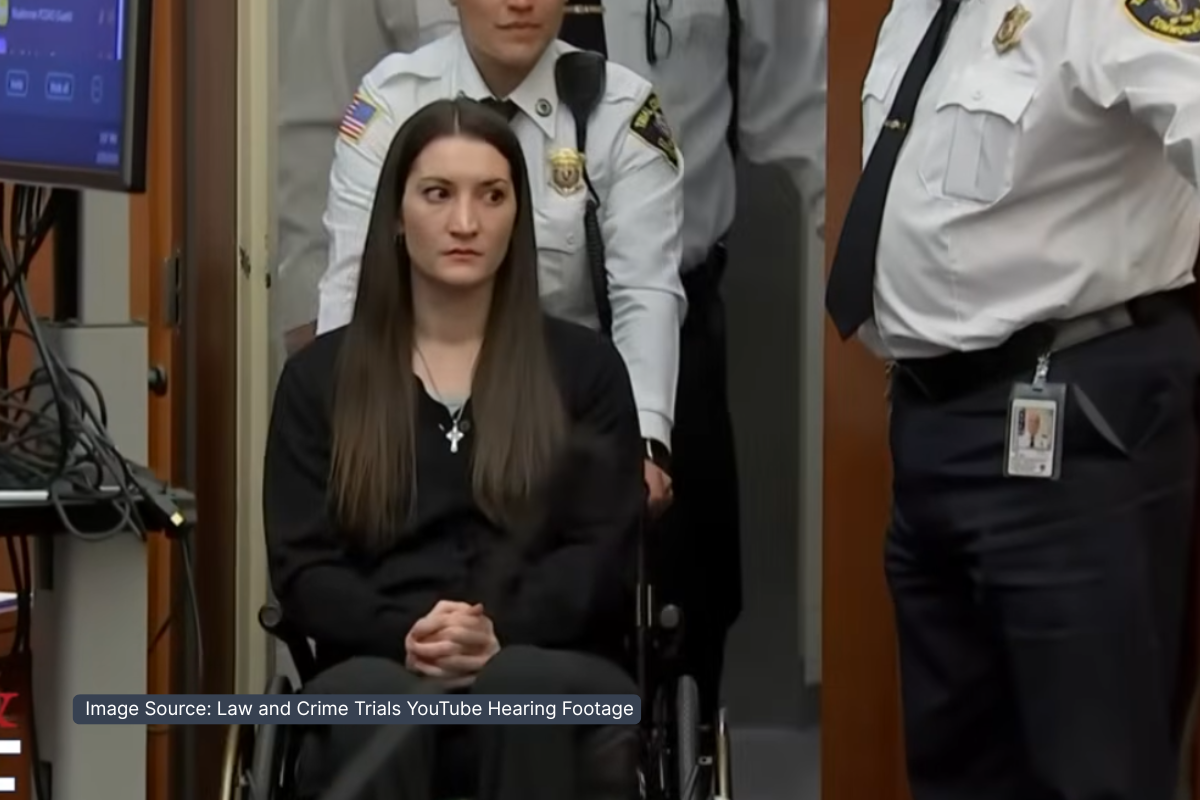 ➤ Prosecutors Drop Three “Redundant” Charges
This sounds more significant than it actually is.
The Commonwealth voluntarily dismissed the three strangulation or suffocation charges before trial, explaining that they are legally subsumed within the three first-degree murder charges because the alleged murders themselves were committed by strangulation. The factual allegations have not changed, and prosecutors will still present evidence that the children died from ligature strangulation.
Lindsay Clancy continues to face:
Three counts of First-Degree Murder
Three counts of Assault & Battery with a Dangerous Weapon
The prosecution described the dismissed strangulation counts as legally redundant rather than a change in its theory of the case.
June 29, 2026 – Judge Rules on 911 Admission
The judge allowed prosecutors to play Patrick Clancy’s 911 call for the jury.
The ruling apparently comes with a limiting instruction to jurors regarding how they should consider the evidence
What the Ruling Could Mean at Trial
The judge’s decision to allow Patrick Clancy’s 911 call gives prosecutors one of the most emotionally powerful pieces of evidence they have. Unlike testimony offered months or years after the tragedy, a 911 call captures events as they unfold. Jurors will hear Patrick’s immediate reactions, his descriptions of what he found, and the urgency of the moments before first responders arrived.
For the prosecution, the recording may help establish the sequence of events and reinforce its theory that the killings were deliberate rather than impulsive. Because the call was made within minutes of the discovery, prosecutors are also likely to argue that Patrick’s statements carry particular credibility as contemporaneous observations rather than memories shaped over time.
The defense, however, is expected to focus jurors on a different issue. Lindsay Clancy is not contesting that she caused the deaths of her children. Instead, her defense centers on whether she was legally criminally responsible because of her mental condition. The defense may argue that while the 911 call is undeniably emotional, it does little to answer the central question jurors must ultimately decide: Lindsay Clancy’s state of mind at the time of the killings.
The recording also presents a challenge for the jury. Judges generally instruct jurors not to let sympathy or emotion influence their verdict, but 911 calls are often among the most compelling pieces of evidence presented at trial. Jurors will be asked to separate the emotional impact of Patrick’s desperate pleas for help from the legal questions surrounding criminal responsibility—a distinction that may prove difficult throughout the trial.
June 18, 2026 – Pretrial Hearing
 Pretrial Hearing – Key Developments
(based on the hearing transcript)
➤Trial remains on schedule.
➤Final pretrial conference: July 13, 2026
➤Jury selection (impanelment): July 20, 2026
➤Judge considering a juror questionnaire. Although both sides generally prefer live questioning, the judge is considering a short written
questionnaire focused on psychiatric and medication-related issues because of the complexity of the case.
A final decision will be made on July 13.
➤Lindsay Clancy’s parents and sister may remain in the courtroom. Prosecutors wanted them sequestered until after they testified.
The judge denied that request and ruled that Lindsay’s mother, father, and sister may remain despite the Commonwealth’s objection.
➤Lay witnesses will be limited in what they can say about Lindsay’s mental condition. Friends and family may describe what they personally observed. They generally may not offer medical or psychiatric opinions or interpret the effects of medications. The judge emphasized those opinions belong to qualified experts.
➤The judge clarified an important evidentiary issue involving expert witnesses. The Commonwealth sought to prevent defense-retained experts from repeating Lindsay Clancy’s own statements to evaluators as substantive evidence. During argument, the judge clarified that this restriction applies to retained experts—not to treating physicians whose testimony may be admissible under other evidentiary rules.
➤The jury will visit the crime scene. Despite objections from the current homeowner, the judge approved a jury view of:
the Clancy residence
the CVS
and 3A Restaurant
The court will issue logistical orders intended to minimize disruption to the homeowner.
➤The Commonwealth may present photographs of the children while they were alive. Defense did not object.
The prosecution plans to introduce one photo of each child along with one family photograph showing all three together.
➤Autopsy photographs will largely be addressed during trial. The judge indicated some photographs will likely be admitted but will review specific images before they are shown to the jury.
➤The prosecution may use a digital 3D model of the Clancy home. The model will be used as a demonstrative aid (“chalk”) to help jurors understand witness testimony. Defense raised no general objection but reserved the right to challenge specific uses during trial.
➤Bloodstain pattern evidence is still unresolved. Prosecutors want to conduct a live courtroom demonstration illustrating blood transfer, drips, and spatter. Defense argued the proposed demonstration involves unreliable “junk science.” Rather than rule immediately, the judge ordered a separate evidentiary hearing before deciding whether the demonstration will be allowed. This may become one of the more closely watched evidentiary issues before trial.
➤Patrick Clancy’s 911 call is likely to be admitted. Defense acknowledged that Massachusetts law strongly favors admission as an excited utterance. The judge indicated he is inclined to admit the recording after personally reviewing it for any necessary redactions.
➤Expert discovery is essentially complete. Both sides confirmed that nearly all expert reports have been exchanged, with only minor amendments or one remaining defense report expected.
➤Estimated trial length: four to six weeks.
➤Prosecutors advised witnesses to expect anywhere from four to eight weeks, while the judge told jurors the expected estimate would likely be four to six weeks.
June 17, 2026 – Prosecution Files Additional Pretrial Motions
Prosecution Files Additional Pretrial Motions Ahead of Final Pretrial Hearing
📌 The Commonwealth has filed several additional pretrial motions in advance of the June 18 final pretrial hearing.
📌 Prosecutors are asking the court to allow jurors to hear Patrick Clancy’s complete 911 call, arguing that statements made during the call are relevant to proving deliberation and the manner in which the children were killed.
📌 According to court filings summarized by multiple news outlets, prosecutors argue that evidence concerning the placement and tightening of the exercise bands is relevant to the charges of First-Degree Murder and the theory of extreme atrocity or cruelty.
📌 The Commonwealth has asked the court to prohibit lay witnesses from offering opinions about Lindsay Clancy’s mental state, limiting such testimony to observations rather than medical or psychiatric conclusions.
📌 Prosecutors are requesting that witnesses be sequestered during trial to prevent them from hearing the testimony of other witnesses before they testify.
📌 The Commonwealth has proposed additional voir dire questions concerning prospective jurors’ personal or family experiences with mental illness, recognizing that mental health issues will be central to the defense.
📌 Prosecutors are also seeking permission for jurors to view the former Clancy residence, as well as the CVS pharmacy and restaurant Patrick Clancy visited on the day of the homicides, arguing that an in-person view would assist jurors in understanding the timeline and physical layout.
📌 Additional motions seek admission of family photographs, crime scene photographs, and autopsy photographs as evidence at trial.
📌The court is expected to address these motions during the final pretrial hearing scheduled for June 18, 2026.
May 28, 2026 Status Hearing Recap
May 28, 2026: A status conference was held in Plymouth Superior Court.
📌Both sides reported that discovery is nearly complete, with only two examiner reports remaining outstanding at the time of the hearing.
📌Prosecutors disclosed a tentative witness list containing approximately 168 potential witnesses, though many are laboratory and foundational witnesses required for evidentiary purposes.
📌Defense attorney Kevin Reddington stated the defense expects to call approximately 50 witnesses, with significant overlap between the defense and prosecution witness lists.
📌Both parties reported ongoing cooperation regarding discovery and evidence exchange.
📌Prosecutors confirmed they will seek a jury view of the former Clancy residence, but the current homeowner plans to oppose the request through counsel. The issue will be argued at the next hearing.
📌The final pretrial conference is scheduled for June 18, 2026, at 2:00 p.m., where motions in limine, jury issues, and the status of expert reports are expected to be addressed. Lindsay Clancy is expected to appear in person.
April 23, 2026 Status Hearing Recap
A status hearing was held yesterday in the case of Lindsay Clancy, focusing on pretrial logistics and the current posture of the case following recent motion activity.
Key Takeaways:
No major rulings issued at this hearing. The court did not take up new substantive motions.
Bifurcation issue remains settled (for now). The judge’s prior denial of the defense request to split the trial still stands, with no indication of immediate reconsideration.
Case continues moving toward trial. Both sides appear to be proceeding under the assumption of a unified trial structure (guilt + criminal responsibility together).
Ongoing pretrial coordination. The hearing primarily addressed scheduling, discovery status, and general readiness.
Notable Context:
The defense has recently attempted to revisit strategy following the denial of bifurcation, including filings that raised questions about how mental health evidence will be presented.
No new evidentiary disputes were formally resolved on the record during this session.
⚖️ Analysis Snapshot
This was a maintenance hearing, not a turning point. The biggest issue—whether the trial would be split—has already been decided, and the case is now moving forward under that framework.
Unless the defense successfully pushes a reconsideration (which appears unlikely), the next meaningful developments will likely come from motions in limine (what the jury will and won’t hear), and final trial scheduling.
March 2, 2026
March 2, 2026 Motion Hearing – Key Developments
📌 Clancy’s attorney Kevin Reddington asked the court to split the trial into two separate phases (bifurcation).
➤ The proposed structure:
Phase 1: The jury would determine whether Clancy committed the acts alleged by the prosecution.
Phase 2: If the jury finds she committed the acts, a second phase would determine whether she was criminally responsible (insanity defense).
📌 Defense argument
Reddington argued that combining guilt and mental-responsibility evidence in a single trial would force Clancy to effectively incriminate herself while presenting an insanity defense. He suggested a two-stage trial would better protect her Fifth Amendment rights.
📌 Prosecution opposition
➤ Prosecutors opposed the request, arguing that Massachusetts law does not require bifurcation in this situation.
➤ The evidence and witnesses for both phases would largely overlap, meaning the case would essentially be presented twice.
➤ By raising an insanity defense, Clancy has already waived certain Fifth Amendment protections, particularly regarding psychiatric evaluations.
📌 Judge’s response
➤ Judge Sullivan did not rule immediately on the bifurcation motion and said that he would take the matter under advisement and issue a decision later.
📌 Upcoming procedural steps
➤ Clancy is expected to undergo a state psychiatric evaluation ahead of trial April 10-12, 2026.
➤ Another court date was set for late April 23, 2026 after the evaluation.
➤ A final trial conference is scheduled for June 18, 2026.
➤ The trial is currently scheduled to begin July 20, 2026.
February 20, 2026
February 20, 2026 – First In-Person Court Appearance
🟡Clancy physically appeared in court for the first time on Friday, February 20, 2026, at Plymouth Superior Court.
🟡She arrived in a wheelchair; it was her first in-person hearing since the January 2023 deaths of her children.
🟡Lawyers discussed procedural matters and pending motions in anticipation of the July 20 trial date — especially motions regarding discovery and defense strategy.
🟡A big point of debate is a defense request to bifurcate the trial — essentially asking the court to split the proceedings into two parts:
Whether she committed the acts in question
Whether she was legally insane at the time
🟡The judge set a March 2, 2026 motions hearing to take up those and other issues.
🟡This hearing also covered the status of discovery (what evidence each side has shared).
🗓️ Defense Motion to Separate Verdicts
🟡Around the same mid-February period, word came out that Clancy’s defense wants the trial structured so that first, the jury decides guilt; then, a second phase would address her mental state and insanity defense.
🟡Prosecutors have not agreed to this split and are opposing some aspects of that motion, meaning it will need to be argued and decided at upcoming hearings (starting March 2).
Note: Bifurcation is rare in murder cases and would significantly shape trial strategy and narrative.
📌 Support and Personal Context at Court
Clancy’s parents attended the February hearing in person, underscoring the emotional and family aspects being presented alongside legal strategy.
Her attorney continues to highlight her ongoing mental health struggles and risk of self-harm if her medical needs aren’t properly addressed during the trial process.
🔜 Upcoming Scheduled Court Dates
March 2, 2026: Motion hearing on bifurcation request and other pretrial motions.
April 10, 2026: Mental health evaluation by a prosecutor-appointed expert (reported in media previews).
June 18, 2026: Final pretrial conference scheduled.
July 20, 2026: Trial is currently set to begin.
January 7, 2026
1. Transportation & Medical Logistics Dominated the Discussion
The main subject was how Clancy will be brought to and from court during her murder trial, set for July 20, 2026. Clancy is currently confined at Tewksbury State Hospital, paralyzed from the chest down after a suicide attempt following the deaths of her three children. Her defense argues she should be transported by ambulance because of her severe medical needs. The sheriff’s office says it can use a wheelchair-accessible van instead.
2. Defense Warns of Serious Health and Safety Concerns
Her attorney, Kevin Reddington, told the court that Clancy’s condition — including lack of motor control and “significant suicidal ideation” — makes logistics extremely complicated. He even warned that Clancy could harm herself again if her needs aren’t met during the trial.
3. Judge Will Create a Custom Order
Judge William F. Sullivan acknowledged the complexity and said he intends to draft a specific order regarding transport and accommodations, based on medical input from Clancy’s caregivers. But he also indicated this may not be the last hearing on these issues; adjustments are likely as details get ironed out.
4. Psychiatric & Discovery Issues Still Ongoing
There’s also ongoing work next steps on medical records, psychiatric evaluations, and expert witness exchanges ahead of trial. Both sides have been ordered to provide more information and there’s a follow-up hearing scheduled January 27.
5. Hearing Was Held Virtually
Clancy herself did not attend in person — she appeared via Zoom from Tewksbury — and spoke minimally.
December 2025
At a December 2025 hearing, the court approved a joint request from the defense and prosecution to delay the trial, citing the complexity of the case and the volume of outstanding discovery, particularly related to psychiatric evaluations and expert evidence. The judge agreed the matter remains “discovery-intensive” and granted the continuance.
The trial is now scheduled to begin on July 20, 2026. The next status hearing is set for January 27, 2026, with a final pretrial conference scheduled for July 13, 2026.
Related Articles
Lindsay Clancy Mistrial – Jurors Speak Out
PLYMOUTH, Mass. – Five jurors have now explained their reasoning after the mistrial. Their interviews reveal how they viewed the evidence, the experts, Lindsay Clancy—and the lone juror who refused to agree. The Lindsay Clancy murder trial ended without a verdict. But...
Lindsay Clancy Murder Trial: Beyond Reasonable Doubt. vs. Reasonable Doubt
Related Articles Related
Lindsay Clancy Jury Deadlock: Did Jurors Understand the Instructions?
PLYMOUTH, Mass. – After days of deliberations and two messages informing Judge William Sullivan that they have been unable to reach a unanimous decision, the twelve jurors deciding the fate of Lindsay Clancy are clearly struggling to agree. But what, exactly, are they...