
Lindsay Clancy Murder Trial – Day 1 & 2: Patrick Clancy Testimony
The Lindsay Clancy murder trial continues with emotional first testimony from Patrick Clancy.
Patrick Clancy Testimony
PLYMOUTH, Mass. – After opening statements concluded, the prosecution called its first witness: Patrick Clancy, Lindsay Clancy’s former husband and the father of their three children. His testimony was expected to provide jurors with an intimate look inside the Clancy household before the January 24, 2023 killings—and it did just that.
Over several hours, Patrick described the couple’s relationship from their first meeting in 2013 through the birth of their children, Lindsay’s growing struggles with anxiety and depression following the birth of their youngest son, and the extensive medical treatment she sought in the months leading up to the tragedy. His testimony established the timeline that both the prosecution and defense are expected to rely on throughout the trial, offering jurors their first detailed account of the family’s daily life before everything changed.
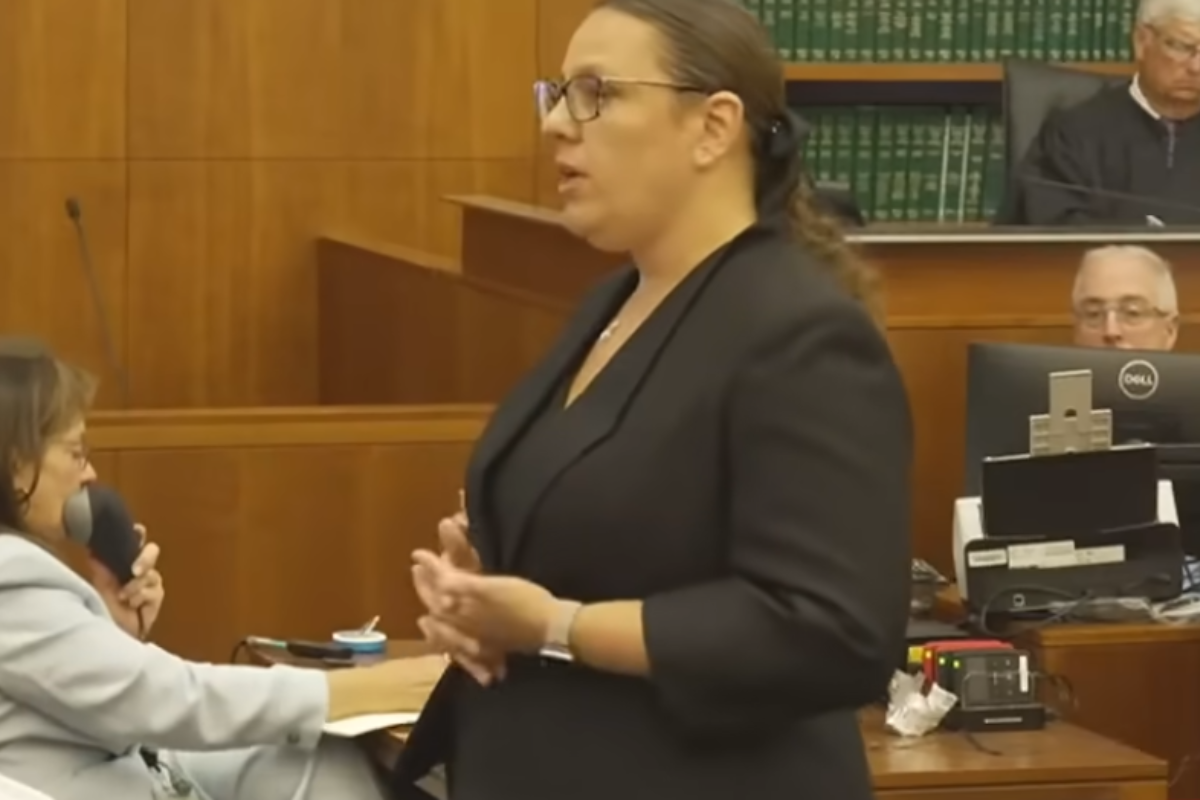
Patrick Clancy's Direct Examination
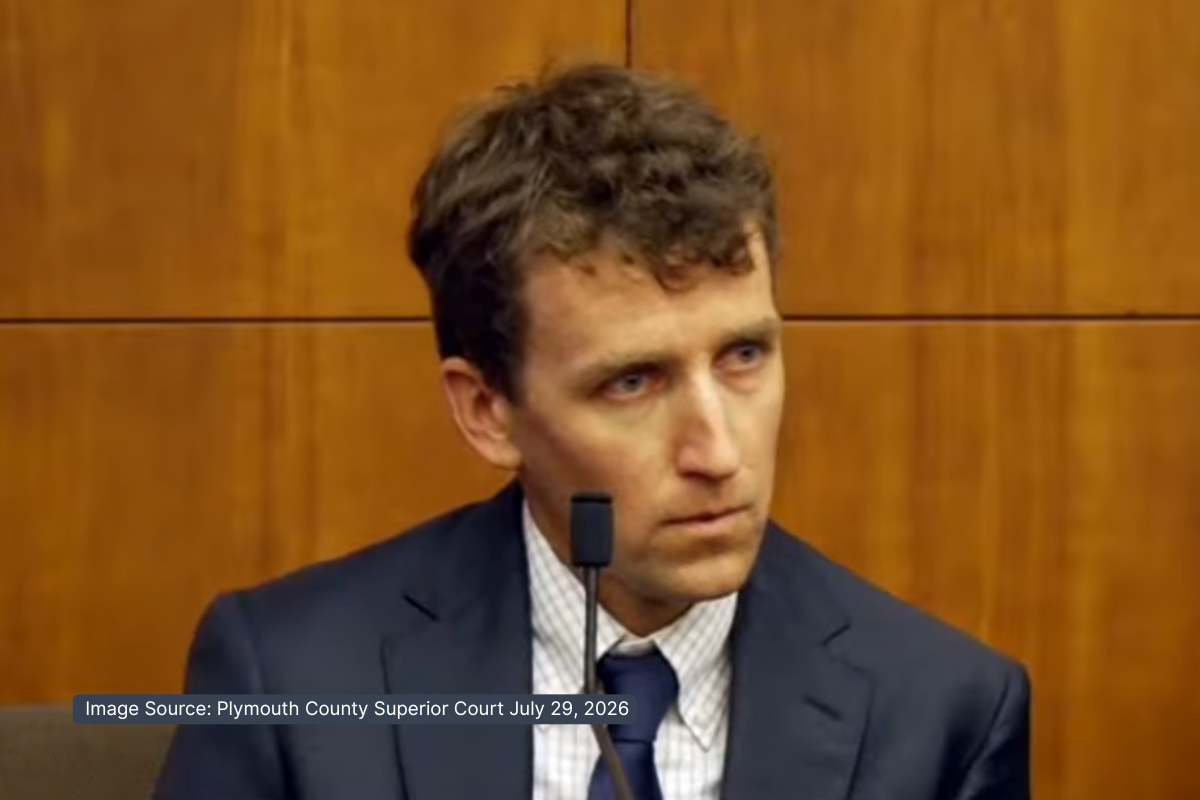
Background
Patrick Clancy testified that he currently lives in New York and works in the technology industry. He identified Lindsay Clancy in court as his former wife, confirming they are now divorced.
He explained that they first met in May 2013 in South Boston through his cousin, who had been Lindsay’s college roommate. They began dating in July 2013, moved in together in September 2015, married in December 2016, and eventually built what he described as a happy family together.
Timeline of Relationship & Family
May 2013 – Patrick met Lindsay through his cousin in South Boston.
July 2013 – They began dating.
September 2015 – Moved into an apartment in Quincy.
2016 – Purchased a home in Weymouth.
December 2016 – Married
December 24, 2017 – Daughter Cora was born.
July 2018 – Family moved to 47 Summer Street, Duxbury.
September 30, 2019 – Son Dawson was born.
May 2020 – Patrick began working for Microsoft. He had already been working remotely since 2018 from a basement office.
May 26, 2022 – Son Callan was born.
Life Before the Mental Health Crisis
Patrick described their family life before late 2022 as active and organized. The children attended preschool, gymnastics, swimming, skiing, and soccer. The family frequently went to playgrounds, birthday parties, beaches, friends’ homes, and spent time boating during the summer. Patrick often took the older children while Lindsay stayed home caring for the baby, describing it as a “divide and conquer” parenting approach.
Patrick testified they both shared parenting duties: alternating preschool drop-offs and pickups, sharing doctor appointments, caring for whichever children fit around his work schedule, regularly exercising themselves.
He described Lindsay as athletic and health-conscious, saying she enjoyed running, Peloton workouts, and Beachbody programs. She had previously been a competitive cheerleader in high school and college.
Childbirth History
Cora (December 2017)
Patrick testified Cora’s delivery was physically difficult for Lindsay. He recalled significant tearing, substantial bleeding, lengthy physical recovery.
He said Lindsay received approximately 10–11 weeks of maternity leave while he took two weeks of paternity leave. During maternity leave she appeared happy, but anxiety increased as her return to work approached.
Dawson (September 2019)
Patrick described Dawson’s delivery as considerably more traumatic. According to his testimony, Dawson was in a breech position. Lindsay suffered greater bruising and tearing than with Cora. Recovery was more painful.
He testified she again did well during maternity leave but struggled emotionally when it became time to return to work. She received approximately 18 weeks of leave.
Callan (May 2022)
Patrick described their third child’s delivery very differently. He testified that delivery was relatively quick, both parents were smiling afterward, there was much less physical trauma than the previous births
Patrick took 12 weeks of paternity leave while Lindsay planned approximately 18 weeks of maternity leave, although she ultimately never returned to work.
Pattern Patrick Observed
One recurring theme emerged throughout Patrick’s testimony. He repeatedly testified that Lindsay generally appeared to do well during maternity leave after each birth, but consistently experienced increasing anxiety as the time approached for her to return to work. He recalled her saying she struggled with being separated from her children and that returning to nursing felt unnatural after having a newborn.
Childcare Support
Patrick testified they had substantial assistance over the years.
Early Babysitter – After Cora’s birth, they hired “Miss Jen” Shanahan for approximately 12 hours each week, primarily so Lindsay could sleep following overnight nursing shifts. They continued using her services for several years.
Elaine Rossi – After Callan was born, they hired nanny Elaine Rossi.
Patrick testified she was initially brought in because Lindsay planned to return to work in October 2022. Elaine cared mainly for Callan while the older children attended preschool and also helped with laundry, food preparation, and household chores.
Patrick described her as “an amazing caregiver.” Because Lindsay ultimately never returned to work, they later decided they no longer needed Elaine’s services.
Financial Flexibility
Patrick testified that finances were not forcing Lindsay back to work. He said he intentionally saved money in what he described as their own “maternity account” so Lindsay could remain home longer if necessary. He explained they had planned for flexibility if she needed additional time away from work.
Mental Health Before Fall 2022
Patrick testified that before late 2022:
Lindsay had not told him she had taken psychiatric medication before they married.
He was unaware of psychiatric hospitalizations after Cora or Dawson were born.
Following Dawson’s birth, Lindsay briefly saw a therapist, but treatment did not continue for long.
He testified she never discussed psychiatric medications with him during those earlier postpartum periods.
Fall 2022: First Signs of Change
Patrick testified that the summer after Callan’s birth was largely positive. He described family vacations, boating, beaches, and spending considerable time together while both parents were on leave.
He testified that he first noticed anxiety increasing around September 2022, as Lindsay’s planned return to work approached. She appeared increasingly stressed while caring for three young children and voiced concerns about returning to nursing, although Patrick said she remained understandable, coherent, and never exhibited behavior that caused him to seek emergency psychiatric intervention at that point.
Lindsay's Condition Worsens
Patrick testified that by the fall of 2022, Lindsay’s anxiety had become more noticeable as her planned return to work approached. She appeared overwhelmed caring for three young children and became increasingly preoccupied with fears that something bad might happen to them. As her symptoms progressed, she began seeking medical and psychiatric treatment, seeing multiple providers and trying numerous medications in an effort to find relief. Patrick described accompanying her to appointments, managing medications together, and trying to support her through what they both hoped would be a temporary crisis.
Timeline of Medical Treatment
Patrick walked jurors through the months leading up to January 2023.
August 2022 – Patrick returns to work. Patrick described Lindsay as increasingly anxious and stressed as her own return-to-work date approached, although he agreed she was still generally in “good spirits.” She told him it felt unnatural to be separated from a newborn. The family had hired Elaine Rossi in anticipation of Lindsay returning to work in October.
September 2022 – Anxiety increased as Lindsay prepared to return to work. Began seeking more intensive medical treatment.
September 17, 2022 – Wedding in New Hampshire / Zoloft discussion. Patrick and Lindsay attended a wedding in New Hampshire and brought Callan. While walking downtown, Lindsay told Patrick she thought she was going to start taking Zoloft, believing it would help her anxiety and make returning to work easier. She told him she planned to see a psychiatrist, although Patrick did not yet know the provider was Jennifer Tufts.
Late September–October – Zoloft, worsening sleep and anxiety. Patrick later learned Lindsay was taking Zoloft, although he did not know precisely when she started it. Testimony established that she ultimately took only seven Zoloft pills before treatment changed. During this period she began reporting significant difficulty sleeping. Patrick slept in the basement for approximately two nights in an effort to help her sleep; Lindsay then moved downstairs herself and slept there for roughly two weeks. Patrick said that from approximately mid-October forward, she seemed to get “worse and worse,” although he could not attribute that deterioration to any particular medication.
Fall 2022 – Multiple medication changes. Appointments with several psychiatric providers. Patrick became increasingly involved in managing medications and appointments.
Fall 2022 – Change in psychiatric provider. Patrick testified that Lindsay eventually moved away from treatment with Tufts because, from his perspective, “whatever she was doing with Jennifer Tufts, it wasn’t working.” He said Lindsay believed she needed someone specializing more specifically in perinatal psychiatry.
Late 2022 – Lindsay stopped working. The family continued searching for treatments that might improve her condition. Patrick testified he remained optimistic that she would recover.
November 2022 – Still functioning independently with the children. Patrick traveled to New York for two nights, leaving Lindsay home caring for the children. He also testified that he continued occasionally going out with friends while Lindsay remained with the children. This later became significant on cross-examination because Patrick continued to trust Lindsay alone with them.
Around November 26 – Family gets a Christmas tree. Despite Lindsay’s developing mental-health problems, Patrick testified that the family went together to a Christmas tree farm around November 26. Photographs from the outing were introduced.
After Thanksgiving/before December 6 – Disturbing thoughts involving the children. Patrick placed Lindsay’s disclosure of the troubling intrusive thoughts sometime after Thanksgiving but before the December 6 appointment. Crucially, he testified that he was not concerned for the children’s safety because she showed no intention of harming them and told him she had no plan. Elsewhere in his testimony he clarified that he understood what Lindsay described more as a fear that something might happen to the children, rather than that she wanted to do something to them.
Early December –This was much more significant than our original summary reflected. Patrick testified that by this point Lindsay had been prescribed approximately 10 medications in just over two months, which “didn’t make sense” to him. He called Lindsay’s parents and asked them to come stay with the family. When Lindsay told him she had another remote appointment with Rebecca Gelato, Patrick insisted that this one needed to be in person. He felt there was a “disconnec Patrick becomes alarmed about her treatment. t” in her treatment and described many of the telehealth appointments as brief, approximately 20 minutes, with what he perceived as insufficient attention.
December 3 – Anniversary plans canceled. Patrick testified they had planned to go out for their anniversary but canceled because Lindsay wasn’t feeling well. They stayed home and ordered takeout instead. This date later became the subject of some confusion during cross-examination over testimony suggesting they had stayed at a Boston hotel.
December 6 – Patrick attends appointment with Rebecca Gelato. Patrick accompanied Lindsay to an in-person appointment. He described Lindsay at this point as extremely sleep deprived and highly anxious; he had seen her sitting on the sofa rocking with her head under a pillow. According to Patrick, Seroquel was substantially increased and Valium was prescribed in connection with tapering her benzodiazepine use.
December – Patrick associates Seroquel with a major decline. Patrick described Lindsay as doing “awful” after starting Seroquel and called this period the beginning of her “big spiral.” He observed significant weight loss, depression and increasing difficulty functioning. She began telling him she was suicidal, although she denied having a suicide plan. By mid-December, Patrick said the Seroquel dosage had reached 400 mg, intended to help her sleep, but in his observation she continued getting worse.
December 15 – Mass General Emergency Department. Lindsay went to the Mass General emergency department. This belongs prominently in the chronology rather than being buried under “continued seeking treatment.” Patrick’s testimony places it within the period when her condition had become severe enough that he was actively questioning the medication regimen and becoming involved in her care.
December 20 – Women & Infants Behavioral Health Program, Rhode Island. Patrick drove Lindsay to the program and described her as scared going in. He then took Dawson skiing. Lindsay called later and told him the providers wanted him to return, pick her up and speak with them. Patrick did so. Her participation lasted only about half a day; Patrick testified that after discussion with the providers, their recommendation was that the program was not the right fit for her. He did not recall them prescribing medication.
Late December – Family members help. Patrick says parents were staying at the Clancy home around the Women & Infants visit, helping with the children. Patrick testified that both sets of grandparents came at various points around this period, apparently separately, to help with childcare and spend time with the family. Lindsay’s parents slept in the basement during at least one of their stays.
December – Continued activity despite her decline. Patrick acknowledged records suggesting Lindsay continued going to the Kingsbury Club on several dates in December—December 6, 13, 16, 17 and 18—although he could not independently remember each date. This is worth noting because her functioning was not simply a straight-line collapse; she continued engaging in some normal activities even while reporting severe symptoms.
Late December/early January – McLean Hospital. Lindsay was eventually admitted voluntarily to McLean. Patrick’s testimony shows that hospitalization occurred against the backdrop of his increasing frustration and concern over the previous treatment and medication changes. McLean tapered her off Seroquel. Patrick later acknowledged that his recollection of the exact medication chronology was imperfect and that the medical and pharmacy records were better sources for precise prescribing dates.
January 5 – Discharged from McLean. Patrick picked Lindsay up from McLean. He testified he was unaware that she had declined certain groups that day or that she had asked for an earlier discharge in connection with preparing for Cora’s birthday party. He also said there were no known insurance barriers to continued hospitalization and stated that, had money been an issue, “I would have paid anything.”
January 6 – Follow-up with Jennifer Tufts. Patrick knew Lindsay had a follow-up appointment with Tufts the day after her McLean discharge.
January 7 – Cora’s birthday party. Cora’s birthday was Christmas Eve, but the family held her party with friends on January 7 because people had not been available over Christmas.
January – Signs of improvement. Patrick testified that Lindsay appeared to be doing better after McLean. Her mood seemed improved, she was more active and able to participate in more activities, and she was going to the Kingsbury Club. He felt comfortable leaving Dawson and Callan home with her and was hopeful things were improving.
January 21–22 – Lindsay’s parents visit. Her parents came for the weekend, apparently simply to visit. On Sunday, Patrick and Lindsay took Cora and Dawson to the Carneys’ home, where there was a fire and they roasted marshmallows. Patrick described Lindsay as quieter than usual but said she was still able to interact. Lindsay’s parents left after they returned home.
January 22, 2023 – Patrick and Lindsay took Cora and Dawson to the Carneys’ home, where there was a fire and they roasted marshmallows. Patrick said he thought the visit was their idea and that they were simply coming to visit. Lindsay’s parents watched Callen at home. Patrick described Lindsay as quieter than usual but said she was still able to interact. Lindsay’s parents left after they returned home.
January 24, 2023
January 24, 2023 Timeline: Patrick Clancy’s Trip for Takeout
Patrick then described the day of January 24 in chronological order.
Before leaving home, Patrick testified the evening initially appeared routine. Dawson was eating chicken nuggets and green beans on the living room couch while Lindsay remained home with the children.
8:00 a.m. – Cora’s five-year physical. Lindsay independently drove Cora to her scheduled pediatric appointment while Patrick remained home with Dawson and Callan. Patrick testified that Lindsay ordinarily handled the children’s medical appointments. While Lindsay was gone, Patrick and Lindsay exchanged texts and photographs. At 8:17 a.m., Patrick sent Lindsay a photograph of Dawson because he had dressed himself completely on his own for the first time; Lindsay responded around 8:18 a.m. with a photograph of Cora. Patrick said their text exchanges were understandable and responsive.
Approximately 8:30 a.m. – Lindsay returns home. Patrick got ready for work and went downstairs to his home office. During the day, Lindsay cared for the children. Patrick testified that she and the children built a snowman and did art projects, and she sent him photographs of their activities. The two continued exchanging messages throughout the day.
During Patrick’s workday – “One of her best days.” Patrick estimated that he came upstairs once or twice because it was a busier-than-usual workday. When he saw Lindsay, he said “she seemed happy.” She was playing with the children and appeared to be in a good mood. She did not tell him she was suicidal, did not report thoughts of harming the children, did not ask for help, and did nothing that caused him concern. Patrick characterized it as “one of her best days.”
4:53 p.m. – Lindsay suggests takeout. Lindsay texted Patrick asking whether he wanted takeout from 3V because she hadn’t cooked and it had been a long day. This was somewhat unusual: the family had eaten at 3V approximately three times, but they had never ordered takeout from there before, and their usual takeout restaurants were closer to home.
4:56 p.m. – Menu discussion. Lindsay texted Patrick asking him to look at the 3V menu.
5:06 p.m. – Discussion about Callan and dinner. Patrick texted Lindsay asking whether Callan had napped. Lindsay responded that his nap had been shorter and he was awake. Patrick also asked what she was ordering; testimony identified her choice as a Mediterranean power bowl.
5:08 p.m. – Patrick chooses his meal. Patrick told Lindsay he wanted the scallop and pork belly risotto. Lindsay then called 3V and placed the takeout order herself.
Shortly afterward – Patrick comes upstairs before leaving. Patrick took Callan for a moment, rocked him on his knees, kissed Cora on the head, and prepared to leave. Dawson was sitting on the couch eating chicken nuggets from a bowl.
As Patrick left – Lindsay appeared “normal.” Patrick testified that Lindsay was standing in the living-room doorway near the basement door holding Callan.
Approximately 5:15 p.m.: As Patrick prepares to leave, Lindsay asks him to stop at CVS to buy Pedialax stool softener for Cora. Patrick asks her to text him the exact product. Lindsay sends the text with the request.
Approximately 5:15–5:18 p.m.: Patrick leaves the house. Dawson is sitting on the couch eating chicken nuggets and green beans. Patrick drives directly to CVS, about a three-minute drive from the house.
Approximately 5:33 p.m.: While searching the pediatric medication aisle, Patrick cannot find the exact medication because the shelves are sparsely stocked. He calls Lindsay. No answer.
Approximately 5:34 p.m.: Lindsay returns his call. Patrick asks if the generic version is acceptable. Lindsay replies, “Yeah, that’s fine.”
Patrick testified:
The conversation lasted only a few seconds.
Lindsay sounded quiet.
She appeared to understand why he was calling.
She sounded busy, leading him to believe she was caring for the children.
Approximately 5:35–5:40 p.m.: Patrick purchases Pedialax (generic equivalent), one package of Skittles. Receipt and CVS surveillance video were introduced into evidence.
Approximately 5:44–5:54 p.m.: Patrick drives from CVS to 3V Restaurant, estimating the trip took about 10 minutes.
5:54:15 p.m.: Surveillance video shows Patrick entering 3V Restaurant. He locates his takeout order and leaves shortly afterward. The receipt reflects the order was under Patrick’s name and phone number, although Lindsay had placed the order.
Approximately 5:56–6:08 p.m.: Patrick drives home, estimating the trip took 10–12 minutes.
Approximately 6:08–6:09 p.m.: Patrick arrives home. He parks his truck, enters through the side door, removes his boots, and places the CVS and restaurant bags on the kitchen island. He immediately noticed something unusual. “The house is really quiet.”
Patrick testified the silence was highly unusual for a household with three young children. He called out to everyone but received no response.
Approximately 6:09 p.m.: After calling out and receiving no response, Patrick calls Lindsay’s cellphone. She does not answer.
Searching the House
Patrick first called down into the basement but heard nothing. Believing Lindsay might have taken the children upstairs for baths, he checked the upstairs bathroom, the children’s bedrooms, and finally the master bedroom. When he reached the master bedroom, he found the door locked.Using an emergency key taped behind another bedroom door, he unlocked it.
Inside the Master Bedroom
Patrick testified that upon opening the bedroom door, he immediately saw blood throughout the room and the bedroom window standing open. He entered only one or two steps before turning around. He described seeing blood sprayed across much of the room, including a large pool on the floor and blood on numerous surfaces. He also noticed Lindsay’s cellphone remained on the bed. Realizing something was terribly wrong, he immediately ran outside toward the backyard.
Finding Lindsay
Patrick testified he found Lindsay lying directly beneath the open bedroom window. She was conscious but seriously injured. He observed deep cuts to both wrists and a wound across her neck. When he asked what had happened, Patrick testified Lindsay responded: “I tried to kill myself.”
He then asked where the children were. According to Patrick, Lindsay replied: “They’re in the basement.”
Patrick testified she did not tell him they were injured or needed help.
Patrick testified he attempted to call 911 but initially had difficulty connecting because his cellphone repeatedly switched between Wi-Fi calling and the cellular network.
Once connected, he remained on the line while trying to speak with Lindsay as first responders were dispatched. He estimated emergency personnel arrived within four to five minutes.
Discovering the Children
As first responders began treating Lindsay outside, Patrick ran into the basement. He testified he first found Cora, face down with an exercise band around her neck. He removed the band and attempted to help her.
Nearby he found Callan, who also had an exercise band around his neck, and removed that band as well.
Patrick then searched for Dawson, eventually locating him inside Patrick’s basement office with another exercise band around his neck. After removing Dawson’s band, Patrick returned to Cora and attempted CPR until first responders came downstairs and took over treatment.
At the Hospital
Patrick testified the children were transported to Beth Israel Deaconess Hospital in Plymouth. Callan was later transferred to Boston Children’s Hospital. Patrick also went to the hospital, where he was able to see his children.
Questions About Lindsay’s Mental State
Toward the end of direct examination, prosecutors asked Patrick several questions intended to clarify what he knew before January 24.
Patrick testified:
No medical provider ever instructed him not to leave Lindsay alone with the children.
Lindsay never told him she wanted to harm the children.
She never said she intended to kill them.
Post-Hospital Phone Call
Patrick testified that approximately a week after the incident, Lindsay called him from Brigham and Women’s Hospital. According to Patrick:
She did not talk about the children.
Instead, she described hearing a man’s voice telling her she had to act immediately or she would lose her chance.
Patrick testified this was the first time he had ever heard Lindsay mention hearing voices.
He further testified she had never previously told him she was experiencing psychosis, and before January 24 he did not even know what psychosis was.
Overall Impression
The second day of Patrick Clancy’s direct examination transitioned from the family’s months-long struggle with Lindsay’s declining mental health to a minute-by-minute reconstruction of January 24, 2023. Through surveillance videos, receipts, photographs, maps, and Patrick’s testimony, prosecutors traced his movements from the time he left home to pick up dinner until his return, when he discovered Lindsay injured outside the home and the couple’s three children in the basement. The testimony concluded with prosecutors asking whether Patrick had ever been warned that Lindsay posed a danger to the children or whether she had ever expressed an intent to harm them, to which he answered, “no”.
Patrick Clancy's Cross Examination and Redirect
Patrick testified that Lindsay described intrusive, disturbing thoughts involving the children, but he clarified that she presented them more as fears that something bad might happen to the children than as thoughts that she herself wanted to harm them. She did not describe a plan or method, and Patrick did not perceive her as intending to harm the children.
Lindsay’s relationship with the children: Patrick described her as an extremely dedicated mother. She read to them from infancy, made up songs, took them to activities, decorated the home with their artwork and photographs, and made monthly photo collages for each child. When specifically asked about Dawson, Patrick said Lindsay “loved Dawson very much” and did not resent him.
The defense then walked Patrick through numerous photographs and Facebook posts showing Lindsay and the children over several years, including family activities continuing into 2022. Patrick characterized the summer after Callan’s birth as a good summer.
Her decline was gradual and began later. Patrick testified that Lindsay’s mental health began deteriorating around September/October 2022, describing what he observed primarily as increasing stress and anxiety. He characterized the deterioration as “pretty gradual.”
The August 2022 “suicide methods” computer evidence received an important alternative explanation. Patrick had been questioned about a computer record suggesting a search involving suicide. On cross, the defense connected the browsing history to Patrick looking up country musician Tom T. Hall, who died by suicide. Patrick denied intentionally Googling “suicide methods,” and the sequence apparently showed browsing associated with Hall/Wikipedia that led into suicide-related material. Patrick agreed that appeared to be what happened.
That’s significant because without the cross, the computer evidence can sound like someone in that household was independently researching methods of suicide months before the killings. The defense supplied a potentially mundane explanation for that history.
So what’s the prosecution doing with the suicide-methods browsing?
The prosecution’s redirect substantially weakened the defense’s neat explanation that Patrick accidentally landed on a suicide-methods page while reading about Tom T. Hall.
Defense counsel’s theory was basically: Patrick searched Tom T. Hall → Hall died by suicide → Wikipedia hyperlink → Patrick inadvertently ended up on suicide methods.
Patrick said that sounded like what happened.
But on redirect, the prosecutor added facts the defense hadn’t mentioned:
Someone logged into Lindsay’s Facebook account on the Surface Pro at 9:40, accessed Tom T. Hall at approximately 9:43, then went to the suicide-methods page around 9:45. According to the prosecutor’s questioning, the user didn’t merely accidentally touch a link — the person spent approximately three minutes on the suicide-methods page and then clicked another link concerning an Australian bridge used for suicide.
Patrick denied ever logging into Lindsay’s Facebook account and ultimately said he had “no idea” whether he was the person using the computer.
The December 2/3 anniversary evidence was also challenged. The defense challenged the chronology surrounding testimony about Patrick and Lindsay going to Boston for a hotel stay, massage and dinner. There was confusion between December 2 and December 3, and the defense introduced photographs/metadata placing Lindsay elsewhere on December 2. The prosecution itself corrected counsel that the Boston event was December 3.
The redirect clarified the January 24 timeline. The defense introduced an email Patrick sent to coworkers at 5:24 p.m. on January 24 and raised the fact that it was associated with his Surface Pro/computer. Patrick said it could actually have been sent from his iPhone.
On redirect, the Commonwealth tightened that up using the surveillance evidence:
Lindsay’s Pedia-Lax text was sent at 5:15 p.m.
CVS was approximately three minutes from the house.
Surveillance showed Patrick entering CVS at 5:32 p.m.
Patrick had his phone with him.
He was also seen using his phone at 3V.
Therefore, the 5:24 p.m. work email did not establish that Patrick was still home using the Surface Pro; it could have been sent from his phone after he left.
Interestingly, Patrick would not let the prosecutor push his departure all the way back to precisely 5:15. When asked whether he had already left when Lindsay sent the text, he answered, “I don’t know if I had left the house yet.”
What the cross-examination accomplished:
The defense didn’t really undermine Patrick as a witness. In some ways, Patrick remained remarkably consistent. Instead, the defense used him to humanize Lindsay and establish the pre-offense mental-health narrative: devoted mother, loving relationship with the children, gradual deterioration beginning in fall 2022, escalating treatment and medication, and no indication to Patrick that she intended to hurt the children.
And that intrusive-thought clarification may be one of the most important pieces. There’s a very different evidentiary progression between:
“I’m afraid something bad might happen to my children”
and
“I have thoughts about harming my children”
and
“I want to harm my children.”
Patrick’s fuller testimony places what Lindsay told him much closer to the first formulation than the third — despite the prosecutor initially using language resembling the second.
Analysis
Taken as a whole, Patrick Clancy’s testimony presented a complicated picture that offered support for both sides of the case. The prosecution established that Lindsay’s mental health had deteriorated in the months before the killings, but Patrick had never known her to be psychotic, had never been warned that she posed a danger to the children, and had never understood her intrusive thoughts as an intention or plan to harm them.
Cross-examination, however, emphasized the severity of her decline, the extensive treatment and medication changes she underwent, and the fact that she had disclosed disturbing intrusive thoughts while actively seeking help.
Importantly, Patrick clarified that when Lindsay spoke to him about the children, he understood her fear as something bad potentially happening to them—not as a desire or intention to harm them herself. Ultimately, his testimony established both the seriousness of Lindsay’s mental health struggles and the absence of an obvious warning, at least to Patrick, that those struggles would culminate in violence against her children.
Related Articles
Lindsay Clancy Mistrial – Jurors Speak Out
PLYMOUTH, Mass. – Five jurors have now explained their reasoning after the mistrial. Their interviews reveal how they viewed the evidence, the experts, Lindsay Clancy—and the lone juror who refused to agree. The Lindsay Clancy murder trial ended without a verdict. But...
Lindsay Clancy Murder Trial: Beyond Reasonable Doubt. vs. Reasonable Doubt
Related Articles Related
Lindsay Clancy Jury Deadlock: Did Jurors Understand the Instructions?
PLYMOUTH, Mass. – After days of deliberations and two messages informing Judge William Sullivan that they have been unable to reach a unanimous decision, the twelve jurors deciding the fate of Lindsay Clancy are clearly struggling to agree. But what, exactly, are they...