
David (d4vd) Anthony Burke Preliminary Hearing Day 1
A factual recap of Day 1 of David Anthony Burke's (d4vd) preliminary hearing, including key testimony, evidence presented, and the prosecution and defense arguments.
What Was Presented on Day One
Updated 7/25/2026
The February 2024 Welfare Check
The prosecution began with body-camera footage from a February 2024 welfare check, conducted after Celeste’s family reported her missing.
According to Senior Deputy Juan Gonzalez, Burke said Celeste had told him she was 18 and that other people were now telling him she was 13. Gonzalez testified that Burke described meeting her through an online chat and gave the impression that he had met her only once and did not really know her.
That footage matters because prosecutors reportedly possess later digital evidence—including messages, photographs and travel records—suggesting a substantially closer and longer relationship. If those records are authenticated, the prosecution can argue that Burke minimized or concealed the relationship when questioned by law enforcement.
Discovery of Celeste’s Remains
LAPD Detective Joshua Byers described responding to the Hollywood tow yard after an employee reported a strong odor coming from Burke’s Tesla.
Celeste’s head and torso were reportedly inside a black cadaver bag in the vehicle’s front trunk. Her arms and legs were beneath it in a separate garbage bag. Identification was later made using dental records after Celeste’s father contacted police, concerned that the unidentified remains might be hers.
Byers also testified that:
Celeste had a “SHHH…” tattoo on her right index finger.
Burke had a similar tattoo on the same finger.
Burke also had “Celeste” tattooed on his left ring finger in faint red ink.
Celeste’s left ring and pinky fingers were missing.
Small pieces of blue plastic were reportedly found on or embedded in portions of her remains.
The missing ring finger is especially significant because prosecutors have alleged that it bore a tattoo connected to Burke. However, the published reports do not yet establish through testimony exactly when or why those fingers were removed.
Search Warrants
After Celeste’s remains were identified, investigators executed numerous search warrants for digital records from Apple, Tesla, Amazon, Home Depot, AT&T, Uber, Postmates, and other companies. Detective Joshua Byers testified that investigators analyzed several terabytes of iCloud data using Cellebrite software, uncovering connected devices, photographs, emails, Tesla vehicle data, and other digital evidence.
According to Byers, Tesla navigation records documented trips to Santa Barbara, Lake Cachuma, and the Santa Ynez Valley during May 2025. Investigators also recovered airline records showing Burke and Celeste traveled together on flights between Los Angeles and Texas and Los Angeles and London, further supporting the prosecution’s allegation of an ongoing relationship.
Byers also testified that iCloud records showed Burke’s iPhone 16 Pro Max, previously connected to the Tesla, last disconnected from the vehicle on July 29, 2025. Investigators have not recovered that phone.
Online Purchases
Detective Byers testified that an Amazon account connected to an email address previously used to purchase airline tickets for Burke and Celeste was used to order equipment under the name “Trayvion” or “Travion Davis.”
The reported purchases included:
April 24, 2025 Shovel (Home Depot via Postmates) One day after prosecutors allege Celeste was killed.
May 1, 2025 Two chainsaws, a 16-inch orange/black WEN saw and a 6-inch pink saw purchased under an alias (Amazon, under alias). Prosecutors allege these were part of the dismemberment plan.
May 4, 2025 Third chainsaw (blue 10-inch Makita, via Postmates) Detective testified this chainsaw has never been recovered.
May 5, 2025 Two “City Morgue” cadaver bags, heavy-duty laundry bags, blue inflatable pool (Amazon, under alias)
July 7, 2025 Burn cage / portable incinerator (Amazon, under alias)
The purchases were allegedly made using Burke’s own payment cards and delivered to his Hollywood Hills residence. Most of the equipment—including two chainsaws and the pool—was reportedly found in his garage when investigators searched the property.
Prosecutors contend that the blue plastic fragments found with the remains came from the inflatable pool and that the pool was used to contain biological material during the dismemberment. That conclusion was described by reporters, Day 2 of this hearing actually establishes a physical match rather than relying on appearance and circumstance.
The Cadaver Bag Problem
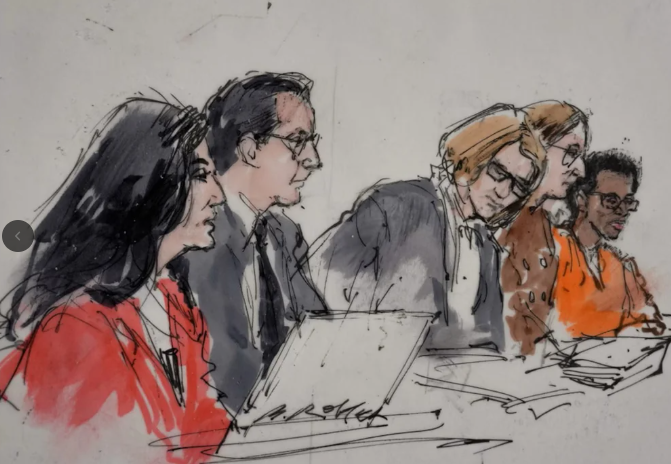
One useful detail emerged during defense attorney Blair Berk’s cross-examination.
Berk questioned whether the cadaver bag found with Celeste’s remains had been tested or otherwise conclusively connected to the bag purchased through the Amazon account. Byers reportedly testified that the medical examiner did not preserve the bag as separate evidence because decomposition made it impossible to remove the remains from it.
That gives the defense a legitimate chain-of-evidence argument: prosecutors may have records showing Burke purchased a particular type of bag, and investigators may believe it resembled the bag in the Tesla, but the original bag apparently cannot be subjected to ordinary comparison, fingerprint, trace or DNA examination.
Financial Evidence and Alleged Motive
Burke’s former financial manager, Benjamin Greger, testified that Burke grossed approximately $10 million to $11 million between 2023 and 2025, including roughly $3 million from an advance and initial payment connected with his Interscope deal.
The reported gross earnings were approximately:
2023: $1.5 million
2024: $6.4 million
2025: $3.1 million (through the time reflected in the records)
Prosecutors are using this testimony to support their alleged motive: Celeste reportedly threatened to expose their sexual relationship at a moment when Burke’s career and income were rapidly expanding.
The prosecution alleges the two argued on April 22, 2025, over Burke’s relationships with other women; Celeste was brought to Burke’s home the following day and was not known to have been seen alive afterward.
Strengths of the Prosecution’s Case So Far
1. The physical evidence is centered on Burke’s property.
Celeste’s remains were found in a Tesla registered to Burke. Equipment allegedly purchased through accounts and payment methods connected to him was delivered to his residence. Similar equipment was reportedly recovered from his garage.
That is not a remote or incidental connection. The car, residence, purchases and alleged processing location all converge on Burke.
2. The purchase trail appears unusually specific.
Chainsaws, cadaver bags, heavy-duty bags, an inflatable pool, a shovel and an incinerating device are difficult to dismiss collectively as ordinary household purchases—particularly when bought close together after the date prosecutors allege Celeste died.
The alleged use of an alias adds an inference of concealment, although using Burke’s own cards and home address makes it an imperfect concealment effort.
3. The pool may create a forensic bridge.
Should experts establish that the blue fragments recovered from Celeste’s remains physically or chemically match the pool found at Burke’s residence, that could be a powerful connection between the dismemberment and his garage.
At present, reporter descriptions use language such as “apparently” or state that prosecutors say the fragments came from the pool. We should not promote that allegation to a proven forensic match until the relevant examiner testifies.
4. Burke’s earlier statement may be contradicted by digital records.
The body-camera footage captures Burke appearing to minimize his familiarity with Celeste. Prosecutors reportedly possess messages, photographs, airline records and other digital evidence documenting a continuing intimate relationship.
A demonstrably false account to officers would not prove murder, but it could be used as consciousness-of-guilt evidence concerning the alleged sexual abuse and as evidence of Burke’s willingness to conceal the relationship.
5. The prosecution has a coherent motive theory
The financial testimony gives measurable context to the allegation that exposure could have endangered Burke’s career. The prosecution can potentially combine:
A documented unlawful relationship
Threats to disclose it
A rapidly expanding career worth millions
Celeste’s arrival at Burke’s residence
Her subsequent disappearance
Her remains in Burke’s vehicle
Disposal-related purchases linked to Burke
That is a coherent circumstantial chain, even without an eyewitness.
Strengths and Openings for the Defense
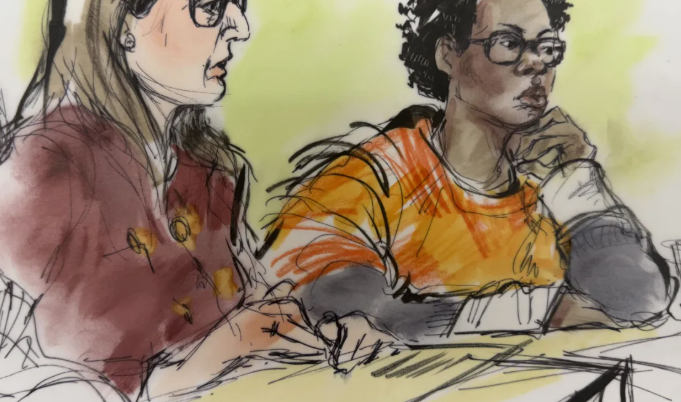
The defense’s strongest arguments are not presently about whether Burke is connected to the concealment or handling of the remains. The real opening is whether the prosecution can prove that Burke caused Celeste’s death, when it occurred, and with what intent.
1. Day One did not establish the act of murder.
So far, the reported testimony establishes the discovery and condition of the remains, Burke’s relationship with Celeste, purchases made through his accounts and his financial circumstances.
It does not yet establish through a witness or forensic expert:
Who inflicted the fatal injuries
Precisely where Celeste died
The exact time of death
Who placed her remains in the Tesla
Whether anyone else had access to the residence, garage, accounts or vehicle
That gap may be filled later, but it remains a gap after Day One.
2. Evidence of dismemberment is not automatically evidence of murder.
The purchase records may be extremely damaging on the mutilation count. They may also demonstrate concealment after Celeste’s death.
But proof that a person dismembered or concealed a body is not necessarily proof that the same person committed the homicide. The prosecution will need additional evidence tying Burke to the fatal penetrating injuries rather than merely to events afterward.
This distinction may become the defense’s central strategy.
3. The condition of the remains creates forensic limitations.
Celeste’s remains were severely decomposed after months in the Tesla. The defense may challenge conclusions concerning:
The precise number and nature of the penetrating injuries
The exact weapon used
Whether all injuries occurred before or after death
The sequence and timing of events
The date of death
Decomposition may prevent either side from answering some of those questions confidently.
4. The cadaver bag was not preserved separately.
Because the bag apparently could not be removed from the remains, the defense can argue that investigators cannot conclusively establish that it was the bag Burke purchased.
A visual resemblance or matching product category is weaker than a direct forensic or serial-number match.
5. The blue-fragment theory needs scientific confirmation.
The prosecution’s pool theory sounds compelling, but the defense can require proof that:
The fragments are the same material as the recovered pool.
They came from that particular pool rather than a common blue plastic product.
Their location on the remains supports the prosecution’s proposed sequence.
The pool was used by Burke rather than another person.
Without laboratory comparison, this remains an inference.
6. The prosecution’s motive theory may prove too broad
Burke’s earnings establish that he had a valuable career. They do not independently establish that he killed to protect it.
The defense may argue that introducing large income figures is designed to make the motive appear more substantial while avoiding the harder question: what evidence shows Burke decided to kill Celeste rather than continue denying, avoiding or managing the relationship as he allegedly had before?
My Assessment After Day One
For the preliminary-hearing standard, the prosecution appears to be in a very strong position. The combination of Celeste’s remains in Burke’s car, purchases linked to his accounts, equipment recovered from his property, the alleged blood evidence in his garage, matching tattoos and digital evidence of the relationship will almost certainly be sufficient to send the case to trial—assuming the reporting is substantially accurate.
But the defense has identified an important division in the evidence:
The prosecution’s evidence may strongly connect Burke to Celeste’s body and its concealment while still requiring additional proof that he personally caused her death.
That distinction will matter far more at trial than it does at this preliminary hearing. Probable cause is a relatively low threshold. A future jury will need proof beyond a reasonable doubt.
Related Articles
Celeste Rivas Hernandez Family Sues d4vd: What the 20-Page Lawsuit Actually Alleges
LOS ANGELES - The family of Celeste Rivas Hernandez has opened a second legal front against singer David Anthony Burke, better known as D4vd. Celeste's parents, Mercedes Martinez and Jesus Edgardo Rivas Alvarado, have filed a sweeping 20-page civil complaint in Los...
David Anthony Burke (d4vd) Preliminary Hearing Day 5: Judge Orders Singer to Stand Trial
Courtroom Drama The fifth and final day of David Burke's preliminary hearing shifted from introducing new evidence to bringing together the digital, forensic, and witness testimony presented over the...
David (d4vd) Anthony Burke Preliminary Hearing Day 4
Courtroom Atmosphere Day 4 focused primarily on forensic pathology and digital evidence. The morning was dominated by testimony from the Los Angeles County Medical Examiner, who detailed the autopsy...