
David (d4vd) Anthony Burke Preliminary Hearing Day 2
A factual recap of Day 2 of David Anthony Burke's (d4vd) preliminary hearing, including key testimony, evidence presented, and the prosecution and defense arguments.
What Was Presented on Day Two
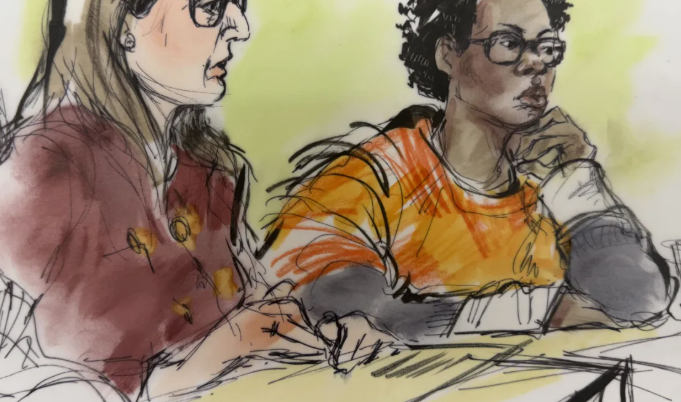
Morning Session
Defense Continues with Benjamin Gregor
The first witness was Benjamin Gregor, the former finance director and money manager connected with Burke’s business affairs.
Defense Goals: Blair Berk’s cross-examination appeared designed to show that Burke was largely removed from his own finances.
Gregor testified:
Burke’s mother, Colleen Burke, handled most financial matters.
Burke rarely asked how much money he was making.
Burke was not heavily involved in day-to-day financial decisions.
The defense also attempted to introduce evidence regarding Burke’s charitable giving and charitable trust, but prosecutors objected and Judge Olmedo sustained those objections, finding they were not relevant to the probable cause hearing.
Security Guard Mentioned
Gregor also identified a live-in security guard named Sheldon who stayed at Burke’s residence for approximately six months. According to Gregor Sheldon lived inside Burke’s home. Gregor never discussed events inside the residence with him.
That testimony could become important later if prosecutors decide the security guard possesses information about Burke’s activities.
Prosecutor Redirect
Deputy District Attorney Beth Silverman then shifted the focus. Rather than finances themselves, she emphasized Burke’s personal involvement in major business decisions.
Gregor acknowledged Burke purchased homes himself, signed contracts, maintained involvement in significant financial transactions. The prosecution appears to be countering the defense narrative that Burke was simply an uninvolved young artist with others controlling his affairs.
Relationship Evidence
One of the more significant moments came when prosecutors attempted to establish how widely Burke’s relationship with Celeste was known before her death.
Gregor testified, “I knew her first name.”
Silverman asked where he had heard Celeste’s name.
Gregor answered from Burke’s manager, Rob Morgenroth. Silverman then attempted to ask whether Morgenroth had described Celeste as Burke’s girlfriend. Before Gregor could answer, the defense objected and the objection was sustained, preventing that testimony from reaching the record.
This line of questioning strongly suggests prosecutors are trying to prove Burke’s relationship with Celeste was known by people within his professional circle long before police discovered her remains. That evidence could become important in proving motive and the continuous sexual abuse charge.
Louis Poimiroo – Senior Vice President of Finance, Interscope Records
Poimiroo testified about Burke’s recording contract and earnings, telling the court Burke earned roughly:
$950,000 in 2022,
$3.87 million in 2023
$186,000 in 2024
$2.5 million in 2025
He further testified that Burke’s contract contained future option periods that could have been worth as much as $19 million if exercised.
Prosecutors appeared to use the testimony to support their theory that Burke had a substantial financial motive to prevent his relationship with Celeste from becoming public. Poimiroo also explained that some early earnings were deposited into a Coogan Trust because Burke was a minor when he signed his recording contract.
Sean Buenrostro – California Highway Patrol Officer
Officer Sean Buenrostro testified about the discovery of Celeste’s passport card.
A California Department of Transportation/transportation worker found Celeste’s passport card along the shoulder of a highway in the hills above Santa Barbara in January 2026.
CHP became involved in documenting and processing the recovered identification.
The passport was turned over to investigators.
LAPD detectives later searched the surrounding area but reportedly found no additional evidence.
Prosecutors have previously alleged Burke traveled to that area to dispose of evidence, making the passport’s location potentially significant.
That testimony wasn’t about proving how Celeste died—it was about placing one of her personal belongings far from Burke’s home, in an area prosecutors believe he visited during the cover-up.
Chelsea Murillo – LAPD Criminalist
Murillo testified regarding the forensic processing of David Burke’s Tesla after investigators recovered Celeste’s remains from the vehicle.
Using photographs taken during the examination, Murillo described the condition of the vehicle as being covered in dust. Investigators observed evidence consistent with advanced decomposition in the front trunk (frunk). She testified that the area contained a strong odor of decomposition, numerous flies, maggots, and other insect activity. Prosecutors also introduced additional photographs documenting the collection of biological evidence from the vehicle.
Murillo’s testimony largely reinforced the forensic evidence presented on Day 1 rather than introducing new discoveries. Instead, prosecutors continued building a detailed record of how the vehicle was processed and how evidence was collected and documented for later laboratory analysis.
Murillo’s testimony expanded on the forensic processing itself, helping establish the chain of custody and methods used to collect evidence from Burke’s Tesla.
Afternoon Session
Before Court Began
There were a couple of procedural issues before testimony resumed.
Attorney Patrick Steinfield, representing Celeste’s family in the civil case, was admonished by Judge Charlaine Olmedo after attempting to use a laptop in court despite the courtroom’s restrictions on electronic devices.
Later, defense attorney Blair Berk complained she had not received a prosecution presentation that was about to be used with the next witness. Prosecutor Beth Silverman disputed that claim, stating the defense had already been provided the materials. There were also some other tense moments between the prosecutor and defense attorney which prompted Judge Olmedo to caution them about conflict and advised them to put their differences aside.
Chelsea Murillo – LAPD Criminalist
Murillo returned to the stand at the afternoon session to continue her testimony regarding the forensic processing of David Burke’s Tesla after investigators recovered Celeste’s remains from the vehicle.
Using photographs taken during the examination, Murillo described the condition of the front trunk (frunk), where investigators observed evidence consistent with advanced decomposition. She testified that the area contained a strong odor of decomposition, numerous flies, maggots, and other insect activity. She also described numerous air fresheners found in various areas of the Tesla.
Prosecutors also introduced additional photographs documenting the collection of biological evidence from the vehicle.
Murillo testified that investigators used Bluestar, a chemical reagent commonly employed to locate latent or cleaned bloodstains, on several areas of Burke’s Tesla. Bluestar is considered a presumptive test, meaning it indicates the possible presence of blood but does not confirm that blood is present. When certain areas reacted, investigators photographed the results and collected swabs for laboratory analysis and DNA testing.
Murillo’s testimony largely reinforced the forensic evidence presented on Day 1 rather than introducing new discoveries. Instead, prosecutors continued building a detailed record of how the vehicle was processed and how evidence was collected and documented for later laboratory analysis.
Murillo’s testimony expanded on the forensic processing itself, helping establish the chain of custody and methods used to collect evidence from Burke’s Tesla.
Points that the cross examination by Blair Berk flushed out:
Some areas of the Tesla were never tested.
Bluestar reactions were only presumptive.
Only limited DNA evidence resulted.
Questions about enhanced photographs.
Bluestar results in the passenger area – Murillo testified she could not confirm that it contained blood. [However, forensic testing for blood would be for other forensic analysts to perform]
Lauren Wallace – LAPD Criminalist, Field Investigation Unit
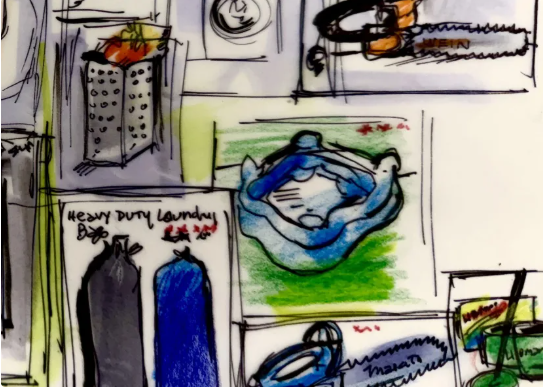
Prosecutors next called Lauren Wallace, an LAPD criminalist assigned to the Field Investigation Unit, who participated in processing evidence recovered during the search of David Burke’s residence on Doheny Place.
Wallace testified that her role was to document, photograph, and collect physical evidence from inside the home before it was submitted for laboratory analysis. Using photographs taken during the search, she walked the court through several items recovered by investigators and explained the procedures used to preserve potential biological evidence.
Among the items processed (photographs/swabbed/tested for presumptive blood) and/or collected were:
Tesla charging cable
rubber floor mats
a rowing machine
brick garage floor beneath the mats
garbage bag containing a cellphone
black fabric and wipes with brown stains
two green tarps bearing several reddish stains
inflatable pool that seemed to be freshly washed, with jagged linear cuts
rolled-up dryer sheet inside the pool, unclear whether this was collected or not.
Wallace explained that investigators follow standardized evidence collection protocols designed to preserve the integrity of physical evidence and maintain a documented chain of custody from the crime scene to the laboratory.
Cross-Examination
Defense attorney Blair Berk’s cross-examination focused less on Wallace herself and more on the limitations of what her work could establish.
Berk emphasized that Wallace’s responsibilities were limited to documenting and collecting evidence—not determining what the evidence ultimately proved. Wallace acknowledged that she did not perform DNA analysis or determine whether any recovered material was connected to the victim; those determinations would be made later by laboratory analysts.
The defense also questioned Wallace about areas that were not sampled or collected during the search, continuing a recurring theme that investigators exercised discretion in deciding which items to test.
Rather than proving guilt directly, Wallace helped establish the foundation necessary for later forensic testimony by explaining how evidence was collected, documented, and preserved before it reached the laboratory. Her testimony also strengthened the prosecution’s chain-of-custody evidence, making it more difficult for the defense to argue that physical evidence had been mishandled after its recovery.
Prosecution Strengths
Day 2 marked a noticeable shift in Prosecutor Beth Silverman’s presentation, moving away from the graphic forensic evidence introduced during the first day of testimony and toward establishing motive, financial incentives, and the integrity of the investigation.
The morning witnesses painted a picture of Burke’s rapidly growing music career and the substantial financial success that accompanied it. Through testimony from Interscope Vice President of Finance Louis Poimiroo and financial manager Benjamin Gregor, prosecutors introduced evidence that Burke had earned millions of dollars since signing with the label and stood to earn substantially more under future contract options. The testimony supported the prosecution’s theory that Burke had a powerful financial incentive to prevent his relationship with 14-year-old Celeste Rivas-Hernandez from becoming public.
Prosecutors also used Sean Buenrostro’s testimony regarding the recovery of Celeste’s passport card to strengthen the chain of physical evidence and reinforce their timeline of events following her disappearance.
During the afternoon, criminalists Chelsea Murillo and Lauren Wallace shifted the focus back to forensic evidence. Their testimony detailed the systematic collection, documentation, and preservation of evidence recovered from Burke’s Tesla and his residence. Together, the witnesses helped establish the procedures investigators followed to maintain the integrity of the evidence before it was submitted for laboratory analysis.
Rather than introducing dramatic new discoveries, Day 2 strengthened the overall framework of the prosecution’s case by connecting motive with the investigative process.
Defense Strengths
Defense attorney Blair Berk continued developing a consistent theme that would emerge throughout the afternoon: investigators exercised discretion in collecting and testing evidence, and those decisions left unanswered questions.
During her cross-examination of Chelsea Murillo, Berk emphasized the limitations of presumptive blood testing and highlighted that Murillo’s role was to locate and document potential biological evidence rather than determine whether it was blood, whose blood it was, or when it was deposited. Berk also questioned why certain areas of the Tesla were not chemically tested or swabbed and pointed out that only a limited number of collected samples ultimately yielded DNA evidence.
The defense similarly used Lauren Wallace‘s testimony to underscore that evidence collection involves judgment calls regarding which items are photographed, collected, and submitted for testing. Wallace acknowledged that her responsibilities were limited to documenting and collecting evidence and that she did not determine the evidentiary significance of the items recovered.
Although the defense did not significantly challenge the credibility of either criminalist, Berk effectively narrowed the scope of their testimony by distinguishing what investigators observed from what the forensic evidence could conclusively prove.
My Assessment After Day Two
Compared to the emotional and graphic testimony presented during Day 1, the second day of the preliminary hearing was more technical and methodical.
Rather than relying on dramatic courtroom moments, prosecutors spent the day constructing the broader narrative underlying their case. Through financial records, business witnesses, and forensic investigators, they sought to demonstrate not only that Burke had a significant financial motive, but also that investigators followed accepted procedures in documenting and preserving evidence recovered during the investigation.
Meanwhile, the defense continued laying the groundwork for what appears to be a long-term trial strategy. Rather than attempting to dispute the prosecution’s theory outright, Blair Berk repeatedly focused on the limitations of forensic testing, the discretion exercised by investigators, and the distinction between evidence that suggests a conclusion and evidence that conclusively proves one.
While Day 2 lacked the emotional impact of the opening day, it was strategically important. The prosecution continued building the foundation of its case, while the defense began identifying the investigative decisions it is likely to challenge if the case proceeds to trial.
Related Articles
Celeste Rivas Hernandez Family Sues d4vd: What the 20-Page Lawsuit Actually Alleges
LOS ANGELES - The family of Celeste Rivas Hernandez has opened a second legal front against singer David Anthony Burke, better known as D4vd. Celeste's parents, Mercedes Martinez and Jesus Edgardo Rivas Alvarado, have filed a sweeping 20-page civil complaint in Los...
David Anthony Burke (d4vd) Preliminary Hearing Day 5: Judge Orders Singer to Stand Trial
Courtroom Drama The fifth and final day of David Burke's preliminary hearing shifted from introducing new evidence to bringing together the digital, forensic, and witness testimony presented over the...
David (d4vd) Anthony Burke Preliminary Hearing Day 4
Courtroom Atmosphere Day 4 focused primarily on forensic pathology and digital evidence. The morning was dominated by testimony from the Los Angeles County Medical Examiner, who detailed the autopsy...